


Oh, the joy of spring and summer fruits! There is truly nothing quite like a homemade strawberry rhubarb pie to herald the warmer months. If you’re looking for another refreshing seasonal treat, try our strawberry lemonade recipe. I have spent years perfecting this classic sweet-tart dessert. Many bakers struggle with a soggy bottom or a runny filling, but I am here to tell you that those days are over. This recipe for strawberry rhubarb pie will guide you to a perfectly flaky crust and an intensely flavored fruit filling that stands firm. Get ready for bakery-quality results right in your own kitchen.
Why You’ll Love This Recipe
This strawberry rhubarb pie recipe stands apart with a few clever tricks. I infuse orange juice with a hint of fresh grated ginger, adding a subtle, warm complexity that beautifully complements the sweet-tart fruit. My secret weapon is macerating the strawberries and rhubarb with both sugars and a small amount of pectin powder. This process naturally draws out moisture and kickstarts the thickening process, ensuring your filling will be firm, not soupy. Then, I drain the released liquid and reduce it on the stovetop with a touch of extra orange zest until it becomes a concentrated, syrupy delight. Folding this rich syrup back into the fruit prevents flavor loss and deepens the fruit’s natural intensity.
This scientific approach guarantees a firm filling every time. You will never have to worry about a soupy pie again. The enhanced fruit flavor, coupled with the unique aromatic note from ginger and orange zest, delivers a truly reliable and exceptional dessert.
Reliably perfect texture is yours. Say goodbye to soggy bottoms and watery fillings, thanks to my special thickening and liquid reduction technique.
Elevated flavor profile is achieved through the subtle ginger and concentrated fruit syrup, which elevate the classic sweet-tart combination to new heights.
Stress-free baking is a promise. My detailed instructions and pro tips ensure that even novice bakers can achieve a bakery-quality pie.
Ingredients Needed
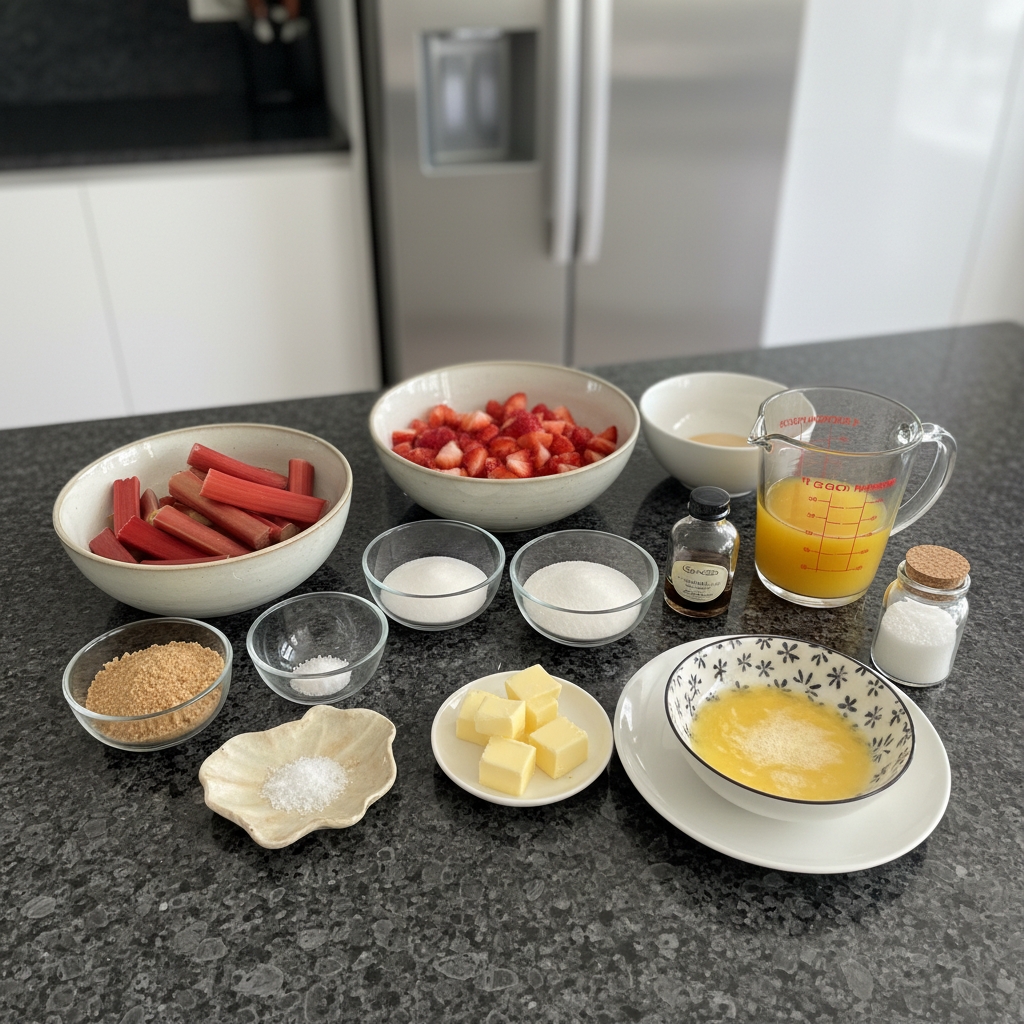
homemade pie crust (my recipe makes 2 crusts; 1 for bottom 1 for top)
3 cups (about 300g) sliced rhubarb (1/2 inch pieces)
2 and 1/2 cups (about 380g) chopped strawberries
1/3 cup (67g) packed light brown sugar
1/3 cup (67g) granulated sugar
1/4 cup (32g) cornstarch
1/4 teaspoon salt
1 Tablespoon (15ml) orange juice
1/2 teaspoon pure vanilla extract
2 Tablespoons (28g) unsalted butter, cut into small pieces
1 large egg, lightly beaten with 1 Tablespoon (15ml) milk
optional: coarse sugar for garnish
Ingredient Notes & Substitutions
For strawberries and rhubarb, selecting ripe, high-quality fruit is key for the best flavor and texture in your pie. For strawberries, look for firm, bright red berries with a sweet aroma. Smaller June-bearing varieties or local farmers’ market finds often have the most intense flavor. For rhubarb, choose crisp, firm stalks. While redder stalks can sometimes indicate sweetness, green stalks are equally delicious and tart. Avoid any limp or yellowed pieces. You can also explore the health benefits of rhubarb. If using frozen rhubarb or frozen strawberries, ensure you thaw them completely in a strainer and pat them very dry with paper towels to remove excess moisture. This prevents a watery fruit filling.
Thickeners like cornstarch play a crucial role in achieving that perfectly firm, gel-like fruit filling and preventing sogginess. In this recipe, the cornstarch works with the natural fruit juices. The unique twist also incorporates pectin powder, or you can use chia seeds as a natural alternative. These additional thickeners further ensure a reliably set filling.
A flaky, buttery crust is the foundation of any great pie. Always use very cold unsalted butter for your homemade pie crust. The cold butter creates steam pockets during baking, resulting in those beautiful, flaky layers we all adore.
The orange juice and ginger are not just for show; they are integral to the unique flavor profile of this strawberry rhubarb pie. The orange zest brightens the fruit, while the ginger adds a subtle, warm, and sophisticated counterpoint to the pie’s sweetness and tartness.
How to Make Strawberry Rhubarb Pie
1. Prepare the Pie Crust
Begin by preparing my homemade pie crust recipe through step 5. The key to a truly flaky crust lies in using very cold ingredients, especially the butter and ice water. This prevents gluten development and ensures a tender result.
2. Make the Enhanced Filling
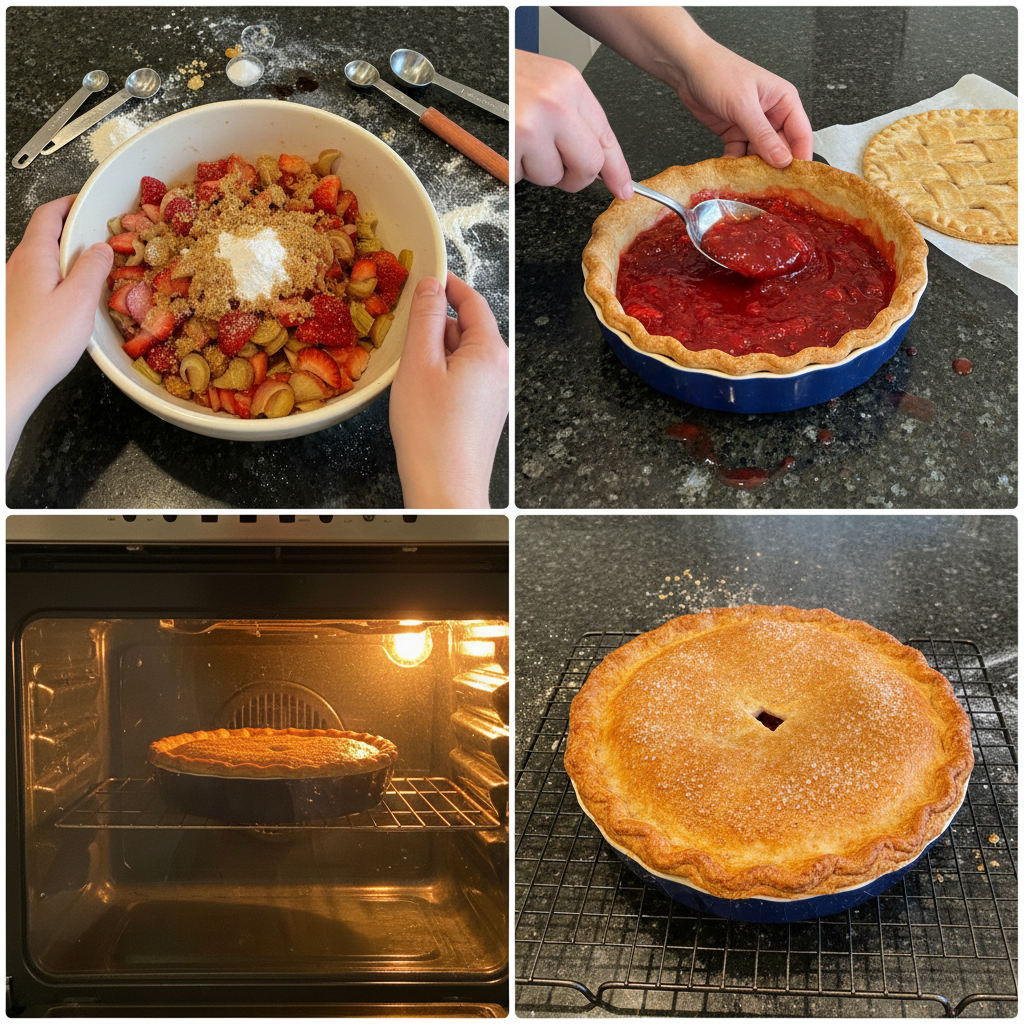
In a large mixing bowl, combine the sliced rhubarb, chopped strawberries, light brown sugar, granulated sugar, cornstarch, and salt. Now, for the unique twist: add a hint of fresh grated ginger to the orange juice before stirring it into the fruit mixture, along with the vanilla extract. Also, incorporate a small amount of pectin powder (or chia seeds if you prefer a natural alternative) into the fruit mixture with the sugars. Let this vibrant red fruit mixture macerate for 30-60 minutes. This essential step draws out excess moisture and begins the thickening process. Once macerated, carefully drain the released liquid from the fruit into a small saucepan. Reduce this liquid on the stovetop with a touch of extra orange zest until it becomes a concentrated, syrupy reduction. Once cooled slightly, fold this rich, thickened syrup back into the fruit. Set the aromatic fruit filling aside as your oven preheats.
3. Preheat Oven
Preheat your oven to 400°F (204°C).
4. Assemble the Pie
On a lightly floured work surface, roll out one of your chilled pie dough discs to about a 12-inch diameter. Keep the other disc refrigerated. Carefully place the dough into a 9-inch pie dish, tucking it in smoothly with your fingers to avoid any air pockets. Spoon the prepared fruit filling into the crust. It is important not to add any residual excess liquid left in the bowl; while our unique twist minimizes this, discard any that remains. Dot the top of the vibrant filling with small pieces of cold unsalted butter. These will melt into the fruit, adding richness.
5. Create the Top Crust
Remove the second disc of chilled pie dough from the refrigerator. Roll it out into a 12-inch diameter circle. You can create a classic lattice top by cutting strips 1/2- to 1-inch wide with a pastry wheel, sharp knife, or pizza cutter. Carefully weave the strips over and under one another, pulling back strips as necessary to create the lattice pattern. Alternatively, you can simply place the solid dough circle on top, cutting several slits to form steam vents. A crumble or streusel topping also makes a wonderful pie top. Once your top crust is in place, press the edges of the strips or the solid crust firmly into the bottom pie crust edges to seal them. Trim off any excess dough with a small knife and then crimp the pie crust edges with a fork or your fingers for a decorative finish. This also helps seal the pie.
6. Egg Wash & Garnish
Lightly brush the top crust with the egg and milk mixture. This will help the crust achieve a beautiful golden brown color as it bakes. If desired, sprinkle the top with a little coarse sugar for an extra sparkle and crunch.
7. Bake the Pie
Place the pie onto a large baking sheet; this catches any bubbling juices and helps with even heat distribution. Bake for 20 minutes at 400°F (204°C). After the initial 20 minutes, keep the pie in the oven, but reduce the temperature to 350°F (177°C) and continue baking for an additional 30-35 minutes. At this point, it is crucial to place a pie crust shield on top of the pie edges to prevent them from browning too quickly. Your strawberry rhubarb pie is done when the fruit filling’s juices are actively bubbling thickly all around the edges and the crust is a gorgeous golden brown. The bubbling indicates that the filling has reached the proper temperature to set.
8. Cool Completely
This step is absolutely critical for optimal texture. Allow the pie to cool for 3 full hours at room temperature before even thinking about slicing into it. This patient cooling time allows the pectin, cornstarch, and fruit juices to properly thicken and set. Cutting into the pie too soon will result in a runny, soupy slice.
Gap-Filling: Mastering Your Pie Crust & Fruit Selection
Achieving a Flawless Pie Crust Every Time
Comparing butter versus shortening in pie crust is a common debate. Butter offers superior flavor and contributes to a beautiful flaky crust. However, it can be slightly more challenging to work with as it melts faster. Shortening, on the other hand, provides incredible tenderness and is very easy to handle, though it offers less flavor. For the best of both worlds, I often recommend a blend of cold unsalted butter and shortening to achieve a flaky, buttery crust that is also manageable.
Preventing shrinking and cracking requires a few key techniques. Do not overwork the dough; excessive handling develops gluten, which leads to a tough crust that is prone to shrinking. Chilling the dough thoroughly at various stages is paramount: after mixing, after rolling it out, and most importantly, chill the assembled pie for at least 30 minutes before baking. This cold dough holds its shape better and resists shrinkage in the oven. Proper hydration of the dough is also important; if your dough is too dry, it can crack easily when rolled.
Working with sticky fruit fillings during assembly can be a bit messy. I suggest lightly flouring your hands if the fruit feels too sticky. Use a rubber spatula to carefully transfer the filling into the pie dish. Do not overfill the pie dish; leave a little space at the top to prevent bubbling over during baking.
Selecting & Prepping Your Seasonal Stars
When selecting types of strawberries best for pie, look for varieties that are firm and hold their shape well, not overly watery. Smaller June-bearing varieties often have a more concentrated flavor, making them ideal for baking. Always emphasize ripeness for natural sweetness, which allows you to reduce the amount of added sugar. A detailed guide on how to select ripe strawberries involves looking for bright red color, a shiny surface, and a sweet aroma. Avoid any white or green spots, as they will not ripen further once picked.
For rhubarb varieties, select fresh, crisp stalks. While “Crimson Red” varieties are often sought after for their vibrant color and slightly sweeter profile, green rhubarb varieties like “Victoria” are equally delicious and perfectly acceptable for pie, often delivering a more pronounced tartness. Always reinforce the importance of slicing rhubarb thinly, into uniform 1/2-inch pieces. This ensures that the tender fruit cooks evenly and softens beautifully within the pie.
For the best flavor and texture, there is truly no substitute for using in-season produce. Seek out local strawberries and rhubarb when they are at their peak for an unparalleled pie experience.
Pro Tips & Troubleshooting
Pro Tips for Pie Perfection
Cold ingredients are key. Always use very cold unsalted butter, and if you include it, cold shortening, along with ice water for your pie crust to ensure maximum flakiness.
Thinly slice rhubarb into uniform 1/2-inch pieces. This allows it to cook through evenly and become wonderfully tender, matching the texture of the strawberries.
Do not rush the chill. Chill your pie dough at every recommended stage, and ideally, chill the assembled pie for at least 30 minutes before baking to prevent any dreaded shrinking.
Use a pie crust shield. After the first 20 minutes of baking, always place a pie crust shield on the edges to protect them from browning too quickly, ensuring a perfectly golden crust all over.
Macerate and reduce for flavor. Embrace the unique twist! Macerating the fruit with pectin and reducing the fruit liquid is not just for texture; it intensely concentrates the natural fruit flavor and actively prevents sogginess.
Listen to your pie. Look for those actively bubbling juices around the edges of the pie as it bakes. That is your visual cue that the filling is cooked and thickened properly.
Common Mistakes to Avoid
Soupy filling is the number one pie killer! Avoid this by diligently following the unique twist steps: maceration, draining, and liquid reduction. Also, ensure adequate cooling time before slicing.
Overworking the dough leads to a tough, less flaky crust. Too much handling develops gluten. Work quickly and keep your ingredients very cold.
Under-baked crust, especially the bottom crust, can ruin an otherwise good pie. Ensure your pie is baked long enough for the filling to bubble vigorously, indicating proper cooking and setting.
Crust shrinking is often due to not enough chilling time. Always chill your dough well before rolling and again after assembling the pie.
Premature serving is a common mistake. Cutting into a pie before it is fully cooled (at least 3 hours) will inevitably result in a runny, soupy filling. Patience is truly a virtue here!
Serving & Storage
Delicious Serving Suggestions
A classic pairing for strawberry rhubarb pie is a generous scoop of cold vanilla bean ice cream. The creamy, cold ice cream provides a delightful contrast to the warm, sweet-tart pie.
For a creamy topping, a dollop of freshly whipped cream or a drizzle of crème anglaise adds a touch of elegance and richness.
Sometimes, a slice is best enjoyed as bare perfection. Appreciate the flaky crust and rich fruit filling on its own, especially after it has cooled completely.
Consider beverage pairings such as a refreshing glass of sparkling rosé, a classic iced tea, or a delicate dessert wine to complement the pie’s flavors.
Storage and Make-Ahead Tips
This pie typically yields 8-10 standard slices, perfect for sharing or enjoying over several days.
A freshly baked pie can be left loosely covered at room temperature for up to 1 day. This can sometimes prevent a soggy crust that might occur with immediate refrigeration, especially if you plan to serve it the next day.
For refrigeration, cover any leftover pie tightly with plastic wrap or aluminum foil and store it in the refrigerator for up to 5 days.
Freezing a baked pie is an excellent option for longer storage. Once completely cooled, wrap the pie tightly in several layers of plastic wrap, then an additional layer of aluminum foil. It can be frozen for up to 3 months.
You can also freeze an unbaked pie. Assemble the pie as directed, but do not apply the egg wash or coarse sugar. Wrap it tightly in plastic wrap and foil. When ready to bake, unwrap, apply egg wash and sugar, and bake directly from frozen. Note that baking time will be extended, so check for doneness.
For reheating instructions: from refrigerated, individual slices can be warmed in the microwave for 30-60 seconds, or in a preheated oven (350°F/177°C) for 10-15 minutes until warmed through. From frozen, bake the entire frozen pie at 350°F (177°C) for 45-60 minutes, or until warmed through and the juices are bubbling. Tent the crust with foil if it starts to brown too quickly.
Conclusion
Creating the perfect strawberry rhubarb pie is a culinary triumph that captures the essence of spring and summer. With my unique twist, incorporating fresh ginger, pectin for thickening, and the concentrated fruit syrup, you are guaranteed a superior, non-soupy pie with incredible depth of flavor. I promise you a reliably firm filling and a beautifully flaky crust every single time. Even if you are new to pie making, these detailed steps and pro tips will give you the confidence to tackle this classic dessert with ease. Do not hesitate to try this recipe. Enjoy the delightful journey of baking this tart and sweet masterpiece, and feel free to customize it with your favorite toppings or serving ideas. I would love to see your beautiful creations!
FAQ
How do I prevent a soggy strawberry rhubarb pie filling?
The key is my unique twist: macerate the fruit with pectin (or chia seeds) to draw out moisture, drain the released liquid, then reduce that liquid to a concentrated syrup and fold it back into the fruit. Also, allow the pie to cool completely for at least 3 hours after baking; this is crucial for the filling to set properly.
Can I use frozen strawberries or rhubarb in this pie recipe?
Yes, you absolutely can! If using frozen fruit, thaw it completely overnight in a strainer to remove as much excess moisture as possible. Then, pat the fruit very dry with paper towels before mixing. As a precaution, you might add an extra 1/2 to 1 tablespoon of cornstarch to the filling.
How can I prevent my pie crust from shrinking or browning too quickly?
To prevent shrinking, ensure your pie dough is well-chilled before rolling and that the assembled pie is chilled for at least 30 minutes before it goes into the oven. To prevent the crust from browning too quickly, use a pie crust shield after the first 20 minutes of baking.
What are some alternative toppings for strawberry rhubarb pie?
Beyond a classic lattice, you can use a simple solid top crust with steam vents, a crumbly streusel topping, or a buttery oat crumble. All these options add a wonderful texture and flavor contrast.
How long should strawberry rhubarb pie cool before serving for optimal texture?
It is essential to cool the strawberry rhubarb pie for a minimum of 3 full hours at room temperature before serving. This allows the fruit filling to properly thicken and set, preventing a runny, soupy slice. Patience truly pays off here.
What’s the best way to store and reheat leftover strawberry rhubarb pie?
A freshly baked pie can be left loosely covered at room temperature for up to 1 day. For longer storage, cover leftovers tightly with plastic wrap or foil and refrigerate for up to 5 days. To reheat, individual slices can be warmed in the microwave for 30-60 seconds, or in a 350°F (177°C) oven for 10-15 minutes. For a whole refrigerated or frozen pie, bake at 350°F (177°C) for 45-60 minutes, tenting with foil if the crust browns too quickly.
What’s the secret to a perfectly flaky pie crust?
The secret to a perfectly flaky pie crust lies in using very cold fats, like butter or shortening, and minimal handling of the dough. Cold fats create steam pockets in the oven, leading to those wonderful flaky layers. Overworking the dough develops gluten, which results in a tough rather than flaky crust. Adequate chilling time at various stages is also crucial.

Perfect Strawberry Rhubarb Pie: No More Soggy Bottoms!
Ingredients
Equipment
Method
- Begin by preparing your homemade pie crust recipe through step 5, ensuring you use very cold ingredients like butter and ice water for a flaky, tender result.
- In a large mixing bowl, combine the sliced rhubarb, chopped strawberries, light brown sugar, granulated sugar, cornstarch, and salt. Add a hint of fresh grated ginger to the orange juice before stirring it into the fruit mixture, along with the vanilla extract. Incorporate a small amount of pectin powder (or chia seeds if preferred) into the fruit mixture with the sugars. Let this fruit mixture macerate for 30-60 minutes to draw out excess moisture and begin thickening.
- Once macerated, carefully drain the released liquid from the fruit into a small saucepan. Reduce this liquid on the stovetop with a touch of extra orange zest until it becomes a concentrated, syrupy reduction. Once cooled slightly, fold this rich, thickened syrup back into the fruit. Set the fruit filling aside.
- Preheat your oven to 400°F (204°C).
- On a lightly floured work surface, roll out one of your chilled pie dough discs to about a 12-inch diameter. Carefully place the dough into a 9-inch pie dish, tucking it in smoothly to avoid air pockets. Spoon the prepared fruit filling into the crust, discarding any residual excess liquid. Dot the top of the filling with small pieces of cold unsalted butter.
- Roll out the second disc of chilled pie dough into a 12-inch diameter circle. Create a classic lattice top by cutting strips 1/2- to 1-inch wide and weaving them, or simply place a solid dough circle on top, cutting several slits for steam vents. Press the edges of the top crust firmly into the bottom pie crust edges to seal, trim excess dough, and crimp for a decorative finish.
- Lightly brush the top crust with the egg and milk mixture for a golden brown color. If desired, sprinkle with a little coarse sugar for sparkle and crunch.
- Place the pie onto a large baking sheet. Bake for 20 minutes at 400°F (204°C). After 20 minutes, reduce the temperature to 350°F (177°C) and continue baking for an additional 30-35 minutes, placing a pie crust shield on the edges to prevent over-browning. The pie is done when the fruit filling’s juices are actively bubbling thickly around the edges and the crust is golden brown.
- Allow the pie to cool for 3 full hours at room temperature before slicing. This critical cooling time allows the pectin, cornstarch, and fruit juices to properly thicken and set, preventing a runny slice.
