


Welcome to my kitchen, where we celebrate the heartwarming tradition of Irish cooking. Today, I am thrilled to share my absolute favorite recipe for Dublin Coddle, a quintessential Irish one-pot meal that embodies comfort and rustic charm. This Dublin Coddle is perfect for chilly evenings, festive St. Patrick’s Day celebrations, or any time you crave a deeply satisfying, savory dish. This recipe offers an authentic experience with a few smart enhancements to guarantee perfect results every time. Get ready to learn how to make a deeply flavorful, comforting Dublin Coddle with perfectly cooked ingredients, suitable for home cooks of all levels.
Why You’ll Love This Recipe
This Dublin Coddle recipe isn’t just another stew; it’s a testament to how simple tweaks can elevate a classic to new heights. My approach focuses on two key enhancements that solve common cooking challenges and dramatically boost flavor.
Perfectly Tender Potatoes: I begin by par-boiling the cut potatoes for just a few minutes before they even hit the Dutch oven. This simple step ensures that your russet potatoes cook uniformly, becoming perfectly tender without turning into a mushy mess, a frequent complaint with slow-cooked stews. Scientifically, this pre-cooking allows the potato starch cells to hydrate and cook evenly within the gentle heat of the stew.
Deeply Flavorful Broth: After searing the bacon and sausage, I deglaze the hot Dutch oven with a cup of robust Irish stout, like Guinness. This crucial step captures all the rich, caramelized ‘fond’ from the bottom of the pot, infusing the broth with deep umami, malty complexity, and a robust flavor profile that plain chicken broth alone cannot achieve. It’s the Maillard reaction working its magic, creating layers of savory taste.
Reliable Results: These methods guarantee tender potatoes and a rich, complex broth every single time you make this Dublin Coddle.
Elevated Flavor: The stout deglaze adds an incredible depth, transforming a traditional dish into an even more savory and comforting experience.
Effortless Comfort: This is truly a one-pot meal, emphasizing ease of preparation and minimal cleanup, making it ideal for a hearty family dinner.
Ingredients Needed
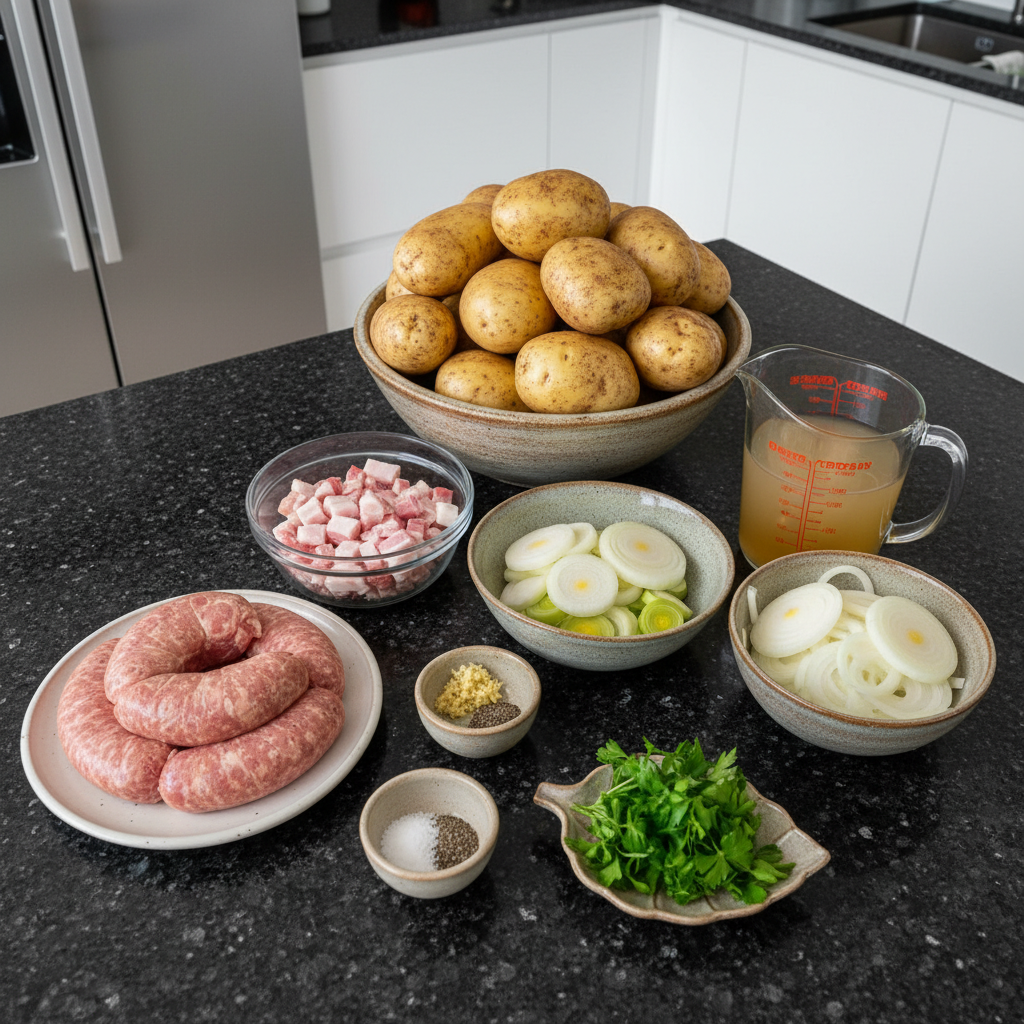
Here are the simple, wholesome ingredients you will need for this delicious Dublin Coddle:
8 slices thick cut applewood bacon (chopped)
6 cloves garlic (minced)
2 pounds quality pork sausage (about 6 links)
2 small yellow onions (sliced 1/4-inches thick)
1 large leek (cleaned and sliced 1/4-inches thick)
2 tablespoons fresh parsley (minced )
3 pounds russet potatoes (roughly peeled and cut into large bite-size pieces)
kosher salt (to taste)
black pepper (to taste)
2 to 3 cups low-sodium chicken broth (low-sodium bone broth or stock)
Ingredient Notes & Substitutions
Pork Sausage: For the best Dublin Coddle, select a quality pork sausage. I recommend rustic, mild Italian pork links, or traditional Irish-style pork links. Look for a savory, not overly spiced, profile with a good fat content to render and build flavor. If you’re looking for an alternative, chicken sausage or even an IPA bratwurst can work well, though the flavor will differ slightly.
Potatoes: Russet potatoes are my top recommendation for this Dublin Coddle. Their high starch content helps to slightly thicken the broth while ensuring they hold their shape beautifully during the slow cooking process. If you can’t find russets, Yukon Gold potatoes are a good alternative. Make sure to cut them into large, consistent bite-size pieces to prevent mushiness.
Leeks: Properly cleaning your leeks is essential to avoid any gritty texture in your Coddle. First, remove the tough outer leaves and trim off the dark green parts and the very end of the root. Slice the leek in half lengthwise, then fan out the layers under cool running water to rinse away any trapped dirt or sand. Pat them dry before slicing.
Broth: You have a few excellent options for the broth. Low-sodium chicken broth is a great base, but low-sodium bone broth or pork broth will add an even richer, more complex flavor to your Dublin Coddle.
Irish Stout: This is where a lot of the magic happens for flavor depth. Guinness is a classic and highly recommended choice, but any good quality Irish stout will work. The stout adds a malty, slightly bitter, and deeply savory note that truly distinguishes this Coddle from versions made with only broth.
Optional Additions: For an extra layer of richness, consider stirring in some shredded aged cheddar cheese just before serving.
How to Make Dublin Coddle
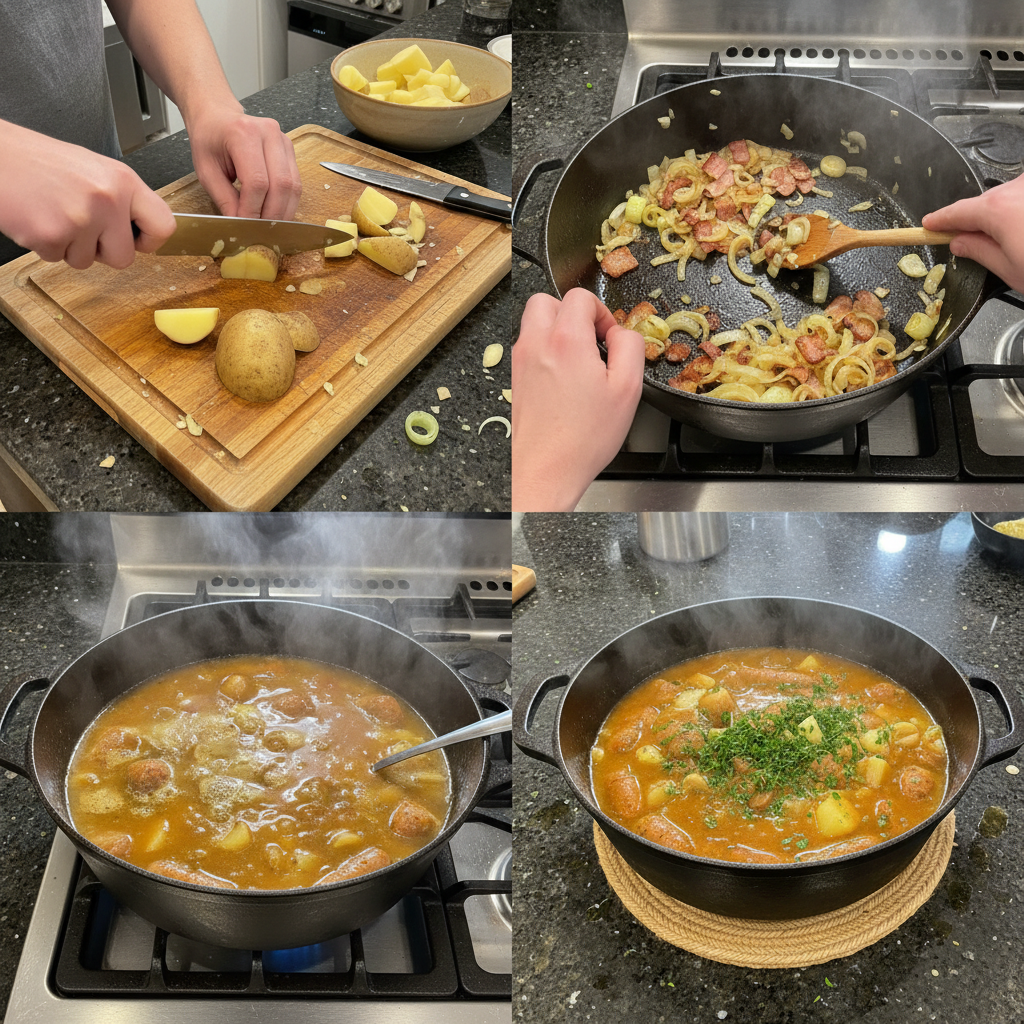
Making a truly authentic and delicious Dublin Coddle is a joyful process. Follow these steps for a perfect, hearty meal.
Preparation
1. Move your oven rack to the lower third of your oven and preheat to 300 degrees F.
2. While the bacon cooks, prepare your other vegetables. Mince the garlic, slice the onions and leeks, and roughly peel and cut the russet potatoes into large bite-size pieces.
3. In a separate pot, bring salted water to a boil. Add the cut potatoes and par-boil for 5-7 minutes until they are slightly tender but still firm. Drain the potatoes thoroughly and set aside. This ensures they cook evenly and perfectly in the coddle.
Brown the Meats
1. Place the chopped thick-cut applewood bacon into a 7-quart Dutch oven and heat over medium to medium-low. Stir occasionally, cooking until the bacon is crispy and golden, about 18-20 minutes. The delicious aroma will fill your kitchen.
2. Add the minced garlic to the Dutch oven with the bacon fat and cook for 2 minutes, stirring gently until fragrant. Use a slotted spoon to remove and transfer the crispy bacon and garlic to a paper towel-lined plate, leaving the rendered fat in the pot.
3. Next, sear the pork sausages in the flavorful bacon fat for 3 to 4 minutes on both sides until beautifully browned. This browning is crucial for developing deep, savory flavors through the Maillard reaction. Transfer the seared sausages to a cutting board and slice them into thirds.
Deglaze and Assemble
1. Remove the Dutch oven from the burner. Pour 1 cup of Irish stout (such as Guinness) into the hot pot. Immediately use a wooden spoon to scrape up all the flavorful ‘fond’ stuck to the bottom. This deglazing step incorporates rich, caramelized flavor into your broth.
2. Now, begin layering your Dublin Coddle. Start by layering in the par-boiled potatoes, seasoning generously with a pinch (or two) of kosher salt and some freshly ground black pepper. Sprinkle half of the fresh minced parsley over the potatoes.
3. Next, layer in the sliced yellow onions, followed by the cleaned and sliced leeks.
4. Distribute the sliced sausages (along with any accumulated juices from the cutting board), the crispy cooked bacon, and the garlic over the vegetables. Add the rest of the fresh minced parsley.
Bake and Serve
1. Pour 2 to 3 cups of low-sodium chicken broth over all the ingredients. If you prefer a brothier Dublin Coddle, definitely add 3 cups.
2. Cover the Dutch oven with its lid and place it into your preheated oven for 1 hour and 30 minutes, or until the potatoes are beautifully fork tender and the flavors have melded together perfectly.
3. Carefully remove the Dutch oven from the oven. Ladle the hearty Dublin Coddle into bowls, making sure to include plenty of the rich broth. Top with a sprinkle of extra fresh minced parsley and freshly ground black pepper. Serve with warm, crusty bread and butter for soaking up every last drop of the delicious liquid.
Slow Cooker Adaptation for Dublin Coddle
This Dublin Coddle recipe can be wonderfully adapted for your slow cooker, making it an even more convenient meal.
Preparing for the Slow Cooker
The initial browning steps are crucial for flavor development and should not be skipped.
1. Brown the bacon and sausage: In a separate skillet or on the stovetop setting of a multi-cooker, follow the main recipe’s instructions to cook the chopped bacon until crispy, remove it, then sear the sliced pork sausages until well-browned. Remember to leave the rendered fat.
2. Deglaze with stout: After removing the sausage, pour 1 cup of Irish stout into the hot skillet, scraping up all the flavorful fond from the bottom. This ensures your slow cooker Dublin Coddle still has that incredible depth of flavor.
3. Par-boil potatoes: Just as in the main recipe, par-boil your cut russet potatoes for 5-7 minutes in salted water, then drain them thoroughly. This prevents mushy or undercooked potatoes in the slow cooker.
4. Transfer ingredients: Carefully transfer the deglazed liquid, seared sausages, crispy bacon, garlic, par-boiled potatoes, sliced onions, sliced leeks, and parsley into your slow cooker insert.
Slow Cooker Cooking Times & Adjustments
Liquid: Since less liquid evaporates in a slow cooker, start with a slightly reduced amount. Use 2 cups of chicken broth initially, in addition to the 1 cup of stout from deglazing. You can always add a splash more broth towards the end of cooking if the consistency seems too thick.
Layering: Layer the ingredients as described in the main recipe, starting with potatoes, then onions, leeks, and finally the meats, to ensure even cooking.
Timing:
On the low setting: Cook for 6-8 hours, or until the potatoes are tender when pierced with a fork.
On the high setting: Cook for 3-4 hours, or until the potatoes are tender.
Always check for potato tenderness before serving, as cooking times can vary slightly between slow cooker models.
Pro Tips & Troubleshooting
Even experienced chefs benefit from a few expert insights and knowing how to avoid common pitfalls.
Pro Tips for a Perfect Coddle
Crisp Bacon First: Always take the time to fully render the bacon fat until it’s wonderfully crispy. This golden fat is the flavor base for searing your sausages and builds the foundation of your Dublin Coddle’s rich taste.
Leave Some Skin: For a more rustic look and a little extra texture, feel free to leave some of the potato skins on your russets. Just be sure to scrub them very clean.
Consistent Potato Size: Ensure all your potatoes are cut into similar large bite-size pieces. This is crucial for even cooking, preventing some pieces from becoming mushy while others remain firm.
Deglazing is Key: When deglazing with Irish stout, make sure to scrape every bit of flavorful ‘fond’ from the bottom of the Dutch oven. This concentrated goodness is essential for maximum flavor depth in your broth.
Broth Consistency: If you find your broth is a little too thin after cooking, simply remove the lid and simmer on the stovetop over medium heat for 10-15 minutes to reduce it slightly. If it’s too thick, add a splash more warm chicken broth until it reaches your desired consistency.
Leek Prep: Remember the efficient leek cleaning method: remove outer leaves, trim ends, slice in half, fan under cool water, then pat dry. This ensures no grit in your delicious Coddle.
Common Mistakes to Avoid
Undercooked Potatoes: This is a common complaint, but my par-boiling unique twist specifically addresses it. Other causes can be potatoes cut too large or inconsistently, issues with oven calibration, or a lid that doesn’t seal well, allowing too much moisture to escape. Ensure even potato size and always par-boil.
Mushy Potatoes: While undercooked potatoes are an issue, overcooked or mushy potatoes are equally undesirable. Avoid cutting your potatoes too small or cooking the Coddle for too long past the point of tenderness. The par-boiling step helps control this.
Skipping Browning: Do not skip browning the bacon and sausages. This step creates the Maillard reaction, developing crucial savory flavors. Not browning will result in a significantly less flavorful Dublin Coddle.
Not Cleaning Leeks Properly: Uncleaned leeks can introduce an unpleasant gritty texture to your stew. Always thoroughly rinse them after slicing to remove any hidden dirt.
Serving & Storage
Once your Dublin Coddle is ready, it’s time to enjoy it! And if there are any leftovers, you’ll be glad to know how to store them.
Serving Ideas
Traditional Accompaniments: Nothing beats serving Dublin Coddle with a generous slice of hearty Irish soda bread or rich brown bread. They are perfect for soaking up every drop of the flavorful broth.
Side Dishes: For a complete and balanced meal, consider pairing your Dublin Coddle with simple roasted Brussels sprouts or gently steamed cabbage.
Garnish: A final flourish of extra fresh minced parsley and freshly ground black pepper adds both color and a burst of fresh flavor just before serving.
Beverage Pairings: To complement the flavors, serve with an Irish stout (like the Guinness used in the recipe) or a crisp, dry apple cider.
Storage and Make-Ahead
Refrigeration: Leftover Dublin Coddle stores beautifully. Allow it to cool completely before transferring it to an airtight container. It can be kept in the refrigerator for up to 3-4 days.
Freezing: Dublin Coddle also freezes well, making it excellent for meal prep. Again, ensure it is completely cooled before transferring it to freezer-safe containers or bags. It can be frozen for up to 2-3 months. Thaw overnight in the refrigerator before reheating.
Reheating: From the refrigerator, gently reheat Dublin Coddle on the stovetop over medium-low heat until warmed through, or microwave in individual portions. From frozen, thaw overnight in the refrigerator, then reheat gently on the stovetop, adding a splash of broth or water if needed to maintain consistency and prevent the potatoes from becoming too mushy.
Conclusion
There you have it: my recipe for an authentic Dublin Coddle, transformed with intelligent culinary twists. This comforting one-pot meal, with its rich flavor profile thanks to the Irish stout deglaze and reliably tender potatoes due to par-boiling, is truly a labor of love that delivers exceptional results. I promise this recipe, while steeped in tradition, is approachable for any home cook and guarantees a satisfying, authentic Irish experience. I encourage you to try this Dublin Coddle for your next family meal, especially during the colder months or for festive celebrations like St. Patrick’s Day. It’s a taste of Ireland you will want to revisit again and again. Feel free to print this recipe and share your experiences with me. Enjoy!
FAQ
What is Dublin Coddle and its history?
Dublin Coddle is a traditional Irish stew originating from Dublin, Ireland. It is a hearty, comforting one-pot meal often made with leftover ingredients, historically eaten on Thursdays when the last of the week’s groceries would be used before Friday’s meatless day. It typically features pork sausages, bacon, potatoes, and onions, slowly cooked in a savory broth.
What are the best types of sausage and potatoes to use for Dublin Coddle?
For the best Dublin Coddle, I recommend using quality pork sausages, such as rustic, mild Italian links or traditional Irish-style pork links. For potatoes, russet potatoes are ideal because their starch helps thicken the broth and they hold their shape well during slow cooking. Yukon Gold potatoes are also a good alternative.
How do I properly clean leeks for this recipe?
To properly clean leeks, first remove the tough outer layers and trim off the dark green tops and the root end. Slice the leek in half lengthwise, then fan out the layers under cool running water to rinse away any trapped dirt or grit. Pat them dry before slicing into 1/4-inch thick pieces.
Can I make Dublin Coddle in a slow cooker, and what adjustments are needed?
Yes, you can absolutely make Dublin Coddle in a slow cooker! You’ll still want to brown the bacon and sausages in a separate pan and deglaze with Irish stout to build flavor. Par-boil the potatoes as in the main recipe. For liquid, use slightly less, around 2 cups of broth plus the stout, as less evaporates. Cook on low for 6-8 hours or on high for 3-4 hours, checking for potato tenderness.
What are traditional serving suggestions and accompaniments for Dublin Coddle?
Traditionally, Dublin Coddle is served with hearty Irish soda bread or brown bread, perfect for soaking up the rich broth. For a complete meal, consider serving it alongside simple roasted Brussels sprouts or steamed cabbage. A garnish of fresh minced parsley and black pepper adds freshness. An Irish stout or crisp cider makes a great beverage pairing.
How can I ensure my potatoes are tender and not mushy in Dublin Coddle?
To ensure tender and not mushy potatoes in your Dublin Coddle, the key is to par-boil them for 5-7 minutes before adding them to the stew. Also, cut your russet potatoes into consistent, large bite-size pieces. This pre-cooking step allows for even hydration and prevents both undercooked firmness and overcooked mushiness during the longer stewing process.
Do you drain the bacon fat when making Dublin Coddle?
No, I do not recommend draining all the bacon fat when making Dublin Coddle. The rendered bacon fat is a crucial flavor base for searing the sausages and contributes significantly to the richness and depth of the overall dish. A small amount of fat is essential for building that authentic, savory flavor profile.

Authentic Dublin Coddle Recipe with a Flavorful Irish Stout Twist
Ingredients
Equipment
Method
- Move your oven rack to the lower third of your oven and preheat to 300 degrees F.
- While the bacon cooks, prepare your other vegetables. Mince the garlic, slice the onions and leeks, and roughly peel and cut the russet potatoes into large bite-size pieces.
- In a separate pot, bring salted water to a boil. Add the cut potatoes and par-boil for 5-7 minutes until they are slightly tender but still firm. Drain the potatoes thoroughly and set aside. This ensures they cook evenly and perfectly in the coddle.
- Place the chopped thick-cut applewood bacon into a 7-quart Dutch oven and heat over medium to medium-low. Stir occasionally, cooking until the bacon is crispy and golden, about 18-20 minutes. The delicious aroma will fill your kitchen.
- Add the minced garlic to the Dutch oven with the bacon fat and cook for 2 minutes, stirring gently until fragrant. Use a slotted spoon to remove and transfer the crispy bacon and garlic to a paper towel-lined plate, leaving the rendered fat in the pot.
- Next, sear the pork sausages in the flavorful bacon fat for 3 to 4 minutes on both sides until beautifully browned. This browning is crucial for developing deep, savory flavors through the Maillard reaction. Transfer the seared sausages to a cutting board and slice them into thirds.
- Remove the Dutch oven from the burner. Pour 1 cup of Irish stout (such as Guinness) into the hot pot. Immediately use a wooden spoon to scrape up all the flavorful 'fond' stuck to the bottom. This deglazing step incorporates rich, caramelized flavor into your broth.
- Now, begin layering your Dublin Coddle. Start by layering in the par-boiled potatoes, seasoning generously with a pinch (or two) of kosher salt and some freshly ground black pepper. Sprinkle half of the fresh minced parsley over the potatoes.
- Next, layer in the sliced yellow onions, followed by the cleaned and sliced leeks.
- Distribute the sliced sausages (along with any accumulated juices from the cutting board), the crispy cooked bacon, and the garlic over the vegetables. Add the rest of the fresh minced parsley.
- Pour 2 to 3 cups of low-sodium chicken broth over all the ingredients. If you prefer a brothier Dublin Coddle, definitely add 3 cups.
- Cover the Dutch oven with its lid and place it into your preheated oven for 1 hour and 30 minutes, or until the potatoes are beautifully fork tender and the flavors have melded together perfectly.
- Carefully remove the Dutch oven from the oven. Ladle the hearty Dublin Coddle into bowls, making sure to include plenty of the rich broth. Top with a sprinkle of extra fresh minced parsley and freshly ground black pepper. Serve with warm, crusty bread and butter for soaking up every last drop of the delicious liquid.
