
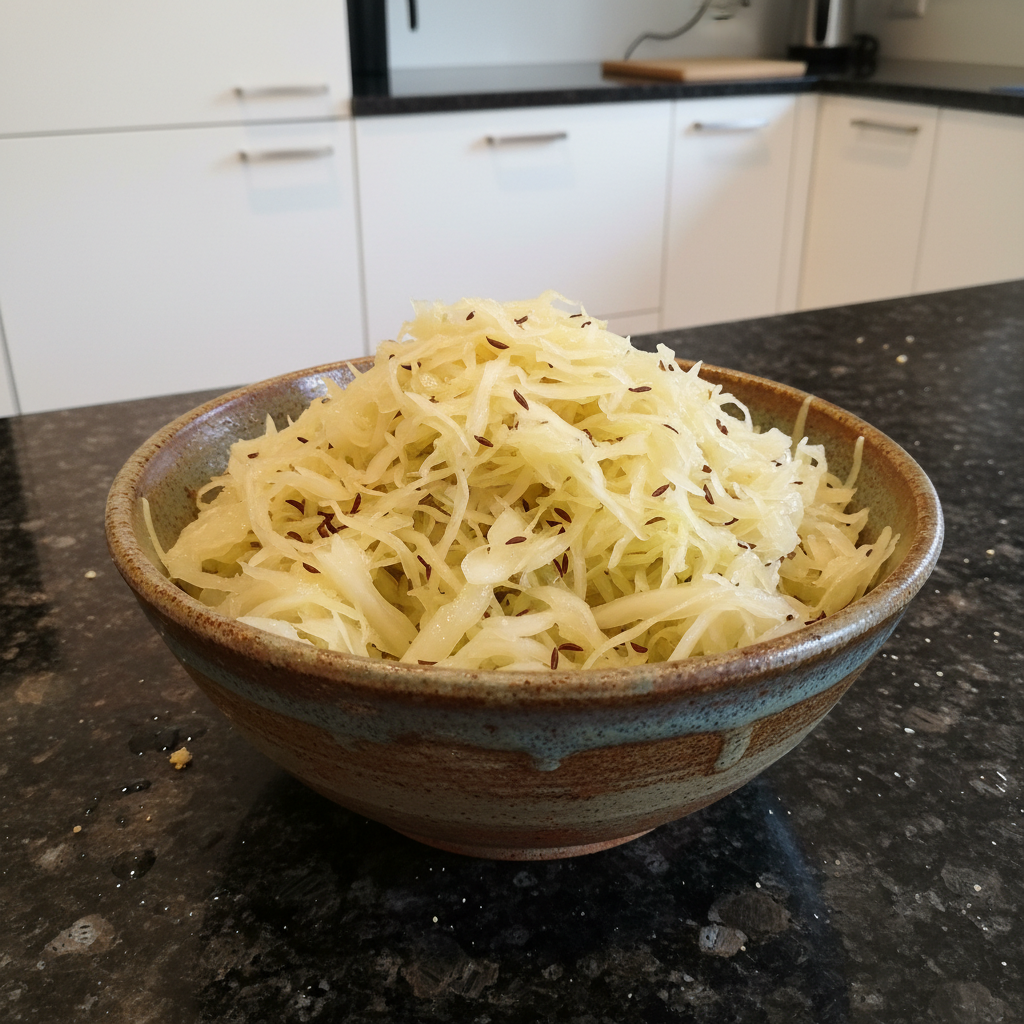
Ingredients
Equipment
Method
Phase 1: Preparation – Shredding and Salting
- Prepare the Cabbage: Remove any damaged outer leaves from the cabbage. Wash the cabbage head thoroughly. Using a sharp knife or mandoline, finely shred the cabbage into strips no wider than 1/8 inch. The finer the shred, the easier it will be to massage and the quicker the brine will form.
- Combine with Salt and Spices: Transfer the shredded cabbage to a large, sturdy mixing bowl. Add the non-iodized sea salt, caraway seeds, and juniper berries.
- Massage the Cabbage: Begin to vigorously massage the cabbage with your clean hands. Squeeze, squish, and knead the cabbage firmly. Continue this for about 5-10 minutes, or until a significant amount of liquid (your brine) has accumulated at the bottom of the bowl. The cabbage should be visibly wilted and glistening with brine. This step is critical for drawing out moisture and starting the fermentation process.
Phase 2: Packing and Weighing
- Pack into Jars: Take handfuls of the massaged cabbage and firmly pack them into clean Mason jars or a ceramic crock. Use your fist or a blunt instrument to press down hard on each layer, forcing out air bubbles and bringing the brine to the surface. It's crucial that the cabbage is packed tightly.
- Ensure Submersion: Pour any remaining brine from the bowl over the packed cabbage in the jars. The goal is for the cabbage to be completely submerged under the brine. If there isn't enough liquid to cover the cabbage, you can mix a small amount of additional salt water (1 teaspoon non-iodized salt per cup of filtered water) and add it until the cabbage is fully submerged. This prevents mold growth, as sauerkraut needs an anaerobic (oxygen-free) environment.
- Weigh Down the Cabbage: Place a fermentation weight (or a smaller, clean Mason jar filled with water) directly on top of the cabbage to keep it pressed firmly below the brine. Leave at least 1-2 inches of headspace from the top of the jar to allow for expansion during fermentation.
- Cover the Jars: Cover the jars with an airlock lid or a standard lid loosely to allow gases to escape. If using a standard lid, you will need to "burp" the jars daily by briefly opening them.
Phase 3: Fermentation and Storage
- Ferment: Place the jars in a cool, dark spot at a consistent room temperature, ideally between 65-72°F (18-22°C). Cooler temperatures will slow fermentation, warmer temperatures will speed it up and can lead to undesirable flavors. You will begin to see bubbles forming within a few days – this is a good sign that the lactic acid bacteria are hard at work!
- Monitor and Taste: Ferment for 2-4 weeks, or even longer, depending on your preference for sourness and the ambient temperature. After about 1 week, you can start tasting a small piece of cabbage daily. When it reaches your desired level of tanginess and crunch, it's ready. The aroma should be pleasantly sour, not foul.
- Refrigerate: Once the sauerkraut has reached its peak flavor, remove the fermentation weight and secure the lid tightly. Transfer the jars to the refrigerator. The cold temperature will significantly slow down the fermentation process, preserving its flavor and texture for months.
Nutrition
Notes
This homemade sauerkraut recipe is surprisingly easy, transforming simple cabbage into a gut-healthy, flavorful condiment. Remember to use non-iodized salt and ensure the cabbage remains submerged during fermentation for optimal results. It pairs wonderfully with classic German fare, hot dogs, or as a tangy side dish. Nutrition information is estimated based on common ingredients and serving sizes and may vary.