


The comforting aroma of freshly baked banana bread is truly irresistible. There is something deeply satisfying about transforming overripe bananas into a tender, moist, and fluffy loaf. Today, I am thrilled to share my absolute best vegan banana bread recipe, a true plant-based baking masterpiece that is designed to deliver a perfectly tender crumb every single time. This isn’t just any vegan banana bread recipe; it is one perfected with a special twist that deepens its flavor beyond compare. You will learn all my pro tips, smart substitutions, and answers to common baking questions to ensure your success.
Why You’ll Love This Recipe
This vegan banana bread stands out for several compelling reasons. My secret to its unparalleled flavor is an Intensified Caramelized Banana Purée. Instead of simply mashing raw bananas, I gently sauté two of the mashed ripe bananas with a tablespoon of brown sugar and a pinch of salt until they become slightly caramelized and fragrant.
The scientific logic behind this twist is fascinating. Sautéing the bananas triggers Maillard browning and caramelization. This process profoundly deepens and enhances the inherent banana flavor, creating more complex, richer notes. The touch of salt perfectly balances the sweetness, making the overall flavor more pronounced and less one-dimensional than bread made with just plain mashed bananas, all without compromising a fluffy texture.
Here are the key benefits you will enjoy:
Unrivaled Flavor: Experience a deeper, richer, and more complex banana taste that truly sets this recipe apart from any other.
Perfect Texture, Every Time: You are guaranteed a consistently tender, moist, and fluffy result, even though this recipe is completely dairy-free and egg-free.
Easy & Accessible: This recipe is straightforward to follow, making it achievable for both plant-based baking beginners and seasoned bakers using common pantry ingredients.
A Healthier Indulgence: Positioned as a guilt-free treat, this plant-based delight is perfect for breakfast, snacks, or dessert.
Ingredients Needed
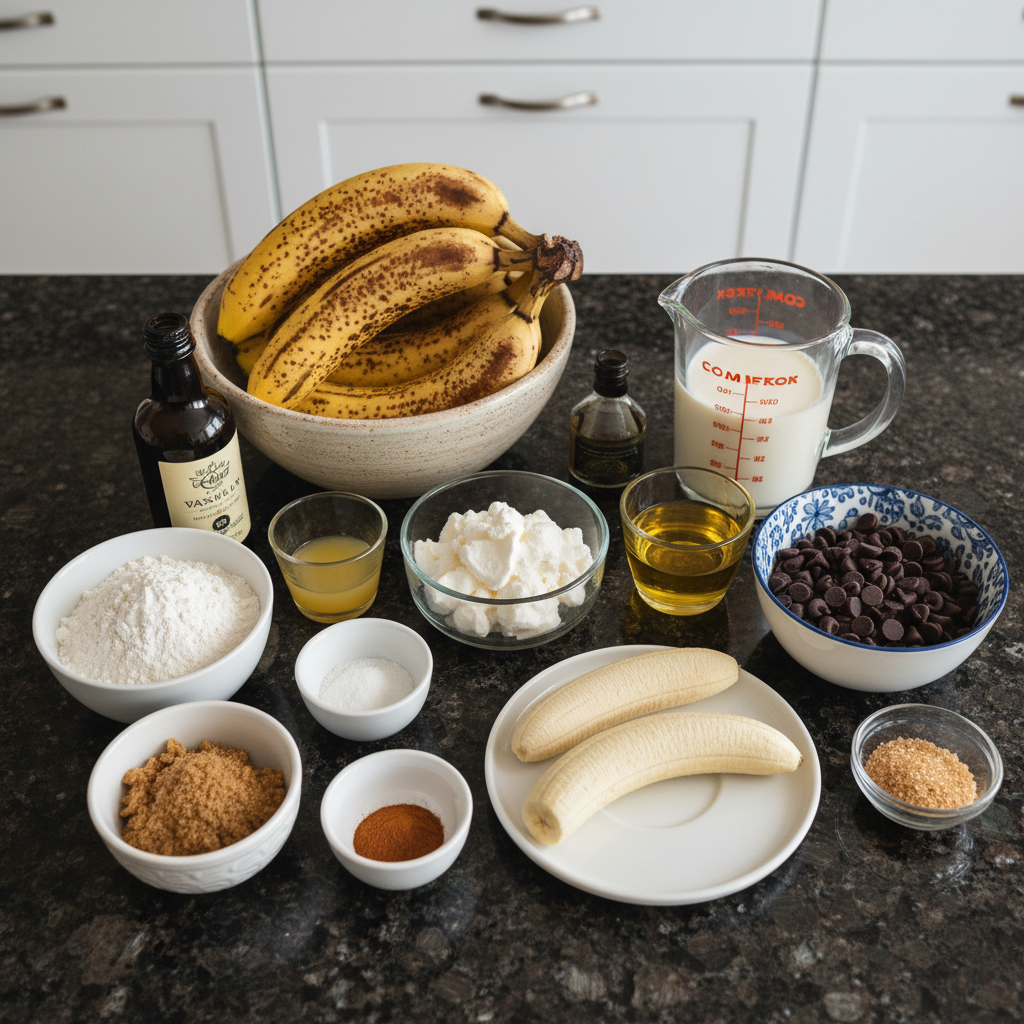
- 1/4 cup + 2 tablespoons (90 mL) oat milk
- 3 medium-sized very ripe bananas (with lots of brown spots)
- 1 tablespoon freshly squeezed lemon juice
- 6 tablespoons (90 mL) aquafaba (see Note 1)
- 1/3 cup (75g) sunflower oil (or any neutral-flavored oil) (see Note 2)
- 3/4 cup (130g) organic brown sugar (see Note 3)
- 1 teaspoon pure vanilla extract
- 2 cups (250g) all-purpose flour, (spooned and leveled (see Note 4))
- 1/4 teaspoon fine sea salt
- 1 teaspoon baking soda (not baking powder!)
- 1 teaspoon ground cinnamon
- 1/2 teaspoon freshly grated nutmeg (optional, see Note 5)
- 1 banana, (sliced lengthwise)
- 3/4 cup (125g) dark chocolate chips (my preference!)
- 3/4 cup (84g) toasted walnuts, (chopped)
- 1 heaping tablespoon demerara sugar (coarse sugar)
Ingredient Notes & Substitutions
For the ripe bananas, it is absolutely essential to use very ripe bananas, those with extensive brown spots, for optimal natural sweetness and a moist texture. As bananas ripen, their starches convert to sugars, intensifying their flavor and making them softer and easier to mash. If your bananas are not quite ripe enough, you can speed up the process by placing them in a paper bag for a day or two, or by baking them in their peels on a baking sheet at 300°F (150°C) for 15-30 minutes until they turn black and soft.
When choosing your neutral oil, sunflower oil is my go-to for its mild flavor. However, you can successfully substitute it with other neutral-flavored oils like grapeseed oil, avocado oil, or even a light olive oil. These alternatives will not impart a strong flavor, ensuring the banana remains the star of your vegan banana bread.
Crafting vegan buttermilk is incredibly simple and crucial for a tender crumb. You just need to combine the oat milk and lemon juice and let it sit for a few minutes. You will notice it slightly thickening or curdling. While oat milk works beautifully, soy milk or almond milk can also be used to create an effective vegan buttermilk, each offering a slightly different subtle nuance in the final flavor profile.
Aquafaba is truly the secret to lightness in this plant-based baking recipe. It is the liquid from a can of chickpeas, acting as an excellent egg substitute. Its unique ability to be whipped into a foam provides a fluffy texture and structure, mimicking eggs in a way that flax eggs cannot quite achieve for aeration. While a flax egg offers strong binding, aquafaba is superior for achieving that desired airy, light result.
Regarding flour facts, proper measurement of all-purpose flour is vital to prevent a dry or dense texture. Always spoon the flour into your measuring cup and level it off with a straight edge, or for the most accurate results, use a digital kitchen scale.
For sweetener choices, brown sugar is my primary sweetener, contributing to the moist texture and caramel notes. If you are looking for sugar reduction, you can slightly decrease the amount to your preference. Coconut sugar is also a suitable alternative, offering a slightly different caramel-like flavor.
Finally, for mix-ins and toppings, dark chocolate chips and toasted walnuts or pecans are wonderful additions. A sprinkle of demerara sugar on top creates a beautiful crackly, crunchy crust. For an elegant touch, a decorative sliced banana arranged lengthwise on top before baking also adds visual appeal.
How to Make The Best Vegan Banana Bread
Preparation Phase
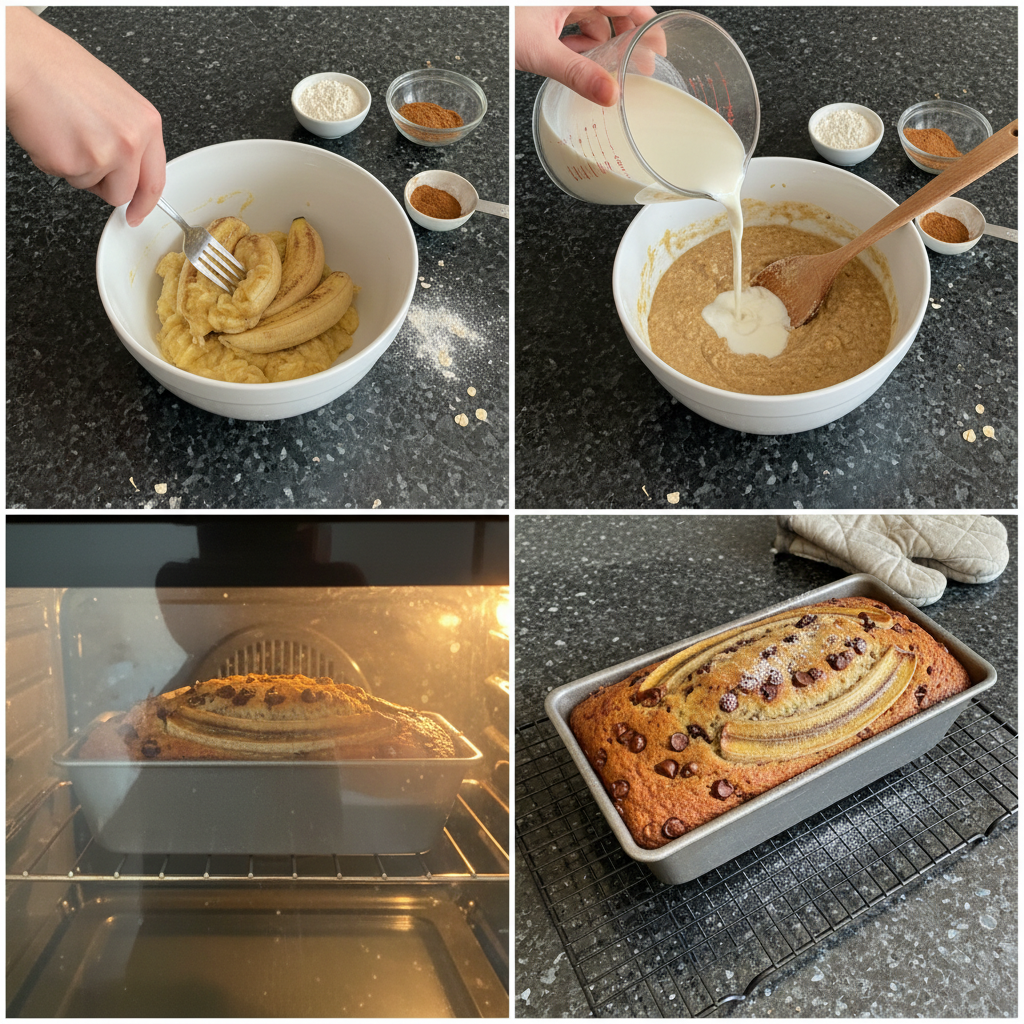
Preheat your oven to 350°F (176°C) and arrange a rack in the middle. Line a 9×5-inch (23×13 cm) loaf pan with parchment paper, allowing the excess to hang over the long sides to form a convenient sling for easy removal. This is a critical step for a clean lift out of the pan.
In a glass, combine the lemon juice and oat milk. Give it a quick stir and set it aside to allow it to activate; this mixture will become your vegan “buttermilk,” which contributes to the bread’s tender crumb.
Banana Caramelization & Aquafaba Whipping
Add all three very ripe bananas to a bowl and mash them thoroughly with a fork until they are smooth with no lumps remaining. This should yield approximately 300-315g, or about 1 ⅓ cups of mashed banana. Now, for the unique twist: take two-thirds of this mashed banana (about 1 cup) and transfer it to a small skillet. Add a tablespoon of brown sugar and a pinch of fine sea salt. Gently sauté this mixture over medium-low heat for about 5-7 minutes, stirring occasionally, until it becomes slightly caramelized and wonderfully fragrant. This step deepens the banana flavor significantly through Maillard browning. Combine this warm, caramelized banana purée with the remaining one-third of the mashed raw banana in a bowl.
Next, pour the aquafaba into a separate small-medium bowl. Using a handheld electric mixer, whip the aquafaba on medium speed for about 45 seconds. Continue until it is uniformly foamy throughout, even at the bottom of the bowl. You may need to tilt the bowl slightly to ensure it all gets whipped evenly. This whipped aquafaba provides essential lift and a fluffy texture to your vegan banana bread.
Combining Wet Ingredients
In a large mixing bowl, add the brown sugar and sunflower oil. Using the electric mixer, beat until they are thoroughly combined and smooth. Carefully fold in the whipped aquafaba, mixing until it is well incorporated into the sugar and oil. Now, pour in your activated vegan “buttermilk” and the pure vanilla extract; mix again until everything is evenly combined. Finally, add your prepared mashed and caramelized banana mixture and give it one last mix until it is fully integrated into the wet ingredients. The mixture should look rich and well emulsified.
Folding Dry Ingredients & Customizing
To the wet ingredients, add the all-purpose flour, fine sea salt, baking soda, ground cinnamon, and the optional freshly grated nutmeg. Switch from the electric mixer to a silicone spatula or a wooden spoon. Gently fold the dry ingredients into the wet until the batter is just barely combined. It is perfectly fine if you still see a few light traces of flour; the key is to avoid overmixing the batter, which can develop gluten and lead to a dry, chewy, or dense texture. If you are using dark chocolate chips or toasted walnuts, gently fold them in now until evenly distributed.
Finishing Touches & Baking
Pour the batter into your prepared loaf pan and use a spatula or spoon to smooth out the top. If you are using the decorative banana topping, take your additional banana, slice it in half lengthwise while keeping the peel on, then peel it. Sprinkle a bit of brown sugar on the cut sides, then gently arrange these sugared banana halves on top of the batter, sugared side up. If your batter has domed in the middle, use a spoon to gently redistribute some batter around the pan. For an extra special crackly crust, sprinkle a generous heaping tablespoon of demerara sugar evenly over the surface of the batter.
Bake in your preheated oven for 50 to 55 minutes. I recommend checking the bread at 45 minutes to avoid any risk of overbaking. It is important not to open the oven door before 45 minutes, as this allows heat to escape and can cause your bread to sink. The banana bread is done when a toothpick inserted into the center at a slight angle comes out with only a few moist crumbs; if there is any runny batter, it needs more time. If you notice your banana bread is browning too quickly on top but the center is not yet done, loosely tent the bread with foil, then bake for an additional 5 to 10 minutes.
Cooling Process
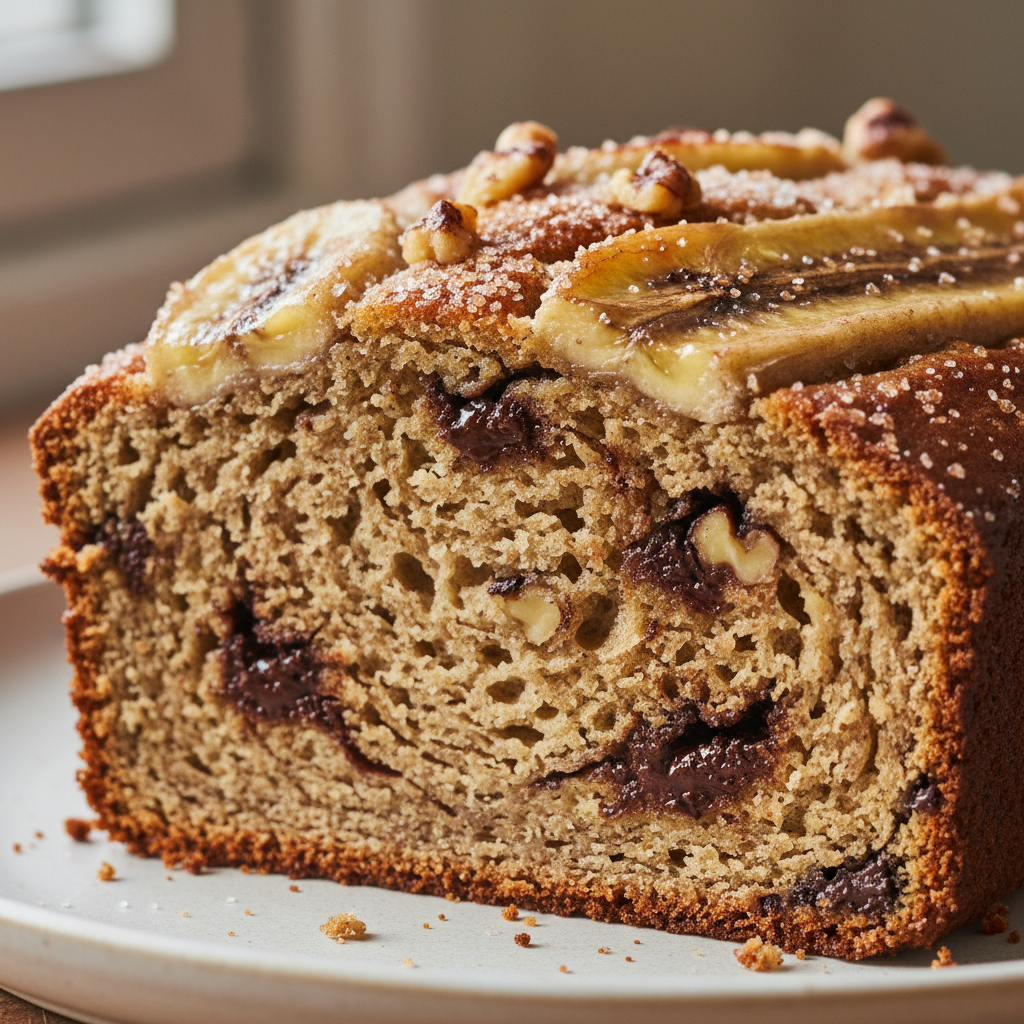
Once baked, transfer the loaf pan to a wire rack and allow it to cool in the pan for 10 minutes. This pan rest is crucial for the bread to set properly. After 10 minutes, use the parchment paper handles to gently lift the bread out of the pan and transfer it directly to a wire rack to cool for at least 20 to 30 minutes before you even think about slicing. The bread is still setting up during this time, and slicing it too early can result in a gooey, unset texture that might crumble. Patience truly is a virtue here!
Elevate Your Bake: Customizations & Advanced Tips
Spice It Up: Beyond Cinnamon & Nutmeg
While ground cinnamon and nutmeg provide classic warmth, do not hesitate to explore other warming spices to customize your vegan banana bread. Consider adding a pinch of allspice for a complex, sweet, and pungent note, or a touch of cardamom for a distinct aromatic, floral, and citrusy flavor. Ground ginger can introduce a lovely spicy kick, or for ease, a pre-made pumpkin pie spice blend works wonderfully, typically containing cinnamon, ginger, nutmeg, allspice, and cloves. Start with half a teaspoon and adjust to your preference.
Plant Milk Power: Alternative Milks for Vegan Buttermilk
My recipe uses oat milk for its neutral flavor and creamy texture, which creates an excellent vegan buttermilk when combined with lemon juice. However, soy milk and almond milk are also fantastic alternatives. Soy milk will yield a very similar result in terms of curdling and texture, perhaps adding a slightly richer undertone. Almond milk is a lighter option and will also curdle effectively, creating a thinner but still functional vegan buttermilk. Regardless of your choice, the acidity from the lemon juice is key to activating these plant milks and contributing to the bread’s tender crumb.
High-Altitude Baking Adjustments for Success
Baking at high altitudes can be tricky, but with a few adjustments, your vegan banana bread will turn out perfectly. Higher altitudes mean lower atmospheric pressure, causing leavening agents to work more efficiently and liquids to evaporate faster. You might need to slightly increase the oven temperature by 15-25°F (about 8-14°C) to help the bread set faster. Reduce the baking soda by about 10-15%, as less leavening is needed. Increasing the all-purpose flour by 1-2 tablespoons and potentially adding a touch more liquid (1-2 tablespoons of oat milk) can also help to counteract dryness and maintain a moist texture. Keep a close eye on your baking time, as it might be reduced.
Aquafaba vs. Flax Egg: A Deeper Dive for Vegan Baking
In vegan baking, both aquafaba and flax egg serve as egg substitutes, but they excel in different areas. Aquafaba, the star in this recipe, is fantastic for providing a light and fluffy texture and volume. When whipped, it creates stable air pockets, much like egg whites, making it ideal for airy cakes and meringues. This property is why it helps achieve the soft, tender crumb in my vegan banana bread. In contrast, a flax egg, made by combining ground flaxseed with water, is primarily a binding agent. It creates a gel-like consistency that is excellent for holding ingredients together but tends to result in a slightly denser or gummier crumb compared to aquafaba’s ethereal lightness. For superior fluffiness and lift, aquafaba is the clear choice, whereas a flax egg is a great all-purpose binder for many other plant-based baking applications where density is less of a concern.
Pro Tips & Troubleshooting
Pro Tips for Perfect Vegan Banana Bread
Do Not Overmix: This is crucial. Gently fold ingredients with a silicone spatula until just combined. Overmixing the batter develops gluten, which can lead to a dry, chewy, or dense texture rather than a tender crumb.
Accurate Flour Measurement: Always measure your all-purpose flour properly by spooning it into the cup and leveling it off with a knife. For the most accurate and consistent results, I highly recommend using a digital kitchen scale.
The Critical Cooling Process: Allow your vegan banana bread to cool completely on a wire rack for at least 20-30 minutes before slicing. This allows the internal structure to set fully, preventing a gooey texture.
Precise Doneness Test: Insert a toothpick into the center of the loaf at a slight angle. This provides a more accurate doneness test in taller cakes. The toothpick should come out with a few moist crumbs, not wet batter.
Preventing Over-Browning: If the top of your banana bread is browning too quickly but the interior is not fully baked, loosely tent the bread with foil for the remaining baking time.
Oven Calibration: Oven temperatures can vary significantly. Using an oven thermometer to ensure your baking temperature is accurate is a simple step that can profoundly impact your baking time and results.
Common Mistakes to Avoid
Overmixing the Batter: This is perhaps the most common error. Excessive mixing develops gluten, resulting in a tough, dense texture instead of the desired tender crumb.
Slicing Too Early: Cutting into the vegan banana bread too soon after baking often leads to a gooey, unset texture and crumbling, as the internal structure has not had time to solidify.
Opening Oven Door Prematurely: Resist the urge to open the oven door before at least 45 minutes of baking time have passed. This allows precious heat to escape, which can cause the bread to sink.
Improper Flour Measurement: Scooping flour directly from the bag is a common error as it compacts the flour, leading to too much flour in your recipe and consequently, a dry texture. Always spoon and level.
Sinking Middle or Gummy Texture: Beyond overmixing, a sinking middle or gummy texture can be caused by too much liquid, an incorrect amount of leavening (such as baking soda), or an uneven oven temperature. An oven thermometer can help identify temperature issues, and ensuring accurate ingredient measurements is key.
Pale Top or Undercooked Sides: To ensure even baking, consider rotating your loaf pan halfway through the baking time. If your bread is otherwise done but has a pale top, you can briefly broil it (with extreme caution and constant supervision) for a minute or two to achieve a golden-brown finish.
Serving & Storage
Irresistible Serving Ideas
My favorite way to enjoy this vegan banana bread is warmed up, allowing the subtle caramelized banana flavor to truly shine. Slather a slice in your favorite vegan butter or a generous dollop of vegan cream cheese for a rich treat. It pairs wonderfully with a freshly brewed coffee or tea, or a tall, cold glass of oat milk. For a lighter touch, serve it alongside fresh fruit like berries or extra sliced bananas. You can also garnish with a light dusting of powdered sugar, a drizzle of maple syrup, or a sprinkle of additional dark chocolate chips for an extra indulgent experience.
Optimal Storage for Peak Freshness
To maintain its moist texture and prevent drying out, store your vegan banana bread at room temperature in an air-tight container or wrapped tightly in foil or plastic wrap. It will stay fresh and delicious for 2-3 days. For longer freshness, you can refrigerate it in an air-tight container for up to 5-7 days. While refrigeration extends its shelf life, it might slightly alter the texture; however, reheating can often restore its tender crumb. Always ensure the bread is well-sealed to protect against humidity loss or gain.
Freezing & Reheating Guide
This vegan banana bread freezes beautifully. For freezing instructions, you can freeze it as a whole loaf or individual slices. Wrap the bread tightly in plastic wrap, then add an additional layer of foil to prevent freezer burn. Place it in a freezer-safe bag or container, and it will keep well for up to 2-3 months.
To defrost, simply let it thaw at room temperature for a few hours (for slices) or overnight in the refrigerator (for a whole loaf).
For reheating instructions, you have several options to restore warmth and that tender crumb. For individual slices, a microwave is quick and easy (about 15-30 seconds). To reheat a whole loaf or multiple slices in the oven, wrap it loosely in foil to prevent drying, and warm at 300°F (150°C) for 10-15 minutes, or until heated through. Individual slices can also be toasted for a minute or two to crisp up the edges.
Conclusion
There you have it: the recipe for the best vegan banana bread you will ever bake, consistently delivering a tender, moist, and fluffy result with incredible ease. The secret lies in my Intensified Caramelized Banana Purée, a unique twist that sets this recipe apart, infusing every bite with unparalleled banana flavor. Even if you are new to plant-based baking, I am confident that with this comprehensive guide, you can achieve delicious, bakery-worthy results right in your own kitchen. I encourage you to try this recipe, experiment with your favorite mix-ins like chocolate chips or walnuts, add a demerara sugar topping, or explore the various spice variations to truly make it your own. Don’t forget to print this recipe card for your kitchen and share your delicious creation with us!
FAQ
Q: What’s the best way to quickly ripen bananas for banana bread?
A: If your bananas are not quite ripe enough, you can accelerate the process by placing them in a paper bag for a day or two. For a quicker method, bake them in their peels on a baking sheet at 300°F (150°C) for 15-30 minutes until they turn black and soft.
Q: Can I make this vegan banana bread gluten-free or healthier with alternative ingredients?
A: Yes, you can adapt this recipe to be gluten-free by using a good quality 1:1 gluten-free all-purpose flour blend. For healthier substitutions, you can experiment with slightly reducing the brown sugar (though the recipe is balanced) or using coconut sugar. While oil is crucial for moistness, opting for healthy neutral oils like avocado or grapeseed is a good choice.
Q: What are the most common mistakes to avoid for perfect vegan banana bread every time?
A: The most common mistakes include overmixing the batter (which leads to a tough texture), slicing the bread too early before it has fully set (resulting in a gooey center), and opening the oven door prematurely, which can cause the bread to sink. Improper flour measurement (scooping instead of spooning and leveling) also frequently leads to a dry texture.
Q: How do I ensure my banana bread bakes evenly and avoids a raw, gummy center?
A: To ensure even baking and prevent a raw, gummy center, ensure your oven temperature is accurate by using an oven thermometer. Also, avoid overmixing the batter. Always perform the toothpick test by inserting a toothpick at a slight angle into the center; it should come out with only a few moist crumbs, not wet batter. If the top is browning too fast, loosely tent with foil.
Q: Can I bake this recipe in a different pan size, like for muffins, and what adjustments are needed?
A: Yes, this recipe can be easily adapted for banana bread muffins or baked in an 8×8 inch square baking pan. For muffins, fill lined muffin tins about two-thirds full and reduce the baking time to approximately 20-25 minutes. For an 8×8 inch square baking pan, the baking time will likely be similar to the loaf pan, around 45-55 minutes, but keep an eye on it and perform the toothpick test for doneness.
Q: I don’t have a loaf pan. What can I use instead?
A: If you do not have a standard 9×5-inch loaf pan, you can use an 8×8 inch square baking pan. The baking time might be similar, but always check for doneness with a toothpick. Alternatively, you can use a few smaller loaf pans for mini loaves, which will require a significantly reduced baking time (around 25-35 minutes). You can also make muffins as described above.
Q: What other mix-ins or spice variations can I add to this banana bread?
A: Beyond dark chocolate chips and walnuts, feel free to get creative! Other popular mix-ins include pecans, shredded coconut, dried cranberries, or a swirl of vegan cream cheese. For spice variations, consider adding a pinch of allspice, ground ginger, or cardamom for different aromatic profiles. A pre-made pumpkin pie spice blend also works beautifully.
Best Vegan Banana Bread Recipe: Caramelized Banana Twist!
Ingredients
Equipment
Method
- Preheat your oven to 350°F (176°C) and arrange a rack in the middle. Line a 9×5-inch (23×13 cm) loaf pan with parchment paper, allowing the excess to hang over the long sides to form a convenient sling for easy removal.
- In a glass, combine the lemon juice and oat milk. Give it a quick stir and set it aside to allow it to activate; this mixture will become your vegan “buttermilk.”
- Add all three very ripe bananas to a bowl and mash them thoroughly with a fork until they are smooth with no lumps remaining (approximately 300-315g, or about 1 ⅓ cups).
- Take two-thirds of this mashed banana (about 1 cup) and transfer it to a small skillet. Add a tablespoon of brown sugar and a pinch of fine sea salt. Gently sauté over medium-low heat for about 5-7 minutes, stirring occasionally, until slightly caramelized and fragrant.
- Combine this warm, caramelized banana purée with the remaining one-third of the mashed raw banana in a bowl.
- Pour the aquafaba into a separate small-medium bowl. Using a handheld electric mixer, whip the aquafaba on medium speed for about 45 seconds until uniformly foamy throughout.
- In a large mixing bowl, add the brown sugar and sunflower oil. Using the electric mixer, beat until thoroughly combined and smooth.
- Carefully fold in the whipped aquafaba, mixing until well incorporated into the sugar and oil.
- Pour in your activated vegan “buttermilk” and the pure vanilla extract; mix again until everything is evenly combined.
- Finally, add your prepared mashed and caramelized banana mixture and give it one last mix until fully integrated into the wet ingredients.
- To the wet ingredients, add the all-purpose flour, fine sea salt, baking soda, ground cinnamon, and the optional freshly grated nutmeg.
- Switch to a silicone spatula or a wooden spoon. Gently fold the dry ingredients into the wet until the batter is just barely combined. Avoid overmixing.
- If using dark chocolate chips or toasted walnuts, gently fold them in now until evenly distributed.
- Pour the batter into your prepared loaf pan and smooth out the top with a spatula or spoon.
- If using the decorative banana topping, slice an additional banana in half lengthwise (keeping the peel on), then peel it. Sprinkle brown sugar on the cut sides and gently arrange these sugared banana halves on top of the batter, sugared side up.
- Sprinkle a generous heaping tablespoon of demerara sugar evenly over the surface of the batter.
- Bake in your preheated oven for 50 to 55 minutes at 350°F (176°C). Do not open the oven door before 45 minutes.
- The bread is done when a toothpick inserted into the center at a slight angle comes out with only a few moist crumbs. If browning too quickly, loosely tent with foil.
- Once baked, transfer the loaf pan to a wire rack and allow it to cool in the pan for 10 minutes.
- After 10 minutes, use the parchment paper handles to gently lift the bread out of the pan and transfer it directly to a wire rack to cool for at least 20 to 30 minutes before slicing.
