


There is something inherently comforting about a warm slice of banana bread. It is the perfect antidote to a chilly morning or a delightful treat for an afternoon pick-me-up. But what if I told you that your go-to comfort could be elevated to an entirely new level? This sourdough banana bread recipe transforms the classic into a truly exquisite experience, thanks to a few simple yet impactful additions. You will find a comprehensive guide here, from precise measurements to expert tips, ensuring your success in creating a moist, flavorful loaf that will impress everyone.
Why You’ll Love This Recipe
This sourdough banana bread stands out from the crowd. My unique twist incorporates browned butter, infused with a hint of toasted cardamom and a touch of flaky sea salt, directly into the batter. This is not just a flavor addition; it is a culinary transformation.
The browned butter undergoes the Maillard reaction, which creates nutty, complex notes from the brown butter solids and a richer fat from the butterfat. This significantly enhances the caramel flavor already present from the brown sugar. Cardamom provides a warm, aromatic complement to the natural sweetness of banana and caramel, adding depth without overpowering. A touch of flaky sea salt then amplifies the overall sweetness and expertly balances the richness of the butter, resulting in a more sophisticated and deeply flavorful bread with an improved aroma.
The result is a soft, moist, and incredibly rich loaf with a velvety, fluffy texture. You will experience a deep caramel-banana flavor with a lightly crunchy exterior that yields to a tender crumb. It is also a perfect way to use up those overripe bananas sitting on your counter. This recipe is surprisingly easy to make for such gourmet results and promises to be a comforting treat for family and friends. It is also suitable for a vegetarian diet.
Ingredients Needed
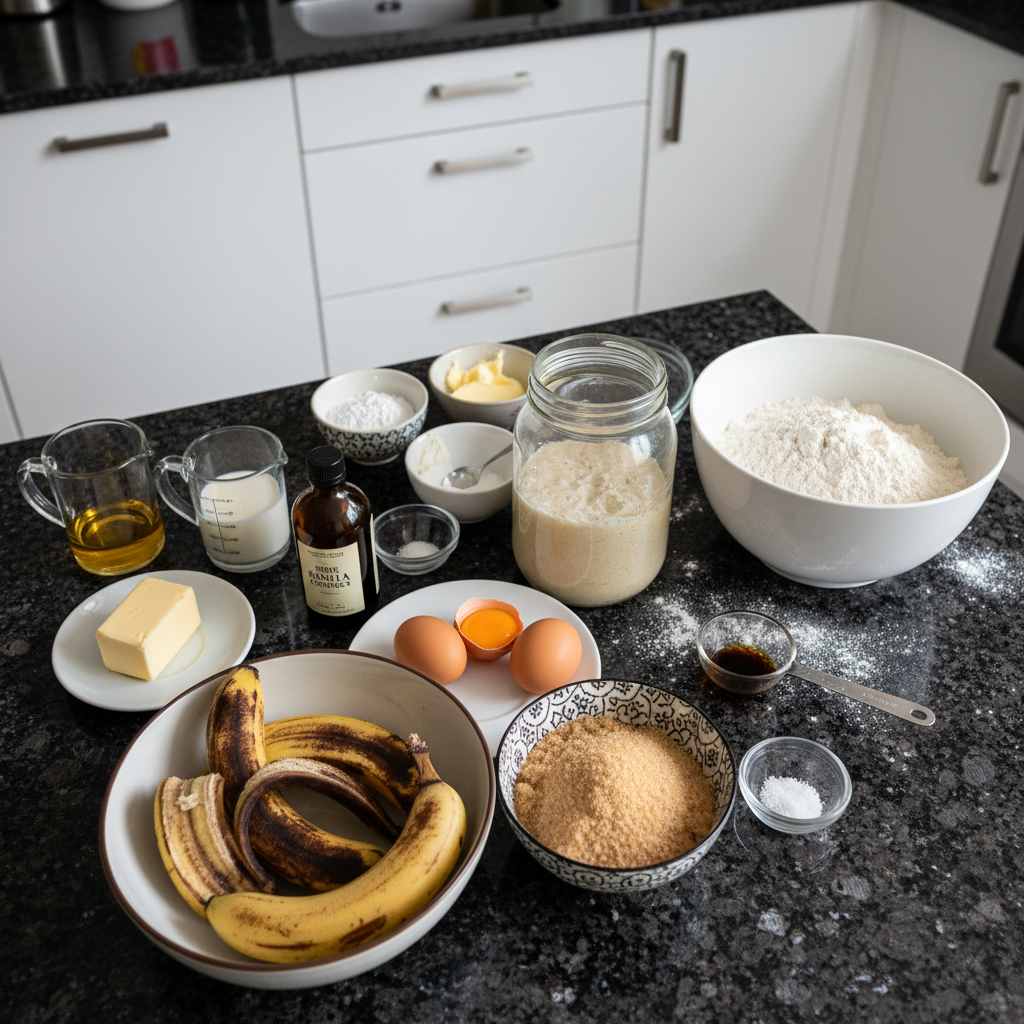
Here are the ingredients you will need for this exceptional sourdough banana bread:
- Butter, for coating the pan
- 375 g overripe bananas (appx. 1 1/2 cups lightly smashed)
- 225 g (1 1/4 cups lightly packed) light or dark brown sugar
- 1½ tsp pure vanilla extract
- 2 large eggs
- 100 g (appx. 1/2 cup) active sourdough starter or sourdough discard
- 250g (2 cups) all-purpose flour
- 1½ tsp baking soda
- 1/4 tsp fine sea salt
- 60ml (1/4 cup) milk
- 125ml (½ cup) neutral flavored oil
- Powdered sugar, butter, and mascarpone cheese for serving, optional
Ingredient Notes & Substitutions
Overripe Bananas: Using very overripe bananas is crucial for optimal sweetness and intense banana flavor. Their natural sugars have fully developed. If using frozen bananas, ensure they are fully thawed and any excess liquid is drained to prevent a runny batter and gummy texture.
Brown Sugar: This recipe calls for all brown sugar because it contributes significantly to the bread’s moistness and provides that exquisite caramel flavor. It works beautifully with the bananas and vanilla.
Sourdough Starter/Discard: Both an active sourdough starter and sourdough discard can be used successfully in this recipe. While both contribute to the bread’s flavor and moisture, this recipe primarily relies on baking soda for its rise. An active starter might impart a slightly more pronounced sourdough tang, while discard offers a milder flavor. Both will contribute to a wonderfully tender crumb.
The Unique Oil (Browned Butter): While the original ingredient list calls for neutral flavored oil, our unique twist replaces this with browned butter infused with cardamom and flaky sea salt. Use unsalted butter for browning, then add the flaky sea salt. Alternatively, you can use salted butter for browning if you prefer a saltier finish. For the cardamom, you can gently toast a few pods and crush them, or use a good quality ground cardamom. The Maillard reaction during browning creates those deep, nutty notes we are after.
Milk: Feel free to use any milk you have on hand. Almond milk is a great dairy-free alternative, and buttermilk can also be used for a slight tangy note and extra tenderness.
Eggs: If you need an egg substitute, flax eggs (1 tablespoon ground flaxseed mixed with 3 tablespoons water per egg) or aqua faba (3 tablespoons per egg) can work. Be aware that these might slightly alter the final texture.
Flour: All-purpose flour is standard for this recipe, providing a tender crumb. Some bakers enjoy experimenting with spelt flour for a slightly nuttier flavor and different texture.
How to Make Ultimate Sourdough Banana Bread
This recipe is designed for maximum flavor and an incredibly moist, velvety crumb. Follow these steps carefully for the best results.
Preheat the Oven and Prepare Your Pans
Begin by preheating your oven to 360 degrees F. This slightly higher temperature than standard helps achieve a better lift for the loaf. Lightly coat three 7x3x2 mini loaf pans or one standard 9×5-inch loaf pan with butter. For easy removal, you can also line the bottom with a strip of parchment paper, leaving an overhang on the sides.
Prepare Your Unique Browned Butter Infusion
This is where the magic happens. In a small, light-colored saucepan, melt 125ml (½ cup) of salted or unsalted butter over medium heat. Watch it closely as it melts, foams, and begins to brown. Swirl the pan occasionally. You will see small brown bits forming at the bottom, and it will develop a nutty aroma. Once it reaches a rich amber color, immediately remove it from the heat. Stir in about a quarter teaspoon of ground cardamom or 2-3 gently toasted and crushed cardamom pods. Add a generous pinch of flaky sea salt and stir until dissolved. Allow this fragrant browned butter to cool slightly before incorporating it into your batter. This replaces the neutral flavored oil conceptually in the recipe flow.
Cream the Wet Ingredients
In a large bowl, add your 375 grams of overripe bananas, 225 grams of light or dark brown sugar, and 1½ teaspoons of pure vanilla extract. Using a hand held mixer or a stand mixer fitted with the paddle attachment, cream these ingredients together for about 30 seconds to 1 minute. It is perfectly fine if some small lumps of banana remain. Next, add the 2 large eggs, one at a time, mixing until each is fully incorporated before adding the next. Finally, stir in the 100 grams of active sourdough starter or sourdough discard.
Incorporate the Dry Ingredients
In a separate bowl, sift together the 250 grams of all-purpose flour, 1½ teaspoons of baking soda, and ¼ teaspoon of fine sea salt. Sifting helps to aerate the flour and prevent lumps. Working in two or three batches, add this dry mixture to your banana mixture. Mix on low speed or by hand, just until the flour streaks disappear. It is critical not to overmix at this stage, as overmixing develops gluten and can lead to a tough banana bread.
Add the Liquids and the Twist
Now, add the 60ml (¼ cup) of milk and your prepared browned butter infused with cardamom and sea salt. Mix again, just until everything is combined. The batter should be thick, moist, and wonderfully aromatic. Again, resist the urge to overmix; this is a key step to ensuring a tender and velvety crumb.
Fill Pans and Bake
Pour the glorious batter evenly into your prepared loaf pan(s). If you are using mini loaf pans, place them onto a baking sheet before transferring them to the oven. This makes them easier to handle. Bake for 45 minutes if using the mini loaf pans, or 60-65 minutes for a standard 9×5-inch pan. The bread should turn a rich golden brown. If you notice the top browning too quickly before the inside is cooked, loosely cover the loaf with aluminum foil.
Check for Doneness
To confirm your sourdough banana bread is perfectly baked, insert a wooden toothpick into the center of the loaf. It should come out clean, with no wet batter attached. For a more precise measure, the internal temperature of the bread should register between 200-209 degrees F (93-98 degrees C).
Cool Completely
Once baked, let the banana bread cool in the pan for 20 minutes. This allows the loaf to firm up and prevents it from sticking. Then, carefully transfer it to a wire rack to cool completely. For the absolute best flavor, many bakers agree that the taste truly develops and blossoms after 24 hours of cooling.
Mastering Bananas, Doneness, and Sourdough Starter Choices
Achieving the perfect sourdough banana bread involves understanding a few key elements beyond just following the recipe. Here are some insights to help you bake like a pro.
Using Frozen Bananas Like a Pro
Frozen bananas are a fantastic way to ensure you always have overripe bananas on hand for baking. To use them in this recipe, first, you must thaw them completely. You can do this by placing them in a bowl in the refrigerator overnight, or for a quicker method, gently warming them in the microwave in short bursts until soft.
The most crucial step when using frozen bananas is to drain off any excess liquid after thawing. Frozen bananas release a significant amount of water, and if this liquid is added to your batter, it will make it too runny. This can lead to a gummy texture in your finished bread or even a sinking middle. Place the thawed bananas in a colander set over a bowl for a few minutes to allow the extra water to drip away before mashing and adding them to the recipe.
The Science Behind a Velvety Crumb: Why Mixing Order Matters
The specific mixing order in this sourdough banana bread recipe is not arbitrary; it is rooted in food science designed to achieve that coveted velvety texture. When you first cream the wet ingredients like bananas, sugar, and vanilla, you are essentially creating an emulsion. This process incorporates air and begins to distribute the fat from the bananas and later the browned butter evenly throughout the mixture. Emulsification helps to prevent the fat from separating and ensures a consistent, moist crumb.
When the dry ingredients, primarily all-purpose flour, are added, it is vital to mix minimally. Flour contains proteins that, when combined with liquid and agitated, form gluten. Excessive gluten development results in a tough, chewy bread, which is the opposite of the tender crumb we want in banana bread. By mixing just until combined, you minimize gluten formation while still ensuring all ingredients are incorporated. This careful fat distribution and gentle mixing prevent toughness, allowing the bread to remain moist and tender.
Active Starter vs. Sourdough Discard: What’s the Difference Here?
In this sourdough banana bread recipe, both an active sourdough starter and sourdough discard can be used successfully. While sourdough is known for its leavening power in bread, this specific recipe relies on baking soda for the primary rise. The sourdough component here is mainly for flavor contribution and moisture enhancement.
An active starter, typically fed and bubbly, might offer a slightly more pronounced tangy flavor profile to the banana bread, adding another layer of complexity. Sourdough discard, which is unfed and less active, will still contribute a wonderful depth of flavor and moisture but with a milder tang. Both versions will result in a beautifully moist and flavorful loaf with an excellent crumb texture. The key benefit of using either is the unique, subtle tang that complements the sweet banana and caramel notes beautifully. If you’re looking for guidance on creating your own sourdough bread starter, we have a helpful guide.
Pro Tips & Troubleshooting
Even experienced bakers can benefit from a few extra insights. Here are my best tips for mastering this sourdough banana bread and avoiding common pitfalls.
Pro Tips for the Ultimate Sourdough Banana Bread
Baking Temperature: I recommend baking this at 360 degrees F. This is about 10 degrees F higher than standard banana bread recipes, and it helps give the loaf a better lift and a beautiful golden crust.
Flavor Development: For the absolute best flavor, plan to enjoy your banana bread the day after it is baked. The flavors truly develop and blossom after 24 hours of cooling, making it an excellent make-ahead recipe for entertaining or a weekend treat.
Sugar Choice: Using all brown sugar, combined with very overripe bananas and pure vanilla extract, is the secret to an exquisite caramel taste that permeates every bite.
Preventing Over-Browning: If you notice your loaf is browning too quickly on top before it is cooked through, simply loosely cover it with aluminum foil. This will protect the crust while allowing the interior to continue baking.
Intensify Banana Flavor: For an even deeper banana flavor, consider roasting or sautéing your overripe bananas lightly before mashing and adding them to the batter. This concentrates their natural sugars and intensifies their aroma.
Perfecting the Twist: When browning the butter, watch it very closely. It goes from perfectly nutty to burnt very quickly. The key is to achieve a rich amber color and a toasted aroma. Immediately remove it from the heat once you reach this stage to stop the cooking process.
Common Mistakes to Avoid (and How to Fix Them)
Overmixing: Overmixing the batter, especially after adding the flour and liquids, is one of the most common mistakes in banana bread. It develops gluten excessively, resulting in a tough, chewy, and dense loaf. To fix this, always mix just until the ingredients are combined and no dry streaks of flour remain. A few small lumps are perfectly fine.
Undercooking the Center: An undercooked center is a frustrating issue. Reiterate checking for doneness with a toothpick that comes out clean. Even better, use a digital thermometer to check the internal temperature, aiming for 200-209 degrees F (93-98 degrees C). If the top is browning too much, cover it with foil and continue baking. You might need to slightly adjust your baking temperature or extend the baking time.
Frozen Bananas Without Proper Thawing and Draining: Using frozen bananas directly or without draining the excess liquid is a common culprit for a runny batter. This can lead to a gummy texture in your bread or even a sinking middle. Always thaw thoroughly and drain well.
Lack of Ripeness: Using bananas that are not sufficiently ripe will result in a banana bread that lacks the deep banana flavor and sweetness you expect. Wait for those bananas to develop plenty of brown spots.
Sinking Loaf: Beyond undercooking, a sinking middle can be caused by too much leavening, opening the oven door too early during baking, or an oven temperature that is too low. Ensure your baking soda is fresh and your oven temperature is accurate. Avoid opening the oven door in the first 25-30 minutes of baking.
Serving & Storage
Once your sourdough banana bread has cooled, the real enjoyment begins. This American cuisine classic is incredibly versatile.
Delicious Serving Ideas
For a simple yet elegant touch, dust your slices with a sprinkle of powdered sugar.
Elevate the experience further by serving it with a dollop of creamy mascarpone cheese or a generous smear of good quality salted butter.
This sourdough banana bread makes a perfect comfort food for breakfast, brunch, dessert, or simply an afternoon snack with your coffee or tea.
Feel free to customize your loaf by adding mix-ins to the batter. Popular choices include chopped walnuts, pecans, chocolate chips, dried cranberries, or fresh blueberries. Add them during the final mixing stage.
Storage and Make-Ahead Tips
Room Temperature: Store your baked sourdough banana bread in an airtight container at room temperature for 3-4 days. This helps to maintain its wonderful moisture.
Refrigeration: For extended freshness, especially in warmer climates, you can refrigerate the banana bread for up to a week. Again, store it in an airtight container to prevent it from drying out.
Freezing: Sourdough banana bread freezes exceptionally well. Wrap an entire cooled loaf or individual slices tightly in plastic wrap, then an additional layer of aluminum foil. This prevents freezer burn. It can be stored in the freezer for up to 3 months, making it a convenient treat to have on hand.
Reheating Recommendations: To reheat frozen slices, you can microwave them for 30-60 seconds or warm them in a toaster oven until heated through and slightly crispy on the outside. A whole frozen loaf should be thawed in the refrigerator overnight, then gently warmed in a 300 degree F oven for about 15-20 minutes. Refrigerated slices can be warmed in the microwave or toaster oven.
Make-Ahead: Remember that the flavor of this banana bread deepens and becomes even more exquisite overnight. This makes it an ideal make-ahead item for entertaining guests or simply for meal prep throughout the week. It is a fantastic same-day recipe that gets even better with time.
Conclusion
There you have it, my ultimate recipe for sourdough banana bread. With the unique twist of browned butter infused with cardamom and a whisper of flaky sea salt, this is far from your average loaf. It is a symphony of flavors and textures, promising a soft, moist, and deeply satisfying experience. I have provided clear, easy-to-follow instructions, along with expert tips and troubleshooting advice, so you can confidently bake a truly magnificent caramel-banana flavored bread. Do not hesitate to try this recipe. Experiment with your favorite variations, and savor every single bite of this extraordinary creation. I would love to hear about your experience in the comments below, or feel free to share your sourdough banana bread creations on social media. Happy baking, and enjoy exploring more sourdough starter and sourdough discard recipes!
FAQ
Does sourdough banana bread freeze well and how should it be stored?
Yes, sourdough banana bread freezes exceptionally well. To freeze, ensure the loaf or slices are completely cool. Wrap them tightly in plastic wrap, then in aluminum foil, and store in the freezer for up to 3 months. At room temperature, store in an airtight container for 3-4 days. In the refrigerator, it will keep for up to a week in an airtight container.
How can I prevent my banana bread from being too sweet or undercooked in the middle?
To prevent it from being too sweet, you can slightly reduce the brown sugar by 2-3 tablespoons, though the recipe is balanced. To avoid an undercooked middle, ensure your oven temperature is accurate and bake until a toothpick comes out clean. For ultimate precision, check the internal temperature, which should be between 200-209 degrees F (93-98 degrees C). If the top browns too quickly, cover it loosely with foil.
What are some recommended variations or additions for this sourdough banana bread recipe?
You can easily customize this recipe. Consider adding a cup of mix-ins like chocolate chips, chopped walnuts, pecans, dried cranberries, or even shredded coconut. For a different flavor, a pinch of cinnamon or nutmeg can also be lovely.
Can I use frozen bananas in this recipe, and are there any adjustments needed?
Absolutely! Frozen bananas work wonderfully. Thaw them completely, either overnight in the refrigerator or gently in the microwave. The crucial step is to drain off any excess liquid released during thawing to prevent a runny batter and a gummy final texture.
What are the best egg or milk substitutes for sourdough banana bread?
For eggs, you can use flax eggs (1 tablespoon ground flaxseed meal mixed with 3 tablespoons water per egg, let sit for 5 minutes) or aqua faba (3 tablespoons per egg). For milk, almond milk, oat milk, or even buttermilk (for an added tang and tenderness) are excellent alternatives.
Can the sourdough banana bread batter be proofed overnight?
While some sourdough recipes benefit from overnight fermentation, this specific sourdough banana bread recipe is designed for same-day baking. It relies primarily on baking soda for its leavening, so an overnight proof is not necessary and could alter the final texture due to extended moisture absorption.
What is the specific internal temperature for doneness?
For perfectly cooked sourdough banana bread, the internal temperature should register between 200-209 degrees F (93-98 degrees C) when measured with a digital thermometer inserted into the center of the loaf.
Can I adapt this sourdough banana bread recipe for muffins?
Yes, you can adapt this recipe for muffins. Simply adjust the baking time. Pour the batter into a greased or lined muffin tin and bake at 360 degrees F for approximately 20-25 minutes, or until a toothpick inserted into the center comes out clean.
Why is the middle of my banana bread sinking or not cooking through?
A sinking middle or undercooked center is a common issue. It can be caused by undercooking (check internal temperature), overmixing the batter (which creates too much gluten), using too much leavening, an inaccurate oven temperature, or opening the oven door too frequently during baking. Ensure you follow the mixing instructions, check for doneness precisely, and maintain a consistent oven temperature.
Does this recipe include nutritional information?
A detailed nutritional information breakdown for this recipe is not provided within this article. However, you can use various online recipe calculators or apps to estimate the nutritional content based on the ingredients and quantities used.

Ultimate Sourdough Banana Bread: Browned Butter & Cardamom Twist
Ingredients
Equipment
Method
- Preheat your oven to 360 degrees F (180 degrees C). Lightly coat three mini loaf pans or one standard 9x5-inch loaf pan with butter. Optionally, line the bottom with parchment paper, leaving an overhang for easy removal.
- In a small, light-colored saucepan, melt 125ml (½ cup) of salted or unsalted butter over medium heat. Watch closely as it melts, foams, and browns, swirling occasionally until small brown bits form and a nutty aroma develops. Once it reaches a rich amber color, immediately remove it from heat.
- Stir in about ¼ teaspoon of ground cardamom (or 2-3 gently toasted and crushed pods) and a generous pinch of flaky sea salt until dissolved. Allow the fragrant browned butter to cool slightly.
- In a large bowl, combine 375 grams of overripe bananas, 225 grams of light or dark brown sugar, and 1½ teaspoons of pure vanilla extract. Cream these together for 30-60 seconds using a hand or stand mixer until combined; small banana lumps are fine.
- Add the 2 large eggs, one at a time, mixing until each is fully incorporated. Finally, stir in 100 grams of active sourdough starter or sourdough discard.
- In a separate bowl, sift together 250 grams of all-purpose flour, 1½ teaspoons of baking soda, and ¼ teaspoon of fine sea salt.
- Add the dry mixture to the banana mixture in two or three batches. Mix on low speed or by hand, just until the flour streaks disappear. Do not overmix.
- Add the 60ml (¼ cup) of milk and the cooled browned butter infused with cardamom and sea salt to the batter. Mix just until everything is combined and the batter is thick, moist, and aromatic. Avoid overmixing.
- Pour the batter evenly into your prepared loaf pan(s). If using mini pans, place them on a baking sheet. Bake for 45 minutes for mini loaf pans, or 60-65 minutes for a standard 9x5-inch pan, until rich golden brown. If the top browns too quickly, loosely cover with aluminum foil.
- Insert a wooden toothpick into the center of the loaf; it should come out clean. For precision, the internal temperature should be 200-209 degrees F (93-98 degrees C).
- Let the banana bread cool in the pan for 20 minutes, then transfer it to a wire rack to cool completely. For optimal flavor, allow it to cool for 24 hours.
