


There is nothing quite like a warm bowl of macaroni and cheese to bring comfort to your soul. But what if you could elevate this ultimate comfort food to an Irish-inspired masterpiece, perfect for St. Patrick’s Day or any day you crave something truly special? My Guinness stout and Irish Cheddar Macaroni and Cheese recipe does just that, offering a unique blend of savory, sharp, and malty notes. I am excited to share a delicious, easy-to-follow recipe along with valuable insights to help you master a rich and incredibly creamy version of this beloved dish.
Why You’ll Love This Recipe
You are going to absolutely adore this Guinness and Irish Cheddar Macaroni and Cheese. It is far from your average mac and cheese.
Unique Twist: I start by blooming 1 teaspoon of smoked paprika in the butter before adding the flour for the roux. This simple step infuses a subtle smoky depth and warmth that enhances the richness of the cheddar and stout without overpowering them. Additionally, I add 1-2 teaspoons of Worcestershire sauce along with the Dijon mustard. This introduces a vital layer of umami, amplifying the savory notes and balancing any slight bitterness from the stout, resulting in a more complex and well-rounded flavor profile.
Irresistibly creamy texture: This recipe delivers an exceptionally smooth and luscious cheese sauce.
Rich and sharp flavor profile: The combination of Irish Cheddar and Guinness stout creates a robust and distinctive taste.
Stovetop convenience: Enjoy restaurant-quality mac and cheese without needing to turn on your oven.
Perfect for any occasion: While it is ideal for St. Patrick’s Day, this dish is comforting enough for any weeknight meal or special gathering.
Ingredients Needed
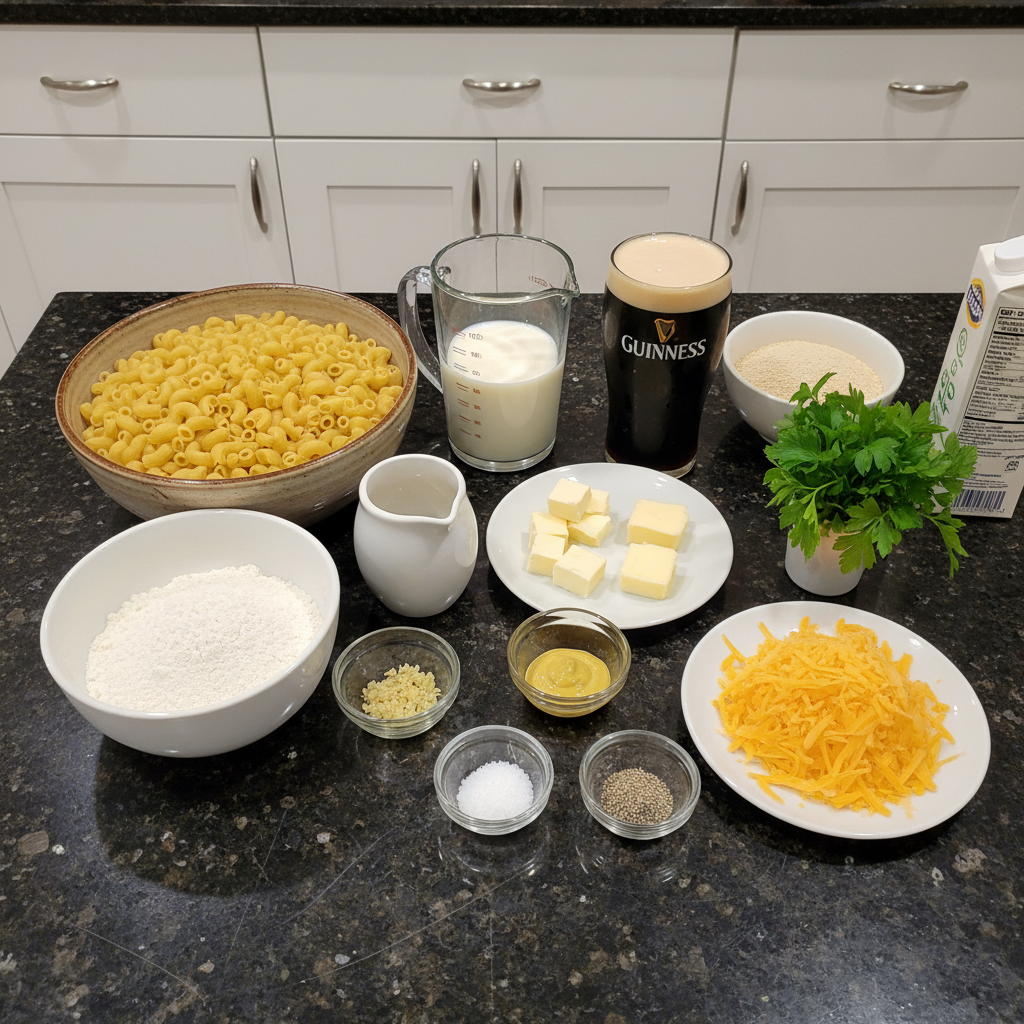
1 pound elbow macaroni
2 tablespoons butter* (see note)
2 tablespoons flour* (see note)
⅔ cup Guinness or other stout
1 ½ cups 2% milk
½ cup half and half
½ teaspoon salt
¼ teaspoon ground black pepper
1 tablespoon dijon mustard
2 ounces cream cheese (cut into pieces)
3 ½ cups shredded cheddar (or another good melting cheese) (divided SEE NOTE)
For the Topping (optional but highly recommended):
1½ tablespoons butter
2 teaspoons finely minced garlic
½ cup panko breadcrumbs
salt/pepper to taste
2 teaspoons minced fresh parsley
Ingredient Notes & Substitutions
Guinness Stout: The recipe calls for Guinness, which provides a distinct malty, slightly bitter, and robust depth. You can use Guinness Draught for a smoother, creamy mouthfeel, or Guinness Extra Stout for a more pronounced roasted flavor. If Guinness is not available, choose another quality stout to maintain the signature flavor profile.
Irish Cheddar: I specifically recommend Irish Cheddar for its sharp, tangy flavor and wonderfully creamy texture that melts beautifully. For the best possible sauce, I always advise shredding your own block cheese. Pre-shredded varieties often contain anti-caking agents like cellulose, which can prevent the cheese from melting smoothly, leading to a grainy sauce. Other good melting cheese substitutions include sharp cheddar, Gouda, or Fontina.
Pasta: Elbow macaroni is traditional and ideal for capturing and holding the creamy sauce. However, feel free to use other short pasta shapes like cavatappi, shells, or rotini if you prefer.
Dairy: The blend of 2% milk, half and half, and cream cheese is crucial for achieving the sauce’s luxurious creaminess and stability. The fats and proteins in these dairies contribute to a silky-smooth, glossy finish.
Flavor Enhancers: Dijon mustard adds a subtle tang that brightens the cheese sauce without making it taste like mustard. Worcestershire sauce provides a layer of umami, while the smoked paprika contributes a delightful warmth and depth.
Breadcrumbs: Panko breadcrumbs are preferred for their superior crispiness and light texture when toasted. If you do not have panko, regular breadcrumbs can be used, though the texture will be slightly different.
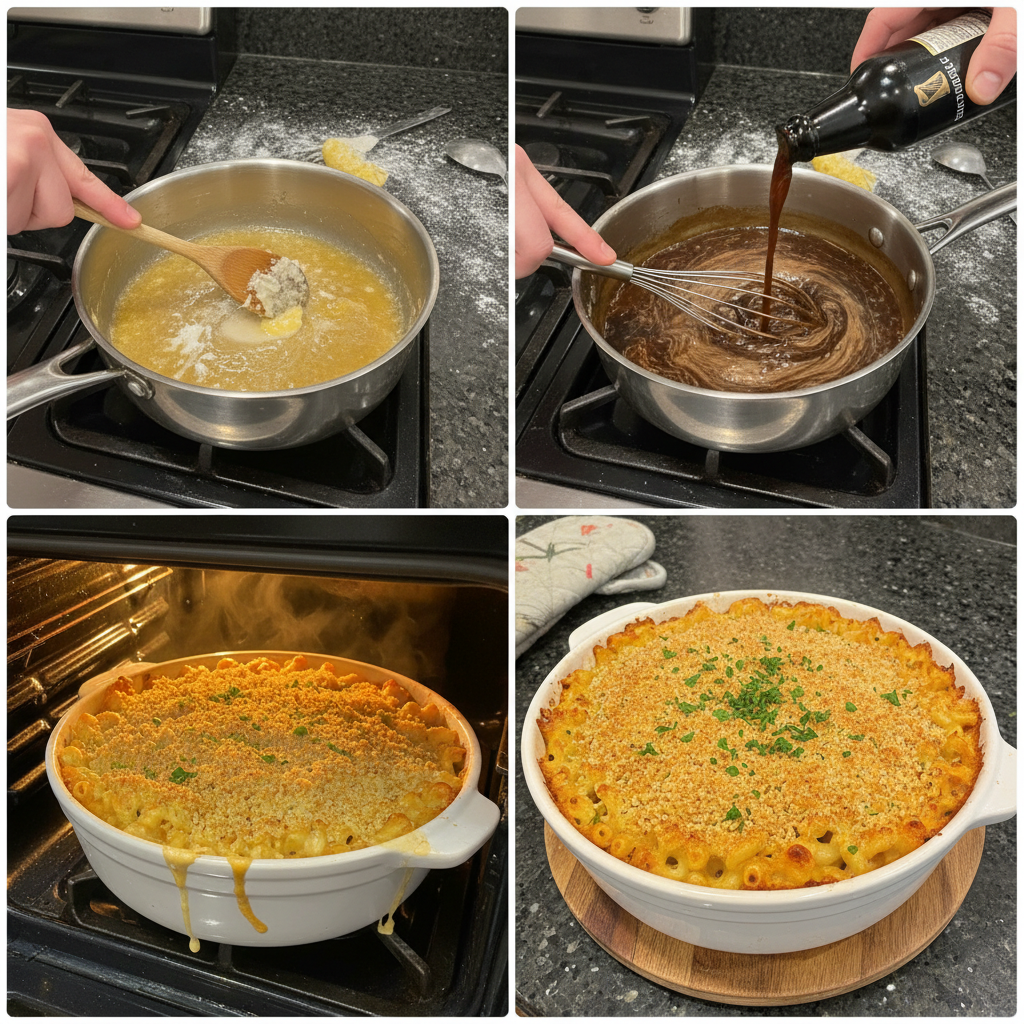
How to Make Guinness and Irish Cheddar Macaroni and Cheese
Making this rich and creamy Guinness and Irish Cheddar Macaroni and Cheese is a delightful process. Follow these steps carefully for the best results.
Prepare the Topping (Optional)
In a medium skillet over medium-low heat, melt 1½ tablespoons of butter.
Add 2 teaspoons of finely minced garlic and ½ cup of panko breadcrumbs.
Cook, stirring frequently, until the breadcrumbs are lightly toasted and the aroma of toasted garlic fills your kitchen. This usually takes 3-5 minutes.
Remove the skillet from the heat.
Add salt and pepper to taste, along with 2 teaspoons of minced fresh parsley.
Stir to combine everything well. Set this flavorful topping aside.
Cook the Macaroni
Bring a large pot of well salted water to a rolling boil.
Add 1 pound of elbow macaroni to the boiling water.
Cook the pasta until it is just al dente, meaning it is firm to the bite but not hard. This is typically 1-2 minutes less than the package directions.
Before draining the pasta, reserve 1 cup of the starchy pasta water. This is a crucial step for adjusting your sauce later. Set the reserved water aside.
Drain the cooked macaroni thoroughly. Do not rinse the pasta, as the residual starch helps the sauce cling to it.
Prepare the Guinness Cheese Sauce
While the pasta is cooking, begin preparing your rich cheese sauce.
In a large saucepan over medium heat, melt 2 tablespoons of butter.
Add 1 teaspoon of smoked paprika and bloom it in the melted butter for about 30 seconds to 1 minute, stirring gently, until it becomes wonderfully fragrant. This step enhances its smoky depth.
Sprinkle in 2 tablespoons of flour.
Whisk the butter and flour together for a minute to create a smooth roux. Cook it gently to eliminate any raw flour taste without browning it too much.
While continuing to whisk, slowly pour in ⅔ cup of Guinness stout, 1 ½ cups of 2% milk, and ½ cup of half and half.
Add ½ teaspoon of salt, ¼ teaspoon of ground black pepper, 1 tablespoon of Dijon mustard, and 1-2 teaspoons of Worcestershire sauce. The Worcestershire sauce provides a fantastic layer of umami.
Bring the mixture to a gentle simmer, whisking frequently. Cook for several minutes until the sauce thickens slightly and coats the back of a spoon with a velvety texture.
Combine and Finish
Reduce the heat to low.
Add 2 ounces of cream cheese, cut into pieces, and 2½ cups of the shredded cheddar cheese.
Stir and whisk continuously until the cream cheese and cheddar are completely melted and the sauce is smooth and glossy.
Add the drained, cooked pasta to the cheese sauce and stir to combine thoroughly, ensuring every piece of macaroni is coated.
Add the remaining 1 cup of shredded cheddar cheese and stir until it is fully melted. This final addition helps achieve that desirable stringy, cheese-pull texture.
I like to let this mixture sit over very low heat for a few minutes, stirring frequently, so the pasta can soak up even more of that delicious cheese sauce. If the sauce becomes too thick, use a splash of your reserved pasta water or a little extra milk or Guinness to achieve your desired creaminess.
To Serve
Transfer the Guinness and Irish Cheddar Macaroni and Cheese to a large serving bowl or individual bowls.
Generously sprinkle the top with the reserved toasted breadcrumbs.
Serve immediately and enjoy the comforting, unique flavors of this dish.
Mastering Your Cheese Sauce: The Science of Creaminess & Troubleshooting
Achieving a perfectly creamy and stable cheese sauce is the hallmark of exceptional mac and cheese. Understanding a few culinary science principles can elevate your dish significantly.
Why Cream Cheese & Pasta Water are Your Secret Weapons
Cream Cheese’s Role: Adding cream cheese to your cheese sauce is a game-changer for stability and texture. From a culinary science perspective, cream cheese acts as an emulsifier. It helps to bind the fats from the butter and cheese with the liquids from the milk and stout, creating a wonderfully cohesive and silky-smooth sauce. This emulsification prevents the sauce from becoming greasy or separating, resulting in a consistently glossy and luscious texture.
Pasta Water’s Magic: That reserved starchy pasta water is truly a secret weapon. The starches released from the pasta during cooking are excellent thickening agents. When added to your cheese sauce, these starches help to further thicken the sauce, aid in emulsifying the fats, and most importantly, bind the sauce directly to the pasta. This creates an incredibly stable and creamy consistency, ensuring your mac and cheese is never watery and always rich.
Preventing Common Cheese Sauce Issues
Curdling & Separation: To prevent your cheese sauce from curdling or separating, heat control is paramount. Always keep your sauce at a gentle simmer, never a rapid boil, especially after adding the cheese. Add the cheese gradually and stir it in off the direct heat if possible, or over very low heat. Using freshly shredded block cheese, as discussed earlier, also makes a significant difference as pre-shredded cheese’s anti-caking agents can disrupt smooth melting.
Too Thin/Too Thick: Adjusting sauce consistency is easy with a few tricks. If your sauce is too thick, gradually whisk in some of your reserved pasta water or a splash of additional milk or Guinness until it reaches your desired creaminess. If the sauce is too thin, you can create a quick cornstarch slurry (1 teaspoon cornstarch mixed with 1 tablespoon cold water) and whisk it into the simmering sauce. Let it cook for a minute or two to thicken.
Adaptations & Make-Ahead Strategy for Your Mac and Cheese
This Guinness and Irish Cheddar Macaroni and Cheese is fantastic as a stovetop dish, but I also understand the desire for variety and convenience.
Stovetop vs. Baked: Answering the Call
While my primary recipe focuses on a rich and creamy stovetop experience, many of you love the crispy top a baked mac and cheese offers. The stovetop version is inherently creamier and smoother, while a baked version develops a delightful crust and deeper flavor on top.
To convert this recipe to a baked version:
Prepare the Guinness cheese sauce and combine it with the pasta exactly as instructed.
Pour the macaroni and cheese into a greased 9×13 inch baking dish.
If using, prepare the Panko breadcrumb topping and sprinkle it evenly over the top of the mac and cheese.
Bake in a preheated oven at 375 degrees F (190 degrees C) for 20-25 minutes, or until bubbly and heated through.
For an extra golden, crispy topping, you can finish it under the broiler for 2-3 minutes, watching carefully to prevent burning.
Make-Ahead & Reheating for Ultimate Convenience
Make-ahead: You can prepare the individual components in advance. The cheese sauce can be made up to 2 days ahead and stored in an airtight container in the refrigerator. Reheat it gently over low heat, whisking in a splash of milk or reserved pasta water to restore its creaminess. The pasta can be cooked al dente, drained, tossed with a tiny bit of oil to prevent sticking, and stored separately. The breadcrumb topping can also be made ahead and stored at room temperature in an airtight container. Assemble and bake or reheat just before serving.
Reheating: Leftover Guinness and Irish Cheddar Macaroni and Cheese reheats beautifully.
Stovetop: Transfer the leftovers to a saucepan over low heat. Add a splash of milk, half and half, or reserved pasta water, about 1-2 tablespoons per cup of mac and cheese. Stir frequently until heated through and creamy again.
Microwave: Place a single serving in a microwave-safe bowl. Add a tablespoon of milk or water. Cover loosely and microwave on 50% power in 1-minute intervals, stirring in between, until heated through and creamy.
Freezing: While freezing can sometimes alter the texture of cheese sauces, you can freeze this mac and cheese. Transfer cooled leftovers to a freezer-safe, airtight container for up to 2-3 months. Thaw overnight in the refrigerator. Reheat using the stovetop or microwave methods, adding a splash of liquid to restore creaminess, as detailed above.
Pro Tips & Troubleshooting
I want you to have the best possible experience making this Guinness and Irish Cheddar Macaroni and Cheese. Here are my top pro tips and common mistakes to avoid.
Pro Tips for Perfect Guinness and Irish Cheddar Macaroni and Cheese Every Time
Embrace the Unique Twist: Do not skip blooming the smoked paprika in the butter and adding the Worcestershire sauce. These steps are crucial for the unparalleled depth and balanced flavor of this particular recipe.
Perfect Roux: When making your roux, cook the butter and flour mixture for at least a minute, whisking constantly. This helps eliminate the raw flour taste without browning it too much, which would change the flavor of your delicate cheese sauce.
Al Dente Pasta: Cook your elbow macaroni until it is just al dente. It will continue to cook slightly when combined with the hot cheese sauce, ensuring it remains firm and never mushy.
Freshly Shredded Cheese: Always shred your own Irish Cheddar or other cheese from a block. Pre-shredded cheeses contain anti-caking agents that can lead to a grainy or lumpy sauce and hinder smooth melting.
Temperature Control is Key: Keep your cheese sauce at a gentle simmer, never a rapid boil, especially after adding the cheese. High heat can cause the cheese proteins to seize and lead to a curdled sauce.
Do not Skimp on Salt: Properly salting your pasta water is critical for flavoring the pasta itself. Also, taste your cheese sauce before combining with pasta and adjust seasoning as needed for optimal flavor.
Adjusting Consistency: Always have some reserved pasta water or extra milk/Guinness on hand. If your sauce becomes too thick while it is sitting, a splash or two can quickly bring it back to the perfect creamy consistency.
Common Mistakes to Avoid
Not Reserving Pasta Water: This is a crucial oversight. Reserved pasta water is invaluable for adjusting sauce consistency and enhancing creaminess if your mac and cheese gets too thick.
Overcooking Pasta: Mushy pasta results in an undesirable texture in the finished dish. Stick to al dente.
Adding Cold Cheese to Hot Sauce: Adding cold cheese directly to a very hot sauce can shock the sauce, causing the cheese to clump or separate. Ensure your sauce is gently simmering and add cheese gradually.
Using Pre-shredded Cheese Exclusively: As mentioned, anti-caking agents in pre-shredded cheese can hinder smooth melting and lead to a grainy sauce. It is best to shred your own.
Forgetting to Whisk: Consistent whisking during the roux-making and sauce-building phases is essential to prevent lumps and sticking, ensuring a smooth base for your cheese sauce.
Serving & Storage
Now that you have crafted this magnificent Guinness and Irish Cheddar Macaroni and Cheese, let us talk about how to best enjoy and preserve it.
Serving Suggestions for Your Irish-Inspired Feast
Classic Pairings: To balance the richness of this Guinness and Irish Cheddar Macaroni and Cheese, I love serving it alongside a crisp green salad with a light vinaigrette or a vibrant side of roasted vegetables like asparagus or Brussels sprouts.
Beverage Pairings: For the ultimate experience, pair your mac and cheese with a perfectly poured pint of Guinness stout. The subtle bitterness and creamy texture of the beer beautifully complement the sharp cheddar and malty notes in the dish.
Dessert Pairings: Extend your Irish-inspired feast with creative dessert ideas. Guinness Brownies with Irish Cream Frosting or refreshing Mint Chocolate Chip Cookies would be a delightful end to your meal.
Garnishing: Always finish with a sprinkle of fresh parsley and the toasted panko breadcrumbs for added texture, freshness, and visual appeal.
Storage & Reheating Tips
Refrigeration: Store any leftover Guinness and Irish Cheddar Macaroni and Cheese in an airtight container in the refrigerator for up to 3-4 days.
Reheating: For best results, reheat leftovers gently. As detailed in the “Make-Ahead & Reheating” section, you can use the stovetop or microwave. Remember to add a splash of milk or reserved pasta water to restore the sauce’s luscious creaminess as it reheats.
Freezing: This recipe can be frozen. Place cooled mac and cheese in a freezer-safe, airtight container. It will keep for up to 2-3 months. Thaw overnight in the refrigerator before reheating gently with an added splash of liquid to bring back its ideal texture, as discussed in the “Make-Ahead & Reheating” section.
Conclusion
I hope you are as excited as I am about this Guinness and Irish Cheddar Macaroni and Cheese recipe. It is truly an exceptional dish that brings together the comforting familiarity of mac and cheese with the rich, complex flavors of Ireland. The unique twist of smoked paprika and Worcestershire sauce creates an unparalleled depth and balance, elevating it beyond the ordinary. With my detailed instructions and expert tips, I am confident that home cooks of all skill levels can achieve culinary success and create an exceptionally creamy, rich, and flavorful dish. I encourage you to try this unique recipe, experiment with the serving ideas, and share your delicious creations. Feel free to print this recipe, leave a comment with your experience, or explore other comfort food recipes on my blog!
FAQ
Can I make Guinness and Irish Cheddar Macaroni and Cheese ahead of time?
Yes, you can. You can prepare the components like the cheese sauce and pasta separately ahead of time. For detailed instructions on how to make ahead and reheat, please refer to the “Make-Ahead & Reheating” section of this article.
What kind of cheese is best for Guinness Mac and Cheese?
I highly recommend using Irish Cheddar for its sharp, tangy flavor and creamy texture. For the smoothest sauce, always shred cheese from a block yourself, as pre-shredded cheeses can contain anti-caking agents. Good melting alternatives include sharp cheddar, Gouda, or Fontina.
What is the secret to a creamy, smooth cheese sauce?
The secret lies in a few key steps: creating a smooth roux as your base, adding cheese gradually over gentle heat, and incorporating cream cheese for stability and emulsification. Reserved pasta water also plays a crucial role in achieving that silky-smooth, stable texture.
How do I adjust the thickness of my mac and cheese sauce?
If your sauce is too thick, simply whisk in a splash of reserved pasta water, milk, or Guinness until it reaches your desired consistency. If it is too thin, you can thicken it with a quick cornstarch slurry (1 teaspoon cornstarch mixed with 1 tablespoon cold water) stirred into the simmering sauce. You can find more details in the “Mastering Your Cheese Sauce” and “Pro Tips” sections.
What are some common mistakes to avoid when making stovetop mac and cheese?
Some common mistakes include not reserving pasta water, overcooking the pasta, adding cold cheese directly to a hot sauce, and exclusively using pre-shredded cheese. Consistent whisking is also key to preventing lumps. The “Common Mistakes to Avoid” section provides a comprehensive list.
What pairs well with Guinness and Irish Cheddar Mac and Cheese?
This rich dish pairs wonderfully with a crisp green salad or roasted vegetables to balance its richness. For beverages, a cold Guinness stout is an excellent choice. For dessert, consider Irish-inspired treats like Guinness brownies or mint chocolate chip cookies. See the “Serving Suggestions” section for more ideas.
How does Guinness stout affect the flavor of macaroni and cheese?
Guinness stout adds a distinctive malty, slightly bitter, and robust depth to the macaroni and cheese. It complements the sharp notes of the Irish Cheddar beautifully. My unique twist, with smoked paprika and Worcestershire sauce, helps balance any potential bitterness from the stout, creating a more complex and harmonious flavor profile.
Is this a stovetop or baked macaroni and cheese recipe?
This recipe is primarily designed for the stovetop, yielding an incredibly creamy and luscious dish. However, I have included clear instructions in the “Stovetop vs. Baked: Answering the Call” section if you prefer to convert it into a baked version with a crispy topping.
Why add cream cheese to macaroni and cheese?
Cream cheese is added for its ability to enhance sauce stability and creaminess. It acts as an emulsifier, helping to bind fats and liquids to create a silky-smooth, glossy sauce that resists separation and greasiness. This is explained further in the “Mastering Your Cheese Sauce” section.

Creamy Guinness & Irish Cheddar Mac and Cheese (Unique Twist!)
Ingredients
Equipment
Method
- In a medium skillet over medium-low heat, melt 1½ tablespoons of butter.
- Add 2 teaspoons of finely minced garlic and ½ cup of panko breadcrumbs.
- Cook, stirring frequently, until the breadcrumbs are lightly toasted and the aroma of toasted garlic fills your kitchen. This usually takes 3-5 minutes.
- Remove the skillet from the heat.
- Add salt and pepper to taste, along with 2 teaspoons of minced fresh parsley. Stir to combine everything well. Set this flavorful topping aside.
- Bring a large pot of well salted water to a rolling boil.
- Add 1 pound of elbow macaroni to the boiling water.
- Cook the pasta until it is just al dente, meaning it is firm to the bite but not hard. This is typically 1-2 minutes less than the package directions.
- Before draining the pasta, reserve 1 cup of the starchy pasta water. Set the reserved water aside.
- Drain the cooked macaroni thoroughly. Do not rinse the pasta, as the residual starch helps the sauce cling to it.
- While the pasta is cooking, in a large saucepan over medium heat, melt 2 tablespoons of butter.
- Add 1 teaspoon of smoked paprika and bloom it in the melted butter for about 30 seconds to 1 minute, stirring gently, until it becomes wonderfully fragrant.
- Sprinkle in 2 tablespoons of flour. Whisk the butter and flour together for a minute to create a smooth roux. Cook it gently to eliminate any raw flour taste without browning it too much.
- While continuing to whisk, slowly pour in ⅔ cup of Guinness stout, 1 ½ cups of 2% milk, and ½ cup of half and half.
- Add ½ teaspoon of salt, ¼ teaspoon of ground black pepper, 1 tablespoon of Dijon mustard, and 1-2 teaspoons of Worcestershire sauce.
- Bring the mixture to a gentle simmer, whisking frequently. Cook for several minutes until the sauce thickens slightly and coats the back of a spoon with a velvety texture.
- Reduce the heat to low.
- Add 2 ounces of cream cheese, cut into pieces, and 2½ cups of the shredded cheddar cheese.
- Stir and whisk continuously until the cream cheese and cheddar are completely melted and the sauce is smooth and glossy.
- Add the drained, cooked pasta to the cheese sauce and stir to combine thoroughly, ensuring every piece of macaroni is coated.
- Add the remaining 1 cup of shredded cheddar cheese and stir until it is fully melted. This final addition helps achieve that desirable stringy, cheese-pull texture.
- I like to let this mixture sit over very low heat for a few minutes, stirring frequently, so the pasta can soak up even more of that delicious cheese sauce. If the sauce becomes too thick, use a splash of your reserved pasta water or a little extra milk or Guinness to achieve your desired creaminess.
- Transfer the Guinness and Irish Cheddar Macaroni and Cheese to a large serving bowl or individual bowls.
- Generously sprinkle the top with the reserved toasted breadcrumbs.
- Serve immediately and enjoy the comforting, unique flavors of this dish.
