


There’s immense satisfaction in creating nourishing foods right in your own kitchen, and few things are as rewarding as a batch of fresh, homemade fermented goods. Today, I’m thrilled to share my go-to Milk Kefir Recipe, a cornerstone for anyone looking to embrace a healthier lifestyle. Whether you’re a seasoned fermenter or just starting out, this guide offers a simple, step-by-step approach to making this probiotic powerhouse, essential care for your active kefir grains, and an exciting ‘Creamy Fruit Swirl’ second fermentation twist that will elevate your homemade kefir experience.
Why You’ll Love This Recipe
While making classic homemade milk kefir is fantastic on its own, my unique ‘Creamy Fruit Swirl’ second fermentation takes it to a whole new level. It’s the perfect solution for anyone who finds traditional kefir a bit too thin or overly tangy.
- Unbeatable Texture: I’ve found that adding chia seeds during the second fermentation acts as a natural thickener. This prevents that often-thin, watery consistency, creating a rich, yogurt-like mouthfeel that’s incredibly satisfying.
- Naturally Sweet & Creamy Flavor: Thawed frozen mixed berries aren’t just for vibrant color and natural sweetness; as they thaw, they release pectin. This natural compound further enhances the creaminess and mellows out any excessive tang from the fermentation, making the kefir more palatable, especially for beginners.
- Boosted Nutrition: Beyond the incredible probiotics, this swirl adds beneficial antioxidants and fiber from the berries and chia, aligning perfectly with a health-conscious lifestyle. It’s an easy way to customize flavors, introduce variety, and make your daily dose of gut health support truly enjoyable.
Ingredients Needed
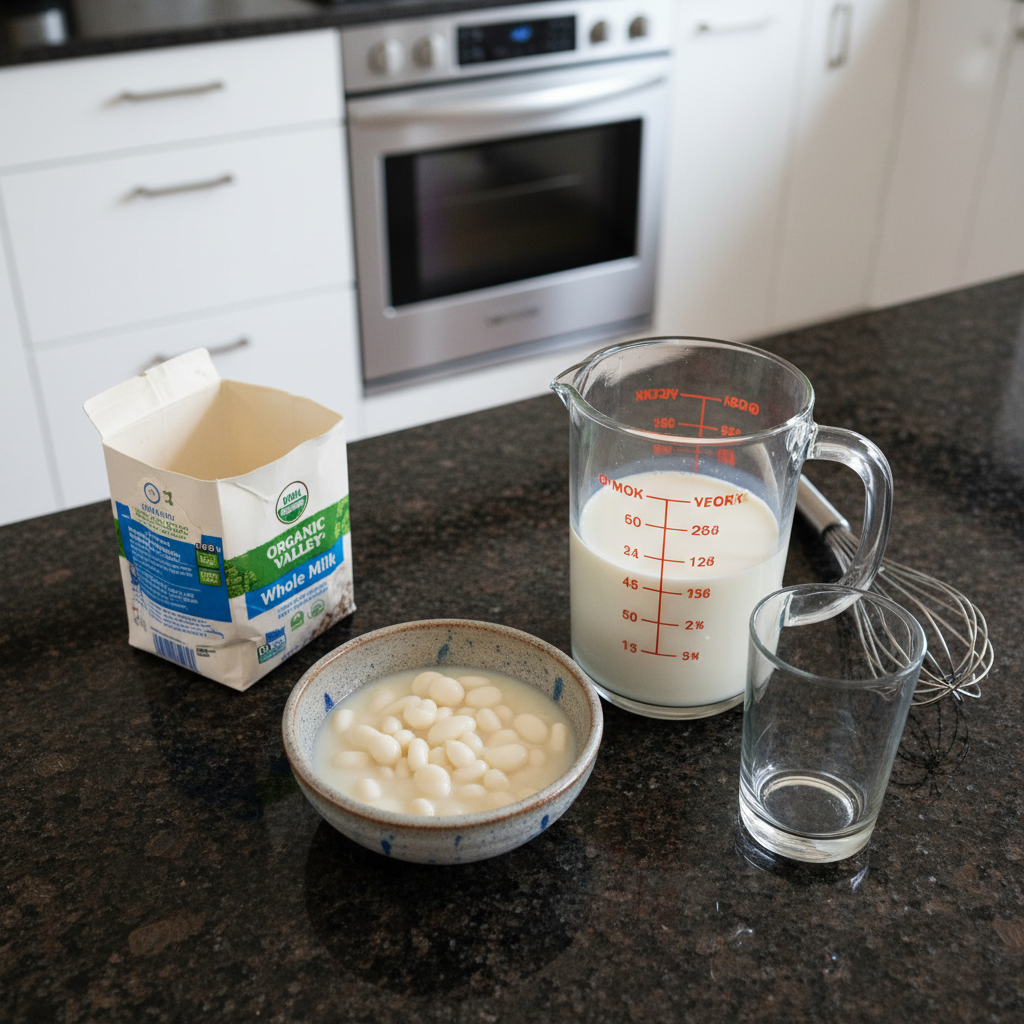
Making delicious milk kefir starts with just two simple ingredients:
- 1 Tablespoon hydrated Milk Kefir Grains
- 2 cups dairy milk
Ingredient Notes & Substitutions
- Milk Kefir Grains: These aren’t powdered starters; they are a live, symbiotic culture of bacteria and yeast (SCOBY) that resemble small, cauliflower-like curds. If you’ve just acquired your kefir grains, they may need a few batches to re-nurture and adapt to your environment and milk.
- Dairy Milk Options: I always recommend using whole pasteurized milk for the most consistent and best results, as it provides plenty of lactose for the grains to thrive on. You can also experiment with raw milk or goat’s milk, but be aware that grains may need time to adapt to new milk sources. Always opt for good quality, full-fat milk for the creamiest kefir.
- Non-Dairy Milk Options: While you can use non-dairy alternatives like coconut milk, almond milk, or soy milk, it’s crucial to understand that these lack the necessary lactose for the grains to sustain themselves long-term. For continuous health, I advise refreshing your grains in dairy milk for 24 hours every few batches. For best results with non-dairy, use full-fat coconut milk from a can (not a carton, which often contains stabilizers) or unsweetened, additive-free almond milk or soy milk.
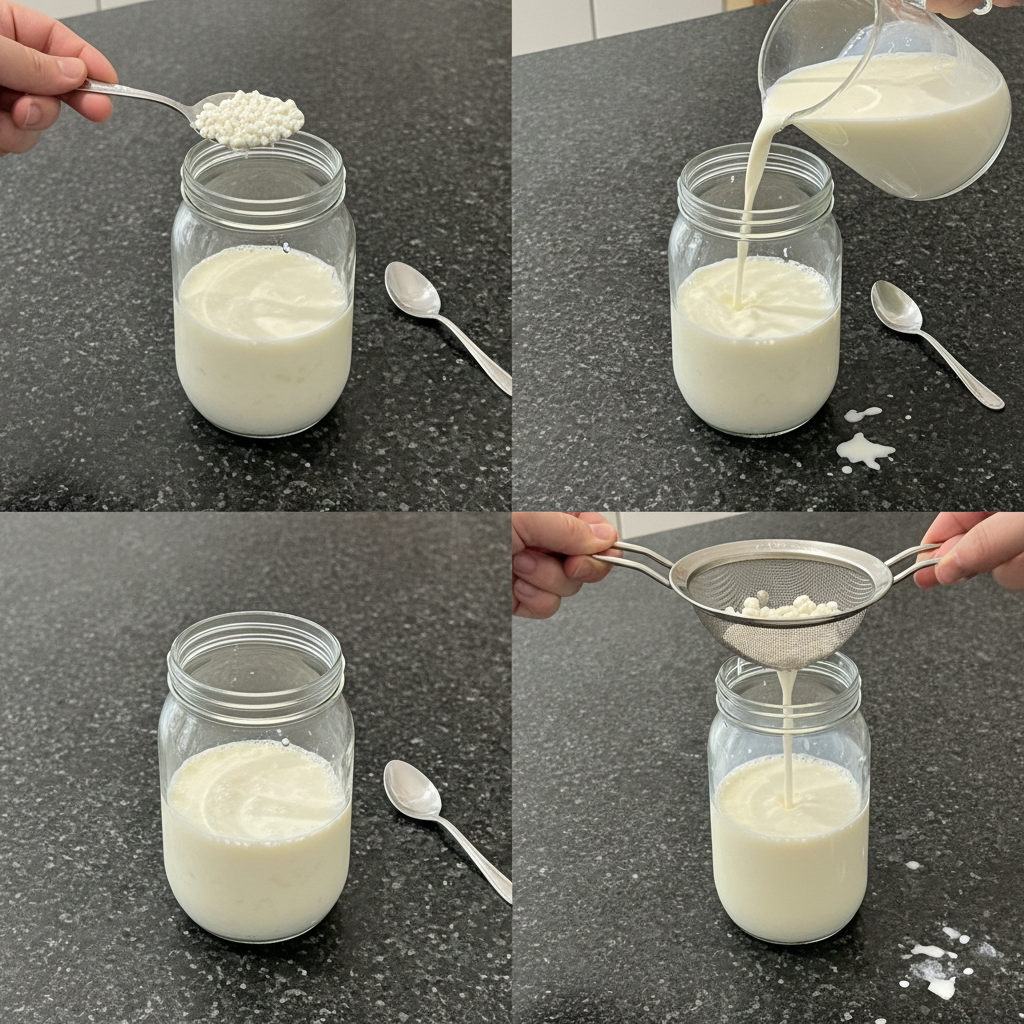
How to Make Homemade Milk Kefir
Making your own milk kefir is a straightforward process once you get the hang of it. Follow these steps for a delicious, probiotic-rich drink:
1. Prepare Your Jar
To begin, add 2 cups of fresh dairy milk to a clean glass jar. Ensuring all your equipment is spotless is key to preventing any unwanted contamination and fostering healthy beneficial bacteria.
2. Add the Grains
Gently place 1 Tablespoon of your hydrated milk kefir grains into the milk. It’s best to avoid metal utensils when handling the grains, as some believe metal can harm them over time.
3. Cover & Ferment
Cover your jar loosely. You can use a plastic lid, a cloth cover secured with a rubber band, or a specialized Fermentation cap. The key is to allow airflow while keeping out dust and other contaminants. This non-airtight seal is essential for the yeast activity during fermentation.
4. Fermentation Time
Allow your kefir to ferment at room temperature for 24-48 hours. The ideal brewing temperature for vigorous fermentation is between 65-75°F (18-24°C), with 72°F (22°C) often cited as perfect. Warmer temperatures will speed up the fermentation time, while cooler temperatures will slow it down. It’s crucial not to ferment for longer than 72 hours; extended fermentation can lead to grain starvation and disintegration.
5. Taste Test
I always recommend tasting your kefir frequently throughout the process, perhaps after 24 hours, and then every few hours, to find your preferred flavor and consistency. Finished kefir should be visibly thicker than milk, with a pleasant tangy taste and a slight fizzy sensation. You might also notice a clear, yellowish liquid, known as whey, separating from the thicker curds – this is a good sign that your kefir is ready!
6. Strain Your Kefir
Once your kefir reaches your desired taste, strain it through a fine mesh strainer (preferably non-metal) or a piece of cheesecloth into a clean container. This step separates the finished milk kefir from the kefir grains. Remember, you generally do NOT need to rinse your grains between uses; if you feel compelled to rinse, do so gently with fresh milk, not water.
7. Second Fermentation (The Creamy Fruit Swirl!)
Now for the exciting twist! After you’ve removed your kefir grains, take approximately 16oz of your strained milk kefir. Blend this with 1/4 cup of thawed frozen mixed berries and 1-2 teaspoons of chia seeds. Transfer this delicious mixture to a clean jar and let it sit in the fridge for 2-4 hours before consuming. This allows the chia seeds to thicken and the fruit flavors to meld beautifully.
8. Repeat & Enjoy!
Place your recaptured kefir grains into fresh dairy milk to start a new batch. You’ve just made your own delicious fermented foods! Enjoy your homemade kefir straight, or explore more serving ideas!
Gap-Filling Section(s)
Beyond the Drink: Making Kefir Cheese & More
Your finished milk kefir is incredibly versatile! One of my favorite ways to transform it is into a thick, creamy kefir cheese, which can easily substitute for sour cream or cream cheese. Here’s how:
- Gather Equipment: You’ll need a fine mesh strainer, a large bowl (to catch the whey), and a piece of clean cheesecloth or a nut milk bag.
- Set Up: Line your strainer with the cheesecloth, ensuring there’s enough overhang to gather later. Place the strainer over the bowl.
- Pour Kefir: Pour your finished, strained milk kefir (without the grains) into the cheesecloth-lined strainer.
- Strain: Cover the setup loosely and refrigerate. The longer you let it strain, the thicker your kefir cheese will become. For a soft, spreadable cheese, strain for 6-12 hours. For a firmer, more crumbly cheese (similar to ricotta), strain for 12-24 hours or even longer.
- Enjoy: Once it reaches your desired consistency, spoon the kefir cheese into an airtight container. The separated whey is also packed with nutrients and can be used in smoothies, for soaking grains, or even as a starter for other ferments.
Serving Ideas for Kefir Cheese: This versatile cheese is fantastic as a spread on toast, a dip for fresh vegetables, or a base for savory spreads with herbs and garlic. It’s an excellent way to incorporate more probiotics and support your gut health in a different form!
Optimizing Your Kefir: Thickness, Non-Dairy & Nutrition
Achieving Thicker Kefir
If you prefer a lusciously thick kefir, there are a few tricks I use beyond simply choosing full-fat milk:
- Adjust the Grain-to-Milk Ratio: A higher concentration of kefir grains relative to milk will result in a faster and thicker ferment. Try using 1.5-2 Tablespoons of grains for every 2 cups of milk, or simply use less milk for your standard 1 Tablespoon of grains.
- Add Milk Powder: For an extra boost of body and nutrients, you can add 1-2 Tablespoons of dry milk powder per cup of milk. This increases the total solids and provides more lactose for the grains, often leading to a creamier texture.
- Second Fermentation: As explored in this recipe’s unique twist, ingredients like chia seeds or fruit pectins naturally thicken the kefir after the grains are removed.
Non-Dairy Success
Making homemade kefir with non-dairy milks is absolutely possible, but requires specific considerations:
- Recommended Non-Dairy Milks: For the best results, I highly recommend full-fat coconut milk from a can (avoiding carton varieties with additives). Unsweetened almond milk and soy milk can also work well. Always choose unsweetened options to avoid feeding the grains unwanted sugars.
- Adjusting Fermentation Time: Non-dairy milks typically ferment faster than dairy milk, sometimes as quickly as 12-18 hours, especially in warmer climates. Taste frequently to prevent over-fermentation, which can lead to an overly sour or separated product.
- Refreshing Grains: To maintain the long-term health and viability of your kefir grains, it’s essential to periodically refresh them in dairy milk for 24 hours every 2-3 batches of non-dairy kefir. If you’re concerned about dairy traces for allergy reasons, you can gently rinse the grains in a bit of fresh non-dairy milk before returning them to your non-dairy batch.
Nutritional Insights
Both dairy and non-dairy kefirs are nutritional powerhouses. Here’s a quick look at their key benefits:
- Probiotics & Gut Health: At the heart of kefir’s benefits are the diverse strains of probiotics and beneficial bacteria, crucial for a healthy gut health. These microbes aid digestion, nutrient absorption, and contribute to a robust immune system.
- Dairy Kefir: Rich in essential nutrients like calcium, magnesium, Vitamin K2, and Biotin. The fermentation process breaks down much of the lactose, making it often well-tolerated by individuals with lactose intolerance.
- Non-Dairy Kefir: While the specific nutrient profile will vary depending on the milk used, non-dairy kefirs still provide the same incredible probiotic benefits. They are excellent alternatives for those avoiding dairy or seeking specific plant-based nutrients.
Pro Tips & Troubleshooting
Pro Tips for Success
After years of making homemade kefir, I’ve gathered a few invaluable tips to ensure your success:
- Grain Re-nurturing: Newly acquired or rested kefir grains may seem sluggish. Give them a warm spot (around 72°F / 22°C) and perhaps a pinch of sugar with the milk for their first few batches to help them activate and adapt. Change the milk frequently (every 12-24 hours) until they become active.
- Non-Dairy Grain Health: If you primarily make non-dairy kefir, commit to refreshing your grains in dairy milk for 24 hours every 2-3 batches to maintain their vitality and ensure they don’t lose their beneficial diversity.
- Temperature Control: The ideal brewing temperature of 65-75°F (18-24°C) is paramount. If your kitchen is cooler, your fermentation time will increase. A warmer spot (like on top of a refrigerator) can speed things up, but avoid extreme heat.
- Hands-Off Grains: Seriously, your grains do NOT need to be rinsed between uses! Rinsing can stress them and isn’t necessary for hygiene.
- Boosting Fermentation: In cooler weather or if your grains are less active, you can use a technique called “back slopping.” This involves adding a small amount of liquid from a previous successful batch into your new milk and grains, acting as a starter and speeding up the process.
- Equipment Care: Always use clean, sanitized equipment. A good scrub with hot soapy water and thorough rinsing is usually sufficient. Avoid harsh chemical cleaners as they can leave residues that harm your beneficial bacteria.
- Excess Grains: Over time, your kefir grains will reproduce! You can eat them (they’re packed with probiotics!), share them with friends, or store them for later use. This is a wonderful aspect of the fermented foods community.
Common Mistakes to Avoid
Even seasoned fermenters run into issues sometimes. Here are common pitfalls and how to troubleshoot them:
- Over-Fermentation: The biggest mistake is leaving grains in milk for longer than 72 hours. This can lead to grain starvation, making them fragile and prone to disintegration. If your kefir is fermenting too fast (e.g., separating before 24 hours), adjust by adding more milk, shortening the fermentation cycle, or reducing the amount of grains (e.g., to 1 Tablespoon per 2 cups).
- Premature Separation: If your kefir separates into distinct whey and curds much earlier than 24 hours, your grains are likely too numerous or the environment is too warm. To correct this, try adding more milk, shortening the fermentation cycle, or reducing the amount of grains.
- Off-Flavors & Spoilage: Do not drink milk kefir if it smells like acetone (nail polish remover), or has obvious signs of mold (green, black, or fuzzy spots). Normal yellowing whey or a slight cheesy aroma is fine. If your kefir is too sour, it’s likely over-fermented; adjust your milk-to-grain ratio or shorten the ferment time. If it tastes yeasty, your grains might need a break or a slight adjustment in temperature.
- Incorrect Storage of Grains: Storing grains dry for too long without sugar, or in unfavorable conditions, can lead to a loss of diversity in the culture. Always follow proper storage guidelines to keep them robust.
Serving & Storage
Serving Ideas
Beyond our delicious ‘Creamy Fruit Swirl,’ your homemade milk kefir is incredibly versatile:
- Drink Straight: Enjoy a glass chilled, as is, for a refreshing probiotic boost.
- Smoothie Booster: Blend into your favorite smoothies! I love adding a scoop of raw cacao powder, a drizzle of honey, a teaspoon of maca powder, or a dash of green powder for added nutrients.
- Flavorful Combinations: Get creative with second fermentation ideas. Try a “Pina Colada” with pineapple and shredded coconut, a “Strawberry Mint” with fresh strawberries and mint leaves, an “Orangesicle Dream” with orange juice and a splash of vanilla extract, or a “Horchata” with ground cinnamon and vanilla. For superfood boosts, consider Superfood Cacao Pow, Superfood Greenie, Superfood Rose-C (with rose water and rosehips), or Superfood Go-go-goji (with goji berries and hibiscus tea).
- Culinary Uses: Use plain kefir as a healthy substitute for buttermilk in baking, or as a stand-in for sour cream or yogurt in dips, dressings, or creamy sauces. The kefir cheese we discussed earlier is particularly excellent for savory applications.
Storage and Make-Ahead
Knowing how to properly store both your finished kefir and your grains is essential:
- Storing Finished Milk Kefir: Once strained, finished milk kefir can be stored in an airtight container in the refrigerator for 1-2 weeks. The flavor may become tangier over time, but it will still be safe to consume.
- Short-Term Grain Storage (1-7 days): If you need a short break from fermenting, place your kefir grains in a small jar, cover them completely with fresh dairy milk, and store them in the refrigerator.
- Medium-Term Grain Storage (7-14 days): For a slightly longer break, you can store your grains dry (no liquid) with a sprinkle of sugar in an airtight container in the refrigerator. This method is less ideal for maintaining maximum diversity but works in a pinch.
- Long-Term Grain Storage (14+ days): For extended breaks, I recommend dehydrating grains. Spread them thinly on parchment paper and dehydrate at a very low temperature (98-105°F / 37-40°C) until completely dry. Once dry, you can coat them with a bit of powdered milk and store them in an airtight container in a cool, dry place. When ready to resume, follow the re-nurturing steps to bring them back to activity, which involves placing them in a dish with milk and a little sugar in a warm spot, changing the milk daily until they are active again.
Conclusion
There’s an incredible satisfaction that comes from mastering the art of making homemade kefir. It’s not just a delicious and refreshing drink, but a living food packed with probiotics that actively supports your gut health and immune system. My ‘Creamy Fruit Swirl’ second fermentation twist is just one way to elevate this ancient superfood, transforming it into a treat that’s both healthful and incredibly palatable.
Don’t be intimidated – success is absolutely achievable, even for beginners. Experiment with different variations, explore new serving ideas, and discover how this simple Milk Kefir Recipe can become a cherished part of your daily routine. Happy fermenting!
FAQ
- Q: What is milk kefir and how is it made?
- A: Milk kefir is a fermented milk drink, similar to yogurt, but with a wider array of probiotics. It’s made by introducing kefir grains (a symbiotic culture of bacteria and yeast, or SCOBY) into dairy milk. The grains consume the milk’s lactose, producing a tangy, slightly fizzy, and nutrient-rich beverage over 24-48 hours.
- Q: How do I know when my homemade milk kefir is ready and safe to drink?
- A: Your homemade milk kefir is ready when it thickens slightly (more than plain milk), has a tangy aroma, and sometimes shows separation of whey (clear liquid) from curds (thick milky part). Taste it frequently after 24 hours to determine your preferred flavor. Avoid drinking if it smells like acetone or shows any visible mold.
- Q: Can milk kefir grains be used with non-dairy milks, and how should they be cared for?
- A: Yes, milk kefir grains can be used with non-dairy milks like coconut milk or almond milk. However, since non-dairy milks lack lactose, the grains need to be refreshed in dairy milk for 24 hours every few batches (2-3 batches) to maintain their health and activity. Non-dairy milks may also ferment faster, so adjust fermentation time accordingly.
- Q: What are the best ways to store milk kefir grains between batches or long-term?
- A: For short breaks (1-7 days), store kefir grains in the refrigerator covered with fresh dairy milk. For longer breaks, dehydrating grains at a low temperature (98-105°F / 37-40°C) until dry, then storing them in an airtight container in a cool, dry place, is recommended. They will need re-nurturing to reactivate.
- Q: How can I flavor my homemade milk kefir for better taste, beyond the basic recipe?
- A: Beyond the ‘Creamy Fruit Swirl’ in this recipe, you can flavor homemade milk kefir during a second fermentation (after removing the grains). Popular variations include blending with fresh or frozen fruits, adding spices like ground cinnamon or vanilla extract, or incorporating ingredients like raw cacao powder, honey, or fruit juices for unique flavor profiles.
- Q: What are the main health benefits of drinking milk kefir regularly?
- A: Drinking milk kefir regularly provides a rich source of probiotics, which are beneficial for gut health, digestion, and supporting the immune system. It also contains essential nutrients like calcium, magnesium, Vitamin K2, and Biotin. Due to the fermentation process, it can also aid in lactose tolerance for some individuals.
- Q: Are milk kefir grains reusable, and how long do they last?
- A: Yes, milk kefir grains are fully reusable! With proper care and regular feeding, they can last indefinitely, growing and multiplying over time, providing an endless supply of homemade kefir.
- Q: What is the difference between milk kefir grains and powdered kefir starter culture?
- A: Milk kefir grains are a live, symbiotic colony of bacteria and yeast (SCOBY) that grow and multiply, allowing for continuous batches. Powdered kefir starter culture is a dehydrated, finite culture that typically produces a few batches before its strength diminishes and you need a new packet. Grains generally yield a more diverse and potent probiotic drink.
- Q: Do I need to rinse my milk kefir grains off between batches?
- A: No, you do not need to rinse your milk kefir grains between batches. Rinsing can stress the grains and is generally unnecessary. Simply place them into fresh milk after straining your finished kefir.
Homemade Milk Kefir Recipe with Creamy Fruit Swirl
Ingredients
Equipment
Method
- To begin, add 2 cups of fresh dairy milk to a clean glass jar. Ensuring all your equipment is spotless is key to preventing any unwanted contamination and fostering healthy beneficial bacteria.
- Gently place 1 Tablespoon of your hydrated milk kefir grains into the milk. It’s best to avoid metal utensils when handling the grains, as some believe metal can harm them over time.
- Cover your jar loosely. You can use a plastic lid, a cloth cover secured with a rubber band, or a specialized Fermentation cap. The key is to allow airflow while keeping out dust and other contaminants. This non-airtight seal is essential for the yeast activity during fermentation.
- Allow your kefir to ferment at room temperature for 24-48 hours. The ideal brewing temperature for vigorous fermentation is between 65-75°F (18-24°C), with 72°F (22°C) often cited as perfect. Warmer temperatures will speed up the fermentation time, while cooler temperatures will slow it down. It’s crucial not to ferment for longer than 72 hours; extended fermentation can lead to grain starvation and disintegration.
- Taste your kefir frequently throughout the process, perhaps after 24 hours, and then every few hours, to find your preferred flavor and consistency. Finished kefir should be visibly thicker than milk, with a pleasant tangy taste and a slight fizzy sensation. You might also notice a clear, yellowish liquid, known as whey, separating from the thicker curds – this is a good sign that your kefir is ready!
- Once your kefir reaches your desired taste, strain it through a fine mesh strainer (preferably non-metal) or a piece of cheesecloth into a clean container. This step separates the finished milk kefir from the kefir grains. Remember, you generally do NOT need to rinse your grains between uses; if you feel compelled to rinse, do so gently with fresh milk, not water.
- After you’ve removed your kefir grains, take approximately 16oz of your strained milk kefir. Blend this with 1/4 cup of thawed frozen mixed berries and 1-2 teaspoons of chia seeds. Transfer this delicious mixture to a clean jar and let it sit in the fridge for 2-4 hours before consuming. This allows the chia seeds to thicken and the fruit flavors to meld beautifully.
- Place your recaptured kefir grains into fresh dairy milk to start a new batch. You’ve just made your own delicious fermented foods! Enjoy your homemade kefir straight, or explore more serving ideas!
