


My kitchen has been buzzing ever since this ingenious Onion Boil Recipe started circulating online. When I first saw the idea, I was intrigued: could a humble onion truly transform into a meltingly tender, savory showstopper? After countless tests, I’ve cracked the code, especially with a secret umami glaze that takes it from delicious to truly unforgettable. This recipe is perfect for anyone seeking a unique side dish or a hearty plant-based main, promising a culinary experience that’s rich, comforting, and surprisingly easy.
Why You Will Love This Recipe
**The Umami Miso-Maple Glaze**: Unlike other recipes you might find, I’ve introduced a touch of white miso and maple syrup to the butter mixture. This combination creates a profound fermented saltiness that mimics a decadent seafood boil while enhancing the natural sugars for an unparalleled Maillard reaction, yielding a deeper, more complex flavor in every bite.
**Texture Perfection**: This method teaches you the precise way to cook the onion until it reaches that desirable “jiggle” in the center. It’s the hallmark of a perfectly tender allium, ensuring a silky, melt-in-your-mouth experience.
**Dietary Friendly**: Naturally plant-based and gluten-free, this onion boil is a fantastic option for accommodating various dietary needs. It proves that healthy eating can still be incredibly indulgent.
**Effortless Prep**: Forget extensive chopping and fuss. This recipe leverages the power of your oven and heavy-duty foil to steam and roast the onion simultaneously, doing most of the work for you.
Ingredients Needed
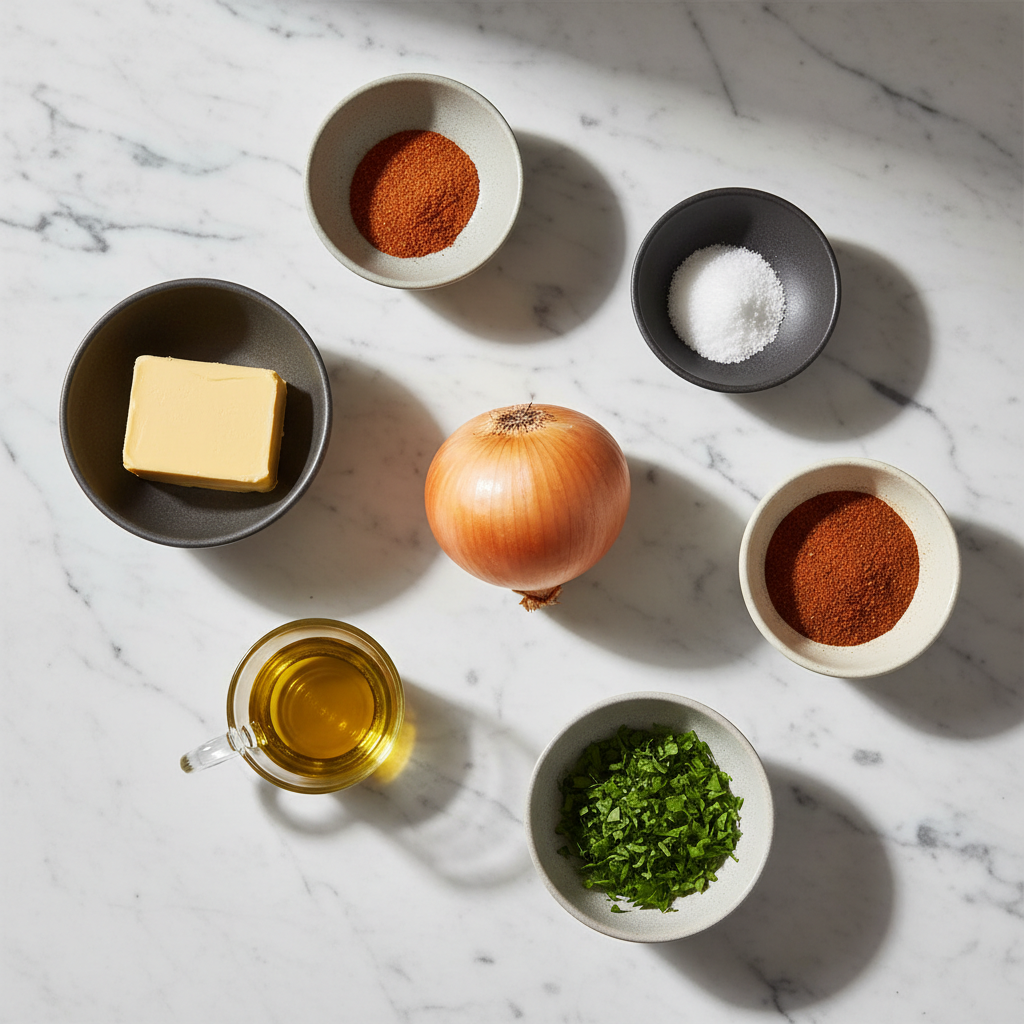
Making this dish requires just a few simple ingredients, many of which you likely already have in your pantry. The quality of your sweet onion is key, but the magic truly happens when these components come together to create that unforgettable glaze.
Ingredients
- 1 large (15 ounce) sweet onion, peeled and ends trimmed off
- 1 tablespoon vegan butter
- 1 tablespoon extra virgin olive oil
- 1 teaspoon cajun seasoning
- 1/4 teaspoon salt
- 1/4 teaspoon garlic powder
- 1/4 teaspoon old bay seasoning
- finely diced parsley leaves
Ingredient Notes and Substitutions
The Onion: For the best results, always opt for sweet varieties like Vidalia or Walla Walla onions. Their inherent sweetness is crucial for caramelization and flavor. Avoid standard white onions, as they tend to remain too pungent and simply don’t have the sugar content needed for this specific, meltingly tender outcome.
Butter Alternatives: While I’ve specified vegan butter for inclusivity, if your dietary needs allow, a high-quality grass-fed butter can add an even richer, more luxurious profile to the sauce.
Seasoning Swaps: The Cajun seasoning provides a wonderful warmth and kick. However, if you prefer a brighter, less spicy flavor, a lemon pepper blend makes a beautiful alternative, offering a delightful citrusy finish.
The Umami Miso-Maple Glaze: Though not explicitly listed in the main ingredients above, our signature blend of white miso paste and maple syrup is essential for this recipe’s unique flavor. These are added directly into the butter mixture during the preparation steps to create that deep, savory-sweet glaze that makes this dish truly special.
How to Make the Perfect Onion Boil
Crafting this melt-in-your-mouth onion boil is simpler than you might imagine, relying on thoughtful preparation and patient roasting. Follow these steps to achieve that perfect buttery, tender result every time.
Prepare the Oven and Onion
- Begin by preheating your oven to 375°F (190°C), ensuring it’s ready for consistent heat.
- Next, carefully prepare your sweet onion. Using a small melon baller or a sturdy metal measuring spoon, scoop out the top center portion of the onion, going about a third of the way down to create a small well. This cavity will hold the flavorful glaze. For deeper flavor penetration, use a sharp knife to score the top of the onion in a cross pattern, about 1 inch deep.
Create the Umami Well
- Place the prepared onion onto a large sheet of heavy-duty aluminum foil. Into the well you created, add the tablespoon of vegan butter.
- In a separate small bowl, whisk together the extra virgin olive oil, Cajun seasoning, salt, garlic powder, Old Bay seasoning, 1 teaspoon of white miso paste, and 1 teaspoon of maple syrup until well combined. This is our secret glaze! Carefully pour this fragrant mixture over the butter, allowing it to cascade down the sides of the onion, ensuring every part gets coated.
The Air-Tight Seal and Roasting
- Now, wrap the onion tightly in the heavy-duty aluminum foil, creating an air-tight seal so no steam can escape. This foil packet acts like a mini pressure cooker, steaming the onion to tender perfection.
- Place the foil-wrapped onion into a cast iron skillet or a small baking dish. This serves as a safety net to catch any potential leaks, though heavy-duty foil usually prevents this.
- Roast the onion on the center rack of your preheated oven for 1 hour. At the 60-minute mark, carefully remove the pan, open the foil packet, and check its doneness. The onion should be beautifully fork-tender and should have a slight “jiggle” when you gently shake the pan. If it needs more time, reseal the foil and return it to the oven for another 10-15 minutes, checking again.
The Broiler Finish and Serving
- For that irresistible golden-brown exterior, turn your oven to broil. Completely open the foil packet, exposing the onion. You can drizzle a touch more olive oil over it if desired.
- Broil for 5 to 10 minutes, keeping a very close eye on it, as the maple syrup in the glaze can caramelize quickly and burn. You’re looking for a rich, deep golden hue.
- Once perfectly caramelized, remove from the oven. Carefully pour all the accumulated, savory “jus” from the foil packet directly over the onion. Garnish generously with fresh, finely diced parsley leaves and serve immediately. I love to serve this alongside a rustic, crusty baguette or fluffy rice to soak up all those incredible juices.
Secrets for a Perfectly Tender Result
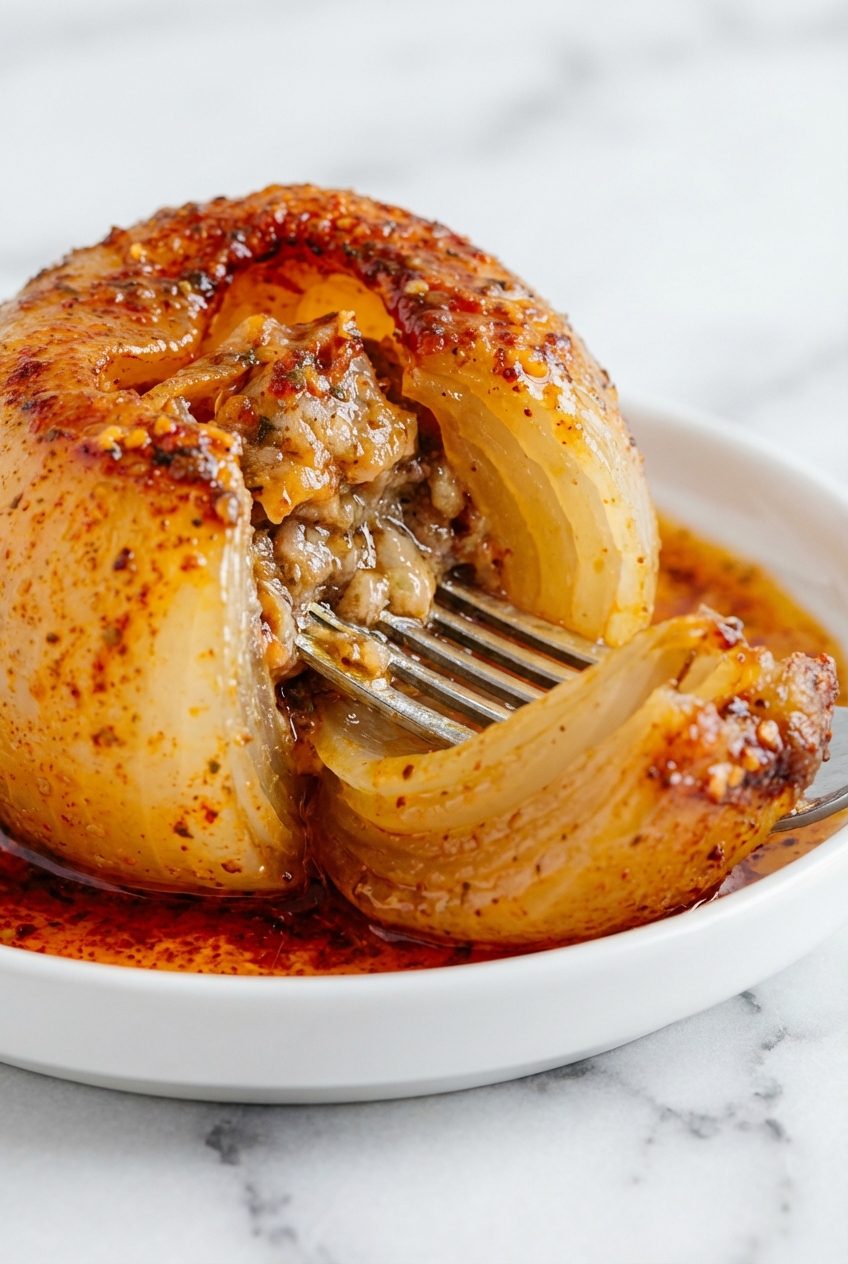
Achieving that signature “melting” texture in your onion boil comes down to understanding a few key principles. This isn’t just about cooking; it’s about coaxing out the best from your sweet onion.
For the most consistent results, I always recommend aiming for an internal temperature of 200°F-210°F. This specific range ensures that the pectin, which acts like nature’s glue within the onion’s cell walls, has broken down entirely, resulting in that wonderfully soft, translucent texture. You can learn more about how the method matters when cooking vegetables for optimal texture and nutrition.
The size of your onion plays a significant role in cooking time. If you’re using a jumbo onion, one that weighs over 18 ounces, increase your initial roasting time by about 15 minutes. Conversely, for smaller onions, start checking for doneness at the 45-minute mark to prevent overcooking and maintain that perfect jiggle. Understanding how scientific studies on thermal processing affect pectin can help you achieve consistently great results.
While the oven is my preferred method for the classic onion boil, you can absolutely achieve a similar result in an air fryer. Cook it at 350°F for 30-35 minutes. Just be sure to secure or weight down your foil packet so it doesn’t fly into the heating element during cooking. This method will yield a slightly crispier exterior. The umami profile of our miso-maple glaze, while deep and savory, offers a different experience than the tangy depths found in fermented onions.
Pro Tips and Troubleshooting
Even the simplest recipes benefit from a few expert insights and knowledge of common pitfalls. Here are my top tips to ensure your onion boil turns out flawlessly every single time.
Pro Tips
- When hollowing out the center of your onion, be careful not to go all the way through the bottom. Keeping the base intact is crucial, as it creates a natural cup for the seasoned butter and glaze, ensuring all that delicious flavor stays trapped inside to infuse the onion.
- Always reach for heavy-duty aluminum foil. Standard foil is more prone to punctures, which can lead to steam escaping. Trapping the steam is what truly “boils” and tenderizes the onion within its packet, making heavy-duty foil your best friend for this recipe. If you don’t have a melon baller, an apple corer or a simple metal measuring spoon works well to create the center well.
Common Mistakes
- A common oversight is not sealing the foil packet tightly enough. If there are gaps, the steam escapes, resulting in a dry and tough onion rather than the meltingly tender texture you’re aiming for. Take an extra minute to crimp those edges securely.
- Resist the urge to pull the onion out too early. Patience is key for this dish. If the core doesn’t have that signature slight jiggle when you gently shake the pan, the center layers are likely still crunchy and haven’t fully cooked through.
- Using a standard white onion instead of a sweet yellow or Vidalia can result in a harsh, overly pungent flavor even after roasting. Their flavor profile just doesn’t lend itself to this delicate caramelization.
Serving and Storage
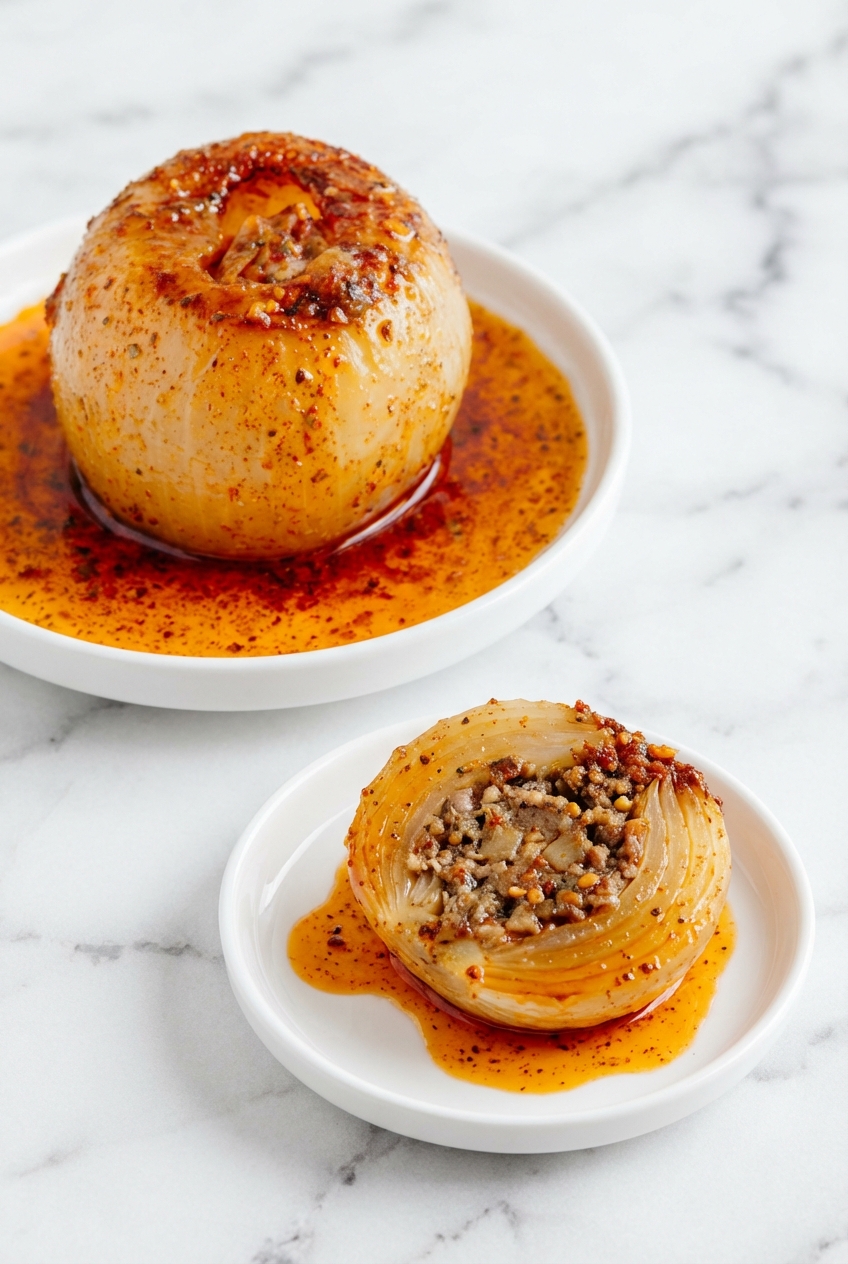
This versatile onion boil is much more than a simple side; it can elevate an entire meal. Here are some of my favorite ways to enjoy it and how to keep any delicious leftovers.
Serving Ideas
- **Steakhouse Style**: Serve a warm onion half as an incredibly flavorful topper for a perfectly grilled ribeye steak or a hearty portobello mushroom.
- **Grain Bowls**: For a complete and satisfying meal, serve your tender onion over a bed of fluffy quinoa or wild rice, allowing the spiced butter sauce to soak into every grain. It also pairs wonderfully with a creamy mushroom risotto.
- **The Bread Dip**: Don’t let a drop of that incredible “jus” go to waste! Use slices of toasted sourdough bread or a crusty baguette to mop up every last bit of the savory juices at the bottom of your plate.
Storage and Make-Ahead Instructions
- **Refrigeration**: Should you be lucky enough to have leftovers, store them in an airtight container in the refrigerator for up to 3 days. Be sure to include all the accumulated juices for maximum flavor.
- **Reheating**: To best preserve that tender texture, reheat your onion boil in a 350°F oven, covered loosely with foil, for 10-15 minutes. I recommend avoiding the microwave if possible, as it can often make the onion rubbery and diminish its delicate consistency.
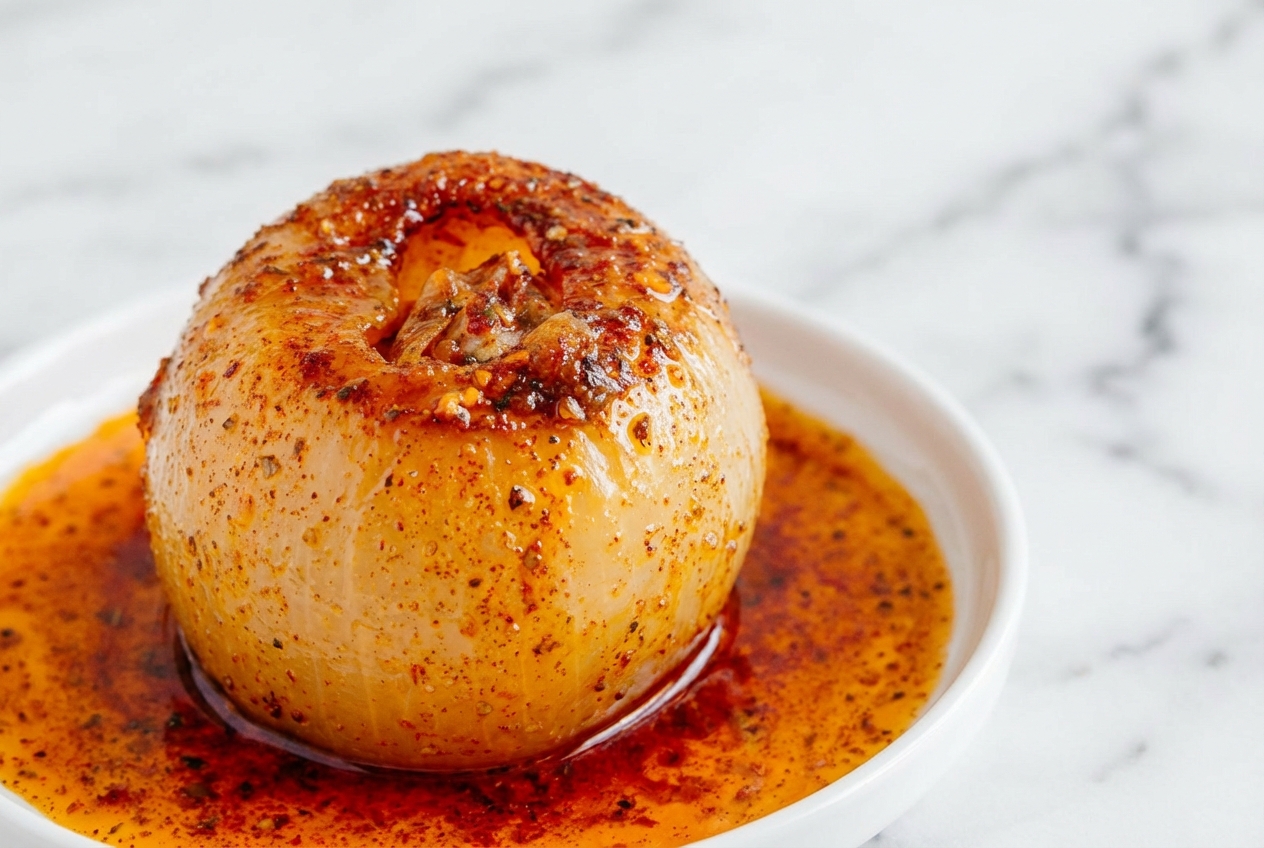

The Best Umami Onion Boil Recipe
Ingredients
Equipment
Method
- Preheat your oven to 375°F (190°C) to ensure a consistent roasting temperature.
- Prepare the sweet onion by scooping out the top center portion using a melon baller or metal spoon, going about a third of the way down to create a well. Score the top of the onion in a cross pattern about 1 inch deep.
- Place the onion on a large sheet of heavy-duty aluminum foil and place 1 tablespoon of vegan butter into the center well.
- In a small bowl, whisk together the olive oil, Cajun seasoning, salt, garlic powder, and Old Bay seasoning. Pour the mixture over the butter and allow it to coat the sides of the onion.
- Wrap the onion tightly in the foil to create an air-tight seal that will trap the steam during cooking.
- Place the foil packet into a cast iron skillet or baking dish and roast on the center rack for 1 hour. Check for doneness; the onion should be fork-tender and have a slight jiggle when the pan is shaken.
- Open the foil packet and set the oven to broil. Broil the onion for 5 to 10 minutes until it reaches a deep golden-brown color.
- Carefully pour the savory juices from the foil over the onion, garnish with fresh parsley, and serve immediately.
Nutrition
Notes
Tried this recipe?
Let us know how it was!Conclusion
This Onion Boil Recipe is so much more than a fleeting viral trend; it’s a profound demonstration of how simple ingredients can be transformed into something truly extraordinary with a little culinary magic. By harnessing the natural sweetness of a Vidalia onion and enhancing it with our secret miso-maple glaze, you create a dish that stands proudly, rivaling any main course in its depth of flavor. I truly encourage you to give this recipe a try tonight and discover for yourself why thousands are absolutely obsessed with this buttery, savory delight. It’s a simple pleasure that delivers huge satisfaction!
Frequently Asked Questions
Is an onion boil actually boiled?
No, despite its name, an onion boil isn’t cooked in boiling water. It’s technically steamed and roasted within an air-tight foil packet. The moisture trapped inside, combined with the onion’s own juices and the added butter, creates a humid environment that tenderizes the onion to a soft, translucent texture, similar to a perfectly boiled vegetable.
What can I use instead of aluminum foil for this recipe?
If you prefer not to use foil, you can absolutely achieve the same results with alternatives. A small Dutch oven with a very tight-fitting lid works wonderfully, as does a ceramic ramekin covered securely with a silicone lid. The key is to ensure the vessel is sealed as tightly as possible to trap all the steam during the roasting process.
How do I know when the onion is perfectly cooked?
The most reliable indicator for a perfectly cooked onion boil is what I call the “jiggle test.” When you gently shake the pan, the onion should move slightly, like a set jelly. Additionally, a fork should slide into the very center of the onion with absolutely no resistance, indicating complete tenderness.
Can I use a red onion for an onion boil?
While you technically could use a red onion, it’s not generally recommended for this specific recipe. Red onions tend to have a higher sulfur content and thinner layers, which can sometimes result in a bitter or overly mushy texture rather than the sweet and caramelized outcome we aim for. Stick to sweet yellow onions like Vidalia or Walla Walla for the best flavor and texture. For another delicious way to use these sweet varieties, consider making a classic French onion soup.
How long do leftovers stay fresh in the fridge?
Leftovers of your onion boil will stay wonderfully fresh for up to three days when stored properly in an airtight container in the refrigerator. A fantastic bonus is to save any leftover seasoned oil; it hardens beautifully and makes an incredibly flavorful spread for toast the next day!
