


There’s something truly magical about paella the vibrant colors, the rich aromas, and that satisfying crunch of the “socarrat” at the bottom of the pan. Traditionally, it’s a dish that takes time and specific equipment, but I’m thrilled to share my recipe for a truly exceptional One-Pot Vegetable Paella that brings all that authentic Spanish flavor to your kitchen with surprising ease. This recipe is designed to simplify the process without compromising on taste or texture, making it perfect for a healthy weeknight meal or a special plant-based feast. Get ready to master a remarkably flavourful and satisfying paella, complete with that coveted crispy bottom, all from a single pot!
Why You’ll Love This Recipe
In my kitchen, I’m always looking for ways to elevate classic dishes while simplifying the process. This One-Pot Vegetable Paella does exactly that, thanks to a few clever techniques that ensure incredible depth of flavor and that highly-prized authentic texture.
- Intense Depth of Flavor: My unique twist involves reducing a portion of the vegetable stock before adding the rice. This crucial step concentrates the liquid’s essence, creating a much richer, more complex base that infuses every grain of paella rice with unparalleled taste. It’s a game-changer for a truly flavourful, hearty, and vibrant dish.
- Achieve the Coveted Socarrat: You might think a crispy rice bottom is only for traditional paella, but I’m here to tell you it’s achievable in your one-pot version! By increasing the heat at the very end without stirring, we encourage the Maillard reaction. This creates a delightful textural contrast – that crispy, caramelized “socarrat” layer that’s a hallmark of true Spanish paella.
- Effortless One-Pot Cooking: The beauty of a one-pot meal cannot be overstated. From start to finish, this recipe minimizes cleanup, making it a perfect weeknight meal when you crave comfort food without the fuss.
- Healthy & Customizable: This recipe is a naturally healthy recipe. It’s inherently a Vegan Paella, Vegetarian Paella, Gluten-Free, and Dairy-Free dish, making it suitable for a wide range of dietary needs. Plus, it’s incredibly versatile for customizing with your favorite seasonal vegetables!
Ingredients Needed
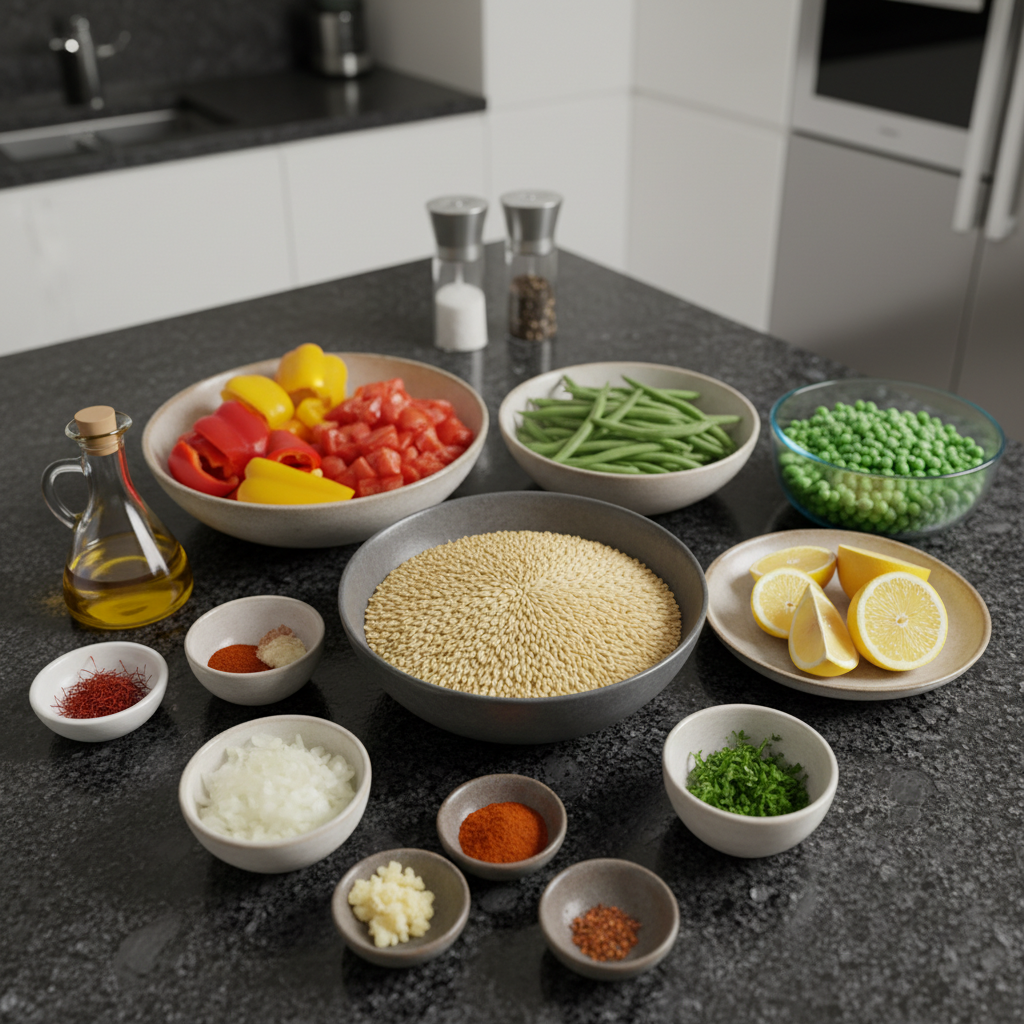
Here’s what you’ll need to create this fantastic One-Pot Vegetable Paella in your kitchen:
- 1.2 litres hot vegetable stock
- Big pinch of saffron
- 2 tablespoons olive oil
- 1 onion (sliced)
- 3 cloves garlic (crushed or grated)
- ½ teaspoon dried chilli flakes (or to taste)
- 3 teaspoons smoked paprika
- 2 red or yellow (bell peppers, sliced or diced)
- 3 medium tomatoes (roughly chopped)
- 100 g green beans (trimmed and cut in half)
- 300 g paella rice
- Salt and pepper
- 100 g frozen peas
- 2 lemons (cut into quarters)
- 2 tablespoons chopped parsley (plus extra for garnish)
Ingredient Notes & Substitutions
- Paella Rice: For an authentic texture, I highly recommend using dedicated Paella rice, such as Bomba rice or Calasparra rice. These varieties are renowned for their ability to absorb a large amount of liquid without becoming mushy, yielding distinct, firm grains. If you can’t find specific paella rice, Arborio rice or another short-grain rice can be used, though the final texture may be slightly creamier, closer to a risotto.
- Vegetable Stock: A good quality Vegetable stock is the foundation of this dish. I often reach for Kallo Organic Vegetable Stock Cubes as they’re reliably vegan and gluten-free. Using a low-sodium stock allows you greater control over the final seasoning of your paella.
- Saffron & Alternatives: The saffron provides that signature golden hue and a delicate, floral aroma. If saffron is too costly or unavailable, a small pinch of turmeric can provide color (though with a different flavor profile), or a tiny amount of yellow food coloring can mimic the visual effect.
- Tomatoes: If using fresh tomatoes, I always recommend removing the seeds before roughly chopping them. This prevents excess liquid from diluting the flavor and affecting the rice’s texture.
- Smoked Paprika: Invest in a good quality smoked paprika (pimentón); it’s indispensable for that authentic Spanish flavor profile and adds wonderful depth.
- Dietary Notes: This recipe is a fantastic choice for many diets! It is naturally a Vegan Paella, Vegetarian Paella, Gluten-Free, and Dairy-Free dish, making it incredibly inclusive.
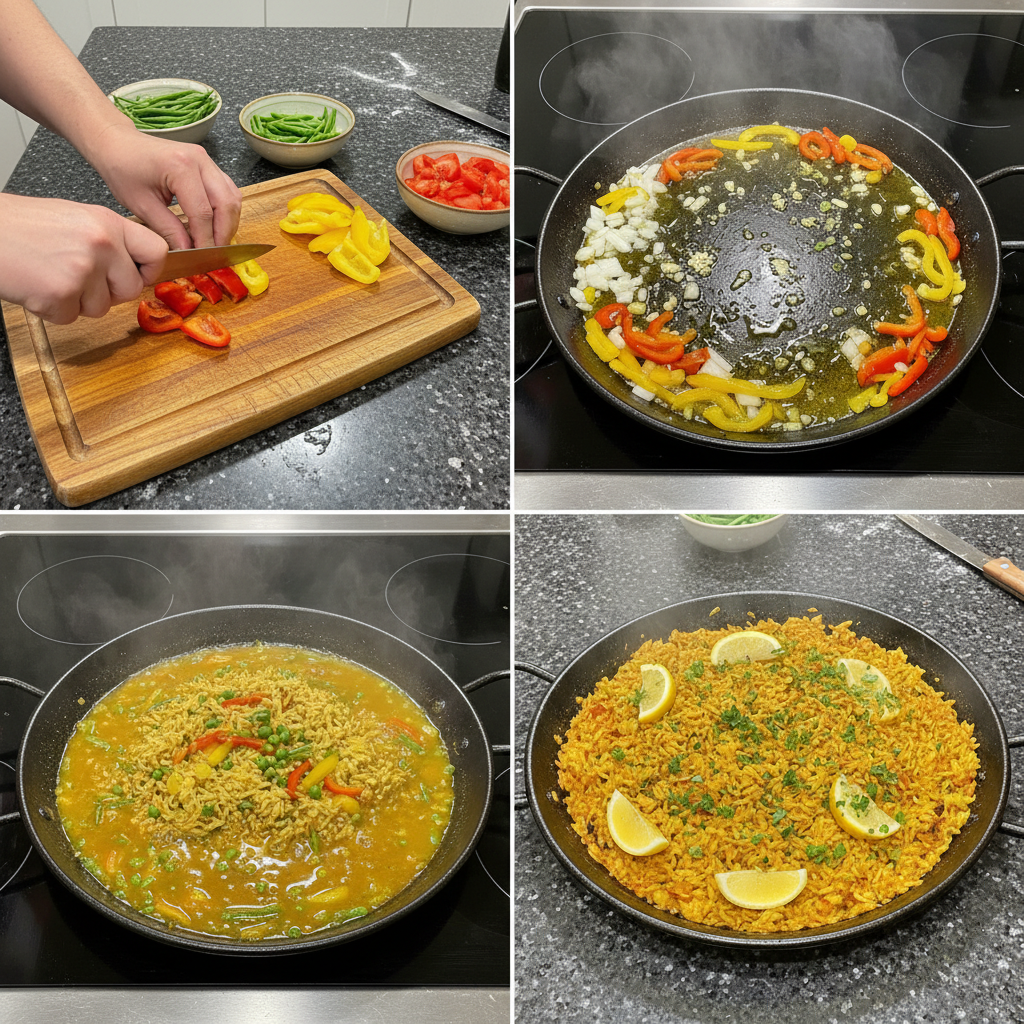
How to Make One-Pot Vegetable Paella
Creating this flavorful One-Pot Vegetable Paella is an enjoyable process. Remember, the key to success lies in following the steps carefully and resisting the urge to stir the rice too much!
1. Prepare Your Saffron & Aromatics
- Add the saffron to the hot stock, stir thoroughly and set aside. This allows the saffron to bloom and infuse its color and flavor into the liquid.
- Place the olive oil in a large, wide pan over a medium-low heat. Add the onion, cover with a lid and cook over a gentle heat for 3 minutes, stirring occasionally until softened and translucent.
- Add the crushed garlic, dried chilli flakes, and smoked paprika. Cook for 2 more minutes, stirring occasionally, until the kitchen fills with fragrant aromas.
2. Intensify the Stock & Build the Base
- At this point, remove about ¼ of the saffron-infused vegetable stock (approximately 300ml) from the main batch and pour it into the pan with the aromatics. Increase the heat to medium-high and bring it to a vigorous simmer, allowing it to reduce by about half, stirring occasionally. This step is our unique twist to truly deepen the flavor base.
- Once the stock has reduced, add the sliced bell peppers, roughly chopped tomatoes, and green beans to the pan. Sauté for another 3-4 minutes until the vegetables start to soften slightly.
3. Cook the Rice to Perfection
- Add the paella rice to the pan, stirring gently for about 30 seconds to coat the grains with the flavorful base. Season with salt and pepper to taste.
- Pour in the remaining (approximately 900ml) vegetable stock. Bring the mixture to a boil, then immediately reduce the heat to a low simmer. Place the lid off. Now, this is crucial: *do not stir the rice from this point forward.* Let it simmer gently for 15 minutes. The rice needs to absorb the liquid evenly and allow its starches to set, which is essential for both the texture and the socarrat.
- Add the frozen peas, distributing them evenly over the rice. Continue to cook for a further 5 minutes, still without stirring. By this time, all the stock should have been absorbed, and the rice should be plump and tender.
4. Achieve the Socarrat & Finish
- To achieve that glorious ‘socarrat’ (crispy rice bottom), increase the heat to medium-high for the final 1-2 minutes. Listen carefully for a gentle crackling sound, and you might see the edges of the rice slightly crisping. *Do not stir during this step.* This is the Maillard reaction at work, creating that desired textural contrast. Keep a close eye on it to prevent burning.
- Remove the pan from the heat. Stir in the juice from two of the lemon quarters and the chopped parsley. Cover the pan with a lid or foil and let it rest for 5-10 minutes. This allows the flavors to meld and the rice to finish steaming.
- Serve your magnificent One-Pot Vegetable Paella scattered with more fresh parsley and with the remaining lemon quarters on the side for squeezing. Enjoy!
Choosing the Right Pan & Customizing Your Paella
The right equipment and a little creativity can truly elevate your One-Pot Vegetable Paella experience. Let’s talk about choosing your battlefield and how to make this dish uniquely yours.
The Perfect Paella Pan for One-Pot Success
The choice of pan is more critical than you might think for achieving the ideal paella texture, especially that crispy socarrat. For this recipe, a large wide pan is absolutely crucial. A 12-14 inch diameter pan is ideal for the serving size of this recipe, providing ample surface area for the rice to cook evenly, for the liquid to evaporate effectively, and most importantly, for the bottom layer of rice to crisp up beautifully.
- Traditional Paella Pan: If you have a carbon steel paella pan, this is naturally the best choice. Its wide, shallow design and dimpled surface promote even heat distribution and excellent socarrat formation.
- Cast Iron Skillet: A large cast iron skillet is another fantastic option. Cast iron offers superb heat retention and can develop a wonderful crust.
- Wide Non-Stick Skillet: For ease of use and cleanup, a wide non-stick skillet can certainly work. Just ensure it’s shallow enough to allow for good evaporation and wide enough to spread the rice in a single layer.
Vibrant Vegetable Variations & Protein Boosts
One of the joys of Vegetarian Paella is its flexibility. Feel free to explore a world of vibrant vegetable variations to suit your taste and the season!
- Seasonal Swaps and Additions:
- In spring, add blanched asparagus spears or sliced artichoke hearts.
- For a summery twist, incorporate zucchini or eggplant cubes (sauté them separately first to avoid making the paella watery, then add with the peppers).
- Mushrooms (cremini, shiitake) can add an earthy depth; sauté them before the onions.
- Jarred roasted red peppers, sliced, can be added towards the end for a smoky, sweet note.
- Broccoli florets or cauliflower florets can also be added with the green beans.
- Optional Protein Boosts: To make your paella even heartier, consider these additions:
- Plant-Based: Stir in a can of drained and rinsed chickpeas or cannellini beans along with the green beans. Cubed firm tofu, pan-fried separately until golden, can be gently folded in at the very end.
- Non-Vegetarian (if desired): For those not strictly adhering to a vegan diet, sliced or diced chorizo can be added to the pan at the same time as the garlic, chilli, and paprika. Cooked chicken (leftover shredded chicken or pre-cooked diced chicken) or pre-cooked prawns/mixed seafood can be stirred in along with the frozen peas, just to heat through.
Pro Tips & Troubleshooting
Even seasoned chefs encounter challenges, and a little wisdom goes a long way. Here are my best insights for achieving paella perfection every time, and how to tackle common hiccups.
Pro Tips for One-Pot Paella Success
My kitchen philosophy is about empowering you with the knowledge to cook confidently. Keep these expert tips in mind for your One-Pot Vegetable Paella:
- Embrace the Socarrat: Don’t be shy about that final high-heat step! Listen for the distinctive sizzle and a gentle crackling sound at the bottom of the pan. The Maillard reaction is your friend here, creating that incredible crispy crust. Just watch it carefully to prevent burning.
- The Golden Rule: No Stirring!: This is perhaps the most important tip. Once the liquid is added, resist the urge to stir the rice. Stirring releases starch, which results in a creamy, risotto-like texture rather than the distinct, tender grains characteristic of paella, and it prevents the much-desired socarrat from forming.
- Liquid Control is Key: While my recipe calls for 1.2 liters of stock, remember that different types of rice and even your pan’s evaporation rate can affect absorption. Some home cooks prefer to start with slightly less (e.g., 900-1000ml) if they find their rice tends to be mushy. Observe your rice; if it looks too dry and still needs cooking, you can add a small splash more hot stock.
- Quality Stock Matters: A good quality Vegetable stock truly makes a difference. Since it forms the base of your paella, using a flavorful stock will ensure a rich and delicious final dish.
- Season Throughout: Taste and adjust the salt and pepper at various stages, especially after the initial stock reduction, to build layers of flavor.
- Mise en Place: Prepare all your ingredients – chopping the onion, slicing the peppers, dicing the tomatoes, and crushing garlic – before you even turn on the stove. This makes for a much smoother and more enjoyable cooking process.
Common Mistakes to Avoid
Even I’ve made these mistakes in my early cooking days! Learn from them to ensure your One-Pot Vegetable Paella is always a triumph:
- Over-Stirring: As mentioned, this is the number one culprit for a less-than-perfect paella. Too much stirring equates to a risotto texture, not paella. Let the rice do its thing!
- Too Much Liquid: Using too much liquid can result in mushy or undercooked rice because the grains become waterlogged rather than absorbing evenly. Follow the recipe’s ratio, but be prepared to adjust slightly based on your observation.
- Not Enough Liquid: Conversely, too little liquid will leave you with dry, crunchy, undercooked rice. If your pan seems to dry out too quickly and the rice isn’t tender, add a small amount of hot stock, a quarter cup at a time.
- Impatient Socarrat: Don’t rush the final crisping stage. If you pull the pan off the heat too soon, you’ll miss out on that delightful crunchy bottom. Trust the process and listen for that tell-tale sizzle.
- Bland Flavor: A common mistake is skimping on quality ingredients or skipping crucial steps like the stock reduction. Ensure you’re using good quality saffron and smoked paprika, and don’t underestimate the power of that concentrated stock base.
- Incorrect Pan Choice: Attempting paella in a pan that is too small or too deep will hinder even cooking and make achieving a proper socarrat next to impossible. Stick to a wide, shallow pan.
Serving & Storage
Once you’ve mastered this incredible One-Pot Vegetable Paella, you’ll want to know how to present it beautifully and make the most of any delicious leftovers.
Serving Suggestions
Paella is a dish that’s meant to be shared and enjoyed with gusto!
- Garnish for Freshness: Always scatter your finished paella with more fresh parsley and arrange the remaining lemon quarters around the edge of the pan. A squeeze of fresh lemon juice just before eating brightens all the flavors.
- Perfect Pairings: This vibrant dish pairs wonderfully with a simple, crisp green salad dressed with a light vinaigrette. For a truly Spanish experience, serve it alongside a glass of chilled dry white wine or a light rosé.
- Creative Leftovers: If you’re lucky enough to have any, cold paella makes for a surprisingly delicious and fancy rice salad the next day! For more ideas on how to transform your delicious leftovers, check out our chili cornbread pie recipe.
Storage & Reheating for Optimal Enjoyment
Proper storage and reheating ensure your meal prep efforts pay off, keeping your paella tasty long after it’s cooked.
- Refrigeration: Allow any leftovers to cool completely before transferring them to an airtight container. It will keep beautifully in the refrigerator for up to 3-4 days.
- Freezing: Yes, you can freeze paella! While the rice texture might soften slightly, the flavors will still be excellent. Place cooled paella in freezer-safe airtight containers or bags and freeze for up to 3 months. Thaw overnight in the refrigerator before reheating.
- Reheating:
- Microwave: For individual portions, cover the paella in a microwave-safe dish and heat on medium power in short bursts, stirring occasionally, until heated through. A splash of water or vegetable broth can help rehydrate the rice.Stovetop: For larger quantities, transfer to a wide skillet, add a splash of water or broth, cover, and heat over medium-low heat until warmed through, stirring gently to avoid breaking up the rice too much.Oven: For a hands-off approach, spread the paella in an oven-safe dish, add a tablespoon or two of water or broth, cover with foil, and bake at 300°F (150°C) for 15-20 minutes, or until hot.
Keep in mind that reheating won’t bring back the original crispy socarrat, but the rich, intense flavor will remain.
Conclusion
I hope you’re as excited as I am to bring this incredible One-Pot Vegetable Paella to your table. We’ve proven that you don’t need fancy equipment or endless hours to create a deeply flavorful, vibrant, and satisfying dish that hits all the right notes, including that delightful crispy socarrat. With my unique stock reduction technique and clear, step-by-step instructions, even beginner cooks can achieve fantastic results, impressing friends and family alike.
So, gather your ingredients, fire up your pan, and embark on a delicious journey of Spanish cuisine from the comfort of your home. Don’t forget to experiment with seasonal vegetables and share your beautiful creations with me on social media! Happy cooking, and enjoy this healthy recipe that’s sure to become a weeknight meal favorite!
FAQ
Here are answers to some common questions about making my One-Pot Vegetable Paella:
Q: What type of rice is best for a vegetable paella?
A: For the best results, I recommend using traditional Paella rice varieties like Bomba rice or Calasparra rice. They absorb liquid incredibly well without becoming sticky or mushy, yielding distinct, tender grains. If these are unavailable, Arborio rice or other short-grain rice can be used, though the texture might be slightly creamier.
Q: How do I achieve the perfect ‘socarrat’ (crispy rice bottom) in one-pot paella?
A: To get that coveted socarrat, follow my unique twist: after the rice has absorbed most of the liquid and is tender (around the 20-minute mark), increase the heat to medium-high for 1-2 minutes *without stirring*. Listen for a gentle sizzle or crackling. This encourages the Maillard reaction, crisping the bottom layer of rice.
Q: Can I customize the vegetables in this paella?
A: Absolutely! This paella is highly customizable. Feel free to swap or add other seasonal vegetables like artichoke hearts, asparagus, mushrooms, zucchini, or eggplant. For a protein boost, consider adding chickpeas, cannellini beans, or pan-fried firm tofu. If desired, you could also add chorizo or pre-cooked prawns/chicken.
Q: How should I store and reheat any leftover vegetable paella?
A: Store leftovers in an airtight container in the refrigerator for up to 3-4 days. You can also freeze it for up to 3 months (texture may soften slightly). Reheat gently in the microwave (covered, with a splash of water/broth), on the stovetop (covered, low heat), or in the oven (covered with foil, 300°F/150°C). The socarrat won’t return, but the flavor will still be fantastic!
Q: Is this one-pot vegetable paella suitable for specific diets like vegan or gluten-free?
A: Yes, this recipe is naturally a Vegan Paella, Vegetarian Paella, Gluten-Free, and Dairy-Free dish, making it suitable for a wide range of dietary preferences and needs.
Q: What kind of pan works best for making one-pot paella?
A: A large wide pan is key. A traditional paella pan (carbon steel), a large cast iron skillet (12-14 inch diameter for this recipe), or a wide, shallow non-stick skillet will work best. The wide surface area promotes even cooking, good liquid evaporation, and proper socarrat formation.
Q: How long does it take to make this One-Pot Vegetable Paella?
A: From start to finish, including prep and cooking time, this One-Pot Vegetable Paella typically takes about 45-55 minutes. This makes it an excellent choice for a flavorful weeknight meal.
Q: What if I don’t have saffron, are there alternatives?
A: Saffron provides a delicate flavor and distinctive color. If you don’t have it, a tiny pinch of turmeric can provide a similar yellow hue, but the flavor profile will be different (more earthy). You could also use a drop of yellow food coloring if color is your primary concern, but neither will fully replicate saffron’s unique taste.
Q: Can I use canned tomatoes instead of fresh?
A: Yes, absolutely! Diced canned tomatoes are a convenient and excellent substitute for fresh. Use one 14.5-ounce can (drained or undrained depending on how much extra moisture you want). Since canned tomatoes have less moisture than fresh, you might need to adjust the overall stock amount slightly, but typically it works perfectly.
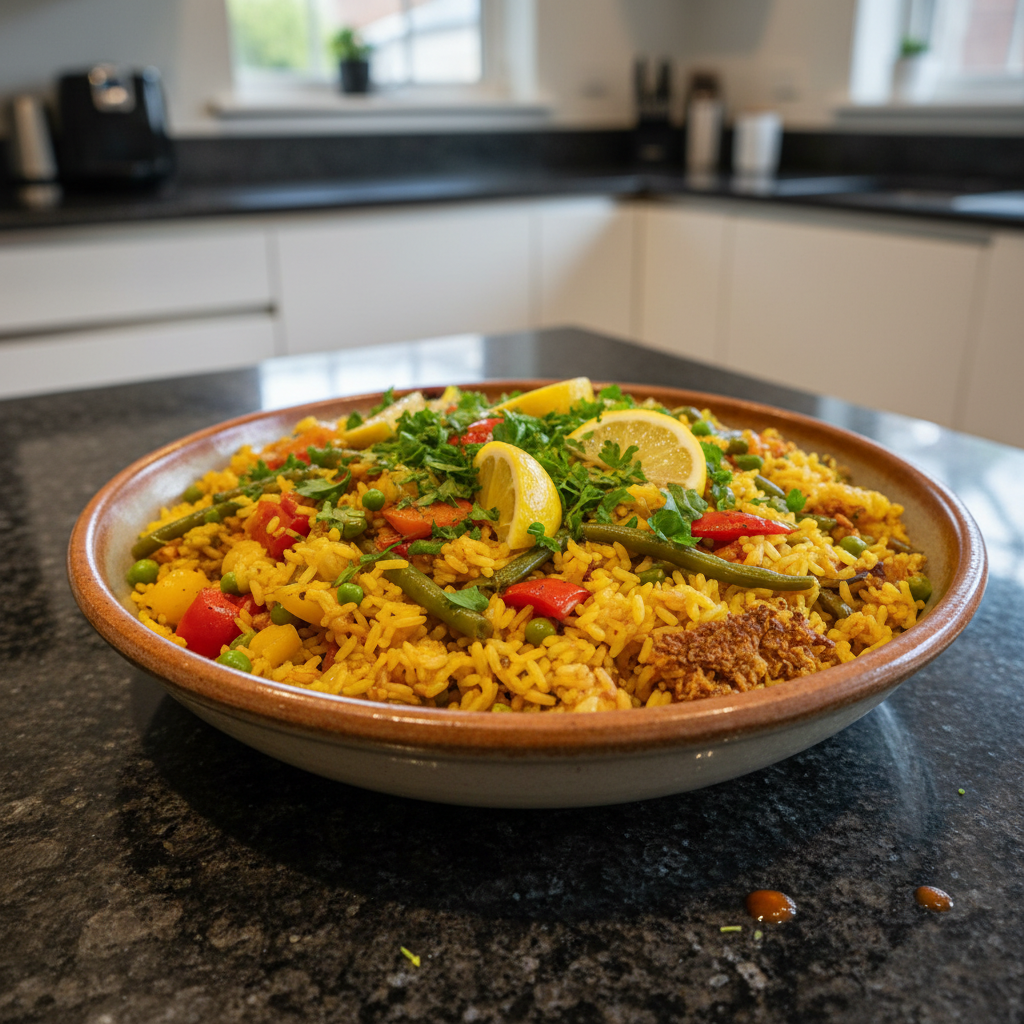
Crispy One-Pot Vegetable Paella: Flavorful & Easy Recipe
Ingredients
Equipment
Method
- Add the saffron to the hot stock, stir thoroughly and set aside. This allows the saffron to bloom and infuse its color and flavor into the liquid.
- Place the olive oil in a large, wide pan over a medium-low heat. Add the onion, cover with a lid and cook over a gentle heat for 3 minutes, stirring occasionally until softened and translucent.
- Add the crushed garlic, dried chilli flakes, and smoked paprika. Cook for 2 more minutes, stirring occasionally, until the kitchen fills with fragrant aromas.
- At this point, remove about ¼ of the saffron-infused vegetable stock (approximately 300ml) from the main batch and pour it into the pan with the aromatics. Increase the heat to medium-high and bring it to a vigorous simmer, allowing it to reduce by about half, stirring occasionally. This step is our unique twist to truly deepen the flavor base.
- Once the stock has reduced, add the sliced bell peppers, roughly chopped tomatoes, and green beans to the pan. Sauté for another 3-4 minutes until the vegetables start to soften slightly.
- Add the paella rice to the pan, stirring gently for about 30 seconds to coat the grains with the flavorful base. Season with salt and pepper to taste.
- Pour in the remaining (approximately 900ml) vegetable stock. Bring the mixture to a boil, then immediately reduce the heat to a low simmer. Place the lid off. Now, this is crucial: *do not stir the rice from this point forward.* Let it simmer gently for 15 minutes. The rice needs to absorb the liquid evenly and allow its starches to set, which is essential for both the texture and the socarrat.
- Add the frozen peas, distributing them evenly over the rice. Continue to cook for a further 5 minutes, still without stirring. By this time, all the stock should have been absorbed, and the rice should be plump and tender.
- To achieve that glorious ‘socarrat’ (crispy rice bottom), increase the heat to medium-high for the final 1-2 minutes. Listen carefully for a gentle crackling sound, and you might see the edges of the rice slightly crisping. *Do not stir during this step.* This is the Maillard reaction at work, creating that desired textural contrast. Keep a close eye on it to prevent burning.
- Remove the pan from the heat. Stir in the juice from two of the lemon quarters and the chopped parsley. Cover the pan with a lid or foil and let it rest for 5-10 minutes. This allows the flavors to meld and the rice to finish steaming.
- Serve your magnificent One-Pot Vegetable Paella scattered with more fresh parsley and with the remaining lemon quarters on the side for squeezing. Enjoy!
