


Step into my kitchen and prepare to be enchanted by a dessert that beautifully marries the vibrant traditions of Japan with the timeless elegance of Italy. This isn’t just any tiramisu; it’s a luscious Matcha Tiramisu, a sophisticated, no-bake treat that promises an unforgettable culinary experience. Whether you’re a seasoned baker or a curious beginner, this article is designed to guide you through every step, offering not just a detailed recipe but also comprehensive guides to perfect your creation. Get ready to learn my expert tips, essential troubleshooting, and discover the delightful secret of our unique white chocolate ganache twist!
Why You’ll Love This Recipe
What truly sets this Matcha Tiramisu apart is its incredible depth of flavor and luxurious texture, thanks to a unique twist I’ve perfected in my kitchen. The star of the show? A subtle layer of high-quality white chocolate ganache nestled within and artfully drizzled on top.
Luscious and Silky: This ganache introduces an unparalleled silky texture and a delicate sweetness that elevates the creamy mascarpone without ever overpowering the distinctive, earthy notes of the matcha. The cocoa butter in quality white chocolate provides a richness that makes each bite utterly decadent.
Enhanced Flavor Profile: A hint of pure vanilla bean paste in the ganache adds an extra layer of aromatic depth, creating a more complex and harmonious flavor profile that will delight your palate.
Elegant Presentation: Beyond taste, the ganache adds a visual elegance, making this dessert as beautiful to behold as it is to eat.
But the ganache isn’t the only reason to adore this recipe! It’s also an elegant, impressive no-bake dessert that offers a safe (cooked egg yolk) and relatively straightforward approach to a traditionally complex treat. It truly is the perfect recipe for anyone seeking an elevated dessert experience.
Ingredients Needed
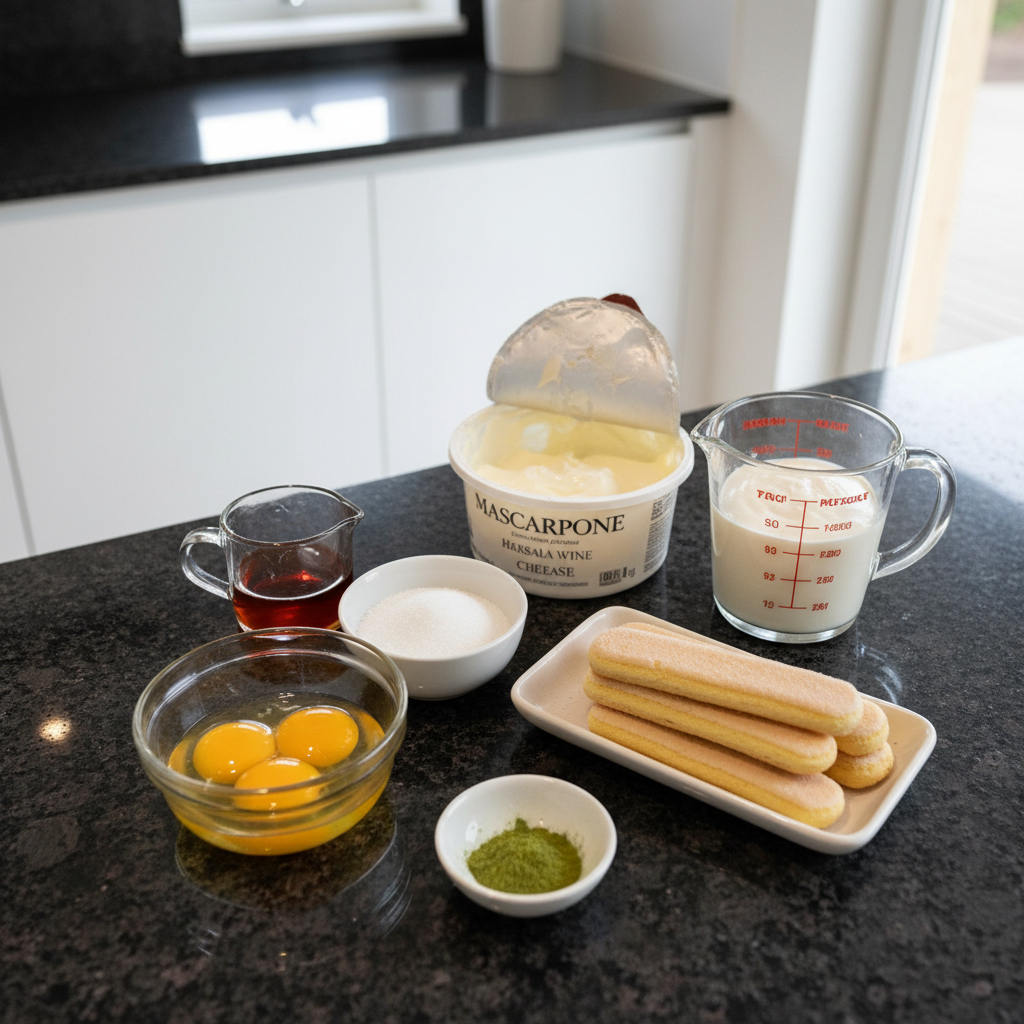
- 3 large egg yolks ((one egg yolk is about 19 g; at room temperature))
- ⅓ cup sugar ((divided))
- 2 Tbsp marsala wine ((highly recommend; missing a kick without it; can substitute with dark rum or brandy))
- 8 oz mascarpone cheese ((at room temperature) )
- 1½ cups heavy (whipping) cream ((chilled))
- For the Cookie Layer:
- ½ cup water ((heated to 175ºF/80ºC))
- 1½ Tbsp matcha (ceremoial or culinary grade) ((9 g))
- 24 ladyfingers ((divided, for 2 layers; you will need 36 cookies for 3 layers; read the post))
- For Serving:
- 2 Tbsp matcha (ceremoial or culinary grade) ((for dusting))
Ingredient Notes & Substitutions
When crafting your Matcha Tiramisu, the quality of your ingredients truly shines. For the star, matcha powder, I recommend using a high-quality ceremonial grade matcha for the vibrant color and nuanced flavor in the cream, though a good culinary grade matcha works perfectly for the ladyfinger soak and dusting. Brands like Maeda-en matcha are reliable choices available in the US market.
Your mascarpone cheese should be full-fat and at room temperature for the smoothest, creamiest texture. Don’t compromise on this! For ladyfingers, traditional Italian Biscotti savoiardi are ideal due to their firmer texture which holds up well to soaking. Look for brands that are relatively dry and airy, rather than soft sponge cakes, for the perfect structural integrity in your tiramisu.
Marsala wine provides a distinct caramel-nutty note that complements the matcha beautifully. If you don’t have Marsala, dark rum or brandy make excellent alcoholic substitutions, adding warmth and depth. For a robust non-alcoholic version, I suggest a strong matcha syrup made with a touch of sugar and water, perhaps boosted with a dash of vanilla bean paste or a hint of almond extract for that missing “kick.”
For our special twist, ensure you use a good quality white chocolate for the ganache – it makes all the difference in achieving that luxurious silkiness. Combine it with chilled heavy cream and a whisper of vanilla bean paste for an exquisite layer.
Finally, remember that sugar levels can be adjusted. If you’re using a particularly bitter ceremonial matcha or prefer a less sweet dessert, you can slightly reduce the granulated sugar. For those exploring dietary adaptations, while this recipe isn’t specifically formulated, you can find specialized gluten-free ladyfingers for a gluten-free tiramisu or explore plant-based alternatives like cashew cream, coconut cream, or vegan mascarpone for a vegan tiramisu, though textures will vary.
How to Make Matcha Tiramisu
Before You Start…
- Please note that this is a chilled dessert and requires at least 4 hours of chilling time, preferably overnight, for the best flavor and texture.
- Gather all the ingredients and equipment. Having everything prepped before you begin ensures a smooth cooking process.
- You will need a medium saucepan, a medium heatproof mixing bowl to set over the saucepan, and two large bowls. Fill one of the large bowls with water and ice and make sure that the mixing bowl fits in this ice bath; set aside for cooling the egg mixture later. Also, set an instant-read thermometer near your double boiler setup.
- Set up a double boiler: First, add 2 inches of water to the saucepan. Next, set the mixing bowl on top and check that the bottom of the bowl does not touch the water. Set aside the mixing bowl to use for the egg mixture. Bring the water to a bare simmer over medium heat, then reduce the heat to low.
To Cook the Egg Mixture
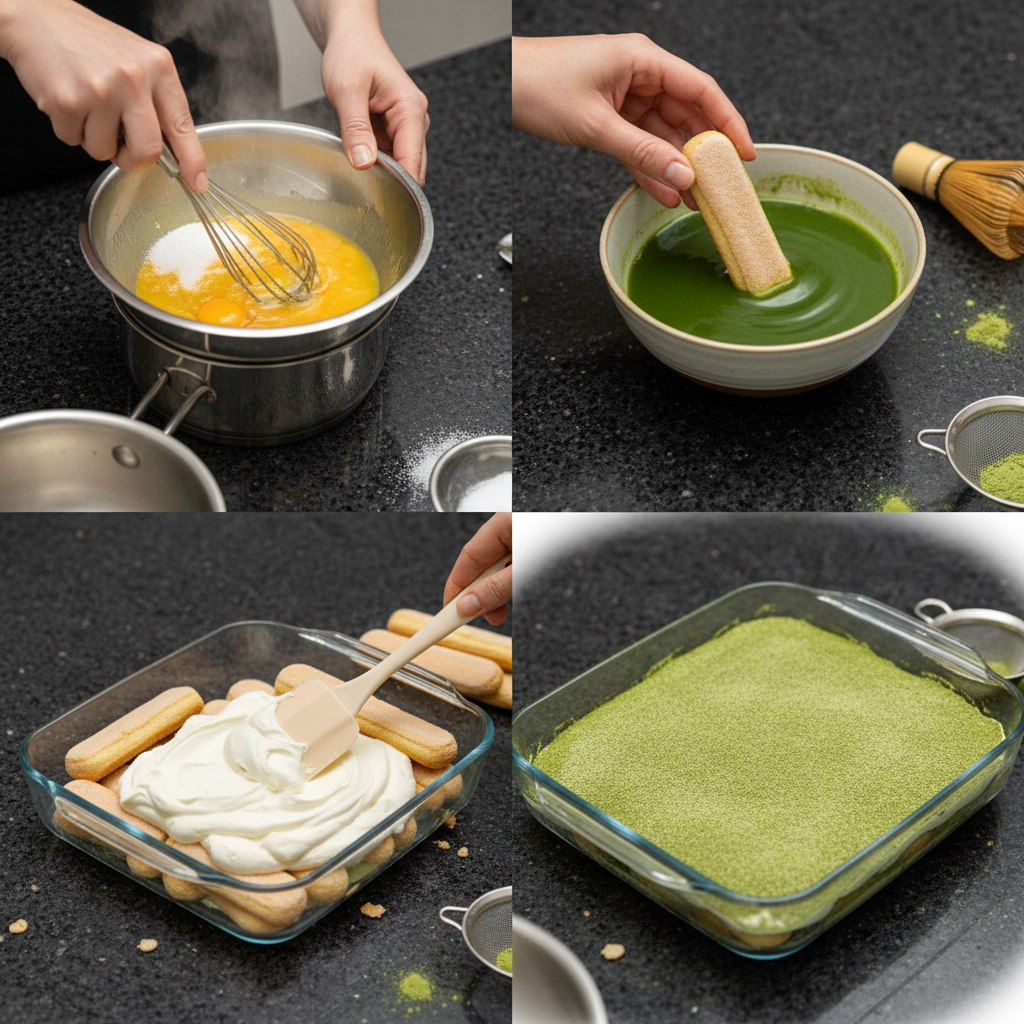
- In the medium heatproof mixing bowl, add the 3 large egg yolks, 2 Tbsp Marsala wine, and 3 Tbsp of the ⅓ cup sugar. Start whisking it with a handheld electric mixer.
- Set the bowl over the saucepan of barely simmering water and continue to beat the egg yolks. Over the next 10 minutes or so, you‘ll gently cook this egg mixture until it registers 160ºF (71ºC), when it‘s safe to consume and eliminates any salmonella risk. Keep your instant-read thermometer handy to check the temperature. Pro Tip: At around 160ºF, your eggs may start to look like scrambled eggs if not mixed constantly; therefore, I highly recommend both an electric mixer and an instant-read thermometer for this process to ensure a smooth, emulsified mixture.
- Continue to cook the egg mixture, beating it constantly. You’ll notice the egg mixture will gradually increase in volume and become noticeably lighter in texture, transforming into a pale yellow, thick, ribbon-like consistency.
- Maintain consistent whisking with your electric mixer. I typically use Speed 3 of a 5-speed hand mixer throughout this process, continuously checking the temperature.
- As soon as the egg mixture reaches 160ºF (71ºC), immediately remove the mixing bowl from the saucepan. Set the bowl in the prepared ice bath to quickly stop the cooking. Let it cool for 1 minute, continuing to whisk occasionally to prevent further cooking and ensure even cooling.
To Make the Mascarpone Cream
- Meanwhile, put the 8 oz mascarpone cheese in another large bowl and soften it gently with a silicone spatula until smooth. Add the cooled egg mixture into the bowl with the mascarpone.
- Important Note: The egg mixture does get cooked a bit on the sides of the bowl from the double boiler. Do not scrape off or use this cooked, hardened egg in your mascarpone mixture, as it will create a grainy texture.
- Gently fold the egg mixture into the mascarpone until just smooth and no streaks remain. Pro Tip: Overmixing at this stage can cause the mascarpone to become grainy, so stop as soon as it’s combined and beautifully creamy.
- Now, make the whipped cream: In another bowl, beat 1½ cups heavy (whipping) cream until foamy; you can reuse the bowl from the ice bath, but make sure it‘s completely dry and chilled. Then, gradually add the rest of the sugar.
- Beat together until medium peaks form. The cream should hold its shape well but still be soft and hasn’t started to become grainy or separated. When you lift out the whisk, peaks will form but they will bend over gently at the end.
- Now, gently fold the whipped cream mixture into the mascarpone mixture using a large spatula.
- Continue to fold the mascarpone cream until it is well combined, light, and airy, taking care not to deflate the whipped cream.
To Assemble
- In a small bowl, combine ½ cup water (heated to 175ºF/80ºC) and 1½ Tbsp matcha (ceremonial or culinary grade). Whisk together vigorously until there are no lumps and the matcha is fully dissolved. Transfer this vibrant green matcha mixture to a flat-bottomed container large enough for a ladyfinger cookie to lay flat.
- Gather your 24 ladyfingers. One at a time, quickly dip a ladyfinger into the matcha mixture until soaked but not soggy; use a pair of tongs to flip it over to soak the other side (this should only take a few seconds per side). Then, place it on the bottom of an 8 x 8-inch (20 x 20 cm) baking dish. Repeat until you‘ve arranged 2 neat rows of 6 ladyfingers each.
- Spread half of the prepared mascarpone cream over the ladyfingers in an even layer. Smooth out the surface using the silicone spatula or a silicone pastry scraper.
- Now for the special twist! Prepare a simple white chocolate ganache: gently melt 3 oz good quality white chocolate (finely chopped) with ¼ cup heavy cream and ½ tsp vanilla bean paste in a small bowl set over a saucepan of simmering water (or in the microwave in short bursts). Stir until smooth and fully emulsified. Let it cool slightly until it’s still pourable but thick enough to spread easily (not hot). Drizzle this luscious white chocolate ganache evenly over the first layer of mascarpone cream.
- Create a second layer of cookies, dipping the remaining ladyfingers in the matcha mixture and placing them in 2 neat rows directly on top of the white chocolate ganache layer.
- Top with the remaining mascarpone cream and smooth out the top evenly. Cover with a sheet of plastic wrap placed directly on the surface of the cream to prevent a skin from forming. Refrigerate for at least 4 hours, preferably overnight, for the best setting and flavor development.
To Serve
- Remove your chilled Matcha Tiramisu from the refrigerator and unwrap the plastic. Immediately before serving, dust 2 Tbsp matcha (ceremoial or culinary grade) generously on top of the tiramisu using a fine-mesh sieve for an even, beautiful coating. Slice and enjoy this elegant, vibrant dessert!
To Store
- You can keep the leftovers in an airtight container and store in the refrigerator for up to 3 days, maintaining its freshness and delightful flavor.
Elevating Your Matcha Tiramisu: Flavor, Substitutions & Customizations
Beyond the core recipe, there are many ways to tailor your Matcha Tiramisu to your taste and dietary needs. Here are some insights to guide your culinary creativity.
Alcohol Choices & Non-Alcoholic Alternatives
The choice of alcohol profoundly impacts the final flavor profile of your Matcha Tiramisu. Marsala wine, with its sweet, nutty, and slightly caramelized notes, perfectly complements the earthy bitterness of matcha. It adds a traditional Italian depth that truly enhances the overall richness. For a different character, dark rum introduces a warm, molasses-like sweetness and subtle spice, while brandy offers a fruiter, more aromatic complexity. Each choice provides a unique “kick” and elevates the dessert’s sophistication.
For a non-alcoholic version that doesn’t skimp on flavor, I recommend creating a concentrated matcha syrup. Simply dissolve a tablespoon of sugar in a quarter cup of hot water, then whisk in 1.5 tablespoons of matcha powder until smooth. For that missing “kick,” add a splash of pure vanilla bean paste or a few drops of almond extract to this syrup. This robust non-alcoholic soak will ensure your ladyfingers are flavorful and moist.
Adjusting Sweetness & Matcha Grade
The beauty of homemade dessert lies in customization, especially when it comes to sugar levels. If you’re using a higher-quality ceremonial grade matcha, which naturally has less bitterness and a smoother taste, you might reduce the sugar by a tablespoon or two to let its delicate notes shine. Conversely, if you opt for a more robust culinary grade matcha, which tends to be more bitter, you might keep the sugar as specified or even add a touch more to balance its intensity. Always taste your ingredients and adjust to your personal sweetness preference. Ceremonial grade matcha is known for its bright green color and mellow umami, while culinary grade matcha is designed for baking, offering a stronger, more assertive green tea flavor that stands up to other ingredients.
Selecting Key Ingredients for Success
In the US market, finding the right ingredients can sometimes be a quest. For ladyfingers, I highly recommend seeking out authentic Italian Biscotti savoiardi. These are typically drier and firmer than some American sponge fingers, making them perfect for soaking without becoming overly soggy. Brands like Balocco or Matilde Vicenzi are good options. For mascarpone cheese, always opt for a reputable Italian brand like BelGioioso or Vermont Creamery if available, ensuring it’s fresh and full-fat for that essential rich, creamy texture.
Dietary Adaptations: Gluten-Free & Vegan Options
Creating a gluten-free tiramisu is quite achievable by simply substituting traditional ladyfingers with certified gluten-free ladyfingers, which are increasingly available in specialty stores or online. Ensure all other ingredients remain gluten-free. For a vegan tiramisu, you’ll need a few more swaps. Replace the eggs and mascarpone with a rich cashew cream or a blend of coconut cream and a plant-based cream cheese alternative. Vegan ladyfingers are also essential. Be mindful that these substitutions will alter the texture slightly, often resulting in a denser, yet still delicious, dessert.
Mastering Storage, Serving & Scaling Your Dessert
To fully enjoy your Matcha Tiramisu, understanding how to store, serve, and even plan ahead is key.
Make-Ahead & Freezing Instructions
This Matcha Tiramisu is an ideal make-ahead dessert for parties. I recommend preparing it at least one day in advance, allowing the flavors to meld beautifully and the layers to set perfectly. The optimal preparation timeline is 24-48 hours before serving. For longer storage, you can freeze individual portions of Matcha Tiramisu. Once completely set, cut into servings, wrap each tightly in plastic wrap, then foil, and place in an airtight container. It can be stored in the freezer for up to 1 month. To thaw, simply transfer frozen portions to the refrigerator overnight. This slow thawing helps maintain the delicate creamy texture.
Serving Sizes & Presentation
From an 8×8 baking dish, you can typically get 9 generous servings or 12 smaller, elegant portions. While I don’t provide calorie counts per actual serving as it varies widely with ingredient brands and precise cuts, understanding the serving size helps you manage your dessert. For a sophisticated touch, consider assembling your Matcha Tiramisu in individual serving dishes or elegant glass cups. This makes for beautiful presentation and effortless serving, especially for dinner parties.
Pro Tips & Troubleshooting
Achieving the perfect Matcha Tiramisu is all about technique and a keen eye. Here are my top tips and solutions to common challenges.
Pro Tips for Perfection
- Ensure Egg Safety and Smoothness: Always use an instant-read thermometer to ensure your egg yolks reach precisely 160ºF (71ºC) while whisking with an electric mixer over the double boiler. This crucial step pasteurizes the eggs, eliminating salmonella risk, and creates a beautifully emulsified, pale yellow base without any scrambling.
- Gentle Folding is Key: When combining the cooked egg mixture with the mascarpone cheese and then folding in the whipped heavy cream, use a light hand. This preserves the airy texture of the whipped cream, preventing a heavy or grainy texture in your final dessert.
- Whip Cream to Medium Peaks: Beat your heavy cream until it forms medium peaks. It should hold its shape but still be soft and pliable. Over-beating will result in a grainy texture, while under-beating will lead to a watery, unstable cream.
- Quick Dip for Ladyfingers: Quickly dipping ladyfingers in the matcha liquid is paramount. A quick dunk (1-2 seconds per side) is all they need to absorb enough flavor without becoming overly soggy and compromising the dessert’s structure.
- Quality Matcha for Vibrant Flavor: Invest in high-quality ceremonial grade matcha or a premium culinary grade matcha. This ensures a vibrant green color and a distinct, delicious matcha flavor that truly shines through.
- Ganache Temperature Matters: For our unique white chocolate ganache layer, ensure it’s cooled to a spreadable, slightly thickened consistency before applying. If it’s too warm, it will melt into the mascarpone; too cold, it will be difficult to spread smoothly.
Common Mistakes to Avoid
- Undercooked Eggs: Not reaching 160ºF (71ºC) for the egg mixture means risking salmonella. Always use a thermometer.
- Overmixing Mascarpone Cream: Mascarpone can turn grainy if overmixed. Fold gently until just combined. If your cream turns watery, it’s often due to overmixing the mascarpone or not beating the heavy cream to the right consistency.
- Over-Soaking Ladyfingers: Soggy ladyfingers are a common culprit for a tiramisu that doesn’t hold its shape. Remember, a quick dip is all it takes. If your cream isn’t setting, ensure your whipped cream was at medium peaks and the mascarpone wasn’t overmixed.
- Dusting Matcha Powder Too Early: Dusting the matcha powder hours before serving will lead to it absorbing moisture and appearing splotchy. Always dust immediately before serving for the freshest look.
- Bland Flavor: If your Matcha Tiramisu tastes bland, it could be due to low-quality matcha, not enough alcohol (or an inadequate non-alcoholic substitute), or insufficient chilling time, which allows flavors to meld.
Serving & Storage
Elegant Serving Ideas
Presentation is key for this stunning Matcha Tiramisu! Just before serving, take a moment to generously dust the top with high-quality matcha powder using a fine-mesh sieve. This creates a beautiful, even, and vibrant green finish. For an extra touch of elegance, garnish each slice with fresh red strawberries, which provide a lovely contrast in color and a burst of complementary fruitiness, or delicate curls of white chocolate shavings. While serving from an 8×8 baking dish is perfectly fine, for special occasions, consider preparing the tiramisu in elegant individual serving dishes like small glasses or ramekins. This makes for a truly impressive and effortless presentation. Pair it with a light, unsweetened green tea or a glass of sparkling water with lime to cleanse the palate.
Optimal Storage & Make-Ahead Tips
For optimal setting and flavor development, your Matcha Tiramisu requires an ideal chilling time of at least 4 hours, but honestly, it’s best when refrigerated overnight. This allows the ladyfingers to soften perfectly, the cream to firm up, and all the incredible flavors to meld into a harmonious whole. Any leftovers can be stored in an airtight container in the refrigerator for up to 3 days. Beyond that, the texture and freshness will start to diminish, though the flavors will still be present.
Conclusion
And there you have it—a truly exceptional Matcha Tiramisu recipe, elevated by my secret white chocolate ganache twist! I hope you feel inspired and confident to create this vibrant, sophisticated dessert in your own kitchen. The marriage of earthy matcha, creamy mascarpone, and that delicate, luxurious white chocolate layer creates a symphony of flavors that is sure to impress. With all the detailed guidance on ingredients, techniques, and troubleshooting, you’re well-equipped to achieve perfection. Don’t hesitate to experiment with different variations or serving ideas, making this recipe truly your own. Please, print this recipe, share your beautiful creations, and explore other tiramisu recipes, such as our Strawberries and Cream Tiramisu, or other Japanese-inspired dessert recipes to continue your culinary adventure!
FAQ
- How do I safely prepare the egg yolks for Matcha Tiramisu and avoid scrambling?
To safely pasteurize egg yolks, you must cook them over a double boiler, continuously whisking with an electric mixer, until the mixture reaches 160ºF (71ºC) as verified by an instant-read thermometer. This temperature ensures safety and creates a stable base without scrambling, especially if you whisk constantly. - What are the best types of matcha powder to use for Matcha Tiramisu and where can I find them?
For vibrant color and delicate flavor in the cream, ceremonial grade matcha is ideal. For the ladyfinger soak and dusting, a high-quality culinary grade matcha works perfectly. You can find excellent options online or at specialty Asian markets. Brands like Maeda-en matcha are reputable choices in the US. - Can I make Matcha Tiramisu without alcohol, and what are the best substitutes for flavor?
Yes, you can! For a non-alcoholic version, replace Marsala wine with a strong matcha syrup (matcha powder dissolved in warm, sweetened water) enhanced with a dash of vanilla bean paste or a hint of almond extract to provide a similar depth of flavor. - How many layers of ladyfingers should I use for Matcha Tiramisu, and how do I prevent them from becoming soggy?
This recipe calls for two layers of ladyfingers, creating a balanced texture. To prevent sogginess, quickly dip ladyfingers into the matcha liquid for only 1-2 seconds per side, ensuring they absorb just enough moisture without becoming mushy. - What is the ideal chilling time for Matcha Tiramisu, and how long can it be stored?
The ideal chilling time is at least 4 hours, but preferably overnight, for optimal setting and flavor development. Leftovers can be stored in an airtight container in the refrigerator for up to 3 days. - Can I prepare Matcha Tiramisu in advance or freeze it for later?
Yes, Matcha Tiramisu is an excellent make-ahead dessert and tastes even better 1-2 days after preparation. For longer storage, individual portions can be frozen for up to 1 month. Thaw them slowly in the refrigerator overnight to maintain texture. - What are the essential kitchen tools for making Matcha Tiramisu?
Essential tools include a medium saucepan, a heatproof mixing bowl (for a double boiler setup), two large mixing bowls, a handheld electric mixer, an instant-read thermometer, a silicone spatula, and a fine-mesh sieve for dusting matcha. An 8×8 baking dish or individual serving dishes will be needed for assembly. - Is Matcha Tiramisu a simple dessert to make?
While it involves several steps, Matcha Tiramisu is a relatively straightforward no-bake dessert, especially with the detailed instructions and tips provided. The most critical steps are safely cooking the egg yolks and gently folding the creams, which are easily mastered with practice and the right tools.

Decadent Matcha Tiramisu with White Chocolate Ganache Twist
Ingredients
Equipment
Method
- Please note that this is a chilled dessert and requires at least 4 hours of chilling time, preferably overnight, for the best flavor and texture.
- Gather all the ingredients and equipment. Having everything prepped before you begin ensures a smooth cooking process.
- You will need a medium saucepan, a medium heatproof mixing bowl to set over the saucepan, and two large bowls. Fill one of the large bowls with water and ice and make sure that the mixing bowl fits in this ice bath; set aside for cooling the egg mixture later. Also, set an instant-read thermometer near your double boiler setup.
- Set up a double boiler: First, add 2 inches of water to the saucepan. Next, set the mixing bowl on top and check that the bottom of the bowl does not touch the water. Set aside the mixing bowl to use for the egg mixture. Bring the water to a bare simmer over medium heat, then reduce the heat to low.
- In the medium heatproof mixing bowl, add the 3 large egg yolks, 2 Tbsp Marsala wine, and 3 Tbsp of the ⅓ cup sugar. Start whisking it with a handheld electric mixer.
- Set the bowl over the saucepan of barely simmering water and continue to beat the egg yolks. Over the next 10 minutes or so, you‘ll gently cook this egg mixture until it registers 160ºF (71ºC), when it‘s safe to consume and eliminates any salmonella risk. Keep your instant-read thermometer handy to check the temperature. Pro Tip: At around 160ºF, your eggs may start to look like scrambled eggs if not mixed constantly; therefore, I highly recommend both an electric mixer and an instant-read thermometer for this process to ensure a smooth, emulsified mixture.
- Continue to cook the egg mixture, beating it constantly. You’ll notice the egg mixture will gradually increase in volume and become noticeably lighter in texture, transforming into a pale yellow, thick, ribbon-like consistency.
- Maintain consistent whisking with your electric mixer. I typically use Speed 3 of a 5-speed hand mixer throughout this process, continuously checking the temperature.
- As soon as the egg mixture reaches 160ºF (71ºC), immediately remove the mixing bowl from the saucepan. Set the bowl in the prepared ice bath to quickly stop the cooking. Let it cool for 1 minute, continuing to whisk occasionally to prevent further cooking and ensure even cooling.
- Meanwhile, put the 8 oz mascarpone cheese in another large bowl and soften it gently with a silicone spatula until smooth. Add the cooled egg mixture into the bowl with the mascarpone.
- Important Note: The egg mixture does get cooked a bit on the sides of the bowl from the double boiler. Do not scrape off or use this cooked, hardened egg in your mascarpone mixture, as it will create a grainy texture.
- Gently fold the egg mixture into the mascarpone until just smooth and no streaks remain. Pro Tip: Overmixing at this stage can cause the mascarpone to become grainy, so stop as soon as it’s combined and beautifully creamy.
- Now, make the whipped cream: In another bowl, beat 1½ cups heavy (whipping) cream until foamy; you can reuse the bowl from the ice bath, but make sure it‘s completely dry and chilled. Then, gradually add the rest of the sugar.
- Beat together until medium peaks form. The cream should hold its shape well but still be soft and hasn’t started to become grainy or separated. When you lift out the whisk, peaks will form but they will bend over gently at the end.
- Now, gently fold the whipped cream mixture into the mascarpone mixture using a large spatula.
- Continue to fold the mascarpone cream until it is well combined, light, and airy, taking care not to deflate the whipped cream.
- In a small bowl, combine ½ cup water (heated to 175ºF/80ºC) and 1½ Tbsp matcha (ceremonial or culinary grade). Whisk together vigorously until there are no lumps and the matcha is fully dissolved. Transfer this vibrant green matcha mixture to a flat-bottomed container large enough for a ladyfinger cookie to lay flat.
- Gather your 24 ladyfingers. One at a time, quickly dip a ladyfinger into the matcha mixture until soaked but not soggy; use a pair of tongs to flip it over to soak the other side (this should only take a few seconds per side). Then, place it on the bottom of an 8 x 8-inch (20 x 20 cm) baking dish. Repeat until you‘ve arranged 2 neat rows of 6 ladyfingers each.
- Spread half of the prepared mascarpone cream over the ladyfingers in an even layer. Smooth out the surface using the silicone spatula or a silicone pastry scraper.
- Now for the special twist! Prepare a simple white chocolate ganache: gently melt 3 oz good quality white chocolate (finely chopped) with ¼ cup heavy cream and ½ tsp vanilla bean paste in a small bowl set over a saucepan of simmering water (or in the microwave in short bursts). Stir until smooth and fully emulsified. Let it cool slightly until it’s still pourable but thick enough to spread easily (not hot). Drizzle this luscious white chocolate ganache evenly over the first layer of mascarpone cream.
- Create a second layer of cookies, dipping the remaining ladyfingers in the matcha mixture and placing them in 2 neat rows directly on top of the white chocolate ganache layer.
- Top with the remaining mascarpone cream and smooth out the top evenly. Cover with a sheet of plastic wrap placed directly on the surface of the cream to prevent a skin from forming. Refrigerate for at least 4 hours, preferably overnight, for the best setting and flavor development.
- Remove your chilled Matcha Tiramisu from the refrigerator and unwrap the plastic. Immediately before serving, dust 2 Tbsp matcha (ceremonial or culinary grade) generously on top of the tiramisu using a fine-mesh sieve for an even, beautiful coating. Slice and enjoy this elegant, vibrant dessert!
