


Bring the vibrant spirit of New Orleans directly to your kitchen with this authentic King Cake recipe. Whether you are celebrating the Epiphany or preparing for a massive Mardi Gras bash, this pillowy, citrus-scented brioche is the centerpiece you need. We are moving beyond the basic dry grocery store cakes to create a professional-grade masterpiece that honors the Feast of the Three Kings with every festive bite.
Why You’ll Love This Recipe
The Brown Butter Difference: Unlike standard recipes, my version infuses brown butter (beurre noisette) and vanilla bean. This secret adds a deep, toasted, nutty dimension and floral aroma, elevating your enriched dough to gourmet status.
Pillowy Texture: Through a specific scalding technique and a little pantry magic with potato flakes, I ensure the crumb stays incredibly soft for days. This is the difference between good and truly unforgettable king cake.
Customizable Fillings: You will learn the art of balancing the classic cinnamon sugar with a rich, tangy cream cheese layer. These versatile fillings mean every bite can be a different delight.
Authentic NOLA Flavor: My King Cake recipe captures the exact citrus and spice profile found in the most famous French Quarter bakeries. It is the taste of true Mardi Gras in every single slice, perfect for a grand celebration.
Ingredients and Substitutions
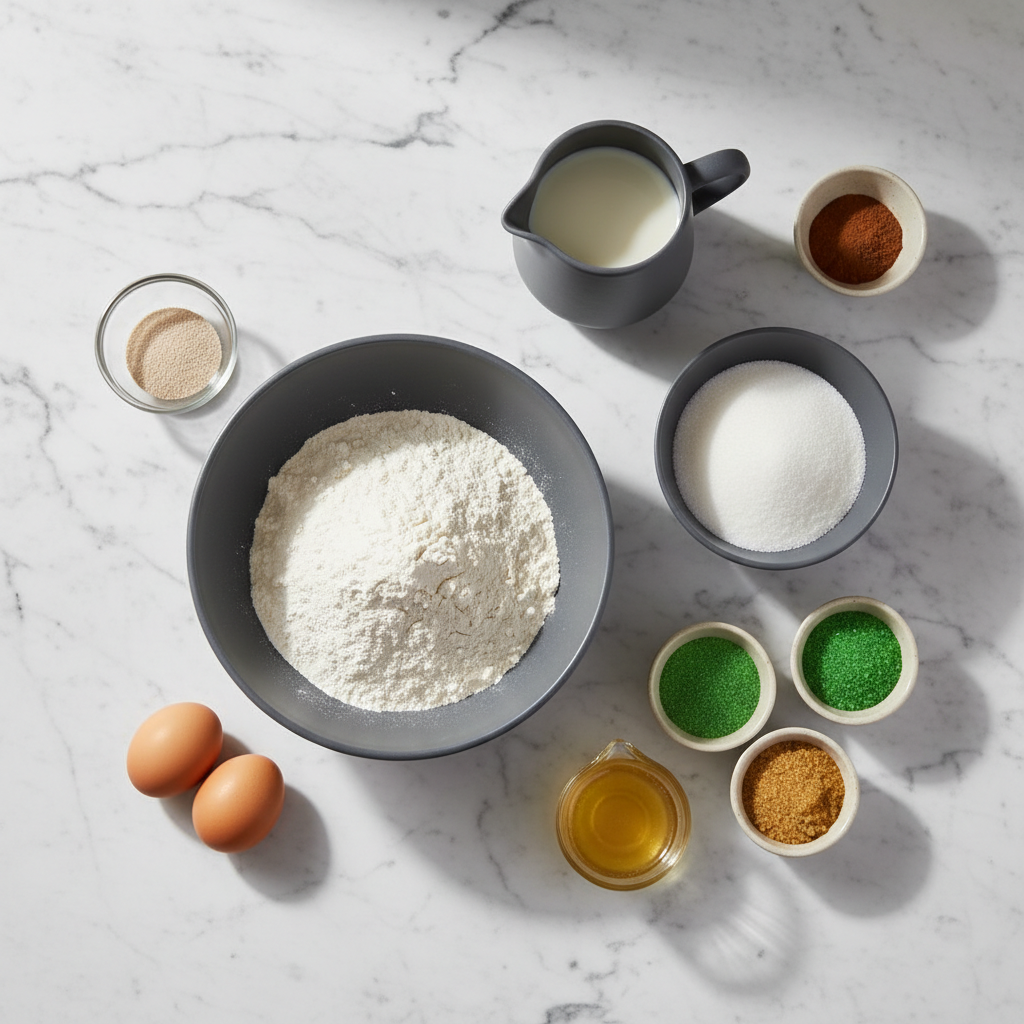
Crafting the perfect King Cake begins with a careful selection of ingredients. Each one plays a crucial role in achieving that signature fluffy texture and vibrant Mardi Gras flavor. Gather these essentials and prepare for a baking adventure!
Ingredients
For the Cake:
- 3/4 cup sugar
- 3/4 cup butter
- 3 cups milk
- 1 cup instant mashed potato flakes
- 1 tablespoon salt
- 4 eggs
- 2 packets instant yeast
- 7 cups all-purpose flour
- 1 teaspoon cinnamon
- 1/4 teaspoon lemon extract
- 1/4 teaspoon orange extract
- 1/4 teaspoon vanilla extract
- 1/4 teaspoon butter extract
For the Cinnamon Sugar Filling:
- 1/3 cup butter
- 1 cup granulated sugar
- 3 teaspoons cinnamon
For the Cream Cheese Filling:
- 1/2 cup powdered sugar
- 8 ounces cream cheese
For the Icing:
- 3 tablespoons butter
- 4 1/2 cups powdered sugar
- 1/2 cup milk
- 1/2 teaspoon salt
- 1 teaspoon vanilla or almond extract
- 3 tablespoons light corn syrup
For the Decorations:
- Purple, green, and yellow colored sugar
- Sprinkles
- 1 Plastic king cake baby
Ingredient Notes & Substitutions
Potato Flakes: These are the secret ingredient to a truly moist and pillowy King Cake, ensuring your yeast dough stays soft for days. They act as a natural moisture-locking agent, far beyond what flour alone can do.
The Extracts: The combination of lemon, orange, vanilla, and butter extracts is absolutely key to that signature “bakery smell” and taste of an authentic King Cake. Do not skip any of these, as they build the distinct, festive flavor profile.
Vanilla Bean: For an extra touch of gourmet quality and visible specks in your dough, I highly recommend using vanilla bean paste or scraping the seeds from a real vanilla bean into your butter mixture. It adds a deeper, more complex vanilla aroma.
How to Make the Ultimate King Cake
Preparing the Dough Base
- Begin by browning the butter in a saucepan over medium heat until it develops a nutty aroma and small brown bits appear at the bottom. Then, add the milk to the saucepan and heat it until the edges begin to foam and a thin “skin” forms across the top, which usually takes about 4-5 minutes. Remember, it should be scalded, not boiled.
- Carefully pour the warm milk and brown butter mixture into a large mixing bowl. Immediately add the sugar, instant mashed potato flakes, and salt, stirring until the butter is completely melted and everything is well combined.
- Allow this mixture to cool down to a lukewarm temperature, precisely 115°F. It is crucial to use an instant-read thermometer for this step; if the mixture is too hot, it will unfortunately kill your yeast and prevent the dough from rising.
- In a separate small bowl, gently beat the eggs together with the lemon, orange, vanilla, and butter extracts. This aromatic blend is what gives your King Cake its characteristic bright, festive flavor.
- Once the milk mixture reaches the correct temperature, sprinkle the instant yeast over it and stir gently to combine. Then, incorporate the egg and extract mixture, stirring until everything is uniformly mixed.
- Place 6 cups of the all-purpose flour and the cinnamon into the bowl of a stand mixer fitted with a dough hook attachment.
- Gradually pour the liquid milk mixture into the flour and cinnamon in the mixer bowl. Mix on medium speed, slowly adding the remaining 1 cup of flour as needed until the dough comes together. You are looking for a soft, slightly sticky dough, which is normal for this enriched brioche-style King Cake.
First Rise & Filling Prep
- Lightly grease a large bowl, then transfer your soft dough into it. Cover the bowl tightly with plastic wrap and let it rise in a warm, draft-free spot for one full hour. The dough should become noticeably puffy and increased in size.
- While the dough is rising, prepare your fillings. For the classic cinnamon filling, simply combine the granulated sugar and cinnamon in a small bowl; set aside the butter for later use. For the cream cheese filling, beat the cream cheese and powdered sugar together until the mixture is smooth and creamy, then transfer it into a piping bag. For more creamy dessert ideas, consider this delightful cherry cheesecake cake to explore how rich cream cheese can be.
Shaping & Baking the Cake
- Once the dough has risen beautifully, gently punch it down to release the air. Divide the dough into two equal portions, as this recipe makes two King Cakes. Then, divide each of those portions into three smaller, equal parts for braiding.
- Working with one piece at a time, roll out each strip of dough to about a 1/2-inch thickness. Generously spread it with softened butter, then sprinkle with your prepared cinnamon sugar mixture. Roll the dough up tightly along its long side and pinch the seam securely to seal it into a rope.
- Take three of these dough ropes and braid them together to form a beautiful plait. Carefully shape the braided dough into an oval ring on a parchment-lined baking sheet, pinching the ends together to seal the circle.
- If you are adding the cream cheese filling, now is the time to pipe it into the natural recesses and grooves of your braided dough ring.
- Cover the shaped King Cakes once more and allow them to rise in a warm place for another hour, or until they have doubled in size and look delightfully puffy.
- Preheat your oven to 350°F. Bake the King Cakes for 15-20 minutes, or until they turn a beautiful golden brown and a thermometer inserted into the thickest part reads 190°F. This internal temperature ensures a perfectly cooked interior without a gummy texture.
The Grand Finale: Icing & Decorating
- Let your beautiful King Cakes cool completely on a wire rack before proceeding to the icing stage. This is crucial; icing a warm cake will cause it to melt right off. If using a plastic king cake baby, gently insert it into the bottom of one of the cooled cakes.
- To make the vibrant icing, melt the butter in a medium bowl. Whisk in the powdered sugar, milk, salt, your choice of vanilla or almond extract, and the light corn syrup until the mixture is completely smooth and glossy.
- Generously spread the freshly made icing over your completely cooled King Cake. Immediately sprinkle with the traditional purple, green, and yellow colored sugars to create that iconic Mardi Gras look.
Secrets for a Fluffy Mardi Gras Masterpiece
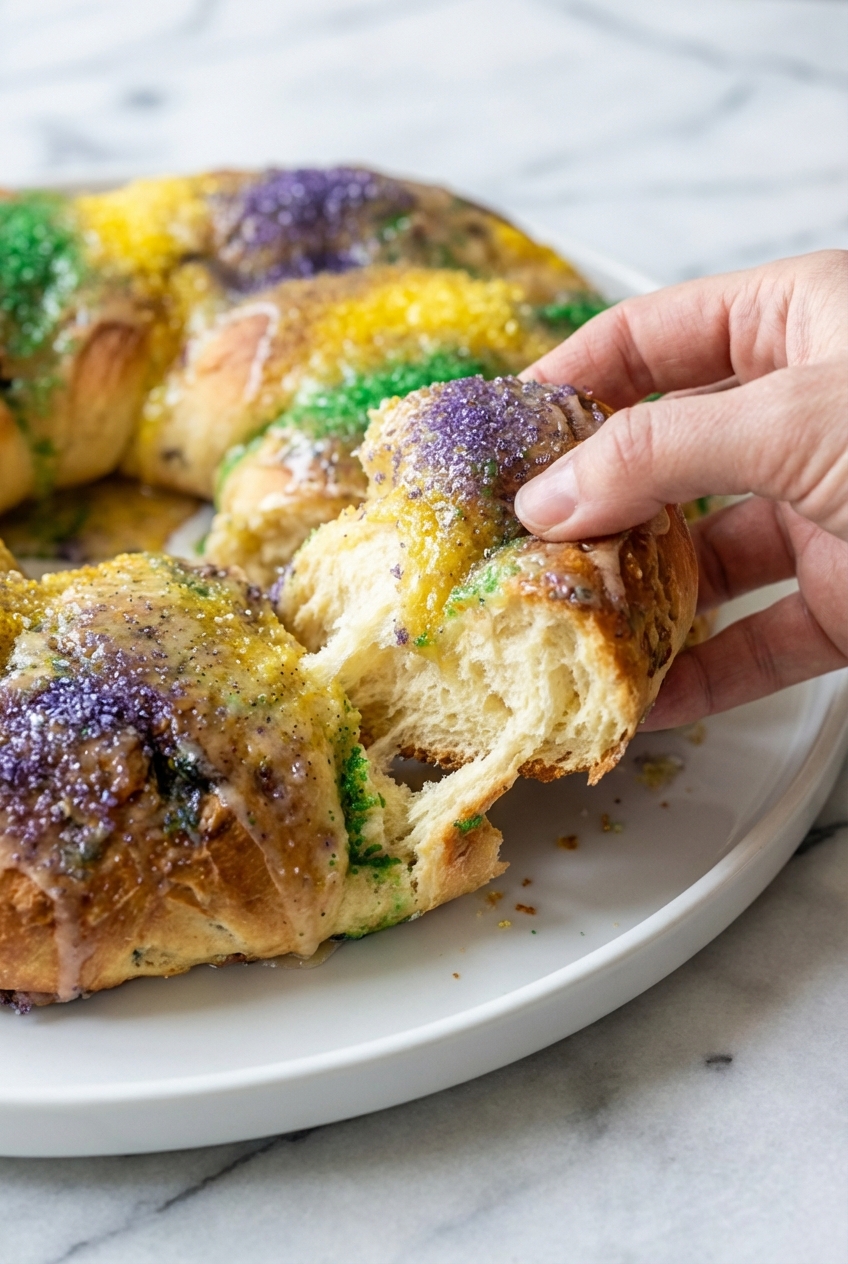
Temperature is King: The milk mixture must be precisely lukewarm, between 110°F and 115°F, when you add the yeast. If it is too hot, the active yeast will be killed, and your dough will not rise. If it is too cold, the yeast will be sluggish, leading to a slow or incomplete rise. This balance is critical for a light, airy brioche.
Don’t Over-Flour: It is tempting to keep adding flour until the dough is no longer sticky, but resist the urge! This enriched dough is meant to be soft and slightly tacky. Adding all 7 cups of flour too fast, or more than necessary, will result in a dense, bready cake instead of the characteristic pillowy texture we desire for a true King Cake.
The 190°F Rule: While visual cues like golden brown edges are helpful, for a truly perfectly baked King Cake, an instant-read thermometer is your best friend. Aim for an internal temperature of 190°F. This ensures the cake is fully cooked through, preventing a gummy interior that can occur if pulled from the oven too soon.
The Maillard Reaction: By browning the butter at the start, you are intentionally kickstarting the Maillard reaction. This process, responsible for the complex flavors in browned foods, enhances the King Cake’s flavor profile. It gives the enriched dough a deeper, more nuanced taste that goes beyond simple sweetness, making it a professional-grade treat worthy of the Carnival season. You can learn more about the historical records of Epiphany celebrations that give context to these traditions by visiting the Library of Congress blog.
Pro Tips & Troubleshooting
Pro Tips
- Zest it Up: For an even brighter aromatic lift that truly mimics high-end New Orleans bakeries, add fresh orange and lemon zest directly into your dough alongside the extracts.
- The Secret Spice: A pinch of freshly grated nutmeg is often the hidden ingredient in authentic NOLA King Cakes, adding a warm, subtle complexity that elevates the spice profile.
- Bulgarian Buttermilk: For those who love a bit more tang to balance the sweetness, try replacing a portion of the milk with Bulgarian-style buttermilk. It adds a delightful complexity and richness.
Common Mistakes to Avoid
- Frosting a Warm Cake: Always ensure your King Cake is completely at room temperature before applying the icing. Frosting a warm cake will cause the beautiful glaze to melt and slide right off, ruining your festive decoration.
- Yeast Check: After adding the yeast to your lukewarm milk mixture, wait five minutes. If the mixture does not bubble or foam, your yeast is likely dead, and it is best to start over with fresh yeast to ensure a proper rise.
Serving & Storage
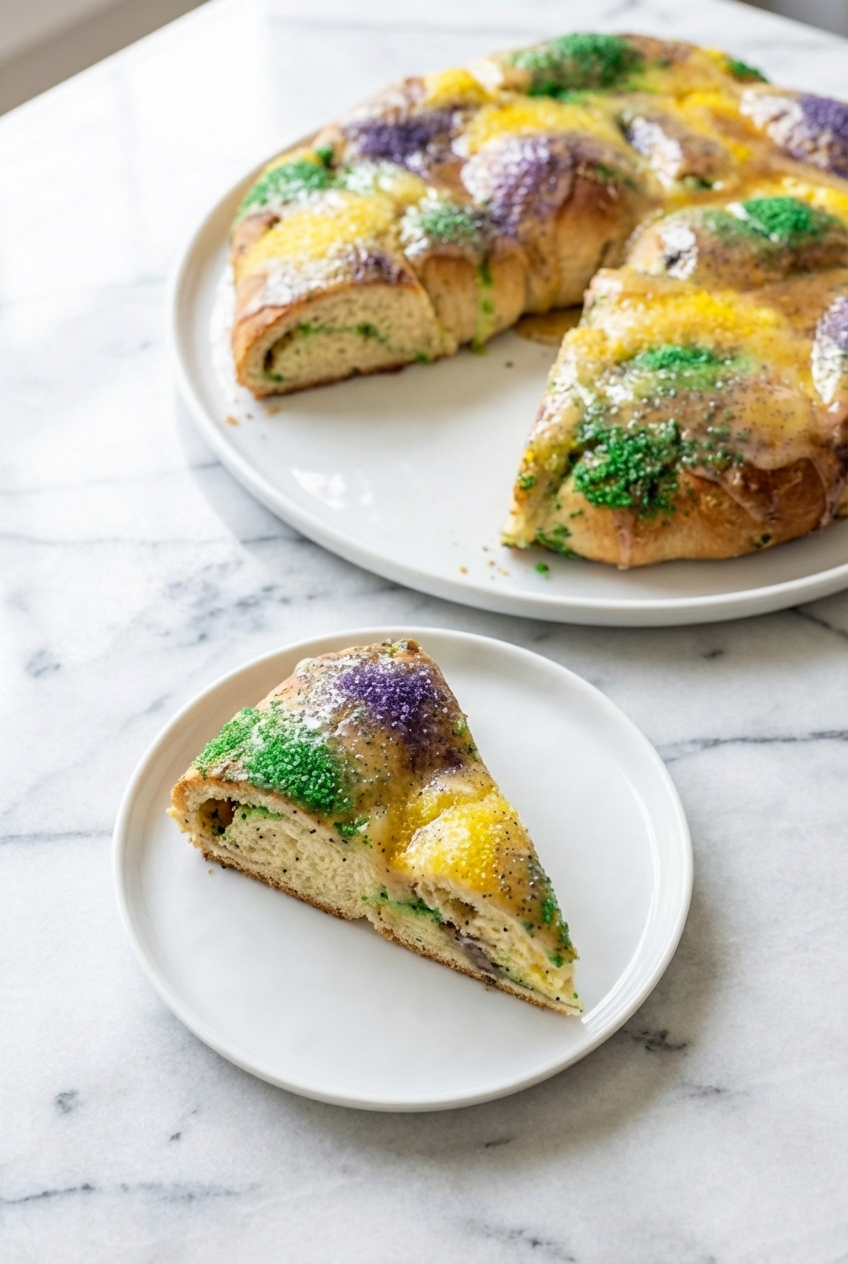
Serving Ideas
- The Chicory Connection: Nothing complements a slice of King Cake quite like a hot cup of strong Café Au Lait or traditional chicory coffee, truly transporting you to the French Quarter.
- Thin Slices: For the optimal experience, I recommend cutting thin pieces of King Cake. This ensures you get a perfect icing-to-cake ratio with every delightful bite, maximizing the sweetness and texture. For other delightful, lemon-forward desserts to round out your festive spread, consider this refreshing limoncello tiramisu.
Storage & Make-Ahead
- The Microwave Trick: If your King Cake is a day or two old and has lost some of its softness, simply microwave a slice for about 10 seconds. This will restore its pillowy texture, making it wonderfully tender again.
- Freezing: You can absolutely make this King Cake ahead of time! The un-iced cake freezes beautifully for up to a month if it is wrapped tightly in both plastic wrap and then foil. Thaw overnight in the refrigerator before icing.
The Tradition of the King Cake
The King Cake is more than just a delicious pastry; it is a beloved centerpiece of the Carnival season, bridging the time from the Epiphany (January 6th) to Mardi Gras (Fat Tuesday). This festive tradition brings joy and community together, symbolizing the journey of the Three Kings. The discovery of the plastic baby, traditionally hidden within the cake, crowns the finder as the “King” or “Queen” for the day, granting them luck and, importantly, the responsibility of providing the next King Cake for the celebration!
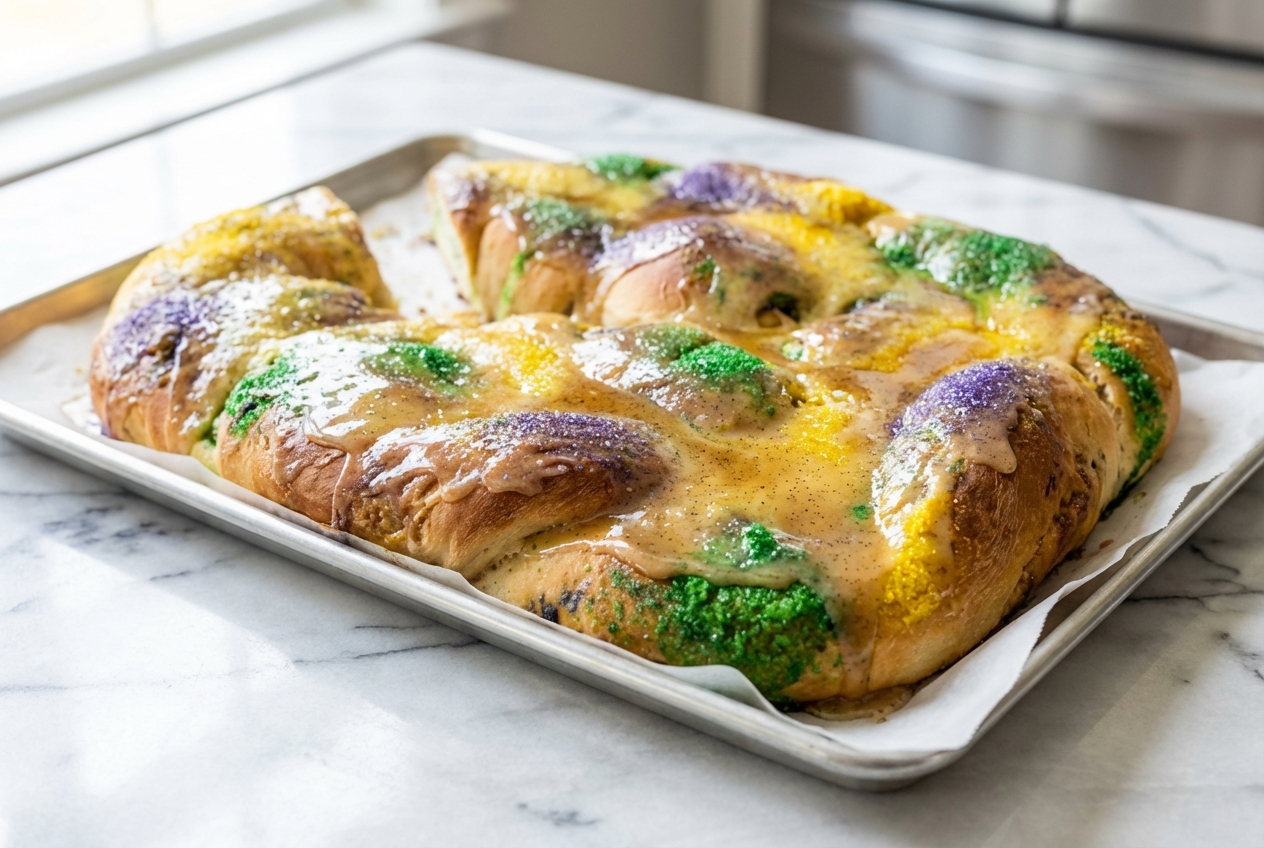

Authentic New Orleans King Cake Recipe
Ingredients
Equipment
Method
- Brown the butter in a saucepan over medium heat until nutty and fragrant. Add milk and heat until it foams at the edges and a skin forms. Do not boil.
- Pour the warm milk and butter into a large bowl. Stir in the sugar, potato flakes, and salt until combined.
- Cool the mixture to exactly 115 degrees F. Use an instant-read thermometer to ensure accuracy.
- In a separate bowl, beat the eggs with the lemon, orange, vanilla, and butter extracts.
- Sprinkle yeast over the lukewarm milk mixture, then stir in the egg and extract blend.
- Combine 6 cups of flour and cinnamon in a stand mixer with a dough hook. Gradually pour in the liquid mixture.
- Mix on medium speed, adding the final cup of flour as needed until a soft, slightly sticky dough forms.
- Transfer dough to a greased bowl, cover tightly, and let rise in a warm spot for 1 hour until puffy.
- Prepare the cinnamon sugar by mixing sugar and cinnamon. For the cream cheese filling, beat cream cheese and powdered sugar until smooth, then place in a piping bag.
- Punch down the risen dough. Divide into two equal portions for two cakes. Divide each portion into three smaller parts for braiding.
- Roll each strip to 1/2-inch thickness. Spread with softened butter and sprinkle with cinnamon sugar. Roll tightly into a rope and seal the seams.
- Braid three ropes together and shape into an oval ring on a parchment-lined sheet. Pinch ends together.
- Pipe cream cheese filling into the grooves of the braid if desired.
- Cover and let rise for another hour until doubled in size.
- Preheat oven to 350 degrees F. Bake for 15-20 minutes until golden brown or an internal temperature of 190 degrees F is reached.
- Cool cakes completely on a wire rack. Insert the plastic baby into the bottom of one cake once cooled.
- Melt butter for the icing and whisk in powdered sugar, milk, salt, extract, and corn syrup until smooth.
- Spread icing over the cooled cake and immediately decorate with purple, green, and yellow sugars.
