


There’s something uniquely comforting about a plate of warm, golden French toast. It’s a dish that instantly conjures images of lazy weekend mornings, family brunches, and pure deliciousness. While a classic french toast recipe might seem straightforward, I’ve discovered a secret twist in my kitchen that elevates this breakfast staple to an unforgettable experience. Whether you’re a seasoned chef or just starting your culinary journey, this recipe offers both a reliable guide and expert tips to master French toast, ensuring a superior, restaurant-quality result every single time.
Why You’ll Love This Recipe
This french toast recipe isn’t just another breakfast dish; it’s a revelation. My unique twist involves two crucial steps that will transform your expectations of French toast.
First, I substitute half of the milk with rich heavy cream. This simple change significantly increases the fat content in the batter, yielding an incredibly luxurious and custardy interior that melts in your mouth.
Second, and equally important, is allowing the batter to rest for 5-10 minutes before you even think about dipping your bread. This resting period gives the all-purpose flour a chance to fully hydrate and the starches to swell. The result is a naturally thicker batter that adheres uniformly to the bread, ensuring consistent flavor absorption and preventing any raw flour taste. It creates a perfectly golden brown exterior and that desirable fluffy, tender texture.
The practical benefits for you, the home cook, are immense. You will effortlessly achieve a gourmet breakfast that rivals any restaurant. This method guarantees consistently fluffy and tender results, making you feel like a true breakfast pro. It is the perfect recipe for those special family brunches or simply to treat yourself to an extraordinary morning meal.
Ingredients Needed
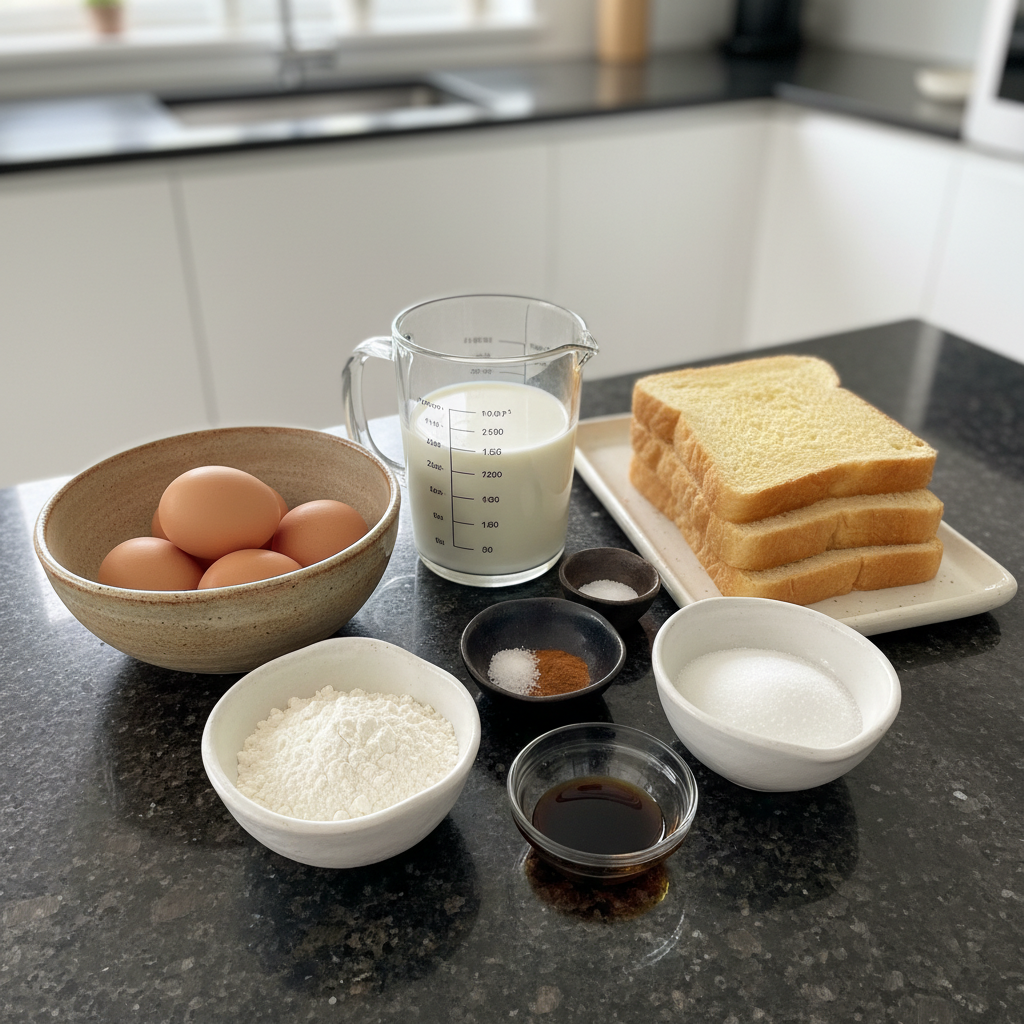
Gather these simple ingredients to create your ultimate French toast:
- 4 large eggs
- 2/3 cup milk ((160 ml))
- 1/4 cup all-purpose flour ((30 grams))
- 1/4 cup granulated sugar ((50 grams))
- 1/4 teaspoon salt
- 1 teaspoon ground cinnamon
- 1 teaspoon vanilla extract ((5 ml))
- 8 thick slices bread
Ingredient Notes & Substitutions
Choosing the right ingredients makes all the difference in a french toast recipe.
For bread choices, I always recommend using thick slices bread, ideally about 1-inch thick. Stale bread is actually your best friend here, as it absorbs the rich batter without becoming soggy. My top recommendations include Brioche, Challah bread, Sourdough bread, or even Texas Toast. The thicker the slice, the better the custardy interior you’ll achieve.
Regarding dairy options, our unique twist heroes heavy cream for that truly custardy interior. However, you can use half-and-half for a slightly lighter but still rich result. If you prefer dairy-free milk like almond milk or soy milk, you might want to add an extra egg yolk or a bit more all-purpose flour to the batter to maintain a similar richness and thickness. For gluten-free or other dietary bread options, simply use a sturdy gluten-free loaf and adapt the batter as needed for consistency.
You might wonder if all-purpose flour is necessary in French toast batter. Absolutely! The all-purpose flour in this recipe is crucial. It helps to create a thicker batter, which coats the bread beautifully and contributes to extra fluffy French toast. It’s one of the secrets to that perfect texture.
Finally, ground cinnamon and vanilla extract are essential flavor enhancers. They add a warm, inviting aroma and a depth of flavor that is truly irresistible.
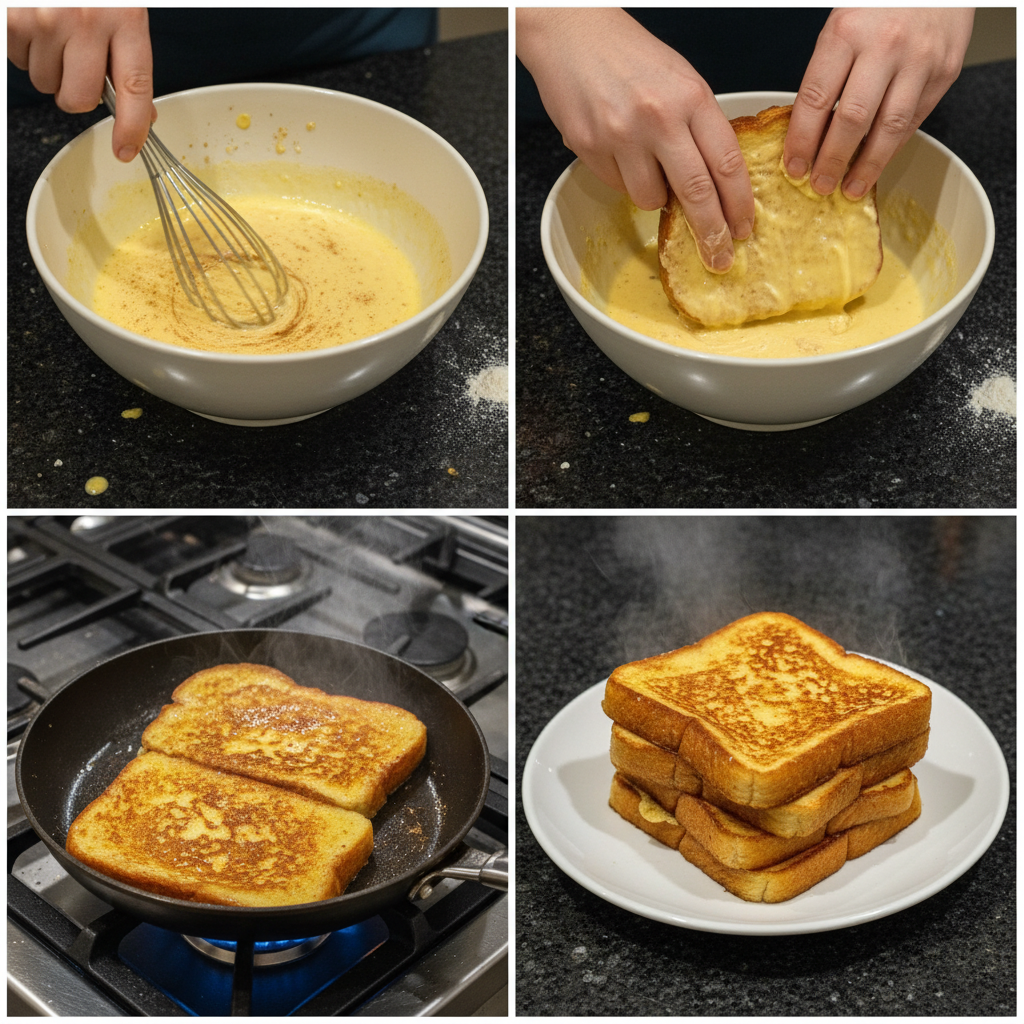
How to Make French Toast
Let’s walk through the steps to create this incredible french toast recipe. Pay close attention to the unique twist for the best results!
1. Prep Your Griddle
First, preheat your griddle to 350 degrees F or heat a skillet over medium heat. It’s crucial not to rush this step; not preheating the griddle or skillet adequately can lead to uneven cooking and sticking. Once hot, grease your cooking surface generously with butter for incredible flavor, a neutral oil for a higher smoke point, or cooking spray for ease. This ensures a beautiful golden brown crust.
2. Whisk the Batter (and The Twist!)
In a blender, add the eggs, milk, all-purpose flour, granulated sugar, salt, ground cinnamon, and vanilla extract. Blend until smooth. Remember to replace half of the milk with heavy cream as per our secret twist! If you prefer whisking by hand, which is perfectly fine, start by mixing the all-purpose flour and eggs together in a shallow dish to prevent lumps, then gradually whisk in the rest of the ingredients until fully combined and smooth.
Now, let your batter rest for 5-10 minutes. This short rest allows the all-purpose flour to fully hydrate and thickens the batter, ensuring an incredibly custardy interior and even coating when you dip your bread slices.
3. Dip the Bread
Once your batter is ready, dip your thick slices bread into the batter, dredging them well on both sides. Ensure full bread saturation but be careful not to over-soak, which could lead to soggy centers. Gently lift the bread, allowing any excess batter to drip off, then carefully place it onto your hot, greased griddle or skillet.
4. Cook to Golden Perfection
Cook the French toast for a few minutes until the bottom starts to get golden brown. You’ll notice a beautiful Maillard reaction beginning to form. Flip and cook on the other side for the same amount of time. Look for visual cues beyond just golden brown: the French toast should appear slightly puffed, the edges should be lightly crisp, and a delicious, fragrant aroma will fill your kitchen. Proper heat management is key here to prevent burning while ensuring the custardy interior is perfectly cooked through.
5. Serve Warm
Remove the cooked French toast to a plate. For larger batches, transfer cooked slices to a wire rack placed on a baking sheet and keep them warm in an oven set to low (around 200°F or 93°C) while you finish cooking the rest. Serve warm immediately with your favorite pancake syrup and a generous sprinkle of powdered sugar.
Mastering Your French Toast: Bread, Griddle & Doneness
Achieving truly spectacular French toast goes beyond just a great recipe; it’s also about understanding the nuances of your ingredients and cooking method. Let me share some of my expert insights.
Choosing Your Canvas: The Perfect Bread
The foundation of great French toast is the bread. I always aim for thick slices bread, ideally about 1-inch thick. This thickness allows for a beautiful contrast between the crispy exterior and the custardy interior. Slightly stale bread is truly preferred because it’s less prone to falling apart and absorbs the batter more effectively without becoming soggy. Brioche, Challah bread, and Sourdough bread are my top contenders for their robust structure and wonderful flavor. If you’re exploring gluten-free or other dietary bread options, look for sturdier loaves that can hold up to soaking, as very soft gluten-free breads might disintegrate.
Griddle & Skillet Savvy
The cooking surface matters! For the recommended type of grease for your griddle or skillet, butter offers unparalleled flavor, creating those delicious browned edges. However, a neutral oil like canola or grapeseed has a higher smoke point, which can be useful, or a cooking spray offers maximum convenience. I often use a combination of butter and a touch of oil for the best of both worlds.
Temperature control is absolutely vital for perfect results. Medium heat, usually around 325-350°F (160-175°C), is ideal. This temperature range allows the French toast to achieve a beautiful golden brown exterior while ensuring the custardy interior cooks through completely. If the heat is too high, the outside will burn before the inside is cooked. If the heat is too low, the French toast can dry out and become tough.
Spotting Doneness & Avoiding Pitfalls
Beyond just ‘golden brown,’ there are specific visual cues for doneness. Your French toast should have a slightly puffed appearance, light crispness on the edges, and feel firm-but-tender in the center when lightly pressed. A delicious Maillard reaction, indicated by those rich brown flavors and colors, should be evident across the surface.
Troubleshooting common issues can save your breakfast! If you’re experiencing soggy centers, it could be due to too much soaking, a griddle that isn’t hot enough, or using bread that’s too fresh or thin. Remember our unique twist of resting the batter, which helps prevent this by thickening the coating. For uneven browning, check if your griddle has hot spots, if you’re using enough grease, or if you’re flipping often enough. Consistent heat management is key to perfectly browned slices every time.
Pro Tips & Troubleshooting
Here are my best tips from years in the kitchen to ensure your French toast is always a triumph, along with common mistakes to avoid.
Pro Tips for the Best French Toast
- Embrace the Creamy Batter: Always remember our unique twist of substituting half the milk with heavy cream and allowing the batter to rest. This is your secret to unmatched richness and a perfectly custardy interior.
- Choose the Right Bread: Opt for thick-sliced, slightly stale bread, about 1-inch thick. This ensures optimal absorption without sogginess and structural integrity.
- Flour for Fluff: The all-purpose flour in the batter is not an oversight. It creates a thicker batter, yielding extra fluffy French toast.
- Make Ahead Batter: Your French toast batter can be made 1-2 days ahead of time. Store it in an airtight container in the refrigerator for quick, easy breakfasts. Just give it a good whisk before using.
- Temperature is Key: Stress the importance of preheating your griddle or skillet properly and maintaining medium heat. This achieves that beautiful golden brown perfection without any burning.
- Don’t Overcrowd: Cook in batches if necessary. Overcrowding the griddle lowers the temperature, leading to uneven cooking and browning.
- Keep Warm: If you’re cooking for a crowd, use an oven set to low (around 200°F or 93°C). Place cooked French toast on a wire rack on a baking sheet to keep batches warm without steaming them, maintaining their crispness.
Common Mistakes to Avoid
- Not Preheating Adequately: Skipping proper preheating means your French toast will cook slowly, stick to the pan, and brown unevenly. Always wait for your griddle or skillet to reach temperature.
- Too High Heat: Using too high heat is a classic mistake. It causes the French toast to burn on the outside while leaving the inside uncooked and raw. Stick to medium heat and practice good heat management.
- Insufficient Coating: Insufficiently coating the bread results in bland or ‘too milky’ French toast. Ensure thorough but not excessive dipping for full flavor.
- Too Fresh/Thin Bread: Fresh, thin bread can become soggy or fall apart when soaked. Always go for thick, slightly stale slices for the best texture.
- Skipping the Batter Rest (Our Twist!): Do not skip the 5-10 minute batter rest! This step is crucial for the flour to hydrate, creating a thicker batter and ensuring that desirable custardy interior and even coating.
Serving & Storage
Once you’ve made your perfect French toast, the fun doesn’t stop there. Here’s how I love to serve and store it.
Serving Ideas
For classic pairings, a drizzle of warm pancake syrup and a dusting of powdered sugar are always winners. A dollop of fresh whipped cream adds extra indulgence. To brighten things up, I love adding fresh fruit like mixed berries, sliced bananas, or peaches. For another delightful sweet treat, consider making our Starbucks banana bread copycat. For a complete Breakfast or Brunch, consider savory complements like crispy bacon or savory sausage alongside your French toast. You could also get creative with garnishes like a sprinkle of cinnamon-sugar or a drizzle of chocolate sauce.
Storage and Make-Ahead
One of the great things about this french toast recipe is its make-ahead potential. The batter can be made 1-2 days ahead of time. Simply store it in an airtight container in the refrigerator, giving it a good stir before use.
If you’re making multiple batches, keeping French toast warm is easy. Place the cooked French toast on a wire rack set on a baking sheet and keep it in a preheated oven at 200°F (93°C). This prevents steaming and keeps the crust crisp.
For storing leftover French toast, allow it to cool completely, then place it in an airtight container in the refrigerator for up to 3-4 days.
Freezing leftover French toast for later is also a fantastic option. Once cooled, flash freeze individual slices on a baking sheet until solid. Then, transfer them to a freezer-safe bag or container, where they will keep well for up to 3 months.
Reheating frozen French toast is simple. For the best crispness, use a toaster or toaster oven for individual slices. Alternatively, you can reheat it in a skillet over medium-low heat for a few minutes per side until warmed through. For larger batches, place slices on a baking sheet and reheat in an oven at 350°F (175°C) for 10-15 minutes. A microwave is the quickest option, though it may result in a softer texture.
Conclusion
I genuinely believe this french toast recipe will become a cherished staple in your home. By embracing the unique twist of heavy cream in the batter and that crucial resting period, you’re guaranteed to achieve a superior French toast with an unbelievably custardy interior and a perfectly golden brown finish. With all the tips and techniques I’ve shared, even beginners can confidently achieve perfect results every time.
I encourage you to try this recipe, experiment with your favorite serving ideas, and truly make it your own Breakfast or Brunch masterpiece. Share your creations and discover more delightful recipes on my blog!
FAQ
What is the best type of bread for French Toast?
For optimal results, I recommend using thick slices bread, about 1-inch thick, that is slightly stale. Sturdy options like Brioche, Challah bread, or Sourdough bread work wonderfully because they hold their shape and absorb the rich batter without becoming soggy.
What is the secret ingredient for extra fluffy French Toast?
Our secret to extra fluffy French toast with a perfectly custardy interior is two-fold. First, we substitute half of the milk with heavy cream for unmatched richness. Second, allowing the all-purpose flour-based batter to rest for 5-10 minutes gives the flour time to hydrate and thicken, ensuring a uniform coating and an incredibly tender texture.
Can I make French Toast batter ahead of time?
Yes, French Toast batter can be made ahead of time. You can prepare it 1-2 days in advance and store it in an airtight container in the refrigerator. Just be sure to whisk it well again before you are ready to dip your bread.
How do I store and reheat leftover French Toast?
To store leftover French toast, cool it completely and refrigerate in an airtight container for 3-4 days. For longer storage, you can freeze leftover French toast for up to 3 months by flash freezing slices on a baking sheet before transferring them to a freezer bag. Reheating frozen French toast is best done in a toaster, toaster oven, or a preheated oven at 350°F (175°C) for 10-15 minutes, or in a skillet over medium-low heat.
How can I prevent my French Toast from burning on the griddle?
To prevent your French toast from burning, proper heat management is essential. Avoid using too high heat. I recommend preheating your griddle or skillet to medium heat, typically around 325-350°F (160-175°C). Adjust the heat as needed to achieve a beautiful golden brown crust without scorching.
Can I make this recipe by hand without a blender?
Absolutely, you can make this french toast recipe by hand without a blender. To avoid lumps, whisk the all-purpose flour and eggs together first in a shallow dish until smooth. Then, gradually whisk in the remaining liquid ingredients like the milk (and heavy cream!) until the batter is thoroughly combined and smooth.
What is the ideal cooking temperature for French toast?
The ideal cooking temperature for French toast is typically medium heat, around 325-350°F (160-175°C). This temperature range is perfect for achieving a beautiful golden brown exterior, allowing the bread to cook through evenly, and ensuring a thoroughly cooked, custardy interior. Too high heat will burn the outside quickly, while too low heat will dry out the French toast.
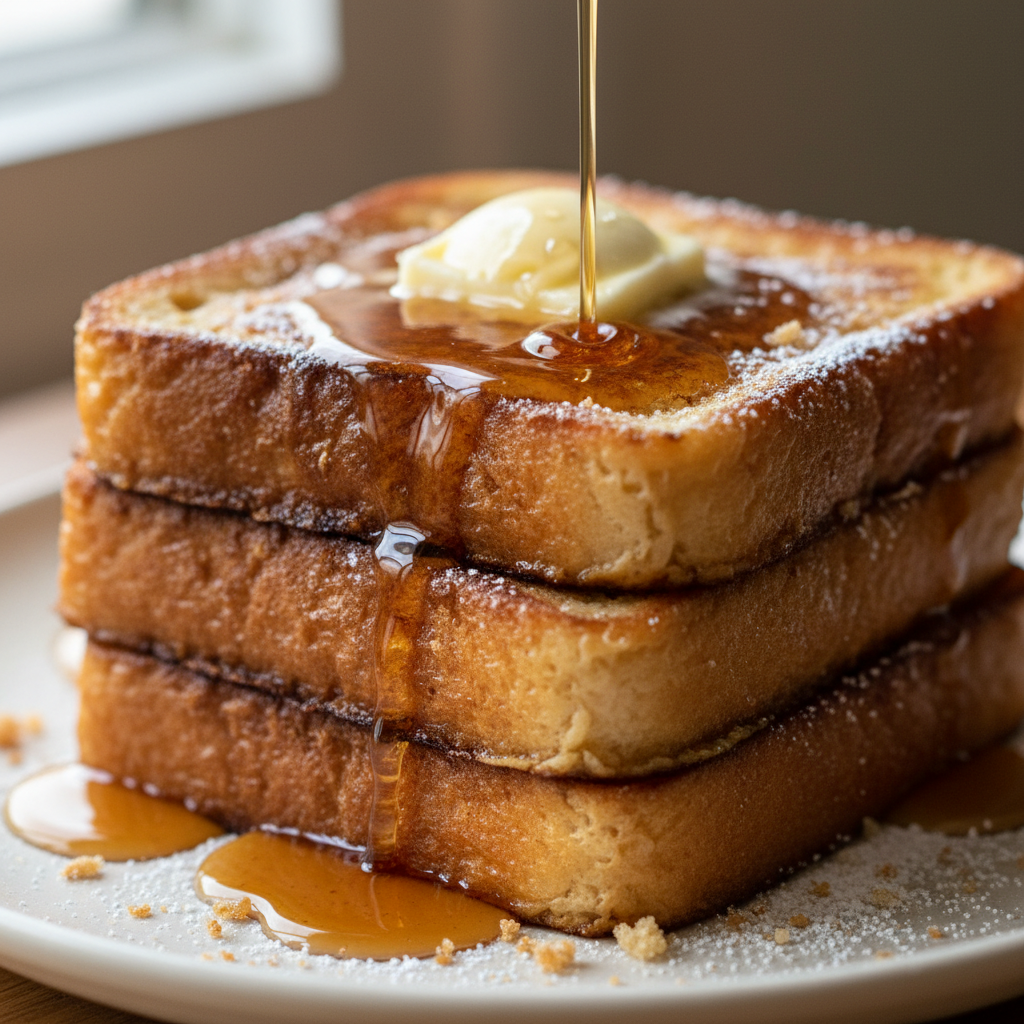
Ultimate Custardy French Toast Recipe (Our Secret Twist!)
Ingredients
Equipment
Method
- Preheat your griddle to 350 degrees F or heat a skillet over medium heat. Ensure it’s adequately hot to prevent sticking and promote even cooking. Generously grease your cooking surface with butter, neutral oil, or cooking spray for a beautiful golden brown crust.
- In a blender, combine the eggs, 1/3 cup milk, 1/3 cup heavy cream (this is the secret twist!), all-purpose flour, granulated sugar, salt, ground cinnamon, and vanilla extract. Blend until smooth. If whisking by hand, mix the flour and eggs first to prevent lumps, then gradually whisk in the remaining ingredients until smooth.
- Let your batter rest for 5-10 minutes. This crucial step allows the flour to fully hydrate and thickens the batter, ensuring an incredibly custardy interior and even coating when you dip the bread.
- Once the batter is ready, dip your thick slices of bread into the batter, ensuring both sides are well coated. Allow any excess batter to drip off, but ensure full saturation without over-soaking, which could lead to soggy centers. Carefully place the dipped bread onto your hot, greased griddle or skillet.
- Cook the French toast for a few minutes until the bottom achieves a beautiful golden brown color and a Maillard reaction begins to form. Flip and cook on the other side for the same amount of time. Look for a slightly puffed appearance, lightly crisp edges, and a fragrant aroma, indicating the custardy interior is perfectly cooked through.
- Remove the cooked French toast to a plate. For larger batches, place cooked slices on a wire rack set on a baking sheet and keep them warm in an oven at 200°F (93°C) while you finish cooking. Serve immediately with your favorite pancake syrup and a generous dusting of powdered sugar.
