


Welcome to a revolutionary take on a beloved Roman classic! If you adore the rich, peppery, and cheesy delight of Cacio e Pepe but crave a heartier, naturally gluten-free, and incredibly stable version, you’ve come to the right place. This **Cacio E Pepe White Beans Skillet** recipe transforms the traditional pasta dish into a satisfying, creamy bean experience, perfect for a weeknight meal or an impressive side. I’m about to unlock the secret to a consistently velvety sauce, free from the dreaded stringiness, thanks to a few chef-inspired tweaks you won’t find anywhere else. Get ready to master a dish that’s bursting with flavor and surprisingly simple to make!
Why You’ll Love This Recipe
In my kitchen, innovation meets tradition, and this Cacio E Pepe White Beans Skillet is a prime example. I’ve taken the classic and infused it with two ingenious twists that guarantee an unparalleled flavor and texture experience.
- Intense Toasted Pepper: My first secret lies in gently toasting freshly cracked black peppercorns in a touch of virgin olive oil before blending them into the Cacio e Pepe sauce base. This step is a game-changer! Toasting unlocks and intensifies the pepper’s volatile compounds, creating a deeper, more aromatic, and robust “pepe” flavor that truly sings in every bite.
- Subtle Umami Boost from Miso: My second twist involves stirring a small amount of white miso paste into the cold water-cornstarch slurry. Don’t worry, it won’t make your dish taste like miso soup! Instead, it provides a subtle, savory umami depth, enhancing the natural cheesy richness and making the sauce incredibly complex and satisfying without altering the classic profile.
Beyond these flavor innovations, you’ll love this recipe for practical reasons too:
- Foolproof Creaminess: This recipe guarantees a velvety smooth sauce every time, thanks to my unique stabilizing technique. Say goodbye to stringy, broken Cacio e Pepe sauces!
- Hearty & Satisfying: White beans offer a fiber-rich, fulfilling alternative to pasta, making this a complete meal or a substantial side dish that truly nourishes.
- Naturally Gluten-Free & Vegetarian: It naturally caters to various dietary needs, appealing to a wider audience without sacrificing flavor or texture.
- Quick & Easy Meal: Designed for home cooks, this skillet dish offers big flavor without complicated steps, and the sauce base can even be made ahead of time.
Ingredients Needed
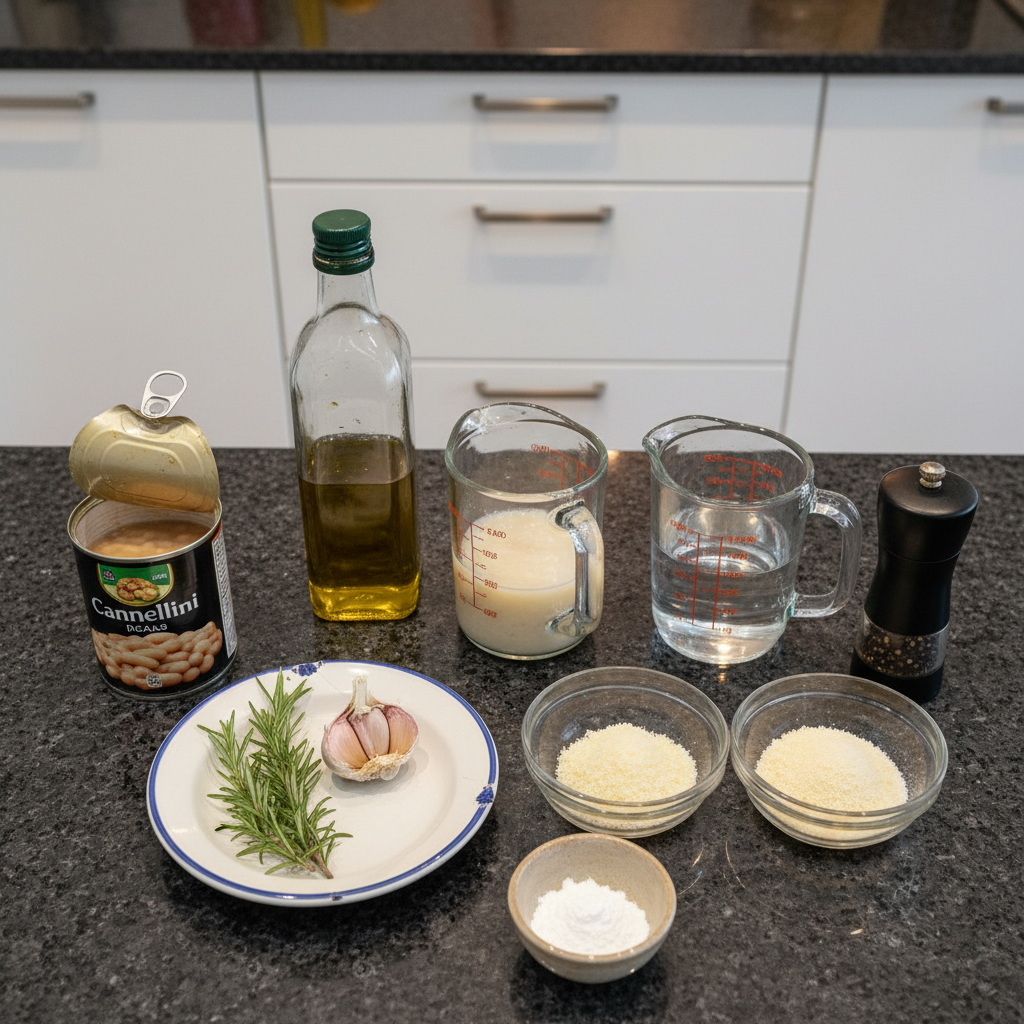
Here’s exactly what you’ll need to create this incredibly creamy and flavorful Cacio E Pepe White Beans Skillet. Precise measurements, especially for the cheese, are key to success!
- 1 can (540mL) of white kidney beans, with canning liquid
- 1 stalk of rosemary
- 1 garlic clove, smashed lightly
- 1 Tbsp olive oil
- 4 to 6 Tbsp of *cacio e pepe base
- 2 ladles full of bean cooking liquid
- 1 or more Tbsp water
- Fresh black pepper
- Pecorino Romano for dusting finished dish
*Cacio E Pepe base (note – it’s important that the cheese be measured by weight)
- 100 grams Parmigiano Reggiano, finely grated
- 150 grams Pecorino Romano, finely grated
- 1 Tbsp virgin olive oil
- Lots of black pepper – at least 1Tbsp
- 1 Tbsp cornstarch
- 2/3 cup of cold water
Ingredient Notes & Substitutions
Achieving the perfect Cacio E Pepe White Beans Skillet starts with understanding your ingredients. Here’s my expert advice:
- White Beans: While I call for white kidney beans, creamy cannellini beans or great northern beans are also excellent choices. Their smooth texture and ability to absorb flavors make them ideal for this dish. Crucially, always use the canning liquid, often called aquafaba, as it’s starchy and contributes significantly to the sauce’s emulsification and creaminess. While canned beans are convenient, you could use rehydrated and cooked dried beans, but ensure they are very tender and you’ve reserved some of their cooking liquid.
- Cheeses (Pecorino Romano & Parmigiano Reggiano): These are the heart and soul of our Cacio e Pepe. Measuring by weight (grams) is absolutely critical for consistency, as volume can vary wildly depending on how finely they’re grated. For the smoothest sauce, grate both cheeses as finely as possible, ideally with a microplane or the smallest holes on a box grater. Pecorino Romano brings a sharp, salty, and sheepy tang, while Parmigiano Reggiano offers a nutty, more mellow, and complex profile. Using both creates a balanced, deeply flavorful cheese base.
- Black Pepper: “Lots of black pepper – at least 1 Tbsp” is a guideline! I always recommend using freshly cracked black pepper for the most vibrant flavor. The amount is truly up to your personal preference; if you love a fiery kick, add more, but start with the recommended amount and adjust for your desired heat level.
- Olive Oil: Use a good quality virgin olive oil. Its fruity, peppery notes will contribute beautifully to the overall flavor of the sauce and beans.
- Cornstarch: This is our “magic stabilizer.” When properly prepared as a cold water slurry and gently heated, it prevents the cheese from becoming stringy or breaking, ensuring a consistently smooth, emulsified sauce. It’s a chef’s secret for foolproof results.
- Rosemary & Garlic: Fresh is always best for infusing maximum flavor into the white beans. The aromatic essence of a whole stalk of rosemary and a lightly smashed garlic clove will elevate the entire dish.
- Dietary Considerations: This Cacio E Pepe White Beans Skillet is naturally gluten-free due to the absence of pasta. For those seeking dairy-free options, while it will significantly alter the classic Roman flavor profile, you could experiment with high-quality plant-based Pecorino and Parmigiano alternatives, or use a cashew cream base. However, be aware that achieving the exact same texture and taste is challenging.
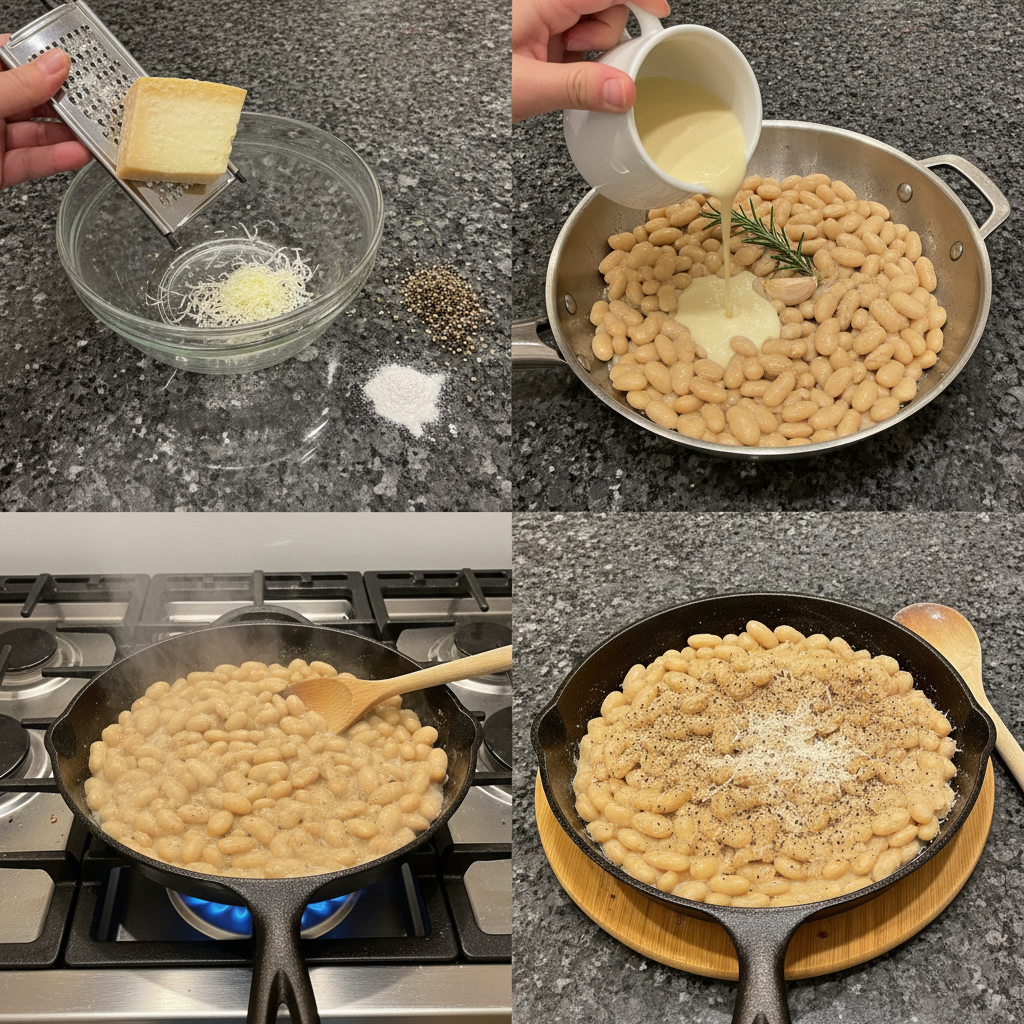
How to Make Cacio E Pepe White Beans Skillet
Follow these steps carefully, and you’ll be rewarded with a creamy, deeply flavorful Cacio E Pepe White Beans Skillet that will impress everyone at your table!
Phase 1: Prepare the Cacio e Pepe Base Components
- Grate Your Cheeses Precisely: The first and most critical step for our sauce base is to measure your Parmigiano Reggiano and Pecorino Romano by weight. I cannot stress this enough – using a kitchen scale ensures accuracy, as grated cheese volumes can vary wildly. Grate both cheeses as finely as possible using a microplane or your finest grater; this is key to a smooth, lump-free sauce.
- Activate the Pepper (Unique Twist!): In a small, dry skillet or saucepan, gently toast your black peppercorns over medium-low heat for about 1-2 minutes, stirring constantly, until they become incredibly fragrant and aromatic. Be careful not to burn them! Once toasted, immediately remove them from the heat and let them cool slightly. This simple step transforms the pepper’s flavor into a rich, deep “pepe.”
- Create the Stabilizing Slurry (Unique Twist!): In a small saucepan, combine the 1 Tbsp of cornstarch with 2/3 cup of cold water. I find using my fingers to mix it is the easiest way to ensure a completely lump-free slurry. Now, stir in 1/2 teaspoon of white miso paste until fully dissolved. Place the saucepan over low heat and gently whisk or stir until the mixture just begins to turn into a light gel. The moment it gels, remove it from the heat immediately. Do *not* let it boil, as this can degrade its stabilizing properties. This cornstarch-miso gel is our magic stabilizer, ensuring your sauce remains velvety smooth without altering the taste.
Phase 2: Blend the Cacio e Pepe Sauce Base
- Blend the Creamy Base: Carefully transfer your finely grated cheeses, the 1 Tbsp of virgin olive oil, and your *cooled* toasted black peppercorns into a blender. Pour in the slightly cooled cornstarch-miso gel. Blend everything together until you achieve a wonderfully nice, thick, and creamy paste. This is your amazing Cacio e Pepe sauce base. It’s incredibly versatile and can be stored in an airtight container in the fridge for up to a week, making it fantastic for quick weeknight meals.
Phase 3: Infuse the White Beans
- Infuse the Beans with Aromatics: Open your can of white kidney beans and, without draining, dump the entire contents (beans and liquid) into a medium pot. Add the remaining 1 Tbsp of olive oil, the stalk of rosemary, and the lightly smashed garlic clove. Heat the pot over medium heat until the liquid just begins to simmer, then reduce the heat to low. Let the beans gently infuse with these delightful flavorings for 5 to 10 minutes. We want them thoroughly heated and beautifully aromatic.
Phase 4: Assemble the Creamy Skillet
- Build the Creamy Sauce: Grab a sauté pan and ladle in about two ladles full of the thick, starchy liquid from your simmering beans. Now, add anywhere from 4 to 6 tablespoons of your prepared Cacio e Pepe sauce base. This base has a strong flavor, so I recommend starting with 4 tablespoons, gently heating and stirring to combine with the bean liquid to create a creamy sauce. Taste it! If you’d like a stronger cheese and pepper presence, add another tablespoon or two. Keep the heat gentle and low to prevent the cheese from seizing or becoming stringy. You will likely need to add a tablespoon or two of water to thin the sauce out to your desired consistency.
- Combine Beans & Sauce: Carefully remove the rosemary stalk and garlic clove from your infused beans. Using a slotted spoon, gently transfer the hot beans from their pot into the sauté pan with your creamy sauce, allowing any remaining liquid to drain back into the pot. Once all the beans are in the pan, gently stir them around, ensuring every bean is beautifully coated and everything becomes “friendly” in the pan.
Phase 5: Serve and Enjoy!
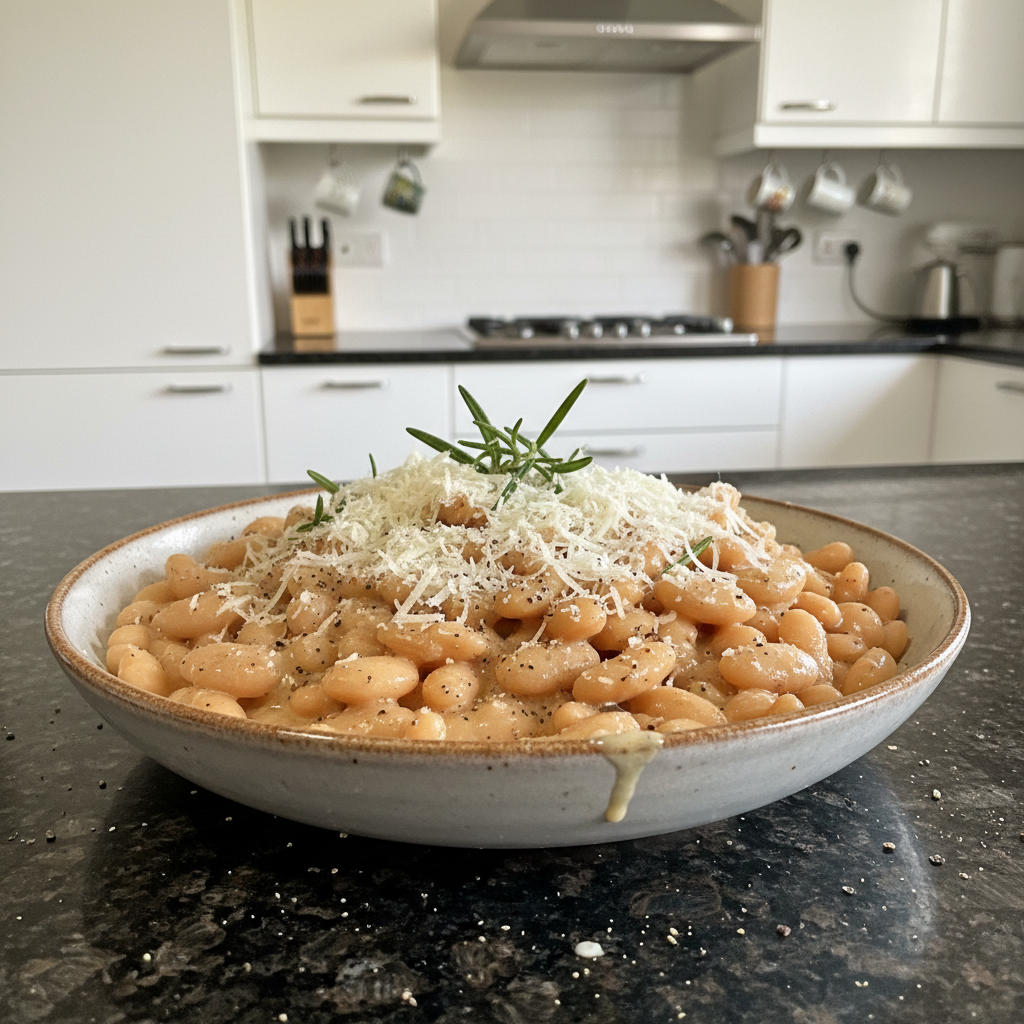
- Serve & Garnish: Pour your luscious Cacio E Pepe White Beans Skillet into a shallow bowl. Finish with a generous grinding of fresh black pepper and a dusting of finely grated Pecorino Romano or Parmigiano Reggiano. Serve immediately and savor every creamy, peppery bite!
Gap-Filling Section: Elevate Your Skillet
Beyond the core recipe, a true chef knows that understanding your tools and how to customize a dish can elevate it from great to extraordinary. Let’s dive into some valuable insights.
Essential Kitchen Tools for a Perfect Cacio e Pepe Skillet
Having the right equipment ensures smooth sailing and perfect results in your kitchen. Here are the tools I recommend for this Cacio E Pepe White Beans Skillet:
- Blender or Immersion Blender: Absolutely crucial for achieving that ultra-smooth Cacio e Pepe sauce base. An immersion blender can be easier for smaller batches and quicker cleanup, fitting into a tall container like a yogurt tub, while a standard blender offers more power for larger quantities.
- Microplane or Fine Grater: This is non-negotiable for finely grating your Pecorino Romano and Parmigiano Reggiano. The finer the grate, the quicker and more smoothly the cheese melts, preventing a gritty or lumpy sauce.
- Heavy-Bottomed Pot/Sauté Pan: Ideal for simmering your beans and assembling the final dish. A heavy bottom ensures even heat distribution, preventing scorching and allowing for gentle, consistent cooking.
- Small Saucepan & Whisk: Perfect for preparing the cornstarch slurry smoothly and gently heating it into a gel. A good whisk helps prevent any lumps from forming.
- Kitchen Scale: My secret weapon for consistent results. Accurately measuring cheeses by weight (in grams) is paramount, as volume measurements can be unreliable. This ensures your sauce is perfectly balanced every time.
Customizing Your Cacio E Pepe White Beans Skillet
This recipe is a fantastic starting point, but don’t hesitate to make it your own! Here’s how you can adapt it to your taste and pantry:
- Exploring White Bean Varieties: While white kidney beans (cannellini) are excellent, feel free to use other creamy white bean varieties like great northern beans. Their subtle differences in texture and flavor are minimal in this dish, and all absorb the rich Cacio e Pepe flavors beautifully. Always remember to use their canning liquid for that essential starchy boost!
- Adding Fresh Vegetables: This skillet is incredibly versatile for incorporating greens. You can easily stir in a handful of fresh spinach or chopped kale during the last minute of cooking to wilt them into the dish. Roasted rapini or tender broccoli florets can also be folded in for added texture and nutrition.
- Dietary Adaptations:
- Gluten-Free: As noted, this recipe is naturally gluten-free since we’re using white beans instead of traditional pasta, making it a wonderful option for those avoiding gluten.
- Dairy-Free: For a dairy-free version, you’d need to substitute the Pecorino Romano and Parmigiano Reggiano with high-quality plant-based cheese alternatives specifically designed for melting. Alternatively, a smooth cashew cream base could replicate some of the richness, but be aware that the classic Cacio e Pepe flavor profile will be altered significantly.
- Adjusting Pepper Levels: The “pepe” factor is entirely yours to control! My recipe calls for at least 1 Tbsp of black pepper, which provides a robust kick. If you prefer a milder pepper note, reduce the amount you toast and blend. For more heat, add an extra grind of fresh black pepper as a garnish at the end. You can experiment to find your perfect balance.
Pro Tips & Troubleshooting
Even seasoned chefs encounter challenges, but with my pro tips and troubleshooting guide, you’ll master this Cacio E Pepe White Beans Skillet with confidence!
Pro Tips for Success
- Measure Cheese by Weight: Always measure Pecorino Romano and Parmigiano Reggiano by weight (grams) for consistent texture and flavor. Grated cheese volume can vary drastically, leading to an unbalanced sauce if not measured accurately.
- Grate Cheese Finely: Use the finest grater you have, like a microplane, for both cheeses. This ensures quick, even melting and a perfectly smooth, emulsified sauce.
- Lump-Free Slurry: When mixing the cornstarch with cold water, use your fingers! It’s the easiest and most effective way to guarantee a completely lump-free slurry before it even touches the heat.
- No Boiling the Slurry: Gently heat the cornstarch gel and remove it from the heat *as soon as* it begins to gel. Overcooking or boiling can degrade its stabilizing properties.
- Toasted Pepper Power: Do not skip toasting the black peppercorns! This crucial step, part of my unique twist, unlocks their full aromatic potential, intensifying the ‘pepe’ flavor significantly.
- Miso Umami Boost: The small amount of white miso paste in the slurry is key to the enhanced savory depth and complexity. It’s a subtle but powerful addition that makes this dish truly special.
- Bean Liquid is Gold: The starchy liquid from the canned beans (aquafaba) is a fantastic substitute for traditional pasta water. It’s full of flavor and aids beautifully in emulsifying your creamy sauce.
- Gentle Heat for Sauce: When combining the cheese base and bean liquid, always maintain a gentle, low heat and constant stirring. High heat will cause the cheese proteins to seize and make your sauce stringy or clumpy.
Common Mistakes to Avoid
- Overheating the Cheese: This is the most common pitfall! Heating the Cacio e Pepe base at too high a temperature causes the cheese proteins to seize, resulting in a stringy, clumpy, or broken sauce. Keep the heat low and steady.
- Not Grating Cheese Finely Enough: If your cheese shreds are too large, they won’t melt smoothly, leaving you with a gritty or uneven sauce texture. Fine grating is key.
- Boiling the Cornstarch Slurry: Allowing the cornstarch gel to boil can degrade its thickening and stabilizing properties, making your sauce less reliable and prone to breaking.
- Adding Cold Beans to Hot Sauce: Ensure your infused beans are hot when you add them to the sauce. Adding cold beans will quickly drop the sauce’s temperature, causing it to cool, tighten prematurely, and potentially break.
- Forgetting the Unique Twist: Skipping the toasted pepper or the miso will result in a less complex and robust flavor profile than intended for this superior recipe. Don’t miss out on these simple but powerful additions!
- Sauce Too Thick/Thin: Don’t be afraid to adjust consistency. If it’s too thick, add a tablespoon of water or bean liquid at a time, stirring gently. If it’s a bit too thin, gently simmer for another minute, stirring constantly, or add a tiny bit more of the cheese base (being careful not to overheat!).
Serving & Storage
Once you’ve mastered this Cacio E Pepe White Beans Skillet, knowing how to serve and store it properly ensures you enjoy every last creamy bite!
Serving Suggestions
This versatile dish can shine in many roles on your table:
- Main Dish or Side: Serve this Cacio E Pepe White Beans Skillet as a hearty vegetarian main course for a satisfying meal, or as a substantial and flavorful side dish alongside your favorite protein.
- Pairing Ideas:
- Classic Italian Comfort: Spoon it generously over creamy polenta for an extra layer of luxurious comfort.
- Fresh Greens: It pairs beautifully with garlicky rapini, simply sautéed spinach, or a crisp green salad dressed with a bright lemon vinaigrette to cut through the richness.
- Protein Boost: Serve it as an elegant side to a perfectly roasted lamb, pan-seared scallops, or grilled chicken.
- Garnishes: Always finish your dish with a generous grinding of fresh black pepper and an extra dusting of finely grated Pecorino Romano for that authentic touch.
- Accompaniments: A crusty baguette or a slice of ciabatta bread is perfect for soaking up every last bit of the rich, creamy sauce.
Storage and Make-Ahead
- Cacio E Pepe Sauce Base: The prepared Cacio e Pepe sauce base (from Step 3 of the instructions) is a fantastic make-ahead component. Store it in an airtight container in the fridge for up to a week, ready to be incorporated into quick meals.
- Storing Cooked Skillet: Leftover Cacio E Pepe White Beans Skillet should be stored in an airtight container in the refrigerator for 2-3 days.
- Detailed Reheating Instructions:
- Best Method: To maintain the sauce’s integrity, gently reheat leftovers in a non-stick skillet over very low heat. Add a splash of water or bean liquid (1-2 tablespoons) to help loosen the sauce and restore its creamy consistency. Stir constantly until warmed through, being extra careful not to boil, which can cause the delicate cheese sauce to break or become oily.
- Sauce Integrity: Emphasize low and slow reheating. Avoid microwaving if possible, as high, uneven heat can easily cause the cheese to separate and become stringy or grainy.
- Creative Uses for Leftover Base: Don’t let any of that delicious Cacio e Pepe base go to waste! Beyond this skillet, use it as a quick sauce for pasta, drizzle it over hot broccoli or cauliflower for a decadent cheesy vegetable side, or even incorporate it as a secret ingredient into your next batch of mac and cheese for an umami-packed twist.
Conclusion
This **Cacio E Pepe White Beans Skillet** isn’t just a recipe; it’s a testament to how classic Roman flavors can be reinvented for modern palates and practical kitchens. With my unique toasted pepper and miso umami twist, you’ve unlocked a secret weapon for creating a stable, intensely flavorful, and creamy Cacio e Pepe sauce every single time. Whether you’re a seasoned chef or a beginner cook, this guide provides all the wisdom you need to master this delightful dish. Don’t hesitate to experiment with different white bean varieties or add your favorite greens. Dive in, get cooking, and savor the rich, peppery, and undeniably satisfying taste of your new favorite skillet meal!
FAQ
Here are some of the most common questions I get asked about making this creamy Cacio E Pepe White Beans Skillet:
How do you prevent Cacio e Pepe sauce from becoming stringy or breaking?
The secret is my cornstarch-miso slurry, which acts as a “magic stabilizer.” Additionally, always use finely grated cheese (measured by weight), and crucially, keep the heat low and gentle when combining the sauce and beans, never letting it boil. High heat is the enemy of a smooth Cacio e Pepe sauce.
Can I use canned white kidney beans for Cacio e Pepe?
Absolutely, canned white kidney beans are ideal for this Cacio E Pepe White Beans Skillet recipe! It’s essential to use the canning liquid along with the beans, as it’s starchy and contributes significantly to the sauce’s creaminess and emulsification.
What are the best serving suggestions for Cacio e Pepe white beans?
This dish is incredibly versatile! I love serving it over creamy polenta, alongside garlicky rapini, or as a hearty side dish with roast lamb or grilled chicken. It’s also fantastic as a standalone vegetarian main. Always garnish with fresh black pepper and an extra dusting of finely grated Pecorino Romano.
How long can Cacio e Pepe sauce base be stored?
The prepared Cacio e Pepe sauce base (the blended cheese, pepper, olive oil, and cornstarch-miso gel) can be stored in an airtight container in the refrigerator for up to a week. This makes it a perfect make-ahead component for quick meals!
Why is cornstarch used in this Cacio e Pepe sauce base?
Cornstarch, when prepared as a gel with cold water and miso, acts as a brilliant stabilizing agent. It prevents the cheese proteins from clumping, seizing, or becoming stringy when heated, ensuring a consistently creamy, emulsified sauce without altering the classic Cacio e Pepe taste.
What types of white beans work best in this skillet dish?
Cannellini beans, great northern beans, and white kidney beans are all excellent choices for this skillet dish. They all have a creamy texture and readily absorb the rich Cacio e Pepe flavors. Remember to always use their canning liquid!
Is Cacio e Pepe white beans gluten-free?
Yes, this specific recipe for Cacio E Pepe White Beans Skillet, using white beans instead of traditional pasta, is naturally gluten-free.
How to reheat Cacio e Pepe white beans without the sauce breaking?
To reheat, gently warm the leftovers in a non-stick skillet over very low heat. Add a splash (1-2 tablespoons) of water or bean liquid to help restore the sauce’s consistency and creaminess, stirring constantly until warmed through. Avoid microwaving or high heat, as this can cause the cheese sauce to separate and become oily or stringy.
Creamy Cacio E Pepe White Beans Skillet (With Umami Twist!)
Ingredients
Equipment
Method
- Grate your Parmigiano Reggiano and Pecorino Romano precisely by weight using a kitchen scale. Grate both cheeses as finely as possible with a microplane or your finest grater to ensure a smooth, lump-free sauce.
- In a small, dry skillet or saucepan, gently toast your black peppercorns over medium-low heat for 1-2 minutes, stirring constantly, until incredibly fragrant. Remove immediately from heat and let cool slightly to transform the pepper’s flavor into a rich, deep ‘pepe’.
- In a small saucepan, combine 1 Tbsp of cornstarch with 2/3 cup of cold water, mixing with your fingers to ensure a lump-free slurry. Stir in 1/2 teaspoon of white miso paste until fully dissolved. Place over low heat and gently whisk or stir until the mixture just begins to turn into a light gel. Remove immediately from heat; do not boil.
- Carefully transfer the finely grated cheeses, 1 Tbsp of virgin olive oil, and the cooled toasted black peppercorns into a blender. Pour in the slightly cooled cornstarch-miso gel. Blend until you achieve a wonderfully thick and creamy paste. This is your Cacio e Pepe sauce base, which can be stored in an airtight container in the fridge for up to a week.
- Open your can of white kidney beans and, without draining, pour the entire contents (beans and liquid) into a medium pot. Add the remaining 1 Tbsp of olive oil, the stalk of rosemary, and the lightly smashed garlic clove. Heat over medium heat until the liquid just begins to simmer, then reduce heat to low. Let the beans gently infuse for 5 to 10 minutes until thoroughly heated and aromatic.
- In a sauté pan, ladle in about two ladles full of the thick, starchy liquid from your simmering beans. Add 4 to 6 tablespoons of your prepared Cacio e Pepe sauce base. Start with 4 tablespoons, gently heating and stirring to combine with the bean liquid to create a creamy sauce. Taste and add more base if desired. Keep the heat gentle and low. Add 1-2 tablespoons of water to thin the sauce to your desired consistency.
- Carefully remove the rosemary stalk and garlic clove from your infused beans. Using a slotted spoon, gently transfer the hot beans into the sauté pan with your creamy sauce. Gently stir the beans, ensuring every bean is beautifully coated.
- Pour your luscious Cacio E Pepe White Beans Skillet into a shallow bowl. Finish with a generous grinding of fresh black pepper and a dusting of finely grated Pecorino Romano or Parmigiano Reggiano. Serve immediately.
