

There are some weeknights that call for a meal that feels like a warm hug in a bowl. For me, this Creamy Chicken Pasta is the answer. It’s the kind of dish that strikes the perfect balance between elegant comfort food and a genuinely easy, 30-minute dinner.
This isn’t just another pasta recipe. I’m going to walk you through creating a restaurant-quality dish at home, complete with a silky, foolproof sauce. The secret lies in a simple trick involving a splash of white wine and a whisper of nutmeg, transforming a good meal into something truly unforgettable.
Why You’ll Love This Recipe
A Sauce with Unforgettable Depth
What sets this recipe apart is the sauce. A splash of dry white wine deglazes the pan, lifting all those delicious browned bits from the chicken and garlic. This acidity cuts through the richness of the cream, creating a brighter, more balanced sauce that isn’t heavy. A tiny grating of nutmeg adds a warm, aromatic complexity that beautifully enhances the savory Parmesan and chicken.
Key Benefits
- Quick & Easy: This entire dish comes together in about 30 minutes, making it the perfect Weeknight Dinner when you’re short on time but craving something special.
- Foolproof Cream Sauce: My tips will help you avoid the common pitfalls of a broken or grainy sauce. You’ll learn the secrets to a perfectly silky texture every single time.
- Incredibly Versatile: This recipe is a fantastic base. You can easily customize it by tossing in your favorite vegetables or swapping out the pasta shape.
- Ultimate Comfort Food: The combination of tender chicken, a rich and silky cream sauce, and perfectly cooked pasta is the definition of comforting.
Ingredients Needed
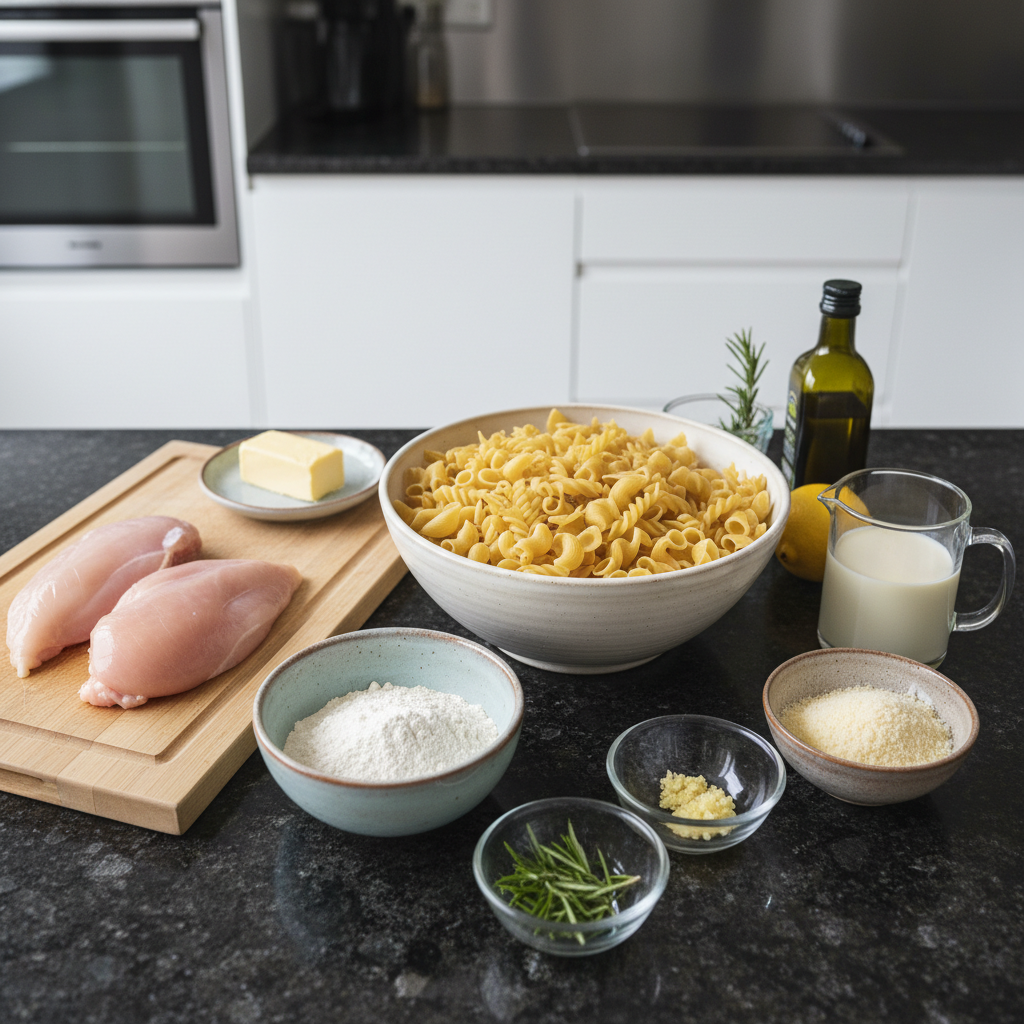
For consistent, perfect results, I recommend using these exact ingredients and quantities. This ensures the sauce has the perfect texture and flavor balance.
- 200 grams dried pasta or 300 grams fresh pasta
- 1 tablespoon olive oil
- 1 x chicken breast (see notes)
- 1 tablespoon flour
- 1 tablespoon butter
- 3 garlic cloves finely chopped
- 1 tablespoon fresh rosemary leaves roughly chopped
- ¾ cup cream
- 1 teaspoon black pepper
- 1 tablespoon lemon juice
- 50 grams parmesan very finely grated
- Lemon zest and extra rosemary to finish
Ingredient Notes & Substitutions
Chicken: While this recipe calls for a chicken breast, feel free to use boneless, skinless chicken thighs for a richer flavor and even more moisture.
Pasta: Long pasta shapes like Fettuccine work beautifully here, as do short shapes like Penne that can trap the sauce. A high-quality gluten-free pasta can be swapped in at a 1:1 ratio with excellent results.
Cream: Heavy cream or heavy whipping cream is essential for the richest, most stable sauce. It has a higher fat content, which makes it far less likely to curdle or break when heated compared to half-and-half.
Parmesan: I can’t stress this enough, use freshly grated Parmigiano Reggiano from a block. Pre-shredded cheeses are often coated with anti-caking agents like potato starch, which can make your sauce grainy instead of smooth.
Dairy-Free Option: For a dairy-free version, substitute the cream with full-fat canned coconut cream or a homemade cashew cream. Use nutritional yeast in place of the Parmesan to get that cheesy, savory flavor.
How to Make Chicken Pasta
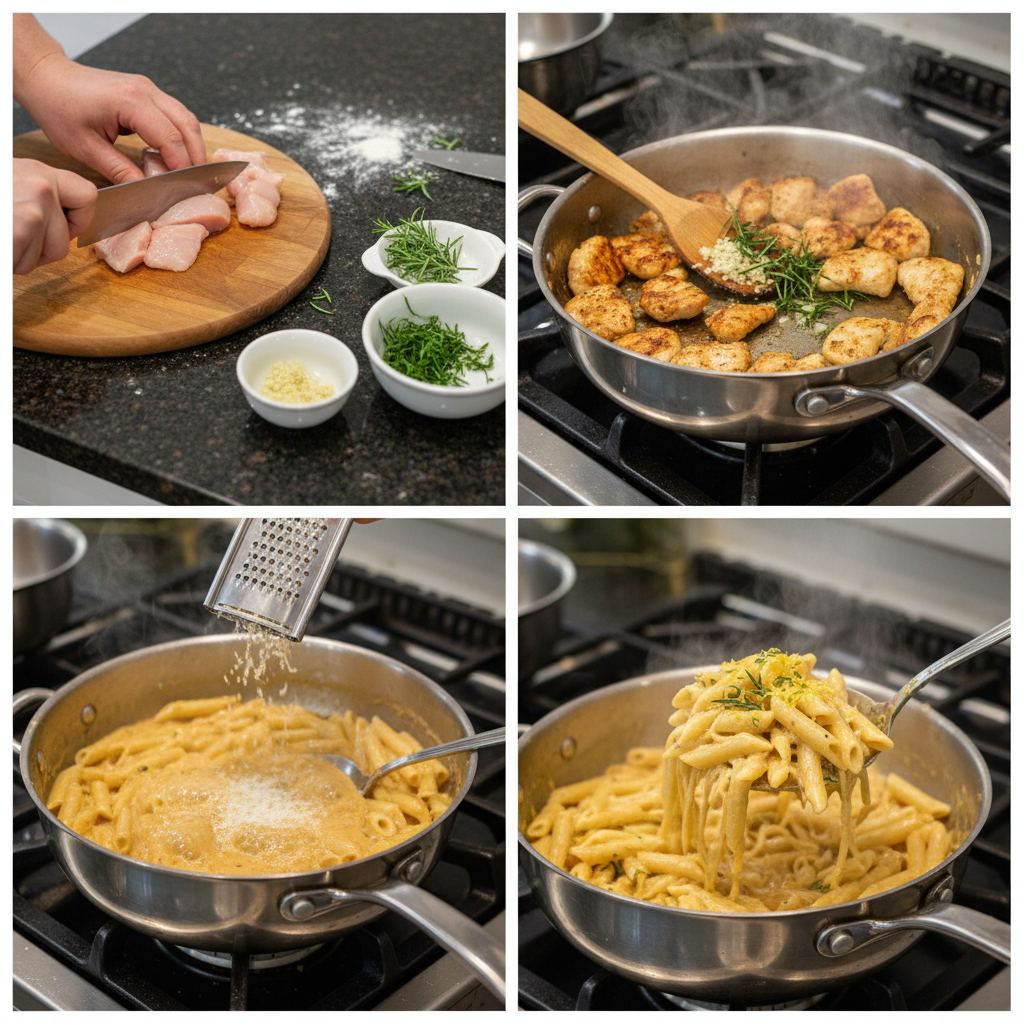
Step 1: Cook the Pasta
- Bring a large pot of water to a rolling boil and season it generously with salt. It should taste like the sea. Cook your pasta according to package directions, but pull it out 1 minute early so it’s perfectly al dente. Before draining, make sure to reserve at least one cup of the starchy pasta water. This is liquid gold for your sauce.
Step 2: Prepare & Cook the Chicken
- While the pasta cooks, prepare the chicken. Place the chicken breast between two pieces of plastic wrap and gently pound it to an even thickness of about half an inch. This is my key trick for juicy, evenly cooked chicken every time.
- Season the flattened chicken generously on both sides with salt and pepper, then lightly dust it with flour. The flour helps create a beautiful golden-brown sear.
- Heat the olive oil in a large skillet over medium-high heat. Carefully place the chicken in the hot pan and cook for about 2-3 minutes per side, until it’s golden brown and cooked through. Avoid overcrowding the pan.
- Remove the chicken from the skillet, wrap it loosely in foil, and set it aside to rest. This step is crucial for keeping all those delicious juices locked inside.
Step 3: Build the Sauce
- Reduce the heat to medium and add the butter to the same skillet. Once it’s melted, add the finely chopped garlic and sauté for about a minute until it’s fragrant. Be careful not to let it brown, or it will taste bitter.
- Add the fresh rosemary and cook for another 30 seconds, just until it releases its wonderful aroma. Now, pour in a splash of dry white wine to deglaze the pan, scraping up any browned bits from the bottom with a wooden spoon.
- Pour in the cream and bring the mixture to a very gentle simmer. It’s important to lower the heat if needed, you should never let a cream sauce come to a rolling boil.
- Remove the pan from the heat for a moment and add the grated Parmesan in two or three batches, stirring until each addition is fully melted and incorporated. This prevents the cheese from clumping. Now, stir in the black pepper, a tiny grating of fresh nutmeg, and the lemon juice.
Step 4: Combine and Finish
- Return the pan to low heat. Pour in about a quarter cup of the reserved pasta water and let the sauce simmer gently for 2-3 minutes. It will seem a little thin at first, but it will thicken into a silky, luscious sauce.
- Add the drained pasta directly into the skillet with the sauce. Toss everything together to coat the pasta beautifully, letting it bubble away for a minute or two. The pasta will finish cooking here and absorb all that incredible flavor.
- Slice the rested chicken breast against the grain. You can either toss the slices into the pasta or arrange them on top of each serving.
- To finish, garnish with a sprinkle of extra rosemary, some freshly grated lemon zest for brightness, and a final dusting of Parmesan cheese if you wish. Serve immediately.
The Science of a Perfect Cream Sauce
Why Starchy Pasta Water is Your Secret Weapon
That cloudy water left over from boiling pasta is packed with starch. This starch acts as a natural emulsifier and thickener. When you add it to your sauce, it helps the fat from the cream, butter, and cheese bind with the water, creating a stable, glossy sauce that clings perfectly to every single piece of pasta instead of being watery or oily.
How to Prevent a Broken or Grainy Sauce
- Gentle Heat is Key: Boiling cream will cause the milk solids and fat to separate, resulting in an oily, broken sauce. Always maintain a gentle simmer and never let it boil vigorously.
- Cheese Choice Matters: As mentioned before, pre-shredded cheese contains additives that prevent smooth melting. A block of real Parmigiano Reggiano is your best friend for a velvety sauce.
- Add Cheese Off the Heat: Tossing cheese into a bubbling sauce can cause its proteins to seize and clump, creating a grainy texture. Adding it off the heat or on very low heat allows it to melt gently and smoothly.
Pro Tips & Troubleshooting
Pro Tips for Restaurant-Quality Results
- Flatten Your Chicken: Pounding the chicken to an even thickness guarantees it will cook quickly and stay incredibly juicy.
- Save More Pasta Water: Always reserve more pasta water than you think you’ll need. It’s the best tool for adjusting your sauce’s consistency.
- Taste at the End: Always taste and adjust your seasoning right before serving. The sauce’s flavor will concentrate as it simmers, so you may need less salt than you think.
- Fresh is Best: Using fresh herbs like rosemary and parsley makes a world of difference in the final flavor.
- Finish with Acidity: A final squeeze of lemon juice just before serving brightens up all the rich flavors and keeps the dish from feeling too heavy.
Troubleshooting Common Issues
My sauce is broken or oily!
Don’t panic! Remove the pan from the heat and vigorously whisk in a tablespoon of hot pasta water. This can often help bring the emulsion back together.
My chicken is dry!
This usually happens from overcooking. Flattening the chicken helps it cook faster, and letting it rest before slicing is non-negotiable for juicy results.
My sauce is too thick or too thin!
If it’s too thick, simply stir in a splash of reserved pasta water until it reaches your desired consistency. If it’s too thin, let it simmer gently for another minute or two to reduce and thicken.
My sauce is bland!
Did you salt your pasta water? This seasons the pasta itself. If the sauce is still lacking, taste and adjust with more salt, black pepper, or a squeeze of lemon juice.
Serving & Storage
Serving Suggestions
This creamy pasta is a star on its own, but it pairs wonderfully with sides that cut through the richness. I love serving it with a simple green salad tossed in a sharp vinaigrette, or a side of steamed asparagus or roasted broccoli.
Of course, a slice of crusty garlic bread for soaking up every last bit of the sauce is never a bad idea. For other comforting meal ideas, you could also try our comforting creamy chicken gnocchi soup or this hearty and comforting chicken pot pie soup. If you’re in the mood for something without meat, our creamy broccoli cheddar soup is another fan favorite.
Make-Ahead, Storage, and Reheating
Make-Ahead: You can cook the chicken ahead of time and store it in the fridge for a day. You can also pre-chop your garlic and rosemary. For the best texture, I recommend making the sauce and combining it with the pasta just before serving.
Storage: Store any leftovers in an airtight container in the refrigerator for up to 3 days.
Reheating: The best way to reheat creamy pasta is gently in a skillet over low heat. Add a splash of milk, cream, or water to the pan to loosen the sauce and bring it back to its creamy, silky glory. I advise against microwaving, as it can overheat the sauce and cause it to become oily.

Creamy Chicken Pasta Recipe (Easy 30-Minute Meal)
Ingredients
Equipment
Method
- Bring a large pot of water to a rolling boil and season it generously with salt. Cook your pasta according to package directions, pulling it out 1 minute early for al dente perfection. Before draining, reserve at least one cup of the starchy pasta water.
- While the pasta cooks, prepare the chicken. Place the chicken breast between two pieces of plastic wrap and gently pound it to an even thickness of about half an inch.
- Season the flattened chicken generously on both sides with salt and pepper, then lightly dust it with flour.
- Heat the olive oil in a large skillet over medium-high heat. Carefully place the chicken in the hot pan and cook for about 2-3 minutes per side, until it's golden brown and cooked through.
- Remove the chicken from the skillet, wrap it loosely in foil, and set it aside to rest.
- Reduce the heat to medium and add the butter to the same skillet. Once melted, add the finely chopped garlic and sauté for about a minute until fragrant, being careful not to let it brown.
- Add the fresh rosemary and cook for another 30 seconds until its aroma is released. Pour in the dry white wine to deglaze the pan, scraping up any browned bits from the bottom with a wooden spoon.
- Pour in the cream and bring the mixture to a very gentle simmer. Do not let the cream sauce come to a rolling boil.
- Remove the pan from the heat and add the grated Parmesan in two or three batches, stirring until each addition is fully melted and incorporated. Now, stir in the black pepper, a tiny grating of fresh nutmeg, and the lemon juice.
- Return the pan to low heat. Pour in about a quarter cup of the reserved pasta water and let the sauce simmer gently for 2-3 minutes to thicken into a silky, luscious sauce.
- Add the drained pasta directly into the skillet with the sauce. Toss everything together to coat the pasta beautifully, letting it bubble for a minute or two to finish cooking and absorb the flavors.
- Slice the rested chicken breast against the grain. You can either toss the slices into the pasta or arrange them on top of each serving.
- Garnish with a sprinkle of extra rosemary, some freshly grated lemon zest, and a final dusting of Parmesan cheese if desired. Serve immediately.
Nutrition
Notes
Tried this recipe?
Let us know how it was!Conclusion
This Creamy Chicken Pasta recipe proves that you don’t need a lot of time or complicated ingredients to create a truly spectacular meal. That simple combination of deglazing with wine and adding a hint of nutmeg elevates the dish from a simple weeknight staple to something you’d be proud to serve to company.
I hope this becomes a new favorite in your kitchen. If you make this recipe, be sure to leave a comment and rating below. I love hearing how it turned out for you!
Frequently Asked Questions (FAQ)
What’s the best way to reheat creamy chicken pasta without it getting dry or oily?
The best method is to reheat it gently in a skillet or saucepan over low heat. Add a tablespoon or two of milk, cream, or water to help loosen the sauce and restore its creamy texture as it warms up.
Can I use chicken thighs instead of breasts in this recipe?
Absolutely! Boneless, skinless chicken thighs are a fantastic substitute. They have a slightly richer flavor and are more forgiving, making them less likely to dry out.
My cream sauce is too thick (or too thin), how do I fix it?
This is an easy fix. If the sauce is too thick, stir in a splash of your reserved starchy pasta water until it reaches the desired consistency. If it’s too thin, allow it to simmer over low heat for a few extra minutes to reduce and thicken.
What vegetables can I add to this pasta and when should I add them?
This recipe is great for adding veggies. Stir in a few handfuls of fresh spinach at the end and let it wilt into the sauce. You could also add sautéed mushrooms, sun-dried tomatoes, or steamed broccoli florets along with the cooked pasta.
Can I make this recipe gluten-free?
Yes, easily. Simply substitute your favorite brand of gluten-free pasta and use a gluten-free all-purpose flour blend to dust the chicken. The rest of the ingredients are naturally gluten-free.
Why is it so important to use freshly grated Parmesan cheese?
Pre-shredded Parmesan contains anti-caking additives like cellulose or potato starch to prevent it from clumping in the bag. These additives prevent the cheese from melting smoothly into the sauce, often resulting in a grainy or clumpy texture. Freshly grated Parmesan from a block melts beautifully every time.
Can I freeze this chicken pasta?
I generally do not recommend freezing creamy pasta dishes. The cream sauce can separate and become watery or grainy when thawed and reheated, and the texture of the pasta can become mushy. This dish is best enjoyed fresh.
