


Life can get incredibly busy, and on those hectic weeknights, the last thing any of us wants is a complicated, time-consuming dinner. But the desire for something truly flavorful, satisfying, and, most importantly, healthy, never fades. That’s precisely why I crafted this incredible Healthy Ground Beef Rice Bowl. It’s a delicious, Korean-inspired solution that promises to simplify your dinner routine without compromising on taste or nutrition. This recipe is perfect for home cooks looking for a versatile and easy-to-make dish that delivers a well-balanced meal with a special twist, designed to elevate both flavor and texture. Get ready to make this a new staple in your kitchen!
Why You’ll Love This Recipe
I’m always looking for ways to elevate simple dishes, and this Healthy Ground Beef Rice Bowl truly shines with its unique approach. Here’s why it’s about to become your new favorite weeknight meal:
- The Game-Changing Stir-Fried Veggie Twist: Unlike many beef bowls that rely solely on raw or pickled toppings, my secret weapon is integrating a quick stir-fried vegetable medley directly into the skillet with the beef. Think thinly sliced bell peppers, crisp snap peas, or small broccoli florets, cooked for just 2-3 minutes during the beef’s final browning, *before* the sauce is added. This creates a fantastic dynamic contrast with the fresh, crunchy pickled carrots and cucumbers I still recommend as a topping.
- Enhanced Flavor & Texture (The Scientific Logic):
- Deeper Flavor Absorption: By cooking the vegetables with the beef, they absorb those savory meat juices and develop a deeper flavor profile, similar to a mini Maillard reaction for your veggies. This truly builds a more cohesive dish with layered tastes.
- Dynamic Textures: This method offers a delightful textural experience. You get tender-crisp cooked vegetables contrasting beautifully with the crunchy fresh pickled toppings, making each bite more dynamic and interesting.
- Quick & Perfectly Cooked: The brief sautéing in the hot pan quickly tenderizes the vegetables while allowing them to maintain a slight, satisfying bite.
- Beyond the Twist: More Reasons to Love It:
- Quick & Easy One-Pan Wonder: This is a true one-pan meal, perfect for busy weeknights, minimizing cleanup and stress.
- Healthy & Balanced: Packed with lean protein, fresh vegetables, and wholesome grains, it’s a perfectly balanced and healthy dinner.
- Incredibly Versatile: Easily customizable to suit different tastes, dietary needs, or whatever you have in your pantry.
- Meal Prep Champion: This recipe is fantastic for meal prep, excellent for batch cooking and enjoying throughout the week.
Ingredients Needed
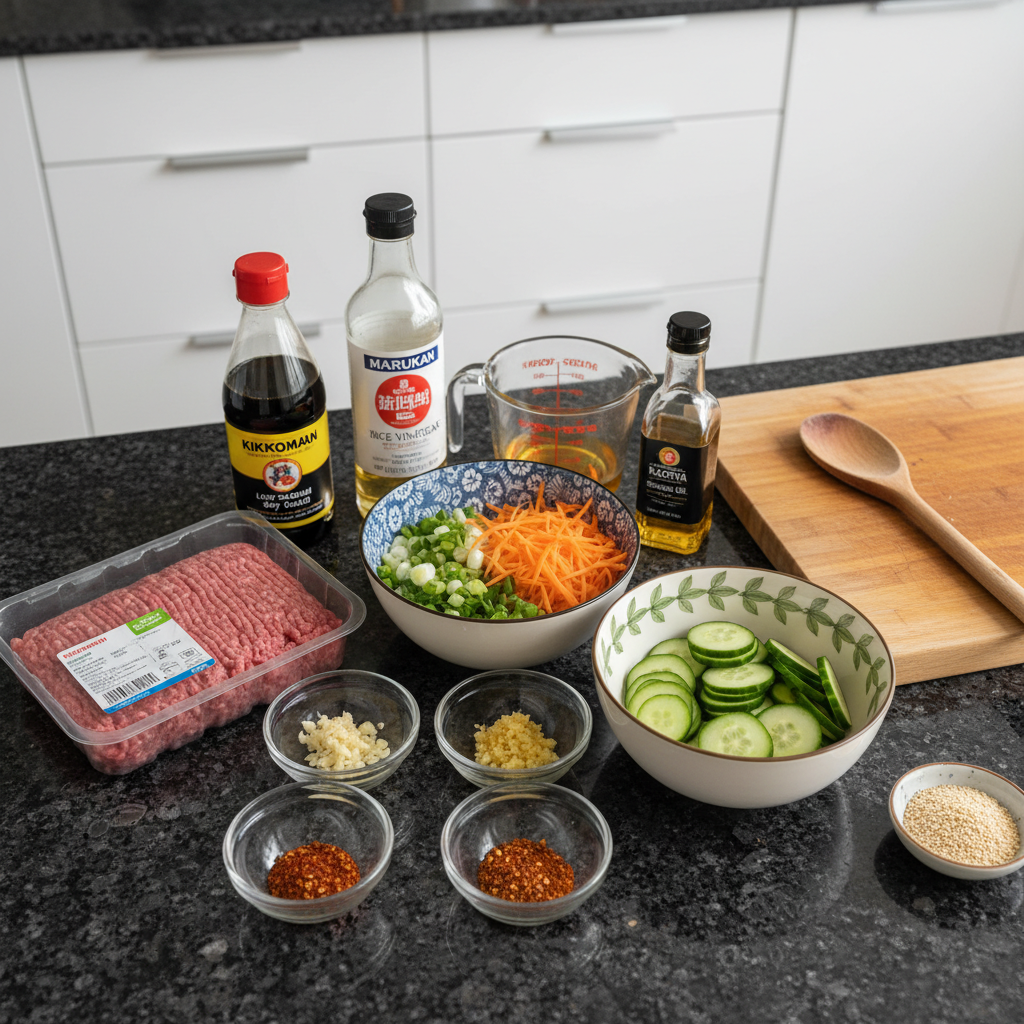
Gather these fresh ingredients to create your vibrant Healthy Ground Beef Rice Bowl. I always recommend having everything prepped and ready before you start cooking!
- 1 pound lean ground beef (I used 93% lean)
- 3 tablespoons low sodium soy sauce (plus additional to taste, divided)
- 1 1/4 cups minced scallions (both green and white parts (from about 1 small bundle), divided)
- 1 tablespoon minced garlic (about 3 cloves)
- 2 tablespoons rice vinegar
- 2 tablespoons honey
- 2 tablespoons minced or finely grated fresh ginger
- 1/4 teaspoon red pepper flakes (plus additional to taste)
- 1 tablespoon sesame oil (plus additional to tase)
- Cooked brown rice (quinoa, or cauliflower rice)
- 1 1/2 cups shredded carrots (see recipe notes to pickle them for an upgrade)
- Thinly sliced seedless cucumbers (Persian-style or English/hot house)
- Toasted sesame seeds
Ingredient Notes & Substitutions
Let’s dive a little deeper into these ingredients, offering you some flexibility and insider tips for the best possible bowl.
- Lean Ground Beef: I recommend using lean ground beef, such as 93% lean, to minimize excess grease and keep the dish lighter. For a different flavor profile, feel free to substitute with ground turkey, chicken, or pork.
- Low-Sodium Soy Sauce: Opting for low sodium soy sauce is a game-changer! It allows you to control the overall saltiness of the dish, ensuring it’s perfectly balanced. For a gluten-free option, simply swap the soy sauce for gluten-free tamari.
- Aromatics (Garlic & Ginger): Fresh is always best when it comes to garlic and fresh ginger, providing a burst of flavor and impressive nutritional benefits (ginger is known for anti-inflammatory properties, and garlic for immune-boosting compounds). Pre-minced varieties can be used in a pinch, but the flavor may be slightly less potent.
- Sweetener: Honey adds a lovely depth, but you can easily swap it for brown sugar or maple syrup if that’s what you have on hand or prefer. Adjust to your taste.
- Red Pepper Flakes: These little flakes are your friend for customizable heat! Start with the recommended amount, then add more if you crave a spicier kick. For an even deeper, more complex Korean-inspired flavor profile and increased spice, consider stirring in 1-2 teaspoons of gochujang (Korean chili paste) with the sauce.
- The Base: While I love fluffy brown rice for its nutty flavor and fiber, this bowl is wonderfully versatile. Feel free to serve it over protein-rich quinoa, low-carb cauliflower rice, or even cooked soba noodles or udon noodles for a different experience.
- Vegetables for the Twist: For the unique stir-fry component, I recommend quick-cooking vegetables that absorb flavor well. Thinly sliced bell peppers (any color!), snap peas, or small broccoli florets are ideal choices.
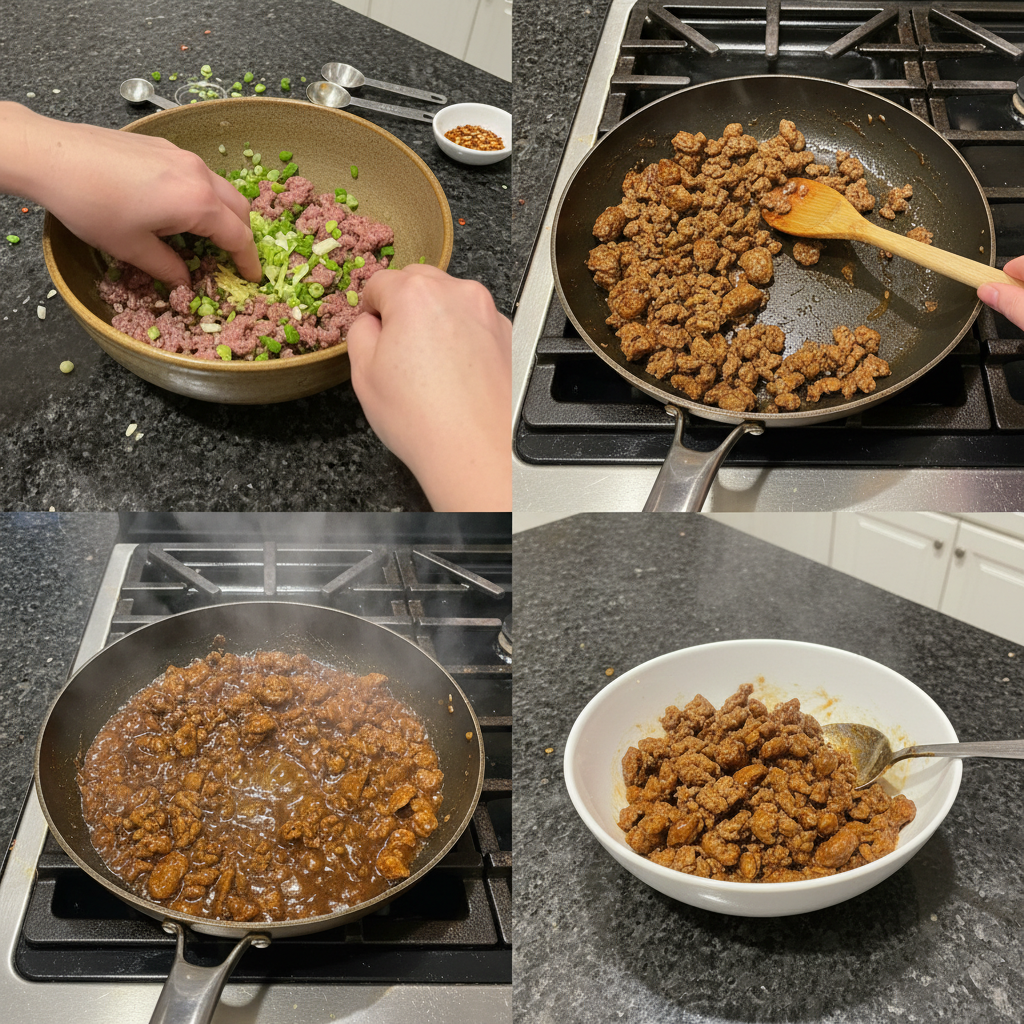
How to Make Your Healthy Ground Beef Rice Bowl
Alright, chef, let’s get cooking! This recipe comes together quickly, especially if you follow my tips for smart prep and embrace the unique stir-fried veggie twist.
1. Prep Your Toppings (Optional but Recommended)
This simple step makes a huge difference in flavor and texture! Thinly slice your seedless cucumbers and shred the shredded carrots. In a small bowl, combine them with about 1 tablespoon of rice vinegar, a tiny pinch of sugar, and a pinch of salt. Give it a good stir and let them sit while you cook the beef. This quick pickling adds a delightful tang and crunch. Remember to drain them before serving.
2. Brown the Beef (and Prep Smart!)
Heat a large skillet over medium-high heat. Add your lean ground beef and begin to brown it, breaking it into small, even pieces with a spatula. You’re looking for a deep, golden-brown color, which means you’re achieving a delicious Maillard reaction that builds incredible flavor. This should take about 5-7 minutes. To ensure proper browning and prevent steaming, make sure your pan isn’t overcrowded.
Pro Tip for Efficiency: While the beef cooks, don’t just stand there! This is the perfect time to efficiently mince your garlic, finely grate the fresh ginger, and chop any additional vegetables for the stir-fry twist (like bell peppers, snap peas, or broccoli) and the remaining scallions.
When the beef is about halfway finished cooking (still showing a little pink), add 1 tablespoon of the low sodium soy sauce and 2/3 of the minced scallions. Continue cooking until the beef is completely browned and cooked through. For food safety, ensure the beef reaches an internal temperature of 160°F (71°C).
3. Integrate the Unique Veggie Twist
This is the crucial step for our unique twist! Once the beef is completely browned, add your chosen quick-cooking vegetables (such as thinly sliced bell peppers, snap peas, or small broccoli florets) directly into the skillet with the beef. Stir everything together and cook for just 2-3 minutes. You want them to be tender-crisp, not soggy, allowing them to absorb those savory beef juices and develop a slight char, enhancing both flavor and texture.
4. Add Garlic & Prepare the Sauce
Stir in the minced garlic and cook for an additional 30 seconds, until it becomes wonderfully fragrant. Meanwhile, in a small bowl, combine the rice vinegar, honey, minced ginger, red pepper flakes, and the remaining low sodium soy sauce. Whisk well to thoroughly combine all the sauce ingredients.
5. Simmer and Finish
Pour the prepared sauce over the browned beef and stir-fried vegetables in the skillet. Stir gently, allowing the sauce to bubble gently and coat everything beautifully. Cook for 2 minutes; the aroma should be incredibly appetizing! Remove the skillet from the heat, then stir in the sesame oil (don’t skip this—it’s essential for that authentic flavor!). Sprinkle the remaining green onion over the top. Taste the mixture and add extra low sodium soy sauce for saltiness or red pepper flakes for heat, as desired, to perfectly balance the flavors.
6. Serve Hot
Serve the flavorful beef and veggie mixture hot, generously spooned over your chosen base (fluffy brown rice, protein-rich quinoa, or light cauliflower rice). Top each bowl with the drained pickled shredded carrots, thinly sliced cucumbers, and a sprinkle of toasted sesame seeds for that irresistible crunch and visual appeal.
Health & Customization for Your Rice Bowl
One of the best things about this Healthy Ground Beef Rice Bowl is how easily it adapts to your health goals and personal preferences. Let’s explore some ways to make it even better for you!
Health & Nutrition Benefits of Your Healthy Beef Bowl
I crafted this recipe not just for flavor, but for robust nutrition too. Here’s a closer look at what makes it so good for you:
- Lean Protein Power: The lean ground beef provides a fantastic source of essential protein, crucial for muscle repair, growth, and keeping you feeling full and satisfied. It also delivers vital nutrients like iron and zinc.
- Antioxidant-Rich Aromatics: Don’t underestimate the power of your fresh ginger and garlic! Ginger is known for its potent anti-inflammatory properties, while garlic is packed with immune-boosting compounds, adding a health kick to every delicious bite.
- Vibrant Veggie Boost: Our unique stir-fried vegetables, like bell peppers, broccoli, and snap peas, along with the fresh cucumber and carrots, contribute a wealth of vitamins, minerals, and dietary fiber, significantly enhancing the dish’s overall nutritional profile.
- Smart Carb Choices: Choosing whole grains like brown rice or quinoa offers sustained energy and a good dose of fiber. For those mindful of carbs, cauliflower rice is a fantastic low-carb, vegetable-packed option.
- Sodium Control: By prioritizing low-sodium soy sauce, we actively manage the sodium content, making this a heart-healthier choice without sacrificing any of that savory, umami flavor.
Customizing Your Korean-Inspired Rice Bowl
This Korean-inspired bowl is a canvas for your culinary creativity. Here are some ideas to make it uniquely yours:
- Adjusting Spice Levels:
- For Mild Flavor/Kids: Simply reduce or omit the red pepper flakes entirely. A tiny pinch of white sugar can also help balance any perceived sharpness.
- For Heat Lovers: Feel free to increase the red pepper flakes. For a deeper, more authentic Korean kick, stir in 1-2 teaspoons of gochujang (Korean chili paste) with the sauce mixture.
- Dietary Adaptations:
- Gluten-Free: As mentioned, using tamari instead of soy sauce is key. Always ensure any other added ingredients (like gochujang or honey) are certified gluten-free.
- Low-Carb: Serve this flavorful mixture over cauliflower rice, zucchini noodles (zoodles), or even large lettuce cups for a refreshing, light wrap.
- Vegetarian/Vegan: Replace the ground beef with your favorite plant-based ground “meat” substitute, or use seasoned, crispy air-fried tofu as the protein base. Adjust cooking times as needed.
- Vegetable Variations: Don’t hesitate to experiment! Other quick-cooking vegetables like sliced mushrooms, thinly sliced zucchini, or even a handful of spinach wilted in at the very end would be delicious. For additional topping ideas, consider quick pickled red onions or radishes.
Pro Tips & Troubleshooting
Even seasoned chefs encounter moments where a little guidance goes a long way. Here are my top tips for success and how to troubleshoot common issues with your Healthy Ground Beef Rice Bowl.
Pro Tips for the Perfect Beef Bowl
- Mastering Fresh Aromatics: For finely grated fresh ginger, use a microplane zester – it’s incredibly efficient. To mince garlic without specialized tools, finely chop it, then sprinkle with a pinch of salt and use the side of your knife blade to mash and smear it into a paste. This unlocks maximum flavor!
- Prep Like a Pro: My golden rule for smooth cooking is “mise en place” – get everything ready *before* you start cooking the beef. Chop all your vegetables, mince aromatics, and mix your sauce. This ensures a stress-free process and prevents anything from burning.
- Optimal Browning for Flavor: Ensure your large skillet is hot enough over medium-high heat and avoid overcrowding the pan when browning the beef. This allows for proper caramelization and the development of rich, savory flavors through the Maillard reaction. Only drain excess fat if you’re using higher-fat beef.
- Timing the Unique Twist: This is key! Add the stir-fry vegetables (like bell peppers, snap peas, or broccoli) for just 2-3 minutes *before* adding the sauce. This ensures they are tender-crisp, not soggy, and truly absorb the beef’s savory flavor.
- Taste and Adjust: Always taste the sauce and the finished dish before serving. Adjust with extra low-sodium soy sauce for saltiness, a touch more honey for sweetness, or additional red pepper flakes for heat, as desired. Your palate is the ultimate judge!
- The Power of Pickling: For the freshest, most vibrant contrast that truly elevates the bowl, take the few extra minutes to quick pickle your shredded carrots and sliced cucumbers. It makes a significant difference in both flavor and texture.
Common Mistakes to Avoid
- Adding Liquid Too Early: Resist the urge to add the sauce before the beef is thoroughly browned. This steams the beef instead of searing it, preventing the development of those deep, rich flavors we’re aiming for.
- Skipping Sesame Oil: Sesame oil is a crucial ingredient for that signature umami depth and an authentic, aromatic Asian cuisine flavor profile. Omitting or significantly reducing it will result in a less flavorful dish.
- Overcooking Vegetables: Be mindful not to overcook the stir-fried vegetables. They should remain tender-crisp for the best texture contrast in the bowl.
- Sauce Too Salty/Too Thin: If your beef mixture ends up too salty, don’t fret! Add a splash of water, a squeeze of lime juice, or a little more honey to help balance it out. If the sauce is too thin, simmer it for an extra minute or two to reduce, or whisk in a cornstarch slurry (1 tsp cornstarch + 1 tsp cold water) at the very end to thicken it.
Serving & Storage
Once your irresistible Healthy Ground Beef Rice Bowl is ready, knowing how to serve it creatively and store it properly will ensure maximum enjoyment!
Creative Serving Ideas
- Base Options: Beyond classic brown rice, try serving your beef and veggies over fluffy, protein-rich quinoa or light and low-carb cauliflower rice. For a different texture and twist, cooked soba noodles or udon noodles are also fantastic choices.
- Garnishes Galore: Don’t skimp on the garnishes! Top generously with the drained pickled carrots and cucumbers, a sprinkle of toasted sesame seeds, and the remaining fresh scallions for vibrant color, crunch, and a burst of freshness.
- Extra Goodies: Elevate your bowl even further with optional toppings. A perfectly fried egg with a runny yolk adds incredible richness, sliced avocado brings creamy goodness, and a drizzle of sriracha can provide an extra kick of heat.
- Perfect Pairings: For a complete meal, I love serving this bowl alongside simple steamed fresh broccoli, quick roasted frozen broccoli, a crisp Asian Cucumber Salad, or a refreshing Asian Cabbage Salad.
- Alternative Presentations: For a lighter, refreshing option, try serving the beef mixture as delicious lettuce wraps. It’s also wonderful paired with some crispy air-fried tofu for extra texture and plant-based protein.
Storage & Make-Ahead Tips
- Meal Prep Friendly: This recipe truly excels for meal prep! I highly recommend portioning the cooked beef and stir-fried vegetables into individual servings in glass food storage containers. Keep your chosen base (rice, quinoa, etc.) separate until serving for the best texture.
- Refrigeration: Store leftover beef mixture and cooked rice/base separately in airtight containers in the refrigerator for up to 3-4 days. Keep any fresh toppings (like pickled carrots and cucumbers) separate until you’re ready to eat to maintain their crunch.
- Reheating: For individual portions, the microwave works perfectly – just heat until warmed through. Alternatively, gently warm in a large skillet on the stovetop over medium heat, adding a splash of water or broth if it seems a little dry.
- Freezing: The cooked beef and stir-fried vegetable mixture (without the rice or fresh toppings) freezes beautifully! Store it in freezer-safe containers or bags for up to 2-3 months. Thaw overnight in the refrigerator before reheating. This makes future busy weeknights a breeze.
Conclusion
And there you have it – a truly delicious, satisfying, and Healthy Ground Beef Rice Bowl that’s destined to become a weeknight hero in your kitchen! I love how its vibrant, Korean-inspired flavors come alive, especially with that clever stir-fried veggie twist that adds incredible texture and depth beyond your usual toppings. This isn’t just a recipe; it’s a testament to how quick and easy healthy eating can be.
Whether you’re new to cooking or a seasoned home chef, this recipe is incredibly approachable and delivers consistently delicious, satisfying results perfect for any night of the week. So, I wholeheartedly encourage you to try it, experiment with the suggested variations and creative serving ideas, and make this a staple in your meal rotation. Come back and tell me how it turned out, share your creations, or leave a comment below – I always love hearing from you!
Frequently Asked Questions (FAQ)
Can I use different types of ground meat in this recipe?
Yes, absolutely! Ground turkey, chicken, or pork are excellent substitutes for ground beef, offering slightly different flavor profiles. Adjust cooking times as needed to ensure the meat is cooked through.
How can I make this Korean Beef Bowl gluten-free?
To make this dish gluten-free, simply swap out regular low-sodium soy sauce for a high-quality gluten-free tamari. Always double-check any additional ingredients (like gochujang, if using) to ensure they are certified gluten-free.
What are the best serving suggestions for a Healthy Ground Beef Rice Bowl?
Serve over brown rice, quinoa, or cauliflower rice. Garnish generously with the quick pickled carrots, thinly sliced cucumbers, and toasted sesame seeds. For extra richness, add a fried egg, and for more vegetables, pair with steamed broccoli or an Asian Cucumber Salad.
Can I make this Korean Beef Bowl ahead for meal prep?
Yes, this recipe is fantastic for meal prep! Cook the beef and stir-fried vegetables, then portion into airtight glass food storage containers with your chosen rice or base. Keep fresh toppings like pickled carrots and cucumbers separate until serving. It will stay fresh in the fridge for 3-4 days.
What vegetables pair well with a Korean Beef Bowl?
For the unique stir-fry twist, bell peppers, snap peas, and broccoli florets are perfect. Classic fresh toppings include shredded carrots and thinly sliced cucumbers. Other great additions are sliced mushrooms, quick pickled onions, or radishes.
How do I store and reheat leftover Beef Rice Bowl?
Store leftovers in an airtight container in the refrigerator for 3-4 days. To reheat, microwave individual portions until warmed through, or gently warm in a skillet on the stovetop, adding a splash of water if needed. The cooked beef mixture can also be freezer-friendly for 2-3 months.
What is Gochujang and can I use it in this recipe?
Gochujang is a savory, sweet, and spicy fermented Korean chili paste. Yes, you can absolutely add 1-2 teaspoons to the sauce mixture for a deeper, more complex Korean flavor profile and an extra kick of heat.
Is this a truly authentic Korean Beef Bowl recipe?
This recipe is designed as a “Korean-inspired” weeknight meal. It captures the delicious essence and flavors of Korean cuisine but is adapted for speed, health, and ease of preparation for the home cook, rather than adhering strictly to traditional Korean culinary methods.
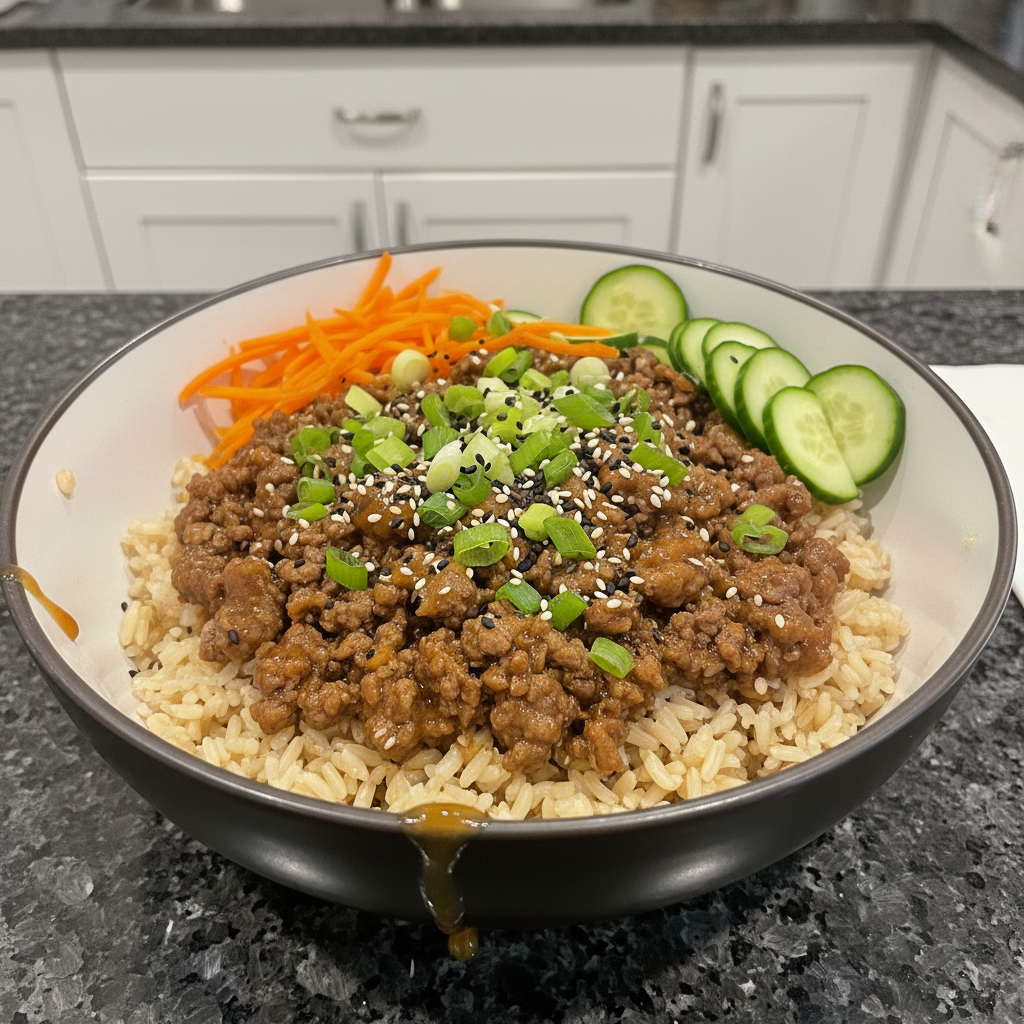
Healthy Ground Beef Rice Bowl: Quick One-Pan Meal with Veggies
Ingredients
Equipment
Method
- Thinly slice your seedless cucumbers and shred the carrots. In a small bowl, combine them with about 1 tablespoon of rice vinegar, a tiny pinch of sugar, and a pinch of salt. Give it a good stir and let them sit while you cook the beef. Remember to drain them before serving.
- Heat a large skillet over medium-high heat. Add your lean ground beef and begin to brown it, breaking it into small, even pieces with a spatula, for about 5-7 minutes until golden brown. While the beef cooks, mince your garlic, finely grate the fresh ginger, chop any additional vegetables for the stir-fry twist, and the remaining scallions.
- When the beef is about halfway finished cooking (still showing a little pink), add 1 tablespoon of the low sodium soy sauce and 2/3 of the minced scallions. Continue cooking until the beef is completely browned and cooked through (for food safety, ensure the beef reaches an internal temperature of 160°F/71°C).
- Once the beef is completely browned, add your chosen quick-cooking vegetables (such as thinly sliced bell peppers, snap peas, or small broccoli florets) directly into the skillet with the beef. Stir everything together and cook for just 2-3 minutes until tender-crisp, allowing them to absorb those savory beef juices and develop a slight char.
- Stir in the minced garlic and cook for an additional 30 seconds, until it becomes wonderfully fragrant. Meanwhile, in a small bowl, combine the rice vinegar, honey, minced ginger, red pepper flakes, and the remaining low sodium soy sauce. Whisk well to thoroughly combine all the sauce ingredients.
- Pour the prepared sauce over the browned beef and stir-fried vegetables in the skillet. Stir gently, allowing the sauce to bubble gently and coat everything beautifully. Cook for 2 minutes. Remove the skillet from the heat, then stir in the sesame oil. Sprinkle the remaining green onion over the top. Taste the mixture and add extra low sodium soy sauce for saltiness or red pepper flakes for heat, as desired, to perfectly balance the flavors.
- Serve the flavorful beef and veggie mixture hot, generously spooned over your chosen base (fluffy brown rice, protein-rich quinoa, or light cauliflower rice). Top each bowl with the drained pickled shredded carrots, thinly sliced cucumbers, and a sprinkle of toasted sesame seeds for that irresistible crunch and visual appeal.
