


As a professional chef and someone who truly cherishes a healthy start to the day, I understand the perpetual quest for a breakfast that is both incredibly satisfying and deliciously good for you. We all want to fuel our bodies without compromising on flavor or texture. This is where my recipe for the ultimate Fluffy High Protein Pancakes comes into play. If you’ve ever struggled with dry, crumbly, or rubbery protein pancakes, prepare to be amazed. This recipe isn’t just about adding protein; it’s about mastering a consistently moist, tender, and incredibly easy pancake that will become your new favorite healthy breakfast, packed with essential tips for success.
Why You’ll Love This Recipe
I’ve heard it countless times: “protein pancakes always turn out dry!” Well, not anymore. My secret weapon, the unique twist in this recipe, is the addition of just **1 tablespoon of finely ground flaxseed meal** (or psyllium husk powder if you need a gluten-free option) into the batter. This isn’t just for extra fiber; there’s a real science behind it. Flaxseed meal acts as a phenomenal binder and emulsifier thanks to its mucilaginous properties. When hydrated, it creates a gel that significantly enhances the structural integrity of the protein-heavy batter, preventing those frustrating pancakes from crumbling apart. The fiber also works wonders to retain moisture, directly counteracting the common drying effect of protein powder, leading to a pancake that’s truly tender and far less rubbery.
What does this mean for you? It means **less crumbly, more cohesive, moist, and tender pancakes** that hold together beautifully. You’ll love how **quick and easy** these high protein pancakes are to prepare, making them perfect for busy mornings. They’re incredibly satisfying for a protein-packed breakfast, keeping you full and energized. Plus, they’re **ideal for meal prep**, ensuring a reliably delicious and nutritious start to your day, every time.
Ingredients Needed
- 2 large eggs
- 1 tablespoon vanilla extract
- 1 teaspoon stevia glycerite (or to taste; equals ⅓ cup of sugar; omit if using sweetened protein powder)
- ½ cup plain Greek yogurt (not regular yogurt)
- 2 scoops unsweetened whey protein powder (level, not packed; 40 grams total; see notes below)
- 1 teaspoon baking powder (gluten-free if needed)
- Avocado oil cooking spray (for the griddle)
Ingredient Notes & Substitutions
Protein Powder: I typically use whey protein powder for the fluffiest results in these protein pancakes. However, this recipe is adaptable! If you prefer pea protein powder, casein protein powder, soy protein, brown rice protein, or hemp protein, they can work. Just be aware that plant-based protein powders, especially pea protein, are often more absorbent and may require an extra splash of liquid (1-2 tablespoons of Greek yogurt or water) to achieve the right batter consistency. For accurate macros, I highly recommend weighing your protein powder to hit the 40 grams. If measuring by volume, be sure to fluff the powder before scooping and use a level scoop, not a packed one, to prevent dry, powdery pancakes.
Binding Agent (The Twist): This is the game-changer! Don’t skip adding 1 tablespoon of finely ground flaxseed meal or psyllium husk powder (for gluten-free needs) to your batter. This ingredient is key for emulsification, hydration, and dramatically improving the structural integrity of these delicate high protein pancakes. It’s how we achieve that perfectly cohesive, tender texture instead of a crumbly mess.
Sweetener: I use stevia glycerite as it’s a natural, calorie-free option. Feel free to use other sugar substitutes, or omit it entirely if your chosen protein powder is already sweetened. To further mask any slight ‘protein powder taste’, beyond the vanilla extract, consider adding a pinch of cinnamon, a tablespoon of mashed banana, or a few drops of other extracts like coconut extract, orange extract, or almond extract.
Greek Yogurt: Make sure you use plain Greek yogurt, not regular yogurt, as the latter is too thin and lacks the protein content. For a thicker batter and an extra protein boost, you could experiment with blended cottage cheese. For dairy-free adaptations, a plain, unsweetened dairy-free Greek-style yogurt can work, but keep an eye on the batter’s viscosity and adjust if needed. The fat percentage won’t drastically alter the outcome, so use what you prefer.
Flour Alternatives: While these are designed as flourless protein pancakes, if you find your pancakes consistently falling apart, a small addition can help. ¼ cup of almond flour or 2 tablespoons of all-purpose flour can be added to the batter for extra binding. Just remember this will change the macros of your high protein breakfast.
Cooking Fat: Avocado oil cooking spray is my go-to for its neutral flavor and high smoke point, ideal for the nonstick griddle. For different flavor profiles, consider a light spray of coconut oil for a tropical hint or a touch of ghee for a richer, buttery taste.
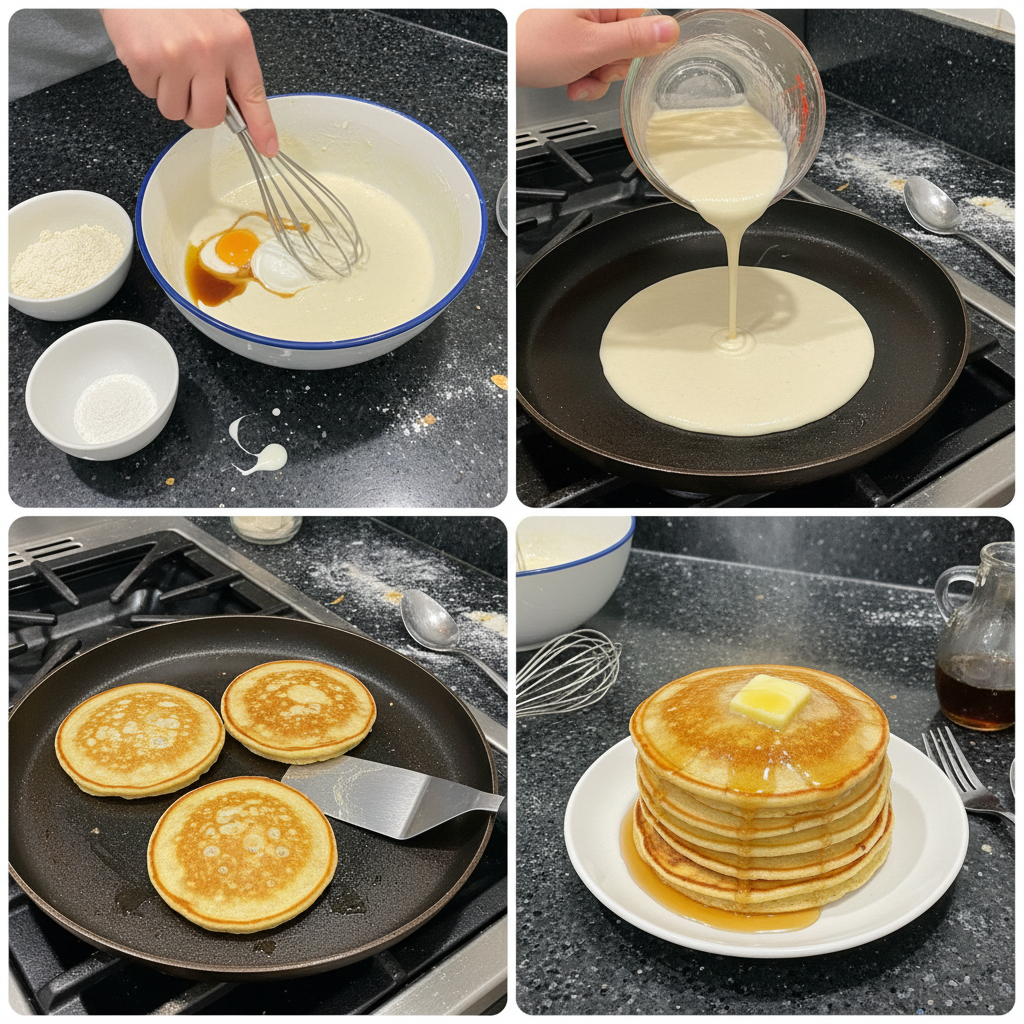
How to Make High Protein Pancakes
Phase 1: Prepare the Batter
- In a medium bowl, whisk the large eggs, vanilla extract, stevia glycerite, and Greek yogurt until well combined and smooth.
- Add the protein powder and whisk until completely smooth and blended. Use a rubber spatula to scrape the sides of the bowl if needed, ensuring no dry pockets remain.
- Whisk in the baking powder. Let the batter rest while you heat the griddle. This short rest time is crucial; it allows the baking powder to activate and the protein powder and flaxseed to properly hydrate, which slightly thickens the batter and contributes to a better texture. The batter consistency should be pourable but not watery, resembling a thin cake batter or a slightly thicker traditional pancake batter.
Phase 2: Heat and Cook
- Heat a nonstick griddle or a large, 12-inch nonstick skillet over medium heat (not higher). If you use an electric stovetop, heat it over medium-low heat. The right cooking temperature is vital for a beautiful Maillard reaction without burning. Spray the skillet with avocado oil cooking spray. Using a 1.5-tablespoon cookie scoop, pour small mounds of the batter onto the griddle. A double-burner griddle will accommodate 8 pancakes. A large skillet will hold 3 or 4. For consistent pancake sizes without a scoop, you can use a regular measuring tablespoon or practice a controlled free-pouring technique for similar sizing.
- Cook the pancakes until they bubble on top and the edges appear set, for about one minute. It happens fast! The surface will also start to look dull rather than wet. Flip and cook them on the second side for just a few more (10-20) seconds. It’s important not to overcook them, or they will turn out dry and rubbery. Lower the heat to medium-low or low if needed to prevent burning. To flip these delicate protein pancakes, carefully slide a wide spatula underneath each pancake, using a second spatula to ensure it rests on top of the wide one, then quickly flip the wide spatula.
Phase 3: Flip and Finish
- Transfer the cooked pancakes to a plate, cover them loosely with foil to keep them warm, and cook the remaining pancakes. Serve immediately for the best experience.
Perfecting Your Protein Pancakes: Consistency & Scaling
Achieving the perfect batch of high protein pancakes consistently requires a little understanding of your batter and how to adjust for your needs. I’m here to guide you through it!
Optimal Batter Consistency: Your batter consistency is paramount. It should be thick enough to hold its shape on the griddle but still spread easily, much like a slightly thicker traditional pancake batter. If you’re using pea protein powder or another plant-based protein, which tend to be more absorbent, you might find the batter thicker than expected. Don’t hesitate to add a splash more liquid – a tablespoon or two of Greek yogurt or even water – until you reach that ideal pourable viscosity.
Achieving Consistent Pancake Sizes: For beautifully uniform protein pancakes that cook evenly, I swear by a 1.5-tablespoon cookie scoop. It takes out all the guesswork! If you don’t have one, no worries. A regular measuring tablespoon can work, or you can simply practice a controlled free-pouring technique, aiming for similar small mounds to ensure even cooking and presentation.
Scaling the Recipe: This recipe is incredibly versatile for any size appetite or meal prep goal. For a **single serving**, simply halve all the ingredients. You’ll get a perfect personal stack of high protein pancakes. Need more? Easily double or triple the recipe while maintaining the ingredient ratios. Just remember to keep an eye on the batter consistency, as larger batches might require minor liquid adjustments depending on your specific protein powder.
Pro Tips & Troubleshooting
Pro Tips for Success
- Accurate Protein Powder Measurement: This is a game-changer! Weighing your protein powder to hit 40 grams (for two scoops) is the most accurate method and prevents dry, powdery pancakes. If you’re measuring by volume, remember to fluff the powder in its container before scooping, then use a level scoop, not a packed one.
- Mind the Heat: The optimal cooking temperature is medium-low to low, especially on electric stovetops. This ensures your protein pancakes cook through gently, developing a beautiful golden Maillard reaction without burning or overcooking them into a dry, rubbery state.
- Don’t Rush the Flip: Patience is a virtue here! Wait until you see bubbles reaching the edges of the pancakes, the surface looks dull and set, and the edges appear slightly firm. Flipping too early is a common mistake that can cause your delicate pancakes to fall apart.
- Use Two Spatulas: For delicate flipping of these thinner protein pancakes, employing two spatulas for support makes all the difference. Slide one wide spatula underneath, then use a second to gently stabilize the top as you quickly flip.
- Leverage the Unique Twist: That flaxseed meal or psyllium husk powder is your secret weapon! Ensure it’s well-incorporated into the batter. It’s crucial for the structural integrity and moisture retention, leading to pancakes that are less crumbly and wonderfully tender.
- Pea Protein Adjustment: If you’re using pea protein powder, which is more absorbent, don’t be afraid to add 2-4 tablespoons of extra Greek yogurt (or water/milk) to your batter. Also, cook these varieties over consistently low heat to prevent them from becoming dryness or overly dense.
Common Mistakes to Avoid
- Overcooking: This is the number one culprit for dry and rubbery protein pancakes. Keep cooking times short – just long enough for the bubbles and set edges on the first side, and only 10-20 seconds on the second.
- Too Much Protein Powder: Heaping scoops of protein powder can throw off the liquid-to-dry ratio, resulting in predictably dry, powdery pancakes. Always measure accurately, ideally by weight.
- Expecting Traditional Pancake Texture: Manage your expectations! Protein pancakes will naturally be smaller, thinner, and have a slightly different texture than fluffy traditional flour-based pancakes. Appreciate them for their unique benefits and delicious, healthy profile.
- Flipping Too Early: This is a sure-fire way to cause pancakes to fall apart, especially with plant-based proteins or delicate batters. Wait for those clear doneness cues!
- Ignoring Batter Rest Time: Skipping the short rest time can lead to less effective baking powder activation and less hydrated protein powder, impacting the final texture and fluffiness.
Serving & Storage
Serving Ideas
The beauty of these high protein pancakes is their versatility! Here are some of my favorite ways to enjoy them:
- Classic Toppings: A dollop of butter and a drizzle of traditional maple syrup (or a sugar-free alternative like Lakanto Maple Flavored Syrup) is always a winner.
- Fruity & Sweet: Pile on a warm blueberry compote or strawberry compote, or simply scatter fresh blueberries over the top. Caramelized fried bananas also make an indulgent and delicious pairing.
- Rich & Creamy: For extra decadence and protein, spread with a luscious keto chocolate hazelnut spread, or whip up a quick Greek yogurt frosting (plain Greek yogurt mixed with a little sweetener and vanilla).
- Flavorful Add-Ins: Get creative! Stir chocolate chips, a pinch of extra cinnamon, a few tablespoons of mashed banana, or chopped pecans directly into the batter before cooking.
- Savory Twist: Don’t limit yourself to sweet! Omit the sweetener and vanilla from the batter, and instead add savory elements like crispy bacon pieces, chopped scallions, or a sprinkle of shredded cheese. Serve with a fried egg for a truly hearty high protein breakfast.
Storage and Make-Ahead
These high protein pancakes are fantastic for meal prep, ensuring you have a healthy breakfast ready throughout the week!
- Refrigeration: Allow any leftover pancakes to cool completely, then store them in an airtight container in the refrigerator for up to 3-4 days.
- Freezing: Yes, protein pancakes can be frozen beautifully! Once completely cool, layer them between sheets of parchment paper to prevent sticking. Place the stack in a freezer-safe bag or container, and they’ll keep well for up to 1-2 months.
- Reheating: For best results, reheat refrigerated pancakes in the microwave for 30-60 seconds, or in a toaster or toaster oven until warmed through. Frozen pancakes can be reheated directly from the freezer in a toaster, toaster oven, or a lightly oiled nonstick skillet over low heat until hot and soft.
Conclusion
I genuinely believe this recipe solves the age-old problem of dry, crumbly high protein pancakes. Thanks to our unique flaxseed meal twist, these pancakes are reliably moist, tender, and incredibly delicious, making a healthy high protein breakfast easy and enjoyable. Even if you’re a beginner in the kitchen, my detailed tips and instructions will guide you to success.
So, go ahead, give these a try! Experiment with your favorite serving ideas or flavor variations. I’m confident you’ll love them as much as I do. Print this recipe and make it a staple for your next healthy breakfast!
FAQ
Why are my protein pancakes dry or rubbery?
The most common reasons for dry or rubbery protein pancakes are overcooking and using too much protein powder. To avoid this, cook them over medium-low to low heat for short periods, and always measure your protein powder accurately (ideally by weight). Our unique flaxseed meal twist also significantly helps with moisture retention.
Can I substitute pea protein powder or other flours for whey protein?
Yes, you can substitute pea protein powder and other plant-based proteins, but be aware of their differing absorbency and potential texture impacts. Pea protein, for instance, is more absorbent and may require an extra 1-2 tablespoons of Greek yogurt or water to achieve the right batter consistency. While this recipe is flourless, if you experience structural issues, you can add ¼ cup almond flour or 2 tablespoons all-purpose flour, but note this will change the macros.
How can I make protein pancakes taste better and enhance their texture?
Our secret is the flaxseed meal (or psyllium husk powder) which significantly improves texture and structural integrity. To enhance flavor, use vanilla extract, a pinch of cinnamon, or other extracts like coconut extract or almond extract. Incorporating ingredients like mashed banana or chocolate chips into the batter also works wonders. Top them with delicious serving ideas like blueberry compote or Greek yogurt frosting.
What are the main differences between protein pancakes and traditional pancakes?
Protein pancakes typically have a higher protein content and often lower carbs, making them a great option for a high protein breakfast. Their texture is generally smaller and thinner than traditional flour-based pancakes, and the mouthfeel is distinct due to the absence of all-purpose flour and the presence of protein powder.
How do I properly store and reheat leftover protein pancakes?
For refrigerating leftovers, cool them completely and store them in an airtight container for up to 3-4 days. To freezing protein pancakes, layer cooled pancakes with parchment paper in a freezer-safe bag or container for 1-2 months. You can reheat them in the microwave (30-60 seconds), a toaster, toaster oven, or a lightly oiled nonstick skillet until warm through.
What are common mistakes to avoid when making protein pancakes?
Avoid overcooking, which leads to dry pancakes. Don’t use too much protein powder; accurate measurement is key. Manage expectations regarding texture, as protein pancakes will differ from traditional ones. Lastly, avoid flipping too early, and ensure you let the batter rest as instructed for best results.
What is the best cooking temperature for protein pancakes?
The best cooking temperature for protein pancakes is medium-low to low heat, especially if you have an electric stovetop. This ensures even cooking, a nice Maillard reaction for flavor, and prevents them from burning or overcooking, which can make them dry and rubbery.
How to prevent protein pancakes from falling apart or being mushy?
The unique twist of adding flaxseed meal or psyllium husk powder is crucial for structural integrity. Ensure your batter consistency is correct – pourable but not too thin. Most importantly, wait for clear doneness cues (bubbles, dull surface, set edges) before flipping to prevent them from falling apart.
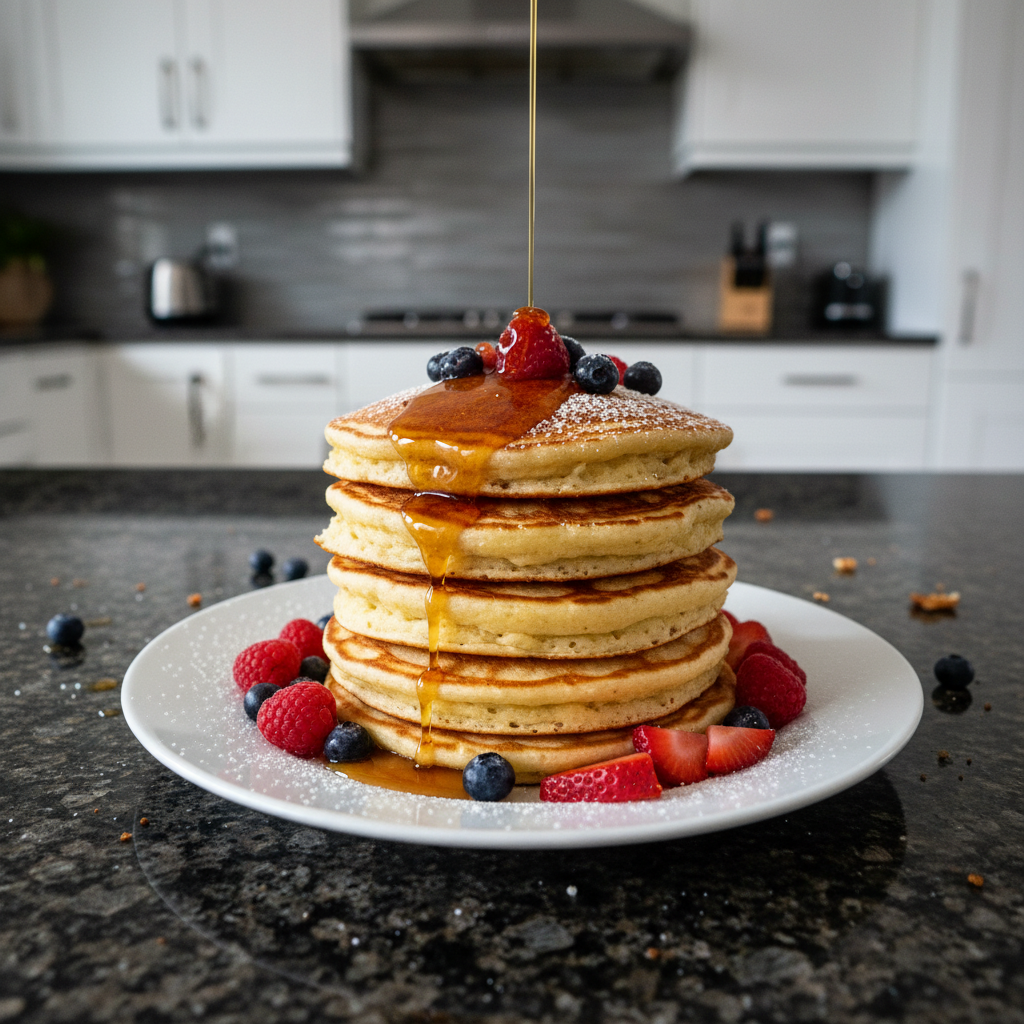
Fluffy High Protein Pancakes
Ingredients
Equipment
Method
- In a medium bowl, whisk the large eggs, vanilla extract, stevia glycerite, and Greek yogurt until well combined and smooth.
- Add the protein powder and flaxseed meal, and whisk until completely smooth and blended. Use a rubber spatula to scrape the sides of the bowl if needed, ensuring no dry pockets remain.
- Whisk in the baking powder. Let the batter rest while you heat the griddle. This short rest time allows the baking powder to activate and the protein powder and flaxseed to properly hydrate, slightly thickening the batter and contributing to a better texture. The batter consistency should be pourable but not watery, resembling a thin cake batter.
- Heat a nonstick griddle or a large, 12-inch nonstick skillet over medium heat (not higher). If using an electric stovetop, heat it over medium-low heat. Spray the skillet with avocado oil cooking spray. Using a 1.5-tablespoon cookie scoop, pour small mounds of the batter onto the griddle. A double-burner griddle will accommodate 8 pancakes. A large skillet will hold 3 or 4.
- Cook the pancakes until they bubble on top and the edges appear set, for about one minute. The surface will also start to look dull rather than wet. Flip and cook them on the second side for just a few more (10-20) seconds. It’s important not to overcook them, or they will turn out dry and rubbery. Lower the heat to medium-low or low if needed to prevent burning. To flip these delicate protein pancakes, carefully slide a wide spatula underneath each pancake, using a second spatula to ensure it rests on top of the wide one, then quickly flip the wide spatula.
- Transfer the cooked pancakes to a plate, cover them loosely with foil to keep them warm, and cook the remaining pancakes. Serve immediately for the best experience.
