


There’s nothing quite like the aroma of a rich, savory stew simmering away, promising a meal that warms you from the inside out. My ultimate Dutch oven beef stew is the embodiment of comfort, a classic dish elevated to perfection. This recipe doesn’t just give you the steps; it unveils the culinary science behind achieving incredibly tender beef and a gravy with unbelievable depth. With a secret flavor twist I’ve perfected in my kitchen, this is the only beef stew recipe you’ll ever need.
Why You’ll Love This Recipe
This isn’t just another stew recipe. It’s a carefully crafted method designed for maximum flavor and foolproof results, all thanks to a few key techniques and a couple of secret ingredients: soy sauce and balsamic vinegar.
A Secret Umami Boost. The game-changer here is the addition of soy sauce and balsamic vinegar. The soy sauce introduces a profound, savory umami that makes the beef taste richer and more complex, while the balsamic adds a subtle brightness that cuts through the richness, creating a perfectly balanced gravy.
A True One-Pot Meal. Everything from searing the beef to simmering the final stew happens in a single Dutch oven. This means fewer dishes to wash and more flavor development, as every browned bit gets incorporated back into the sauce.
Melt-in-Your-Mouth Tender Beef. By braising the stew low and slow in the oven, we guarantee that the tough connective tissue in the beef chuck breaks down into silky gelatin. The result is fall-apart tender beef in every single bite.
A Deeply Flavorful Gravy. We build layers of flavor from the very beginning. Searing the meat creates the delicious browning known as the Maillard reaction, and deglazing the pot captures every last bit of that flavor, which you just can’t achieve in a slow cooker.
Perfect for Any Occasion. This hearty stew is the ultimate comfort food for a chilly evening, making it a perfect winter recipe.
Ingredients Needed
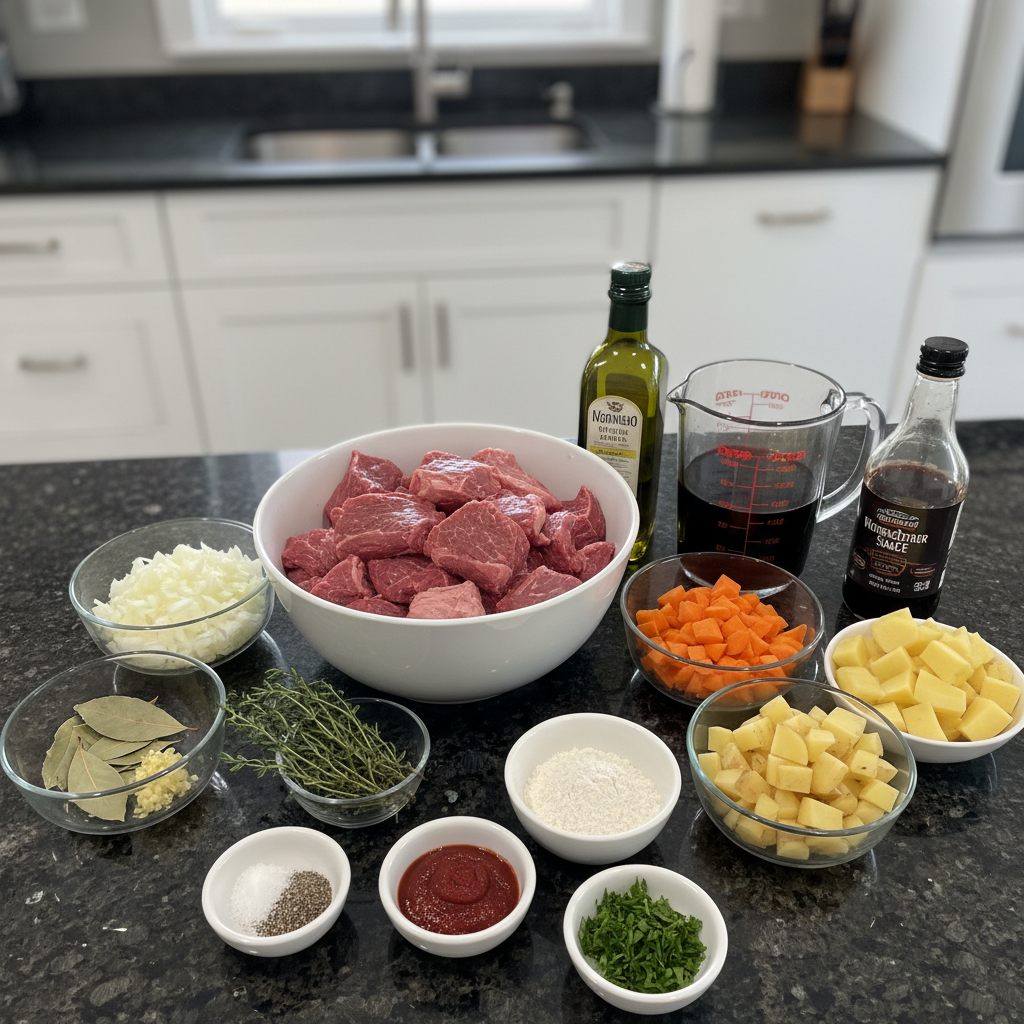
- 3 pounds whole boneless beef chuck roast, cut into 1.5 inch chunks
- 1 ½ teaspoons Kosher salt
- 1 teaspoon ground black pepper
- Olive oil
- 1 medium yellow onion, diced
- 5 cloves garlic, minced
- 3 large carrots, peeled and chopped
- 1 teaspoon fresh thyme, roughly chopped
- 2 tablespoons tomato paste
- 2 teaspoons Worcestershire sauce
- ½ cup red wine (or beef broth)
- ¼ cup all-purpose flour, plus more as needed
- 4 cups beef broth, plus more as needed
- 3 medium Yukon gold potatoes, peeled and diced (see note below)
- 2 dried bay leaves
- Chopped parsley
- Olive oil
- Salt and pepper to taste
- Frozen or fresh green peas (optional)
Ingredient Notes & Substitutions
Beef Chuck Roast: This is, without a doubt, the best cut for stew. Beef chuck roast is rich in connective tissue and collagen. During the slow cooking process, that collagen breaks down into rich gelatin, which not only makes the meat incredibly tender but also gives the gravy a silky, luxurious body.
Potatoes: I strongly recommend waxy potatoes like Yukon Gold potatoes or red potatoes. They hold their shape beautifully during the long braise. Avoid starchy potatoes like Russets, which tend to disintegrate and can make the stew grainy.
Red Wine: Use a dry, full-bodied red wine that you’d enjoy drinking. Cabernet Sauvignon, Merlot, or Zinfandel are all excellent choices. If you prefer to cook without alcohol, you can easily substitute an equal amount of beef broth.
Our Secret Ingredients: For the flavor twist, a standard soy sauce (not light or dark) and any decent balsamic vinegar you have on hand will work perfectly to add that special something to your stew.
How to Make Dutch Oven Beef Stew
Follow these steps carefully, and you’ll be rewarded with a rich, deeply flavorful stew that tastes like it simmered for days.
-
Prepare and Sear the Beef
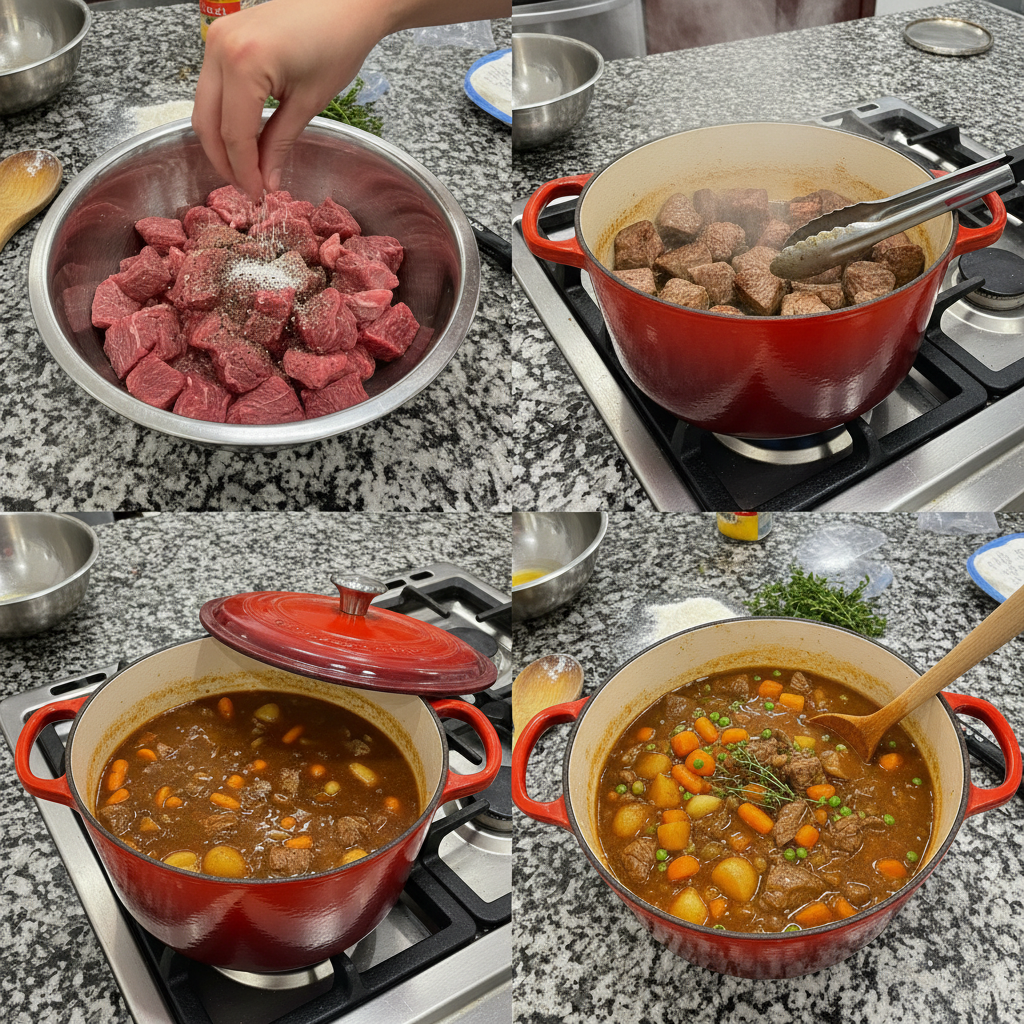
First, preheat your oven to 325°F (165°C). Pat the beef chunks completely dry with paper towels, then season them generously with the Kosher salt and black pepper. Heat a splash of olive oil in a large Dutch oven over high heat until it shimmers. Working in batches, sear the beef on all sides until a deep brown crust forms. You want to hear a confident sizzle! This step is crucial for flavor. Avoid overcrowding the pan, as this will steam the meat instead of browning it. Transfer the seared beef to a separate plate.
-
Sauté the Aromatics & Flavor Base
Reduce the heat to medium. Add a bit more olive oil if needed, then add the diced onion, garlic, and carrots to the pot. Cook, stirring occasionally, until they begin to soften, about 5 minutes. The aroma will be incredible! Now, stir in the fresh thyme, tomato paste, Worcestershire sauce, and our secret ingredients—the soy sauce and balsamic vinegar. Cook for another 2-3 minutes, allowing the tomato paste to darken and become fragrant.
-
Deglaze and Build the Gravy
Pour in the red wine (or beef broth) to deglaze the pot. Use a wooden spoon to scrape up all those delicious browned bits (called fond) from the bottom. Let the wine bubble and reduce for about 3 minutes. Sprinkle the all-purpose flour over the vegetables and stir continuously for about a minute to cook out the raw flour taste. This creates our flour roux, the foundation for a thick, luscious gravy.
-
Braise to Perfection
Slowly pour in the 4 cups of beef broth, stirring constantly until the flour is fully incorporated and the liquid begins to thicken. Return the seared beef and its juices to the pot. Add the diced Yukon Gold potatoes and the dried bay leaves. Bring the mixture to a boil, then reduce the heat to a gentle simmer for 5-7 minutes. Taste and adjust with salt and pepper if needed. Cover the Dutch oven with its lid and transfer it to the preheated oven. Let it braise for 1 hour and 45 minutes, or until the beef is fork-tender.
-
Finish and Serve
If you’re using peas, stir them in during the last 10 minutes of cooking. Once the stew is done, carefully remove it from the oven. Discard the bay leaves. Let it rest for a few minutes before serving. Garnish generously with fresh chopped parsley for a pop of color and freshness. Enjoy!
Mastering Your Stew: Pro Choices & Troubleshooting
With the basics down, let’s dive into the details that will make your stew consistently perfect.
Choosing the Best Red Wine
The wine you choose will add its own character to the stew. A Cabernet Sauvignon provides a robust structure, a Merlot offers softer, fruitier notes, and a Zinfandel can add a hint of jammy richness. The most important rule is to use a dry red wine you would happily drink on its own. The cooking process will concentrate its flavor, so quality matters.
Why Chuck Roast is King: The Science of Tender Stew
Tougher cuts of meat like beef chuck roast are packed with connective tissue, primarily collagen. When you try to cook these cuts quickly, the meat remains tough and chewy. However, the magic of braising—cooking with slow, moist heat—transforms this collagen into silky, rich gelatin. This process not only makes the beef fall-apart tender but also enriches the gravy, giving it an unmatched body and luxurious mouthfeel.
Common Stew Problems & How to Fix Them
- My meat is tough: This is almost always a sign of undercooking. The collagen hasn’t had enough time to break down. Don’t worry! The fix is simple: put the covered Dutch oven back into the oven and cook for another 30-45 minutes, checking for tenderness.
- My gravy is too thin: For a quick fix, create a cornstarch slurry. Whisk 1 tablespoon of cornstarch with 2 tablespoons of cold water until smooth. Stir this mixture into the simmering stew on the stovetop and cook for a minute or two until it reaches your desired thickness.
- My vegetables are mushy: This typically happens when using starchy potatoes like Russets or cutting the vegetables too small. Stick with waxy potatoes like Yukon Golds and cut your carrots and potatoes into larger, uniform chunks to ensure they hold up during the long cook time.
Variations & Customizations
Once you’ve mastered the classic, feel free to make it your own with these delicious additions.
How to Add Mushrooms
Mushrooms are a fantastic addition. For the best flavor and texture, sear 8 ounces of sliced cremini mushrooms in butter in the Dutch oven after you’ve browned and removed the beef. Set the cooked mushrooms aside and stir them back into the stew during the final 30 minutes of oven time. This prevents them from becoming waterlogged.
Making a Gluten-Free Beef Stew
To make this recipe gluten-free, simply skip the all-purpose flour. You can thicken the stew at the end of the cooking process using a cornstarch slurry, as described in the troubleshooting section. Also, be sure to use a gluten-free Worcestershire sauce and substitute Tamari for regular soy sauce to avoid any hidden gluten.
Other Popular Additions
Feel free to experiment with other root vegetables. Parsnips can be added along with the carrots for a sweet, earthy flavor. For a touch of green, stir in a cup of frozen peas at the very end of the cooking time; they only need a few minutes to heat through.
Serving & Storage
This stew is a meal in itself, but here are my favorite ways to serve and store it.
What to Serve with Beef Stew
This hearty stew is perfect served over creamy mashed potatoes, buttery egg noodles, or simply with a side of crusty bread for dipping into that incredible gravy. A simple green salad with a bright vinaigrette provides a refreshing contrast to the richness of the stew.
Storing, Freezing, and Reheating
- To Store: Allow the stew to cool completely, then transfer it to an airtight container. It will keep in the refrigerator for up to 4 days. The flavor is often even better the next day!
- To Freeze: Once cooled, portion the stew into freezer-safe containers or bags. It can be frozen for up to 3 months. Note that potatoes can sometimes become slightly softer in texture after thawing.
- To Reheat: If frozen, thaw the stew overnight in the refrigerator. Reheat gently in a pot on the stovetop over medium-low heat, stirring occasionally. Add a splash of beef broth if the gravy has become too thick.
Conclusion
This is truly the ultimate Dutch oven beef stew. The dedication to building flavor through searing and deglazing, combined with the secret umami twist, creates a dish that is deeply satisfying and consistently delicious. By following these steps and tips, you are guaranteed a successful and comforting one-pot meal that will have everyone asking for the recipe. I can’t wait to hear how you enjoy it. Leave a comment and rating below!
Frequently Asked Questions (FAQ)
What is the best cut of beef for a Dutch oven stew?
The best cut is a beef chuck roast. Its high collagen content breaks down during slow cooking, resulting in exceptionally tender meat and a rich, full-bodied gravy.
How do you make beef stew meat tender, not tough?
The key is low-and-slow cooking. Don’t rush the process. If your beef is tough, it simply needs more time in the oven for the collagen to break down into silky gelatin. Give it another 30-45 minutes and check again.
Can I make this beef stew without red wine?
Absolutely. You can substitute the red wine with an equal amount of beef broth. You will still get a delicious and deeply flavorful result.
What are the best potatoes for beef stew?
Waxy potatoes like Yukon Gold or red potatoes are the best choice. They hold their shape during the long cooking time and won’t fall apart or make your stew grainy.
How can I thicken my beef stew if it’s too thin?
The easiest way is to use a cornstarch slurry. Mix 1 tablespoon of cornstarch with 2 tablespoons of cold water until smooth, then stir it into the simmering stew until it reaches your desired thickness.
How do I store, freeze, and reheat leftover beef stew?
You can store leftovers in an airtight container in the refrigerator for up to 4 days or freeze them for up to 3 months. Reheat gently on the stovetop, adding a splash of beef broth if needed.

The Ultimate Dutch Oven Beef Stew (Melt-in-Your-Mouth)
Ingredients
Equipment
Method
- First, preheat your oven to 325°F (165°C). Pat the beef chunks completely dry with paper towels, then season them generously with the Kosher salt and black pepper. Heat a splash of olive oil in a large Dutch oven over high heat until it shimmers. Working in batches, sear the beef on all sides until a deep brown crust forms. You want to hear a confident sizzle! This step is crucial for flavor. Avoid overcrowding the pan, as this will steam the meat instead of browning it. Transfer the seared beef to a separate plate.
- Reduce the heat to medium. Add a bit more olive oil if needed, then add the diced onion, garlic, and carrots to the pot. Cook, stirring occasionally, until they begin to soften, about 5 minutes. The aroma will be incredible! Now, stir in the fresh thyme, tomato paste, Worcestershire sauce, soy sauce, and balsamic vinegar. Cook for another 2-3 minutes, allowing the tomato paste to darken and become fragrant.
- Pour in the red wine (or beef broth) to deglaze the pot. Use a wooden spoon to scrape up all those delicious browned bits (called fond) from the bottom. Let the wine bubble and reduce for about 3 minutes. Sprinkle the all-purpose flour over the vegetables and stir continuously for about a minute to cook out the raw flour taste. This creates our flour roux, the foundation for a thick, luscious gravy.
- Slowly pour in the 4 cups of beef broth, stirring constantly until the flour is fully incorporated and the liquid begins to thicken. Return the seared beef and its juices to the pot. Add the diced Yukon Gold potatoes and the dried bay leaves. Bring the mixture to a boil, then reduce the heat to a gentle simmer for 5-7 minutes. Taste and adjust with salt and pepper if needed. Cover the Dutch oven with its lid and transfer it to the preheated oven. Let it braise for 1 hour and 45 minutes, or until the beef is fork-tender.
- If you're using peas, stir them in during the last 10 minutes of cooking. Once the stew is done, carefully remove it from the oven. Discard the bay leaves. Let it rest for a few minutes before serving. Garnish generously with fresh chopped parsley for a pop of color and freshness. Enjoy!
