


In my kitchen, there is nothing quite as comforting and satisfying as a freshly baked loaf of banana bread. But what if that beloved treat could also fuel your body with wholesome protein without sacrificing an ounce of flavor or that perfect, moist texture? I am thrilled to share my ultimate recipe for protein banana bread, designed to be both incredibly delicious and wonderfully macro-friendly. This recipe is straightforward, packed with expert tips, and features a unique twist that will elevate your baking. Get ready to bake a truly moist, flavorful, high-protein banana bread that is perfect for any time of day.
Why You’ll Love This Recipe
This protein banana bread is a standout, and the secret lies in one simple, game-changing step: lightly toast the old-fashioned rolled oats in a dry pan before blending them into flour. This pre-treatment unleashes the Maillard reaction, intensifying the natural oat flavor. It creates a deeper, nuttier, and more complex aromatic base for the banana bread, enhancing flavor without altering its nutritional composition.
You will find unrivaled flavor and aroma in every slice. The toasted oats contribute a depth of flavor that is simply missing from standard recipes. This recipe also guarantees perfect texture, delivering consistently moist banana bread with a fluffy banana bread crumb, preventing any dryness often associated with high-protein baked goods. It is a truly high protein and whole grains option, appealing to healthy recipes and macro-friendly recipes enthusiasts, being rich in protein and fiber from the oats and white whole wheat flour. Furthermore, this bread is versatile and convenient. It is perfect as a healthy breakfast or a healthy snack, easy to make, great for meal prep, and suitable for the whole family. With this method, you can expect reliable results every time, leading to a more robust and satisfying outcome.
Ingredients Needed
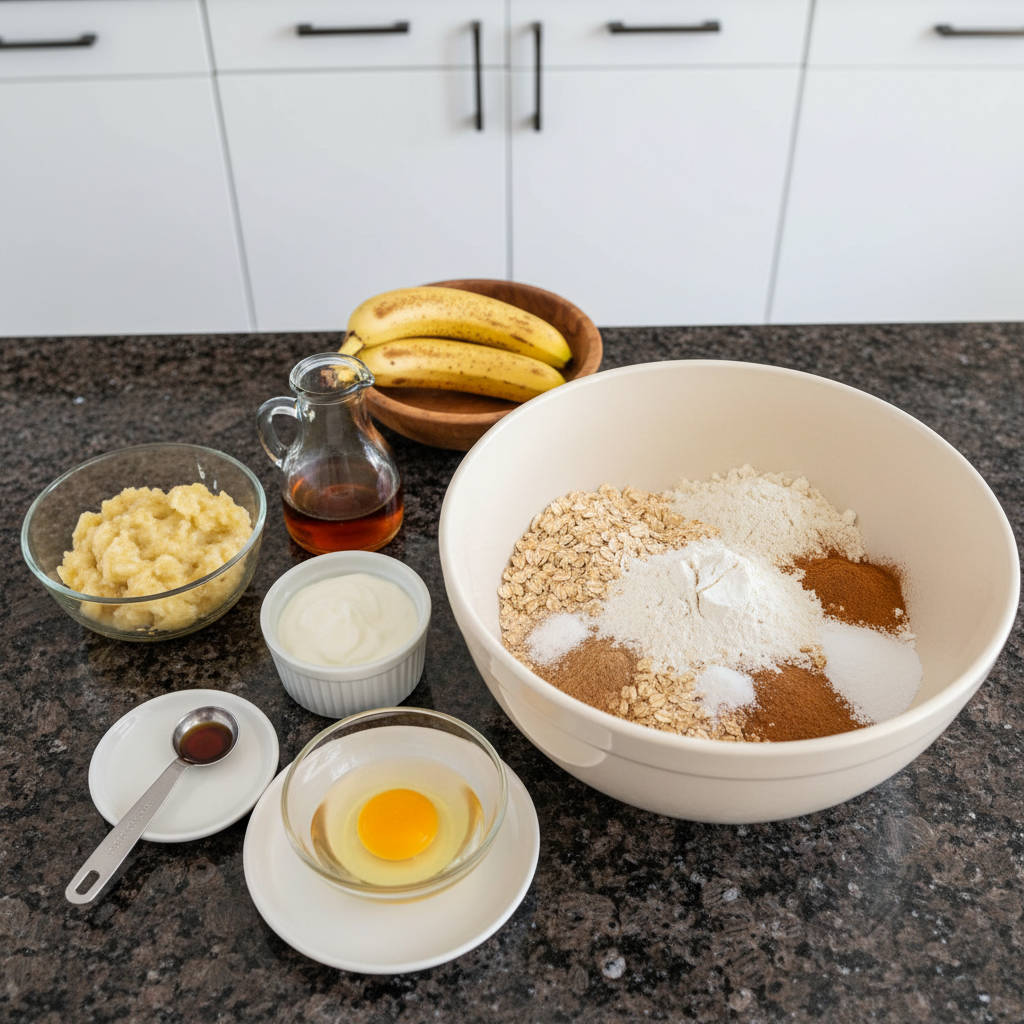
¾ cup old-fashioned rolled oats
¾ cup white whole wheat flour
½ cup Vanilla Protein Powder
1 teaspoon baking soda
1 1/2 teaspoons baking powder
1 teaspoon kosher salt
1 teaspoon ground cinnamon
1 large egg
3 large bananas, mashed (1 ¼ cup)
½ cup plain Greek yogurt
1 teaspoon vanilla extract
2 Tablespoons maple syrup, honey or agave
Ingredient Notes & Substitutions
Protein Powder: For the best texture, I always recommend using whey protein or casein protein powders. They tend to integrate smoothly and provide a moist, fluffy result. Plant-based protein powders can be used, but be aware they might result in a slightly denser or gummier texture. Vanilla flavor works best for consistency with the overall profile, but you can use an unflavored option if you prefer to adjust other flavors.
Bananas: The secret to truly moist banana bread is using very ripe bananas. Look for bananas with many brown spots or even a fully blackened peel. These are naturally sweeter and softer, contributing optimal sweetness and moisture to your loaf.
Oats: Stick to old-fashioned rolled oats for this recipe. Instant or steel-cut oats will not yield the same unique twist or ideal texture when blended into flour.
Flour: I chose white whole wheat flour because it offers all the whole grain benefits with a lighter texture than regular whole wheat flour. It provides a tender crumb while boosting fiber. You can substitute with all-purpose flour for a lighter loaf, or regular whole wheat flour for a more robust whole grain flavor. If you are not gluten-free, you could also substitute with more oat flour.
Greek Yogurt: Plain Greek yogurt is a powerhouse here, adding significant moisture and protein while keeping the bread light. For a dairy-free banana bread option, a plain, unsweetened dairy-free yogurt alternative, such as almond, soy, or coconut-based yogurt, works well.
Sweeteners: Maple syrup, honey, or agave all provide natural sweetness to the bread. If you prefer to use specific sugar substitutes like erythritol-based or stevia-based granular sweeteners, you certainly can. Just note that they might affect the texture slightly, potentially requiring a bit more liquid to maintain moisture.
Salt & Spices: Kosher salt balances the sweetness and enhances all the other flavors. Ground cinnamon adds a beautiful warmth and classic banana bread aroma.
Eggs: The large egg acts as a binder, providing structure and moisture to the loaf.
How to Make Protein Banana Bread
This protein banana bread recipe comes together easily, especially with my unique toasted oat method. Follow these steps for a perfect, moist, and flavorful loaf every time.
Phase 1: Prepare the Dry Ingredients
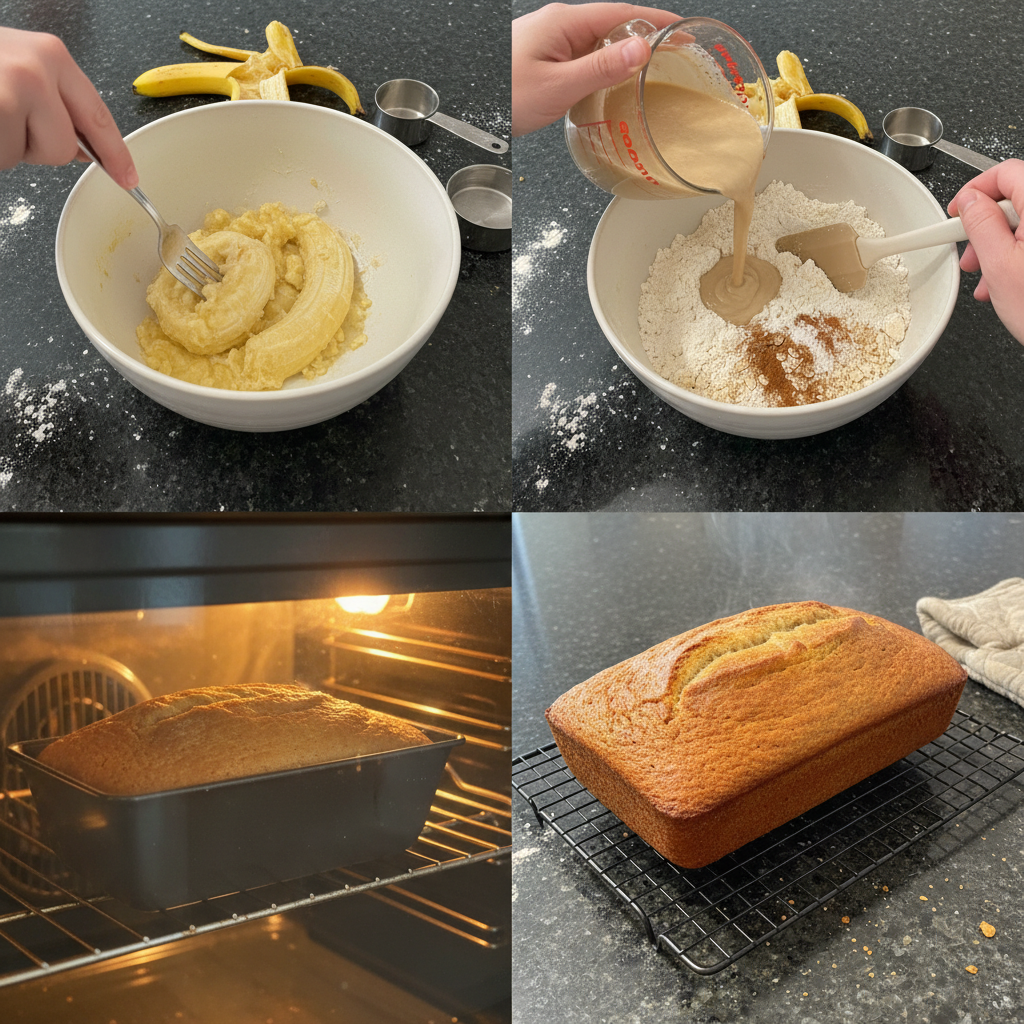
My secret to truly exceptional protein banana bread begins here. First, lightly toast your old-fashioned rolled oats in a dry pan over medium heat for about 5-7 minutes. Stir them frequently until they become fragrant and lightly golden. This simple step activates the Maillard reaction, bringing out a wonderfully nutty aroma and deeper flavor. Once cooled slightly, add the toasted oats to a food processor or blender and blend until they reach the texture of fine flour. Transfer this homemade oat flour to a large mixing bowl. Now, stir in the protein powder, white whole wheat flour, baking soda, baking powder, kosher salt, and ground cinnamon. Make sure everything is well combined.
Phase 2: Combine Wet and Dry
In a separate medium bowl, mash your ripe bananas to a smooth consistency using a fork or a potato masher. The riper the bananas, the sweeter and more moist your banana bread will be. To the mashed bananas, mix in the large egg, plain Greek yogurt, vanilla extract, and your chosen liquid sweetener (maple syrup, honey, or agave). Mix these wet ingredients until they are smooth and well incorporated. Now, this next step is crucial for a fluffy banana bread: gently fold in the dry ingredients into the wet mixture. Mix until just combined. Overmixing develops gluten too much, which can lead to a tough or gummy texture.
Phase 3: Bake to Golden Perfection
Pour your batter into a prepared loaf pan. I always grease my loaf pan and line the bottom with parchment paper to prevent sticking and ensure easy removal. Bake the protein banana bread at 350 degrees F for 35-45 minutes. Your kitchen will fill with a sweet, warm aroma as it bakes. The bread should turn a beautiful golden brown on top. To check for doneness, perform the toothpick test: insert a toothpick into the very center of the loaf. If it comes out clean, with no wet batter, it is ready. If it starts to brown too quickly part way through cooking, especially during the last 15-20 minutes, loosely cover it with foil. This expert tip prevents the top from over-browning while allowing the center to cook thoroughly.
Once baked, let the bread cool in the pan for 10-15 minutes before carefully transferring it to a wire rack to cool completely. This prevents sogginess and helps the loaf set properly.
Optimizing Your Bake: Pan Types & Adjustments
Baking is a science, and even the type of loaf pan you use can impact the final result. Understanding baking time adjustments for different loaf pan materials or sizes is key to achieving perfection.
Loaf Pan Materials: Different pan materials conduct heat differently, affecting both baking time and crust development. Metal pans tend to bake faster and produce a darker crust. If you are using a dark metal pan, you might want to reduce your baking time by a few minutes. Glass or ceramic pans absorb and retain heat longer, baking more slowly but often more evenly. These may require longer baking times, perhaps an extra 5-10 minutes, and I sometimes even reduce the oven temperature slightly to 325°F to prevent over-browning. Silicone pans are wonderfully non-stick but can lack structural integrity; always place them on a baking sheet. They may bake slightly faster or need adjusted times due to their material properties.
Loaf Pan Sizes: This recipe assumes a standard 9×5 inch loaf pan. If you use a smaller pan, such as an “8×4 inch”, your batter will be deeper. This means it will require a longer baking time, typically an extra 10-15 minutes. Always monitor it closely with the toothpick test. Conversely, for wider or shallower pans, the baking time might be slightly reduced.
High Altitude Baking: For those baking at high altitudes, minor adjustments are often necessary. You might need to reduce leavening agents slightly and increase the liquid content. I recommend researching specific high-altitude baking adjustments for your region if this applies to you.
Customizing Your Protein Banana Bread: Dietary Swaps & Add-ins
One of the joys of baking at home is the ability to customize. This protein banana bread recipe is incredibly versatile, allowing for various dietary swaps and delicious add-ins.
Gluten-Free Adaptation: To make gluten-free banana bread, ensure you use certified gluten-free old-fashioned rolled oats. Then, substitute the white whole wheat flour with a 1:1 gluten-free all-purpose flour blend. Make sure your blend contains xanthan gum for proper structure. The texture might be slightly different, so be sure to check for doneness carefully.
Dairy-Free Swaps: Creating dairy-free banana bread is simple. Just swap the plain Greek yogurt for a plain, unsweetened dairy-free Greek yogurt alternative. Almond, soy, or coconut-based yogurts work beautifully. If you are aiming for a fully vegan option, you would also need to use a plant-based protein powder and an egg substitute, noting that this might significantly alter the final texture.
Lower Sodium/Cholesterol: This recipe already uses kosher salt in moderation. If you wish to reduce sodium further, you can simply omit or reduce the salt, though it may slightly impact the flavor balance. Regarding cholesterol, this recipe is naturally lower due to the use of yogurt and oats instead of butter or oil. The primary source is the single large egg. If cholesterol is a major concern, you could swap the egg for an egg substitute or a flax egg, understanding that this may affect the final texture.
Delicious & Healthy Add-ins: Elevate your protein banana bread with these fantastic additions:
Nuts: Stir in a half cup of chopped walnuts, pecans, or almonds for a delightful crunch and healthy fats.
Chocolate: For a touch of indulgence, mini semi-sweet chocolate chips are always a hit.
Dried Fruit: Raisins, chopped dates, or dried cranberries add chewiness and natural sweetness.
Spices: A pinch of nutmeg, cloves, or allspice can enhance the warmth and complexity of the ground cinnamon.
Seeds: Chia seeds, flax seeds, or hemp seeds are excellent for adding extra fiber and omega-3s.
Pro Tips & Troubleshooting
Even seasoned bakers can benefit from a few expert insights. Here are my best pro tips to ensure your protein banana bread is always a success, along with common mistakes to avoid.
Pro Tips
Embrace the Toast: Always toast your old-fashioned rolled oats. This unique twist is a small step with a big impact, guaranteeing that superior nutty flavor and aroma that makes this recipe truly special.
Banana Ripeness is Key: This cannot be stressed enough. Use very ripe bananas, those with plenty of brown spots or even a fully black peel, for maximum natural sweetness and a perfectly moist banana bread.
Do Not Overmix: This is one of the most common pitfalls in baking quick bread. Gently fold the dry ingredients into the wet until just combined. Overmixing develops gluten, leading to a tough, gummy texture rather than a fluffy banana bread.
The Foil Trick: If you notice your loaf browning too quickly on top, especially during the last 15-20 minutes of baking, simply cover it loosely with aluminum foil. This expert tip ensures even baking without burning the top crust.
The Toothpick Test: Master the toothpick test. Insert a clean toothpick into the very center of the loaf. If it comes out clean with no wet batter clinging to it, your bread is done. A few moist crumbs are perfectly fine.
Cool Completely: It is tempting to slice into a warm loaf, but resist! Let your protein banana bread cool fully on a wire rack before slicing. This allows the internal structure to set properly and prevents a gummy texture.
Common Mistakes to Avoid
Under-ripe Bananas: Using yellow or green bananas will result in a less sweet, drier bread and a less intense banana flavor.
Overmixing the Batter: This is a top cause of a dense or gummy texture and a tough crumb. Mix just until the ingredients are incorporated.
Incorrect Protein Powder Substitution: Incorrectly substituting protein powder can significantly alter the consistency, making the batter too wet or the bread gummy or less loaf-y. Stick to whey protein or casein protein for the best results, or be prepared for texture changes with plant-based protein.
Opening the Oven Too Soon: Avoid opening the oven door frequently, especially in the first 20 minutes of baking. This can cause the center of the bread to sink.
Improper Pan Preparation: Not greasing or lining the loaf pan adequately can lead to the bread sticking and falling apart when you try to remove it.
Under- or Over-Baking: Do not solely rely on the timer. Always use the toothpick test to confirm doneness. Under-baking leads to raw centers, while over-baking results in dry, crumbly edges.
Serving & Storage
Once your delicious protein banana bread is cooled, it is ready to be enjoyed in many wonderful ways.
Serving Ideas
Everyday Enjoyment: This quick bread is perfect as a healthy breakfast or a satisfying healthy snack. I love enjoying a slice with my morning coffee or a soothing cup of tea.
Elevated Servings: For an extra special treat, consider these pairings:
Toppings: A smear of your favorite nut butter, like almond or peanut butter, adds healthy fats and flavor. A dollop of extra plain Greek yogurt or whipped cream cheese is also delightful.
Fresh Fruit: Serve a slice alongside fresh berries or thinly sliced bananas to complement the banana bread flavors.
Flavor Boosts: A drizzle of maple syrup or honey, or a sprinkle of extra ground cinnamon, can elevate the experience.
Storage and Make-Ahead
Room Temperature: Your protein banana bread will stay fresh for 2-3 days at room temperature when stored in an airtight container.
Refrigeration: For extended freshness, store the bread in an airtight container in the refrigerator for up to a week. I recommend bringing it to room temperature or gently warming it before serving to restore its soft texture.
Freezing: This is an excellent recipe for meal prep and freezing banana bread.
Ensure the loaf is completely cool before freezing.
Wrap the entire loaf or individual slices tightly in plastic wrap, then wrap again in aluminum foil. You can also place the wrapped bread in a freezer-safe bag.
Label with the date. It can be frozen for up to 3 months.
Thawing: Thaw overnight in the refrigerator or at room temperature. Reheat slices gently in the microwave or oven for a fresh-baked feel.
Meal Prep: Bake a batch on the weekend and slice it up for easy grab-and-go healthy snacks or breakfasts throughout the week.
Conclusion
There you have it—my ultimate recipe for protein banana bread. With its delicious flavor, moist texture, and impressive protein content, this quick bread is a truly satisfying and macro-friendly treat. The unique twist of toasting the old-fashioned rolled oats before blending them into flour makes all the difference, creating a depth of flavor that sets this recipe apart. I am confident that with these detailed instructions and expert tips, you can achieve fantastic results, regardless of your baking experience. I encourage you to try this recipe, experiment with variations like adding chopped walnuts or mini semi-sweet chocolate chips, and share your delightful creations. Happy baking, and enjoy this wholesome twist on a classic!
FAQ
What type of protein powder works best for Protein Banana Bread?
For the best texture, I recommend using whey protein or casein protein powder. These types generally yield a moist and fluffy result due to their composition. Plant-based protein powders can be used, but they may result in a slightly denser or gummier loaf.
Can I make Protein Banana Bread without protein powder, and what are the best substitutes?
Yes, you can certainly make this recipe without protein powder. The bread will still be delicious but less protein-dense. To substitute the ½ cup of protein powder, simply add an additional ½ cup of white whole wheat flour or oat flour to the dry ingredients.
How ripe should bananas be for banana bread?
For optimal sweetness and intense banana flavor, use very ripe bananas. Look for bananas with many brown spots on the peel, or even those that are mostly black. These bananas are softer and sweeter, contributing essential moisture to your bread.
How do I adjust this recipe to make Protein Banana Muffins?
The batter works perfectly for banana muffins. Spoon the batter into a greased or lined standard muffin tin, filling each cup about two-thirds full. Adjust the baking time to 18-25 minutes at 350°F. Use the toothpick test to check for doneness; a toothpick inserted into the center of a muffin should come out clean.
What is the best way to store and freeze Protein Banana Bread?
Protein banana bread lasts 2-3 days at room temperature in an airtight container, or up to a week in the refrigerator. For freezing banana bread, ensure it is completely cool, then wrap it tightly in plastic wrap followed by aluminum foil, or place it in a freezer-safe bag. It can be frozen for up to 3 months. Thaw overnight in the refrigerator or at room temperature.
What are some delicious and healthy add-ins for my Protein Banana Bread?
You can enhance your protein banana bread with add-ins like chopped walnuts, pecans, or mini semi-sweet chocolate chips. Other great options include raisins, chopped dates, or a pinch of extra spices like nutmeg or allspice. Remember to add these in moderation for the best health benefits.
How do I know when my Protein Banana Bread is perfectly baked?
The best way to tell if your protein banana bread is fully baked is by performing the toothpick test. Insert a toothpick into the center of the loaf; it should come out clean with no wet batter. The top of the bread will also be golden brown and spring back slightly when lightly touched. If the top browns too quickly, cover it loosely with foil.
Is this recipe really low fat and high in protein?
Yes, this recipe is designed to be a macro-friendly recipe that is low fat and high protein compared to traditional banana bread. It achieves this by using lean protein powder and whole grains (old-fashioned rolled oats, white whole wheat flour) and opting for Greek yogurt instead of butter or oil, which reduces the fat content significantly.

Ultimate Protein Banana Bread: Moist, Fluffy, & High-Protein
Ingredients
Equipment
Method
- Lightly toast the old-fashioned rolled oats in a dry pan over medium heat for about 5-7 minutes. Stir frequently until fragrant and lightly golden. This activates the Maillard reaction, developing a nutty aroma and deeper flavor.
- Once cooled slightly, add the toasted oats to a food processor or blender and blend until they reach the texture of fine flour. Transfer this homemade oat flour to a large mixing bowl.
- Stir in the protein powder, white whole wheat flour, baking soda, baking powder, kosher salt, and ground cinnamon into the oat flour. Ensure everything is well combined.
- In a separate medium bowl, mash the ripe bananas to a smooth consistency using a fork or potato masher.
- To the mashed bananas, mix in the large egg, plain Greek yogurt, vanilla extract, and your chosen liquid sweetener (maple syrup, honey, or agave). Mix these wet ingredients until smooth and well incorporated.
- Gently fold the dry ingredients into the wet mixture until just combined. Avoid overmixing to prevent a tough or gummy texture.
- Pour the batter into a greased loaf pan, lined on the bottom with parchment paper to prevent sticking and ensure easy removal.
- Bake at 350 degrees F for 35-45 minutes, or until the top is golden brown and a toothpick inserted into the center comes out clean. If the top browns too quickly, loosely cover it with foil during the last 15-20 minutes.
- Once baked, let the bread cool in the pan for 10-15 minutes before carefully transferring it to a wire rack to cool completely. This prevents sogginess and helps the loaf set properly.
