


There is nothing quite like a perfectly cooked pot roast. The aroma alone can transform any kitchen into a haven of comfort. My ultimate slow cooker pot roast recipe promises just that: a deeply flavorful, fork-tender beef meal that practically cooks itself. Forget complicated techniques; this recipe is designed for ease, delivering restaurant-quality results with minimal effort. I am excited to share my special flavor-boosting secret that elevates this classic comfort food to new heights, making it a reliable favorite for busy weeknights or a relaxed Sunday supper.
Why You’ll Love This Recipe
This pot roast slow cooker recipe isn’t just easy; it’s a culinary revelation. I have perfected a unique twist that transforms a simple pot roast into an unforgettable feast. You are going to love how effortless it is to achieve such a rich and complex flavor profile.
The Secret to Unforgettable Flavor: Our Umami Boost
The magic truly happens with a small but mighty addition: a tablespoon of tomato paste and a tablespoon of balsamic vinegar during the deglazing step. The tomato paste provides a concentrated burst of umami and a subtle sweetness. This intensifies the savory depth of the beef, creating a richer, more complex gravy base. Simultaneously, the balsamic vinegar adds a subtle tang and a complex sweetness. This perfectly balances the richness of the pot roast and enhances the beautiful browned flavors from the Maillard reaction. The result is a more nuanced, vibrant, and truly exceptional taste profile that you will crave.
Effortless Comfort Food
One of the greatest joys of a slow cooker or crock pot is its hands-off nature. This recipe is perfect for busy weeknights or relaxed weekends when you want incredible flavor without constant attention. You are guaranteed to achieve fork-tender beef every time, complete with a rich, clinging gravy that defines classic comfort food.
Family-Friendly & Meal Prep Ready
This hearty pot roast is a satisfying family meal that appeals to everyone. It is also an excellent candidate for meal prep, providing delicious leftovers that taste even better the next day. Imagine having such a flavorful meal ready to go with minimal effort during the week.
Ingredients Needed
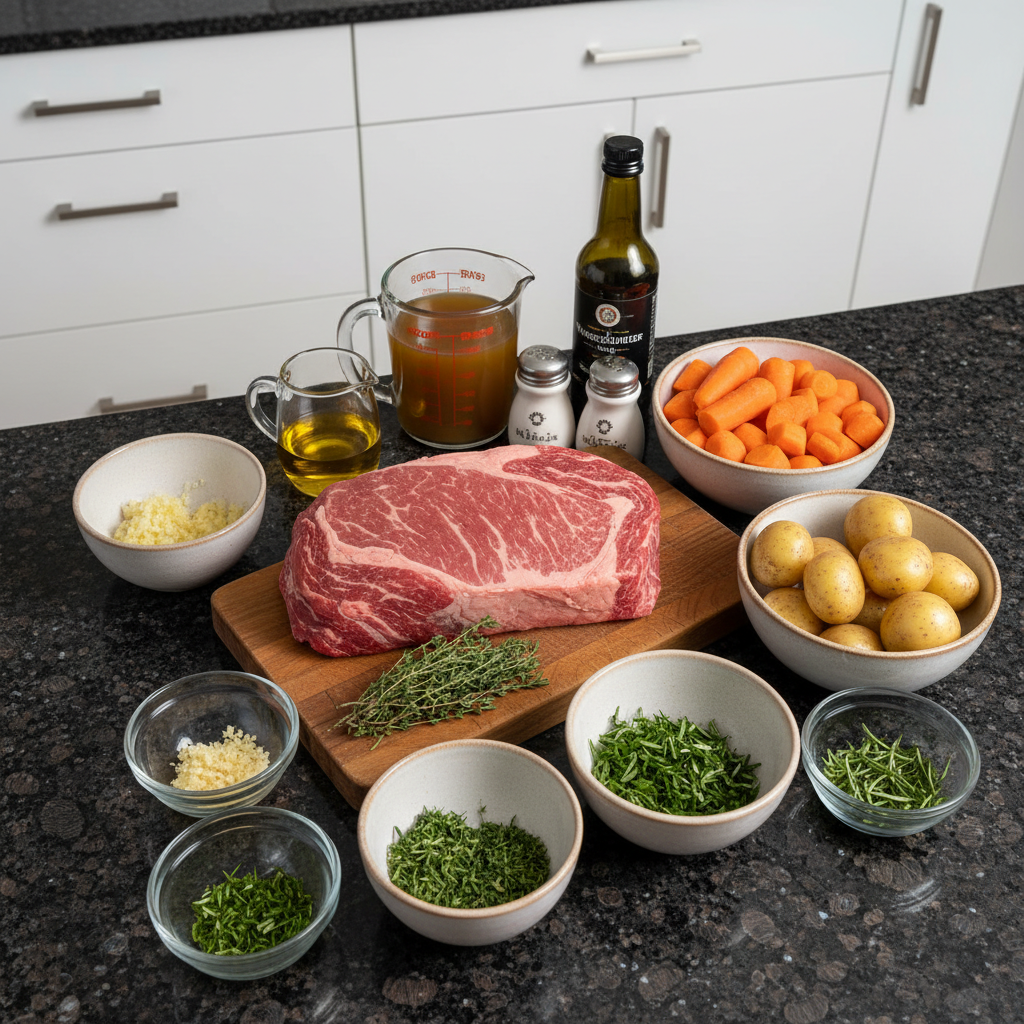
Here are the ingredients I use for my ultimate slow cooker pot roast. Each one plays a vital role in building the incredible flavor.
- 1 1/2 Tbsp olive oil, (divided)
- 1 (3 lb) chuck roast
- Salt and freshly ground black pepper
- 1 medium yellow onion, (peeled, halved and cut into thick slices)
- 5 garlic cloves, (minced (1 1/2 Tbsp))
- 1 1/4 cups beef broth
- 2 tsp Worcestershire sauce
- 1 Tbsp minced fresh thyme
- 1 Tbsp minced fresh rosemary
- 2.5 lbs small yukon gold potatoes, (left whole)
- 5 medium carrots (about 1 lb), (peeled and cut into 1-inch pieces*)
- 2 1/2 Tbsp cornstarch mixed with 3 Tbsp beef broth, (optional, for thickening gravy)
- 2 Tbsp chopped fresh parsley
Ingredient Notes & Substitutions
Choosing the Right Beef: I always recommend a chuck roast for pot roast slow cooker recipes. Its excellent marbling and connective tissue break down beautifully during slow cooking, yielding incredibly tender, shreddable beef. It is the ideal cut for that melt-in-your-mouth experience.
Potatoes that Hold Up: For potatoes that remain tender but not mushy, opt for waxy varieties like Yukon gold potatoes or red potatoes. These hold their shape much better than starchy potatoes like Russets, which can become grainy and fall apart in the slow cooker.
Fresh is Best: For the most vibrant flavor, use fresh yellow onion, garlic cloves, fresh thyme, and fresh rosemary. If you must use dried herbs, use about one-third of the amount specified for fresh. Fresh ingredients truly make a difference in the overall depth of the pot roast.
Beef Broth vs. Stock: While beef broth works perfectly here, using beef stock can provide an even richer flavor and a more gelatinous texture to your gravy. Beef stock often has more collagen, which breaks down into gelatin, adding body and mouthfeel.
Gluten-Free Thickening: If you prefer a gluten-free gravy, you can substitute arrowroot powder for cornstarch, using the same slurry method. Alternatively, a roux made with a gluten-free flour blend can also work to thicken the gravy.
Optional Red Wine: For an even deeper flavor profile, consider adding about 1/2 cup of dry red wine along with the beef broth during the deglazing step. It complements the beef beautifully and adds another layer of complexity to the gravy.
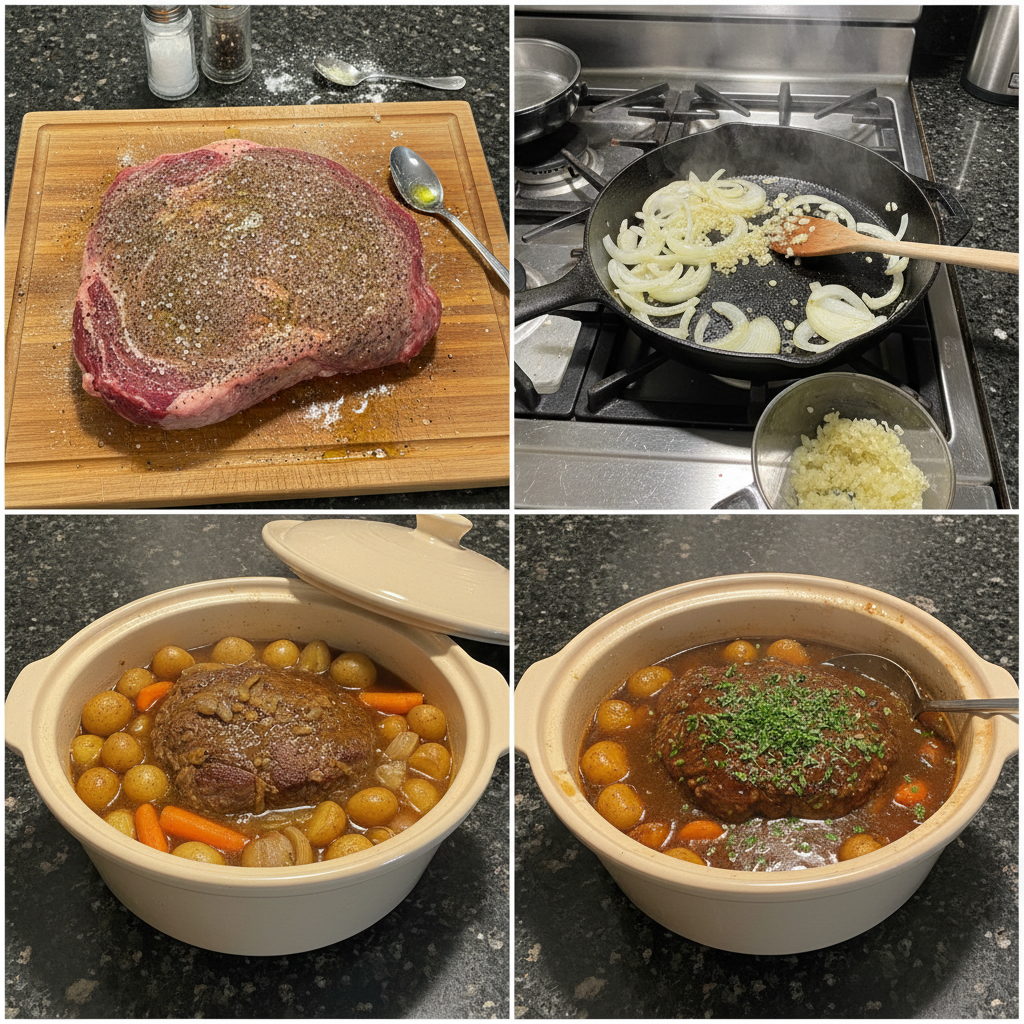
How to Make Slow Cooker Pot Roast
Follow these steps closely, and you will achieve a truly exceptional pot roast. The key is in building layers of flavor right from the start.
Prepping and Searing the Roast
First, heat 1 tablespoon of olive oil in a large pot or Dutch oven over medium-high heat. While the oil heats, pat your chuck roast dry thoroughly with paper towels. This is crucial for a good sear. Season the beef generously all over with salt and freshly ground black pepper. Carefully place the seasoned roast into the hot pot. Sear the roast until it’s deeply browned on both sides, which typically takes about 4 to 5 minutes per side. You will see a beautiful crust forming, and the kitchen will fill with an inviting aroma from the Maillard reaction. This browning step is essential for developing incredible depth of flavor for your pot roast and its gravy. Once seared, transfer the roast to your slow cooker.
Building the Flavor Base with Aromatics and the Twist
Add the remaining 1/2 tablespoon of olive oil to the same pot. Add the sliced yellow onion and sauté for about 2 minutes until it begins to soften and become fragrant. Then, stir in the minced garlic and sauté for another 30 seconds, until its aroma fills the kitchen. Pour this aromatic onion and garlic mixture over the seared roast in the slow cooker.
Return the pot to the heat. This is where our unique twist comes in. Add 1 tablespoon of tomato paste and 1 tablespoon of balsamic vinegar to the hot pot. Stir them into the remaining browned bits for about 30 seconds. Then, pour in the beef broth, Worcestershire sauce, fresh thyme, and fresh rosemary. Cook for about 15 seconds, actively scraping up all those savory browned bits from the bottom of the pot with a wooden spoon. This deglazing step captures all the intense umami and flavor, infusing it directly into your broth with the added balance from the balsamic and depth from the tomato paste. Remove the pot from the heat.
Layering and Slow Cooking
Now, arrange the whole Yukon gold potatoes and 1-inch pieces of carrots over the onion layer in the slow cooker. I like to make sure they are somewhat submerged in the liquid for even cooking. Pour the flavorful beef broth mixture evenly over the top of the roast and vegetables, then season everything with a bit more salt and pepper.
Cover the slow cooker with its lid and cook on low heat for about 8 to 9 hours. This low and slow cooking process is paramount for achieving truly fork-tender beef and perfectly cooked vegetables. The meat will reach an internal temperature of 190-205°F, which is ideal for breaking down collagen and ensuring a succulent, shreddable texture.
Finishing with a Clinging Gravy
Once the roast and vegetables are tender, carefully remove them from the slow cooker. Shred the beef, discarding any excess fat, and cut the potatoes if desired. If you want to thicken the broth into a rich gravy, which I highly recommend, first skim any excess fat from the surface of the broth in the slow cooker. Then, pour the broth through a fine mesh strainer into a small saucepan. Heat the saucepan over medium-high heat. In a separate small bowl, whisk together the 2 1/2 tablespoons of cornstarch with 3 tablespoons of beef broth until smooth. Pour this cornstarch slurry into the simmering saucepan, whisking constantly. Bring the gravy to a gentle simmer, stirring continuously, and let it simmer for about 30 to 60 seconds until it transforms from a thin liquid into a rich, clinging gravy that coats the back of a spoon.
Serving Your Masterpiece
Finally, plate your tender pot roast and vegetables. Generously pour the savory gravy over the top, then sprinkle with fresh chopped parsley for a bright finish. Your masterpiece is ready to be enjoyed!
Mastering Your Slow Cooker: Size, Scaling & Doneness
Understanding your slow cooker and how to adapt recipes is key to consistent success in the kitchen.
Choosing the Right Slow Cooker Size
For this 3-pound chuck roast recipe, a 6-quart slow cooker is absolutely perfect. It allows enough space for the roast and vegetables without overcrowding, promoting even cooking. If you plan to cook larger cuts, such as a 4-5 pound roast, I recommend using a 7-8 quart slow cooker to accommodate the increased volume comfortably.
Scaling the Recipe for Larger Roasts
If you are feeding a bigger crowd and using a 4-5 pound chuck roast, you will need to adjust the ingredients proportionally. Increase the beef broth by about 1/2 to 1 cup more, ensuring the liquid comes about halfway up the roast. Also, proportionally increase the Worcestershire sauce, yellow onion, garlic cloves, carrots, Yukon gold potatoes, and seasonings like salt and black pepper. Be aware that a larger roast will require a longer cooking time; plan for 9-10+ hours on low heat to achieve that ideal tenderness.
Ensuring Fork-Tender Beef Every Time
Achieving truly fork-tender beef in a pot roast isn’t just about cooking it until it’s “done”; it’s about cooking it long enough for the collagen and connective tissues to break down. The ideal internal temperature for a shreddable pot roast is between 190-205°F, measured with a meat thermometer in the thickest part of the roast. This is significantly higher than typical beef doneness temperatures, but it ensures the beef is incredibly succulent and melt-in-your-mouth tender, not just cooked through.
Pro Tips & Troubleshooting
After years in the kitchen, I have gathered some insights that will guarantee your pot roast slow cooker is always a triumph. Avoid common pitfalls with these simple expert tips.
Pro Tips for the Best Pot Roast
Don’t Skip the Sear: Searing the beef thoroughly before slow cooking is non-negotiable. This step creates a rich, brown crust through the Maillard reaction, developing incredible depth of flavor and texture that is crucial for a robust pot roast and its gravy.
Fresh Aromatics & Herbs: Always opt for fresh yellow onion, garlic cloves, fresh thyme, and fresh rosemary. Their vibrant oils and aromas infuse the pot roast with unparalleled flavor. If you must substitute with dried herbs, remember to use only one-third of the fresh amount.
The Power of Deglazing (with the Twist!): Make sure to thoroughly deglaze the pan after searing and sautéing. Using beef broth, Worcestershire sauce, plus my unique additions of tomato paste and balsamic vinegar, effectively scrapes up all those delicious browned bits, concentrating the umami in your gravy. This is a game-changer for flavor.
Choose the Right Potatoes: For perfectly tender vegetables that do not turn to mush, always use waxier potatoes like Yukon gold potatoes or red potatoes. Leave them whole or cut them into very large pieces to ensure they hold their shape during the long cooking process.
Thicken Gravy Smart: Always thicken your gravy after the pot roast has finished cooking. A cornstarch slurry whisked into the hot liquid provides a perfectly clinging consistency without a raw, starchy taste. Before thickening, skim off any excess fat from the surface of the broth for a cleaner, more refined gravy.
Cook Low and Slow: Patience is key with pot roast. Cooking on low heat for 8-9 hours is paramount for achieving that incredibly fork-tender beef and maximum flavor development. Resist the urge to rush it.
Common Mistakes to Avoid
Skipping the Browning: A common mistake that leads to a less flavorful beef and gravy. The sear is critical for building that foundational taste.
Using Powdered Ingredients: Avoid using onion powder or garlic powder in place of fresh. While convenient, they simply cannot replicate the aromatic depth and complexity that fresh ingredients provide.
Mushy Potatoes: This happens when starchy potatoes (like Russets) are used or when vegetables are cut into small cubes. Always use appropriate potato varieties and larger cuts to prevent an undesirable texture.
Thickening Too Early: Attempting to thicken the gravy at the beginning of cooking can lead to improper thickening and a starchy flavor. Always wait until the end.
Rushing with High Heat: Cooking a pot roast on high heat might seem faster, but it will not yield the same tender, melt-in-your-mouth results as the low and slow method. High heat can make the meat tough.
Under-Seasoning: Always taste and adjust salt and black pepper levels before serving. A perfectly seasoned pot roast enhances all its wonderful flavors.
Serving & Storage
This slow cooker pot roast is a hearty meal in itself, but a few thoughtful additions can make it even more special.
Serving Ideas
My ultimate pot roast slow cooker is a deeply savory, satisfying meal. I love serving it with a simple side salad to add a touch of freshness and balance the richness. Steamed asparagus provides a vibrant green color and crisp texture that complements the tender beef beautifully. For soaking up every last drop of that incredible, clinging gravy, there is nothing better than warm, buttered homemade bread. It is truly the perfect comfort food experience.
Storage and Make-Ahead
Refrigeration: Leftover pot roast and gravy can be stored together in an airtight container in the refrigerator for up to 3-4 days. I often find the flavors deepen and meld even more overnight, making leftovers a real treat.
Freezing: This pot roast freezes wonderfully. You can freeze the cooked beef, gravy, and vegetables separately or together in freezer-safe containers or heavy-duty freezer bags for up to 2-3 months. To thaw, simply transfer it to the refrigerator overnight.
Reheating: For best results, gently reheat the pot roast on the stovetop over low heat, adding a splash of beef broth if needed to prevent the beef from drying out and to refresh the gravy’s consistency. You can also reheat it on low in your slow cooker or in the microwave for convenience, ensuring the beef stays moist and the gravy remains perfectly clinging.
Conclusion
I hope you are now inspired to create this ultimate pot roast slow cooker in your own kitchen. With my special twist of tomato paste and balsamic vinegar, you are not just making a meal; you are creating an experience of incredible depth and flavor. Even if you are a beginner, you can achieve perfect, fork-tender beef and a rich, clinging gravy every single time. This comfort food classic is truly a testament to the magic of low and slow cooking. I encourage you to try this recipe soon, share your results, and perhaps explore other slow cooker comfort food recipes in your culinary journey. Enjoy every tender, flavorful bite!
FAQ
Here are some frequently asked questions about making the best pot roast in your slow cooker.
What is the best cut of beef for slow cooker pot roast?
I always recommend a chuck roast. Its marbling and connective tissue are perfect for slow cooking, breaking down into incredibly tender, flavorful beef.
Do I need to brown the pot roast before slow cooking?
Yes, absolutely. Searing the pot roast before slow cooking is crucial for developing deep, rich flavors through the Maillard reaction, which significantly enhances the taste of both the beef and the gravy.
How can I prevent vegetables from getting mushy in the slow cooker?
To prevent mushy vegetables, use waxier varieties like Yukon gold potatoes or red potatoes and leave them whole or cut them into large, 1-inch pieces. Avoid starchy potatoes or small cuts.
What are the best herbs and aromatics for pot roast?
Fresh yellow onion, garlic cloves, fresh thyme, and fresh rosemary are my go-to choices. Their robust flavors are essential for an aromatic and delicious pot roast.
How do I thicken the gravy for my slow cooker pot roast?
Thicken the gravy after the pot roast has finished cooking. Skim any fat from the cooking liquid, then simmer it in a saucepan and whisk in a cornstarch slurry (cornstarch mixed with an equal part of cold beef broth) until it reaches your desired consistency.
How long should I cook a pot roast in a slow cooker on low heat?
For a 3-pound chuck roast, cooking on low heat for 8-9 hours is ideal. This ensures the beef becomes wonderfully fork-tender and moist.
How do I know my pot roast is truly tender (what internal temperature)?
A truly tender pot roast is not just cooked through, but the collagen has broken down. The internal temperature for a shreddable pot roast should be between 190-205°F when measured with a meat thermometer.
Can I use beef stock instead of beef broth in this recipe?
Yes, you can. Beef stock often has a richer flavor and more gelatinous body than beef broth, which can lead to an even more flavorful and luxurious gravy.
How can I adjust this recipe for a larger cut of meat (e.g., 4-5 pounds)?
For a 4-5 pound chuck roast, increase the beef broth by 1/2 to 1 cup, and proportionally increase all other seasonings and vegetables. Ensure the liquid comes about halfway up the roast. The cooking time will also extend to 9-10+ hours on low heat.
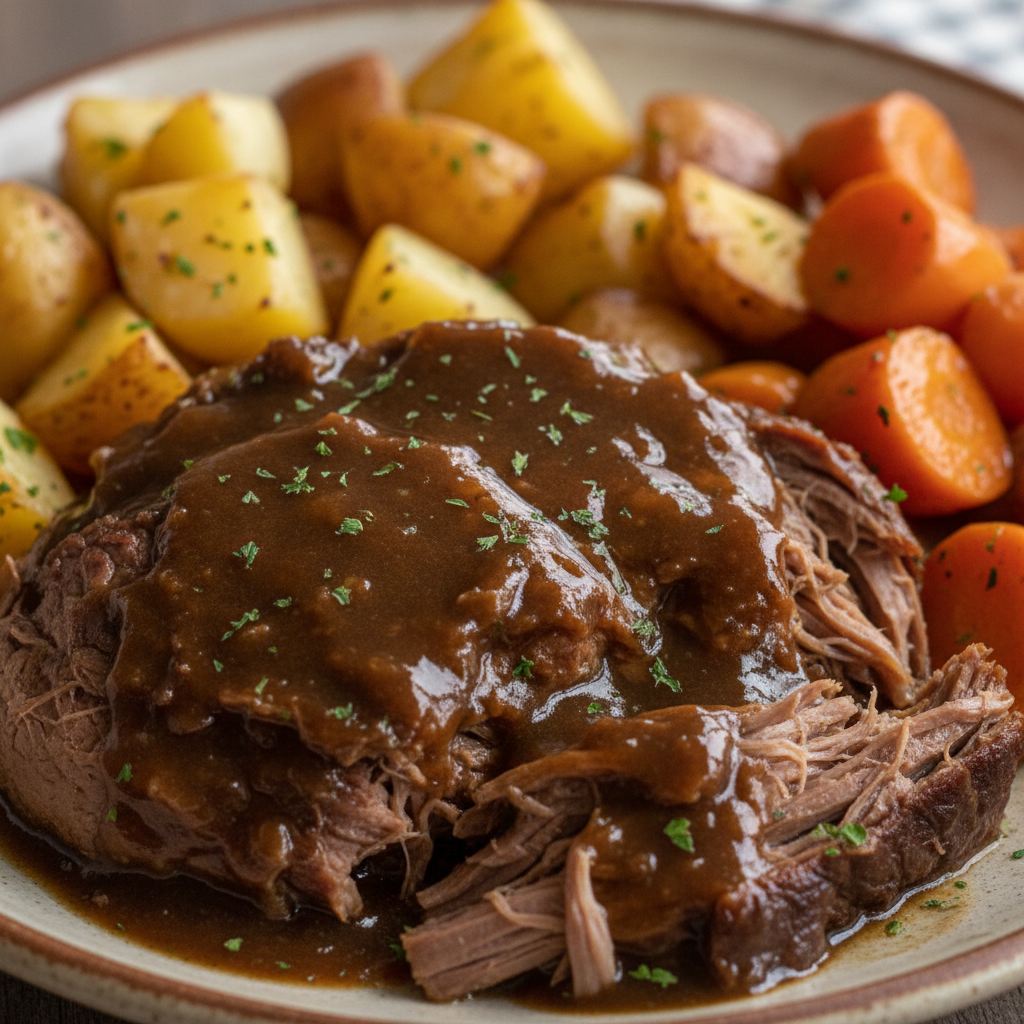
Ultimate Slow Cooker Pot Roast: Tender, Rich & Easy Recipe
Ingredients
Equipment
Method
- Heat 1 tablespoon of olive oil in a large pot or Dutch oven over medium-high heat. Pat your chuck roast dry thoroughly with paper towels.
- Season the beef generously all over with salt and freshly ground black pepper.
- Carefully place the seasoned roast into the hot pot. Sear until deeply browned on both sides, which typically takes about 4 to 5 minutes per side.
- Transfer the seared roast to your slow cooker.
- Add the remaining 1/2 tablespoon of olive oil to the same pot. Add the sliced yellow onion and sauté for about 2 minutes until it begins to soften and become fragrant.
- Stir in the minced garlic and sauté for another 30 seconds, until its aroma fills the kitchen.
- Pour this aromatic onion and garlic mixture over the seared roast in the slow cooker.
- Return the pot to the heat. Add 1 tablespoon of tomato paste and 1 tablespoon of balsamic vinegar. Stir them into the remaining browned bits for about 30 seconds.
- Pour in the beef broth, Worcestershire sauce, fresh thyme, and fresh rosemary. Cook for about 15 seconds, actively scraping up all those savory browned bits from the bottom of the pot with a wooden spoon.
- Remove the pot from the heat.
- Arrange the whole Yukon gold potatoes and 1-inch pieces of carrots over the onion layer in the slow cooker. Ensure they are somewhat submerged in the liquid for even cooking.
- Pour the flavorful beef broth mixture evenly over the top of the roast and vegetables, then season everything with a bit more salt and pepper.
- Cover the slow cooker with its lid and cook on low heat for about 8 to 9 hours. The meat will reach an internal temperature of 190-205°F.
- Once the roast and vegetables are tender, carefully remove them from the slow cooker. Shred the beef, discarding any excess fat, and cut the potatoes if desired.
- If you want to thicken the broth into a rich gravy, first skim any excess fat from the surface of the broth in the slow cooker.
- Pour the broth through a fine mesh strainer into a small saucepan. Heat the saucepan over medium-high heat.
- In a separate small bowl, whisk together the 2 1/2 tablespoons of cornstarch with 3 tablespoons of beef broth until smooth (this is your slurry).
- Pour this cornstarch slurry into the simmering saucepan, whisking constantly. Bring the gravy to a gentle simmer, stirring continuously, and let it simmer for about 30 to 60 seconds until it transforms into a rich, clinging gravy.
- Finally, plate your tender pot roast and vegetables.
- Generously pour the savory gravy over the top, then sprinkle with fresh chopped parsley for a bright finish. Your masterpiece is ready to be enjoyed!
