


Welcome to my kitchen. Today, we are diving into a dish that truly embodies comfort and gourmet flavor: blackened chicken alfredo. This recipe is a delightful fusion of spicy, savory blackened chicken and rich, creamy Alfredo sauce, creating an unforgettable meal that is both comforting and incredibly flavorful. I have perfected this classic comfort food, and I am excited to share my ultimate guide to creating a superior homemade version. You will learn expert tips, troubleshooting advice, and a unique flavor-boosting technique that elevates this dish beyond your wildest expectations.
Why You’ll Love This Recipe
My recipe for blackened chicken alfredo truly stands apart from the rest, thanks to a secret step that infuses every bite with unparalleled flavor. After searing the blackened chicken, I integrate a crucial deglazing step. I take that hot cast iron skillet, still fragrant with the savory remnants of the chicken, and deglaze it with a quarter cup of dry white wine or chicken broth. This captures all the delicious browned bits, known as fond, from the bottom of the pan.
This simple act of deglazing is a game-changer. It is rooted in scientific logic, as these Maillard reaction compounds are packed with intense savory and umami flavors. By adding this concentrated liquid directly into our Alfredo sauce, we create a significantly deeper, more integrated, and slightly smoky flavor profile that runs throughout the entire dish. This makes the blackened aspect robust and cohesive, far beyond just the surface of the chicken.
You will experience unrivaled flavor depth with this method, achieving a truly gourmet, restaurant-quality taste. This blackened chicken alfredo is also a weeknight winner. It is an easy recipe and a quick dinner that can be on your table in under 30 minutes, yet feels incredibly indulgent. Ultimately, it is the perfect comfort food, a creamy, spicy, and satisfying dinner recipe that is ideal for family meals or a cozy night in.
Ingredients Needed
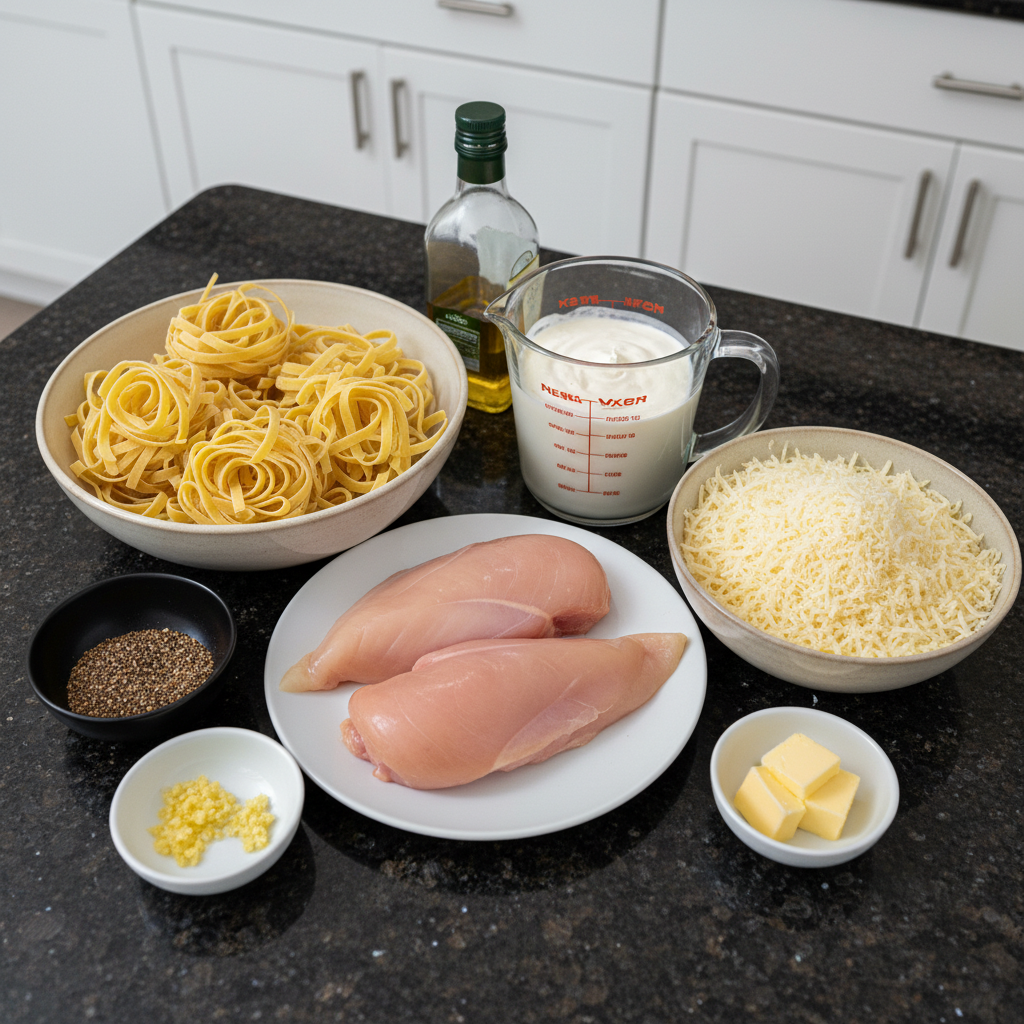
- 2 Boneless Skinless Chicken Breasts
- 2 Tbsp Blackening Seasoning
- 2 Tbsp Olive Oil
- 12 oz Fettuccine Pasta
- 6 Tbsp Butter
- 1 Tbsp Minced Garlic
- 1 1/2 cup Heavy Whipping Cream
- 1 1/2 cup Grated Parmesan Cheese
Ingredient Notes & Substitutions
When selecting your ingredients for blackened chicken alfredo, quality truly makes a difference. For the chicken breasts, I always opt for quality boneless, skinless pieces. You can butterfly them or slice them thinly to ensure consistent cooking and maximum surface area for that beautiful blackening seasoning.
Regarding blackening seasoning, store-bought blends offer great convenience. However, making your own at home allows for incredible customizability in terms of spice levels and freshness. I will share details on how to make your own seasoning a bit later in this article, but for now, reputable brands work wonderfully.
For the fettuccine pasta, cooking it to a perfect al dente doneness is critically important. The pasta will continue to cook slightly when it is tossed with the hot Alfredo sauce. If fettuccine is not your preference, other pasta types like penne, linguine, or bowtie pasta can also be used effectively in this creamy pasta dish.
When it comes to the heavy whipping cream, always use full-fat heavy cream with at least 36 percent milkfat. This is essential for the richest, creamiest, and most stable Alfredo sauce. Avoid lower-fat alternatives, as they are prone to splitting and will not give you that desired luxurious texture.
Parmesan cheese is perhaps the most crucial ingredient for your homemade Alfredo sauce. You must use freshly grated Parmesan cheese from a block. Pre-grated or powdered varieties often contain anti-caking agents that can result in a grainy, clumpy, and less flavorful sauce. Taking the extra moment to grate your own will transform your Alfredo sauce.
For the deglazing liquid in our unique twist, dry white wine, such as a Pinot Grigio or Sauvignon Blanc, adds a wonderful layer of complexity. However, chicken broth is a perfect non-alcoholic substitute that still captures those delicious flavors.
If you are looking for variations, blackened shrimp is an excellent and popular protein swap for the chicken breasts in this recipe.
How to Make Blackened Chicken Alfredo
Let’s get cooking and bring this incredible blackened chicken alfredo to life in your kitchen. This process is designed to maximize flavor at every step.
Preparing the Chicken
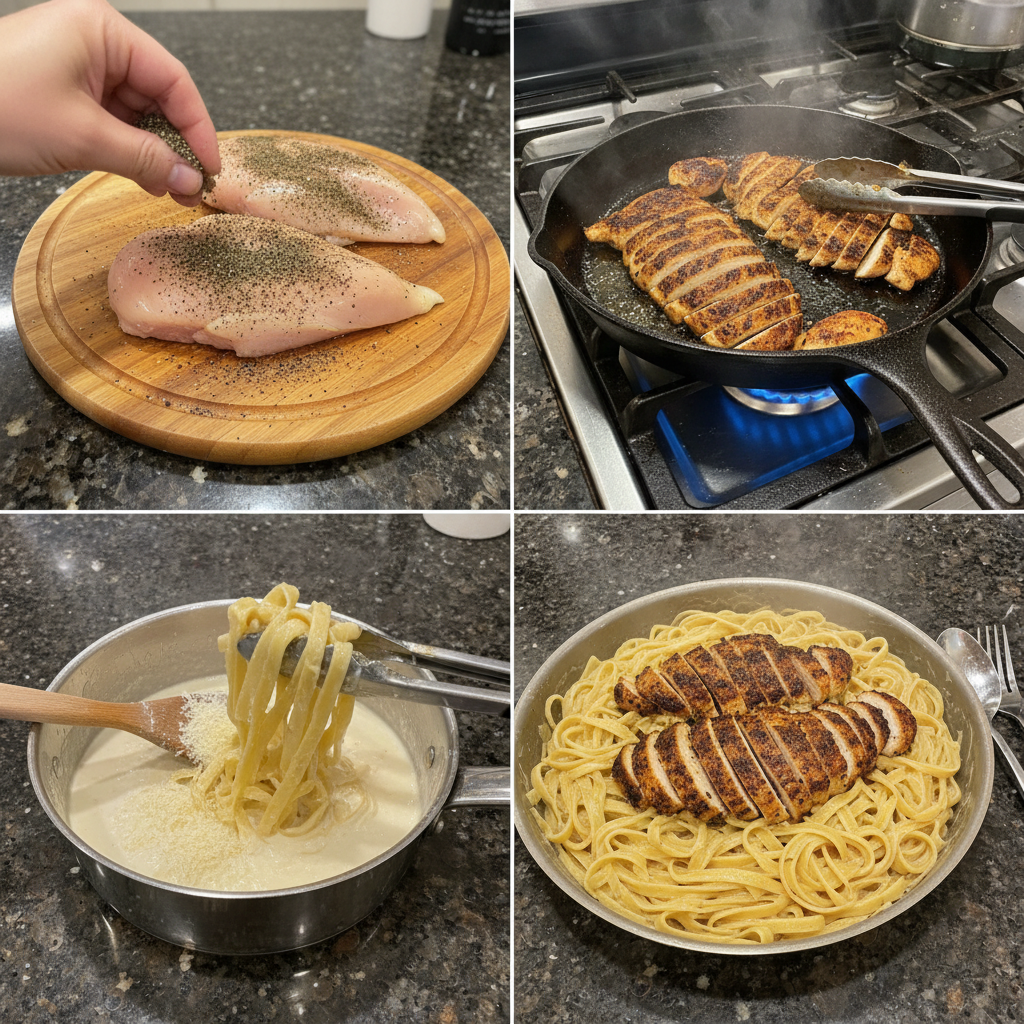
First, take your boneless skinless chicken breasts and filet them horizontally to create four thinner pieces. This ensures even cooking and more surface area for the blackening seasoning. Generously coat both sides of the chicken with the blackening seasoning, pressing it gently to adhere.
Next, heat a cast iron skillet over high heat. You want it hot enough so that when you add the olive oil, it shimmers almost immediately, and the skillet just starts to smoke. Place the olive oil in the pan, then carefully add the seasoned chicken breasts. Cook the chicken for about 5 minutes on each side until a deep, flavorful crust forms and each side is beautifully browned. Once cooked, transfer the chicken to a separate plate and cover it loosely with foil to keep it warm and allow the juices to redistribute.
Capturing the Flavorful Fond
Do not clean that cast iron skillet yet! This is where our unique twist comes in. While the skillet is still hot and on the heat, add a quarter cup of dry white wine or chicken broth. Immediately use a wooden spoon or spatula to actively scrape up all the flavorful browned bits, or fond, from the bottom of the pan. Allow this liquid to reduce slightly, concentrating all those amazing Maillard reaction flavors. Carefully pour this rich, deglazing liquid into the large pot where you will eventually make the Alfredo sauce. This step is essential for infusing your Alfredo sauce with deep, integrated blackened flavor.
Cooking the Pasta
While your chicken rests and you have captured that amazing fond, cook the fettuccine pasta to al dente based on the package instructions. This usually means cooking it for 8-10 minutes. It is crucial for the pasta to be firm to the bite, as it will continue to cook when tossed with the hot sauce. Once it is perfectly al dente, strain the pasta and set it aside, reserving a bit of the pasta water just in case you need it later.
Crafting the Alfredo Sauce
In the same large pot that you used for the pasta, now clean, or a separate large pot, add the butter and minced garlic. Cook this over low heat for 3-5 minutes until the butter is melted and the garlic becomes wonderfully fragrant, but not browned. Whisk in the heavy whipping cream. Cook gently while continuously whisking for approximately 3-5 minutes until the cream is heated through and begins to gently simmer. Do not let it come to a rolling boil. Now, remember that flavorful deglazing liquid you saved? Whisk that into the cream mixture, incorporating all those amazing savory notes.
Remove the pan from the heat, then stir in the freshly grated Parmesan cheese. Stir constantly until the cheese is fully melted and the sauce is smooth and creamy. The residual heat will melt the cheese without causing the sauce to separate. If the sauce seems too thick, you can add a splash of warm pasta water until it reaches your desired creamy consistency.
Combining and Serving
Now, toss the cooked al dente pasta with the homemade Alfredo sauce, ensuring every strand is coated in that luxurious creaminess. Slice the rested blackened chicken breasts into medallions. Arrange the sliced chicken on top of the noodles with the Alfredo sauce.
Serve your blackened chicken alfredo immediately while warm and enjoy every comforting, spicy, and creamy bite!
Mastering the Blackening & Perfecting Your Alfredo Sauce
To truly excel at making blackened chicken alfredo, understanding the nuances of both the blackening technique and the Alfredo sauce is key. I want to empower you with deeper knowledge to confidently create this dish every time.
Homemade Blackening Seasoning
While store-bought blackening seasoning is convenient, crafting your own allows for customization and ensures the freshest spices. For a balanced homemade blend, combine 1 teaspoon each of paprika, cayenne pepper, garlic powder, onion powder, dried oregano, and dried thyme. Add 1/2 teaspoon of salt and 1/4 teaspoon of black pepper. This blend offers adjustable spice levels, fresh ingredients, and no unwanted additives, making your cajun chicken alfredo truly your own.
Achieving the Perfect Blackened Sear
The core concept of “blackening” is to create a dark, flavorful crust on your chicken through the Maillard reaction, not to burn it. This requires very high heat. For a cast iron skillet, “high heat” specifically means preheating the skillet until it just starts to smoke, or a drop of water evaporates instantly upon contact. Always exercise safety precautions when cooking with such high heat.
The importance of a properly heated, well-oiled cast iron skillet cannot be overstated. A hot skillet ensures an immediate sear, locking in juices and creating that characteristic crust. Also, avoid overcrowding the pan. If you put too many chicken breasts in at once, the temperature of the skillet will drop, causing the chicken to steam rather than sear. This results in less flavor and a poor texture for your blackened chicken.
Ensuring Chicken Safety & Doneness
For food safety, it is crucial to ensure your chicken breasts reach a specific internal temperature. Poultry, including these chicken breasts, must reach 165°F or 74°C in the thickest part. The most reliable way to confirm this is by using a reliable meat thermometer. While visual cues like no pink in the center and clear juices are helpful, a thermometer removes any guesswork and is vital for preventing undercooked poultry.
Troubleshooting Your Alfredo Sauce
Homemade Alfredo sauce is wonderfully rich, but it can present a few challenges. Here is how to troubleshoot common Alfredo sauce issues and avoid mistakes like splitting or thinning.
If your sauce is separating or breaking, this often happens from too high heat, vigorously boiling the cream, or adding cold Parmesan cheese too quickly. To prevent this, always advise removing the pan from direct heat when stirring in your freshly grated Parmesan. Whisk constantly, and ensure your heavy whipping cream is only gently simmering, never boiling vigorously. Gentle heat helps with proper emulsification.
If your Alfredo sauce is too thin, you can gently reduce it over very low heat for a few more minutes. Alternatively, add a bit more freshly grated Parmesan cheese, as the cheese helps to thicken the sauce naturally. The emulsification of fats and liquids is key to achieving that stable, thick, and creamy sauce.
Conversely, if your sauce becomes too thick, simply advise thinning it with a splash of warm pasta water or chicken broth. Add it slowly, stirring until the desired creamy consistency is reached.
Pro Tips & Troubleshooting
Here are my top tips and common mistakes to help you master this blackened chicken alfredo recipe and achieve restaurant-quality results every time.
Pro Tips
For perfect pasta every time, cook your fettuccine pasta to al dente according to package directions. To prevent sticking if you are not using it immediately, you can toss it with a tiny bit of olive oil or butter. Do not rinse pasta with cold water unless you are specifically trying to stop cooking for a salad, as it removes the starches needed for the sauce to adhere properly.
Fresh Parmesan is absolutely key. I cannot stress enough the unwavering importance of using freshly grated Parmesan cheese from a block. It is essential for a silky, flavorful, and stable Alfredo sauce that will not turn grainy or oily.
The deglazing difference makes this recipe truly special. Never skip deglazing the skillet after cooking the chicken. This step, capturing the fond left from the Maillard reaction, is a flavor powerhouse that deeply enriches your sauce.
Temperature control for Alfredo is critical. Keep the cream mixture at a gentle simmer, never a rolling boil, to prevent the sauce from breaking, separating, or becoming oily. Gentle heat fosters a smooth emulsification.
Finally, always rest your chicken. After blackening, allow the chicken to rest for 5-10 minutes under foil. This allows the juices to redistribute throughout the meat, resulting in more tender and moist chicken.
Common Mistakes to Avoid
Avoid overcooking the pasta. This leads to mushy noodles that will fall apart when tossed with your beautiful sauce, making for a less enjoyable creamy pasta experience.
Never use pre-grated cheese. This is a common mistake that causes a grainy, oily, or significantly less flavorful Alfredo sauce due to the anti-caking agents found in packaged cheese.
Using too high heat for Alfredo sauce is a major culprit for sauce separation, breaking, or an undesirable oily texture. Remember, low and slow is the way to go for a perfect creamy sauce.
Avoid overcrowding the skillet when cooking the chicken. This prevents the chicken from achieving a proper, crispy crust. Instead, it steams the chicken, resulting in less flavor and a poor texture for your blackened chicken.
And of course, not deglazing the pan means missing out on capturing the incredible fond from the blackening process. This results in a less flavorful, less integrated Alfredo sauce and truly diminishes the unique twist of this recipe.
Serving & Storage
Once you have created this masterpiece, here is how to best enjoy it and manage any delicious leftovers.
Serving Ideas
For classic pairings, I love serving blackened chicken alfredo with a side of steamed broccoli. You can even toss the broccoli directly into the Alfredo sauce for added convenience and flavor. A crisp fresh green or Caesar salad provides a lovely counterpoint to the richness of the dish. Warm garlic bread or dinner rolls are perfect for soaking up every last bit of that creamy sauce.
For garnishes, a sprinkle of fresh parsley, a touch of extra Parmesan, or a pinch of red pepper flakes adds both an appealing presentation and an extra flavor kick. When considering beverage pairings, a dry white wine, perhaps the same one used for deglazing, or a light-bodied red wine would complement the flavors beautifully.
Storage and Make-Ahead
To safely store leftover blackened chicken alfredo, place it in an airtight container in the refrigerator for 3-4 days. This ensures it remains fresh and delicious for future meals.
For reheating leftovers, you have a couple of optimal methods to maintain the texture and flavor of your dish. On the stovetop, gently reheat on low heat in a skillet or pot. Add a splash of milk, cream, or chicken broth as needed to restore that creamy consistency, stirring frequently until it is warmed through. If using a microwave, reheat in short intervals of 30-60 seconds, stirring between each, and add a little liquid if the sauce appears too thick.
If you wish to freeze blackened chicken alfredo for future meals, it is best to freeze the pasta and sauce separately from the chicken if possible, as this helps preserve the texture of both. Store the combined dish in airtight, freezer-safe containers for up to 2-3 months. For best results, thaw it overnight in the refrigerator before reheating gently using the stovetop method.
Conclusion
I hope you are now inspired to create this incredible blackened chicken alfredo in your own kitchen. This dish truly delivers a delicious combination of spicy blackened chicken and a luxurious, creamy Alfredo sauce. Remember, the unique twist of deglazing the skillet is what truly elevates this recipe above standard versions, creating a memorable and deeply flavorful experience.
With my detailed instructions and expert tips, I am confident that home cooks of all skill levels can achieve impressive, restaurant-quality results. Feel free to experiment with different pasta variations or serving suggestions, making this versatile comfort food a staple for any weeknight meal. I encourage you to print this recipe, share it with friends and family, and explore other related creamy pasta or quick dinner recipes on my site.
FAQ
How spicy is blackened chicken alfredo, and can I adjust the heat?
The spiciness of blackened chicken alfredo primarily comes from the cayenne pepper in the blackening seasoning. You can absolutely customize the heat level by increasing or decreasing the amount of cayenne in your homemade blend, or by choosing a mild or hot store-bought seasoning.
What are the best pasta types and sides to serve with blackened chicken alfredo?
While fettuccine pasta is traditional, other great pasta alternatives include penne, linguine, spaghetti, or bowtie pasta. For sides, I recommend steamed broccoli, a fresh Caesar salad, or warm garlic bread to complement the creamy sauce and complete your meal.
What common mistakes should I avoid when making homemade Alfredo sauce?
To ensure a perfect homemade Alfredo sauce, avoid using pre-grated Parmesan cheese, as it can make your sauce grainy. Also, refrain from cooking the cream over too high heat, which can cause the sauce to separate or break. Always use full-fat heavy cream and add cheese off the heat for the best results.
How can I properly store and reheat leftover blackened chicken alfredo?
Store leftovers in an airtight container in the refrigerator for 3-4 days. To reheat, gently warm on the stovetop over low heat, adding a splash of milk, cream, or chicken broth to restore creaminess. You can also microwave in short bursts, stirring often and adding liquid if needed. For freezing, it is best to separate the chicken from the pasta and sauce if possible, storing for up to 2-3 months after thawing overnight in the fridge.
Is it better to make my own blackening seasoning or use store-bought?
Making your own blackening seasoning allows for customization of spice levels and ensures fresh ingredients without additives, which I prefer for optimal flavor. However, store-bought seasoning offers convenience and is a perfectly acceptable option for a quick dinner.
What’s the secret to perfectly cooked chicken and creamy Alfredo sauce?
The secret lies in a few key steps: ensure your chicken is cooked to a safe internal temperature of 165°F or 74°C, use fresh, quality ingredients like freshly grated Parmesan and full-fat heavy cream, and most importantly, utilize the unique deglazing twist after cooking the chicken to infuse your Alfredo sauce with deep, integrated flavor.
Can I substitute shrimp for chicken in this recipe?
Yes, blackened shrimp is an excellent and very popular alternative to chicken in this recipe. Just be aware that shrimp cooks much faster, so adjust your cooking time accordingly, typically only 1-2 minutes per side.
What kitchen tools are essential for making this recipe?
For this blackened chicken alfredo, you will need a sturdy cast iron skillet for the chicken, a large pot for the pasta and sauce, a whisk for the Alfredo, tongs for handling the chicken, a sharp knife for slicing, and crucially, a meat thermometer to ensure the chicken is cooked safely.

Blackened Chicken Alfredo: The Ultimate Creamy, Spicy Recipe
Ingredients
Equipment
Method
- Filet the boneless, skinless chicken breasts horizontally to create four thinner pieces, ensuring even cooking and more surface area for seasoning.
- Generously coat both sides of the chicken with blackening seasoning, pressing gently to adhere.
- Heat a cast iron skillet over high heat until it shimmers and just starts to smoke. Add olive oil, then carefully place the seasoned chicken breasts in the pan.
- Cook the chicken for about 5 minutes on each side until a deep, flavorful crust forms and each side is beautifully browned.
- Transfer the cooked chicken to a separate plate and cover loosely with foil to keep it warm and allow juices to redistribute.
- While the skillet is still hot and on the heat, add a quarter cup of dry white wine or chicken broth. Immediately use a wooden spoon or spatula to actively scrape up all the flavorful browned bits (fond) from the bottom of the pan.
- Allow this liquid to reduce slightly, concentrating all the amazing Maillard reaction flavors. Carefully pour this rich, deglazing liquid into the large pot where you will eventually make the Alfredo sauce.
- While your chicken rests, cook the fettuccine pasta to al dente based on the package instructions (usually 8-10 minutes). Ensure it is firm to the bite.
- Once perfectly al dente, strain the pasta and set it aside, reserving a bit of the pasta water.
- In the same large pot used for the pasta (now clean) or a separate large pot, add the butter and minced garlic. Cook over low heat for 3-5 minutes until butter is melted and garlic is fragrant, but not browned.
- Whisk in the heavy whipping cream. Cook gently while continuously whisking for approximately 3-5 minutes until the cream is heated through and begins to gently simmer. Do not let it come to a rolling boil.
- Whisk the saved flavorful deglazing liquid into the cream mixture, incorporating all those amazing savory notes.
- Remove the pan from the heat, then stir in the freshly grated Parmesan cheese. Stir constantly until the cheese is fully melted and the sauce is smooth and creamy. If the sauce seems too thick, add a splash of warm pasta water until desired consistency is reached.
- Toss the cooked al dente pasta with the homemade Alfredo sauce, ensuring every strand is coated.
- Slice the rested blackened chicken breasts into medallions.
- Arrange the sliced chicken on top of the noodles with the Alfredo sauce. Serve immediately and enjoy!
