


Welcome to my kitchen, where today we are transforming a beloved classic into something truly extraordinary. If you are a fan of classic chocolate chip cookies, you’ll find this oatmeal variation to be an exciting twist. This recipe promises incredibly chewy cookies with crisp edges, soft centers, and an irresistible depth of flavor. Whether you are a seasoned baker looking for new insights or a beginner seeking a foolproof method, I have poured all my expertise into crafting a guide that will help you bake perfection every time. Get ready to discover your new favorite cookie.
Why You’ll Love This Recipe
This oatmeal chocolate chip cookie recipe features a unique twist: browned butter for enhanced flavor depth. I consider browning butter to be a game-changer for these cookies. It transforms simple unsalted butter into a golden, fragrant elixir. The Maillard reaction during browning creates nutty, caramelized notes that elevate the taste far beyond what regular butter can achieve. This technique adds an incredible complexity and richness to every bite. This browning process also subtly alters the butter’s composition, contributing to a wonderfully chewier texture in the finished cookies. These are a classic comfort food elevated to gourmet status, making them perfect for family gatherings or a thoughtful homemade gift. They are incredibly family-friendly and also ideal for making ahead, allowing you to enjoy fresh baked cookies with minimal effort.
Ingredients Needed
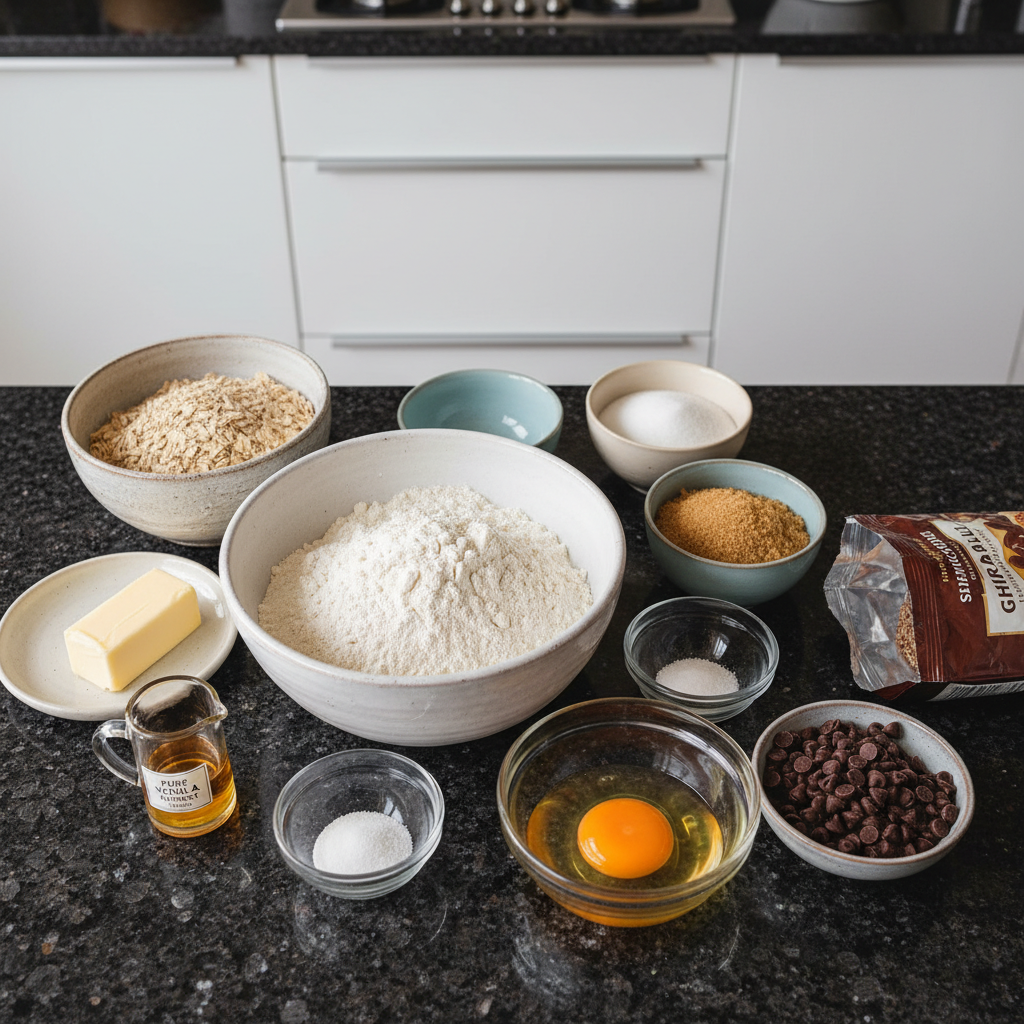
- 1 cup all-purpose flour (120g)
- 1/2 tsp baking soda (3g)
- 1/2 tsp salt (5g)
- 1/2 cup unsalted butter (room temperature, 113g)
- 1/3 cup granulated sugar (65g)
- 2/3 cup light-brown sugar (140g, packed)
- 2 tsp pure vanilla extract (10mL)
- 1 large egg
- 1 1/2 cups rolled oats (135g)
- 1 cup semisweet chocolate chips (150g)
Ingredient Notes & Substitutions
Unsalted Butter and The Brown Butter Twist: I always recommend using unsalted butter in baking to control the salt content precisely. For this recipe, we are browning the butter, a technique that requires you to melt it in a light-colored saucepan over medium heat, swirling occasionally. Watch as the butter will foam, then the milk solids at the bottom will turn golden brown and smell wonderfully nutty. Pour it into a heatproof bowl immediately to stop the cooking, then allow it to cool until it reaches a soft, semi-solid consistency, similar to room temperature butter. This cooling is crucial before proceeding with the sugars and egg. If you ever use butter that is not browned, ensure it is truly at room temperature. This means it should be soft enough to indent with your finger but not melted or greasy. Proper room temperature butter is key for optimal creaming.
Rolled Oats: For the best chewy cookies, rolled oats are essential. They provide a substantial, satisfying texture that quick oats simply cannot replicate. Quick oats are cut into smaller pieces and cook faster, resulting in a softer, almost cakier cookie. Stick to rolled oats for that classic, hearty oatmeal chocolate chip cookie chew. For more on the different types of oats and their uses, check out this guide to rolled oats vs. quick oats. If you’re looking for a different kind of oatmeal treat, you might also enjoy our lacy oatmeal cookies.
Chocolate Chips: I love using semisweet chocolate chips in my oatmeal chocolate chip cookie recipe for a balanced sweetness. However, feel free to experiment. Dark chocolate chips or chunks will lend a richer, more intense chocolate flavor. Milk chocolate chips will make for a sweeter, creamier cookie. You can even chop up a good quality chocolate bar for varying textures and pockets of melted chocolate.
Flour Measurement: Accurate flour measurement is critical for perfect cookies. Too much flour can lead to dry, dense cookies. I highly recommend using a kitchen scale for precision. If you do not have one, use the spoon-and-level method: gently spoon the all-purpose flour into your measuring cup until it overflows, then level it off with the back of a knife. Do not pack it down or scoop directly from the bag.
Optional Mix-ins: These oatmeal chocolate chip cookies are wonderful as is, but they also welcome additions. Consider folding in chopped walnuts or pecans for a delightful crunch. For a different flavor profile, raisins or butterscotch chips can be lovely additions. If you’re keen to explore other classic cookie flavors, you might enjoy our peanut butter cookies or brown sugar cookies.
Potential Substitutions (General Guidance): While this recipe is optimized for the ingredients listed, I understand that sometimes substitutions are necessary. For gluten-free options, a 1:1 gluten-free flour blend can sometimes work, though results may vary. Egg replacers can also be attempted, but the cookie’s texture might change. For best results with specific dietary needs, I often recommend seeking out recipes specifically developed for those substitutions.
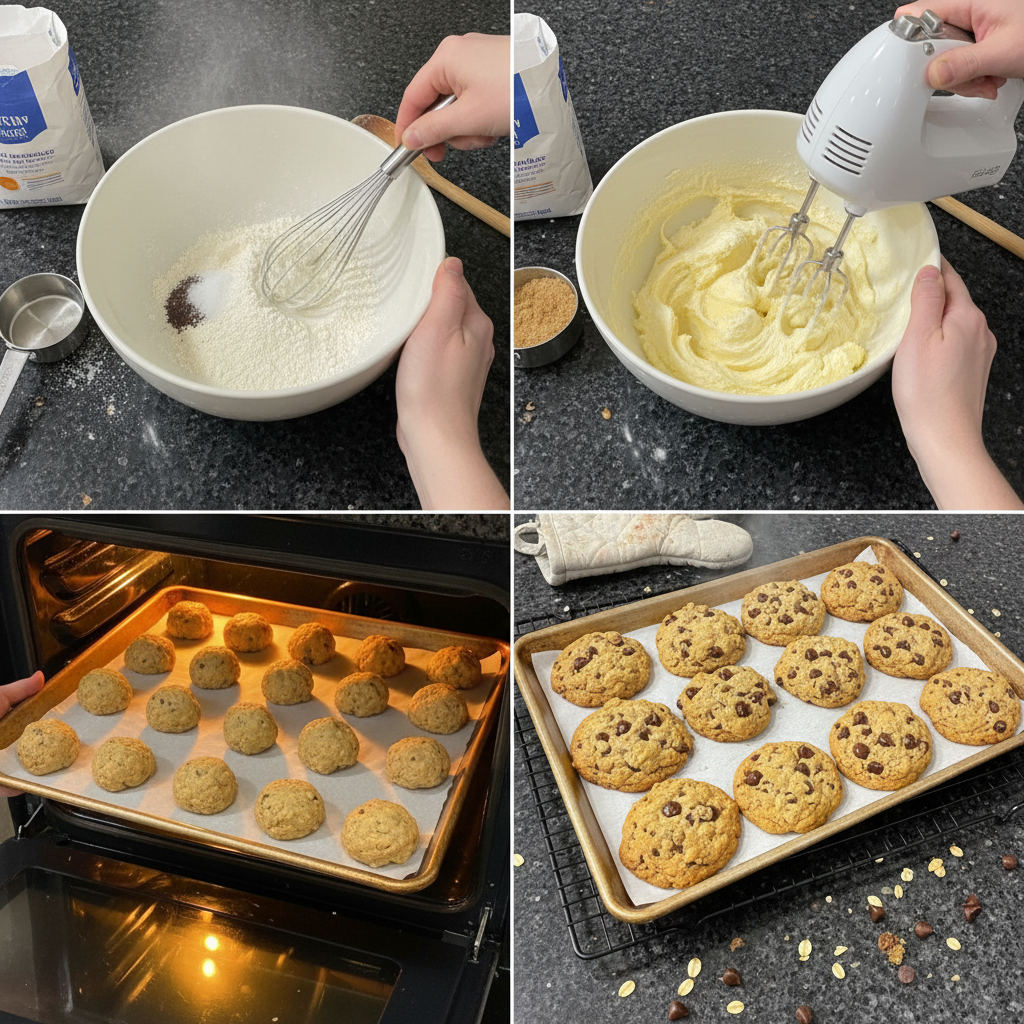
How to Make Chewy Brown Butter Oatmeal Chocolate Chip Cookies
These steps are designed to guide you through creating the most delicious oatmeal chocolate chip cookies with that incredible browned butter flavor.
Brown the Butter
Begin by browning your butter. Melt 1/2 cup of unsalted butter in a small, light-colored saucepan over medium heat. Watch it carefully; it will melt, then foam, and you will see tiny amber-colored bits begin to form at the bottom. Swirl occasionally. Once the milk solids turn a beautiful golden brown and a rich, nutty aroma fills your kitchen, immediately pour the browned butter into a heatproof bowl. Let it cool until it is a soft, semi-solid consistency, much like room temperature butter, before you proceed. This cooling is vital so it does not cook the sugars or egg later.
Whisk Dry Ingredients
In a medium bowl, whisk together the 1 cup of all-purpose flour, 1/2 teaspoon of baking soda, and 1/2 teaspoon of salt. Make sure these are thoroughly combined, then set the bowl aside.
Cream Butter & Sugars
In the bowl of a stand mixer fitted with the paddle attachment, or with a hand mixer, combine your cooled browned butter with 1/3 cup of granulated sugar and 2/3 cup of light-brown sugar. Beat on medium speed for 2 to 3 minutes, until the mixture becomes truly light, fluffy, and noticeably paler in color. This step incorporates essential air, creating a tender crumb in your finished cookies. Scrape down the sides of the bowl as needed.
Add Wet Ingredients
Reduce the mixer speed to low. Add the 2 teaspoons of pure vanilla extract and 1 large egg. Beat until the ingredients are just well mixed, about 1 minute. Ensure you scrape down the sides of the bowl to incorporate everything fully.
Combine Wet & Dry
Gradually add the flour mixture to the wet ingredients. Mix on low speed until the flour is just almost combined. It is crucial not to overmix at this stage, as overdeveloping the gluten can lead to tough cookies. Stop mixing as soon as most of the flour streaks disappear.
Stir in Mix-ins
Remove the bowl from the mixer. With a sturdy spoon or spatula, stir in the 1 1/2 cups of rolled oats and 1 cup of semisweet chocolate chips until they are evenly distributed throughout the dough.
Chill the Dough
Cover the cookie dough bowl with plastic wrap and chill it in the refrigerator for at least one hour, or ideally, overnight. This chilling period is not just for convenience; it is a vital step that prevents the cookies from spreading too much, allows the flavors to meld, and helps achieve that perfect chewy texture.
Prepare Oven & Baking Sheets
When you are ready to bake, preheat your oven to 375 degrees F (190 degrees C). Line your baking sheets with parchment paper. This prevents sticking and ensures even baking.
Scoop Dough
Using a small ice cream scooper (approximately two tablespoons), drop heaping tablespoon-size balls of dough onto the prepared baking sheets, spacing them about 2 inches apart. For a bakery-worthy appearance, I often press a few extra chocolate chips onto the tops of the scooped dough balls before baking. For consistently uniform cookies, you can also weigh each dough ball, aiming for about 35-40 grams per cookie.
Bake Cookies
Bake the cookies for 8 to 10 minutes. Look for cookies that are golden around the edges but still appear soft, slightly puffed, and even a little underbaked in the center. The centers will set up further as they cool, ensuring a wonderfully chewy interior. Do not overbake.
Cool & Transfer
Remove the baking sheets from the oven. Let the cookies cool on the baking sheet for 1 to 2 minutes. This brief cooling period on the warm sheet allows them to firm up slightly without becoming brittle. Then, carefully transfer the cookies to a wire rack to cool completely. Cooling on a wire rack ensures air circulation, preventing soggy bottoms and contributing to the desired chewy texture.
Mastering Cookie Science & Perfect Texture
Understanding the science behind your baking helps immensely in achieving consistent and delicious results. Here is a deeper dive into what makes these oatmeal chocolate chip cookies so special.
The Magic of Browning Butter (Revisited)
We revisited this unique browned butter twist because it is truly foundational to this recipe’s flavor. The Maillard reaction is a complex chemical process that occurs when amino acids and reducing sugars react at high temperatures. In butter, this means the milk solids caramelize, creating hundreds of new flavor compounds. These compounds are responsible for the rich, nutty, and toasted notes that elevate the simple butter into something extraordinary. This transformation not only enhances the flavor profile but also affects the overall dough consistency and contributes to a chewier cookie by removing some of the water content from the butter.
The Crucial Role of Chilling Dough
Chilling cookie dough is more than just a waiting game; it is a critical step for perfect cookies. First, the fat in the dough (our glorious browned butter) solidifies. This makes the dough firmer, preventing excessive cookie spread in the oven. Second, the sugars in the dough, especially the light-brown sugar, have time to absorb moisture from the other ingredients. This hydration leads to more concentrated flavors and aids in achieving a wonderfully chewy texture. Finally, the gluten development from mixing gets a chance to relax. This gluten rest results in a more tender cookie crumb rather than a tough one. Cookies made from chilled dough consistently bake up thicker, chewier, and more flavorful.
Baking Soda’s Function
In this oatmeal chocolate chip cookie recipe, baking soda plays a specific and important role. It is a chemical leavening agent that reacts with acidic ingredients. Our light-brown sugar is slightly acidic, which activates the baking soda. This reaction produces carbon dioxide gas, which expands in the oven, helping the cookies to rise and creating a tender, open crumb. Baking soda also promotes cookie spread, contributing to those desirable crisp edges.
Achieving Uniform Cookies
For cookies that bake evenly and look professionally made, uniformity is key. Beyond using an ice cream scooper, I recommend weighing your dough balls with a kitchen scale for ultimate precision. Aim for about 35-40 grams per cookie. If you prefer a smoother, perfectly round cookie, gently roll the scooped dough between your palms before placing it on the baking sheet. This ensures consistent size and shape, leading to a perfectly baked batch every time.
Cooling for Optimal Chewiness
The way you cool your cookies significantly impacts their final texture. After baking, allowing the cookies to cool on the hot baking sheet for 1 to 2 minutes helps them set without drying out too quickly. This initial cool down on the sheet prevents them from collapsing or breaking when moved. Transferring them to a wire rack to cool completely is then essential. The wire rack allows air to circulate around the entire cookie, preventing moisture from getting trapped and making the bottoms soggy, ensuring that ideal chewy texture is maintained throughout.
Pro Tips & Troubleshooting
Even the most seasoned bakers run into challenges sometimes. Here are my best pro tips and common mistakes to avoid for your oatmeal chocolate chip cookie recipe success.
Pro Tips for Success
Accurate Flour Measurement: This is one of my top expert tips. Always measure your all-purpose flour correctly. Using a kitchen scale is the most accurate method. If you are using measuring cups, remember to fluff the flour in its container first, then gently spoon it into your measuring cup and level it off with a straight edge. Never pack it down or scoop directly with the cup.
The Brown Butter Advantage: Make sure your butter is browned to that perfect amber color for maximum flavor depth. However, it is equally important to let it cool to a soft, semi-solid consistency before incorporating it. Butter that is too hot will melt the sugars and scramble the egg, ruining your dough.
Chilling for Perfection: While you might be tempted to skip it, chilling the cookie dough is highly recommended. It prevents excessive cookie spread, intensifies all the delicious flavors, and contributes to that superior chewy texture we are aiming for.
Picture-Perfect Cookies: For that professional, bakery-style look, gently press a few extra semisweet chocolate chips or other mix-ins onto the tops of your scooped dough balls just before they go into the oven. This makes them incredibly appealing.
Know When They’re Done: The ideal baking time for these oatmeal chocolate chip cookies is 8 to 10 minutes. Look for golden edges, but make sure the centers still appear slightly soft and perhaps a little underbaked. They will continue to set as they cool on the baking sheet and wire rack, ensuring a perfect chewy center.
Common Mistakes to Avoid
Over-measuring Flour: This is by far the most common mistake I see home bakers make. Adding too much all-purpose flour results in dry, crumbly, or dense cookies instead of the chewy ones we want. Revisit the accurate flour measurement tips above.
Skipping the Chill Time: If you do not chill the dough, especially with a higher butter content like in this brown butter recipe, your cookies are prone to excessive spreading. This leads to thin, crispy, and less flavorful cookies. Patience truly pays off here.
Overmixing the Dough: Once you add the flour mixture, mix on low speed until just combined. Overmixing develops the gluten too much, which can lead to tough, rather than tender, cookies.
Baking on Hot Sheets: Always allow your baking sheets to cool completely between batches. Placing new cookie dough on warm baking sheets can cause immediate spreading before the cookies have a chance to set, resulting in flatter cookies.
Improper Butter Temperature: If you were making a recipe without the brown butter twist, ensuring your unsalted butter is at true room temperature is vital for optimal creaming. If it is too cold, it will not cream properly, leading to a dense texture. If it is too warm, the dough can become greasy, and the cookies might spread too much. Since we are browning the butter here, the key is cooling it back down to that soft, semi-solid stage.
Serving & Storage
Once your chewy brown butter oatmeal chocolate chip cookies are baked, it is time to enjoy them. Here are some of my favorite ways to serve and store them.
Serving Ideas
Classic Pairing: There is nothing quite like a warm, chewy cookie. Serve these fresh from the oven alongside a scoop of creamy vanilla ice cream for a truly delightful dessert experience. The contrast of warm cookie and cold ice cream is heavenly.
Salted Finish: For an extra pop of flavor that enhances both the chocolate and the rich butter notes, sprinkle a pinch of flaky sea salt, like Maldon, over the cookies immediately after they come out of the oven. It is a small touch that makes a big difference.
Beverage Pairings: These cookies pair perfectly with a cold glass of milk, a comforting mug of coffee, or a cozy cup of hot cocoa. They are the ultimate companion for your favorite beverage.
Storage and Make-Ahead
Storing Baked Cookies: To maintain their chewiness and freshness, store your baked oatmeal chocolate chip cookies in an airtight container at room temperature. They will stay fresh and delicious for up to 3 to 5 days.
Freezing Cookie Dough: This is one of my favorite make-ahead tips. Scoop the unbaked cookie dough into individual balls using your ice cream scooper. Place them on a parchment paper-lined baking sheet and freeze until solid, about 1-2 hours. Once frozen, transfer the dough balls to a freezer-safe bag or container. You can store frozen cookie dough for up to 2-3 months. When you are ready to bake, simply place the frozen dough balls on a prepared baking sheet and bake as directed, adding 1 or 2 extra minutes to the baking time.
Freezing Baked Cookies: Yes, you can freeze baked oatmeal chocolate chip cookies too. Once they are completely cooled, layer them with parchment paper in an airtight container or freezer-safe bag. They can be frozen for up to 1 month. Thaw them at room temperature when you are ready to enjoy.
Reheating for Freshness: For that fresh-out-of-the-oven experience with cold baked cookies, pop them into the microwave for 10-15 seconds, or warm them in a low oven (around 275 degrees F or 135 degrees C) for a few minutes until soft and warm.
Conclusion
I hope this comprehensive guide has inspired you to bake the best chewy brown butter oatmeal chocolate chip cookies you have ever tasted. The unique twist of browned butter truly sets this oatmeal chocolate chip cookie recipe apart, infusing every bite with an unforgettable depth of flavor. Even if you are new to baking, by following these detailed steps and heeding the expert tips, you will achieve fantastic results. Do not hesitate to try some of the recommended variations or serving ideas to personalize your batch. I would love to hear about your baking adventures. Feel free to leave a comment below or share this recipe with your friends and family. Happy baking!
FAQ
How long can you store oatmeal chocolate chip cookie dough and baked cookies?
You can store unbaked oatmeal chocolate chip cookie dough in the refrigerator for up to 3 days. For longer storage, freeze scooped dough balls for up to 2-3 months. Baked cookies, when stored in an airtight container at room temperature, will stay fresh and chewy for 3-5 days.
Can I substitute salted butter for unsalted butter in this recipe?
While I recommend unsalted butter for precise salt control, you can use salted butter. If you do, omit the 1/2 teaspoon of salt called for in the recipe to prevent the cookies from becoming too salty.
What are the best mix-ins or chocolate variations for oatmeal chocolate chip cookies?
Beyond semisweet chocolate chips, you can use dark chocolate chips or chunks for a richer flavor, milk chocolate chips for a sweeter treat, or even white chocolate chips. Other popular mix-ins include chopped walnuts, pecans, raisins, or butterscotch chips. Feel free to get creative.
What is the best way to measure flour to ensure perfect cookies?
The most accurate way is to use a kitchen scale to measure 120 grams of all-purpose flour. If using measuring cups, lightly fluff the flour, spoon it into the measuring cup, and then level it off with a straight edge. Avoid scooping directly from the bag, as this can compact the flour and lead to using too much.
Why is chilling cookie dough important, and is it optional?
Chilling the cookie dough is highly recommended and largely not optional for the best results. It allows the butter to solidify, preventing excessive spreading, and gives the sugars time to absorb moisture, concentrating flavors and contributing to a chewier texture. It also helps relax the gluten, resulting in a more tender cookie.
How can I troubleshoot common oatmeal chocolate chip cookie baking problems?
If cookies spread too much, ensure your butter was properly cooled after browning, your oven temperature is accurate, and you chilled the dough sufficiently. If they are dry or crumbly, you likely added too much flour or overbaked them. Overmixing the dough can lead to tough cookies, while baking on hot sheets causes immediate spreading.
What type of oats should be used for oatmeal chocolate chip cookies?
For the best texture in these oatmeal chocolate chip cookies, I strongly recommend using old-fashioned rolled oats. They provide a satisfying chewiness and hearty texture that quick oats or instant oats cannot match. Quick oats are finer and tend to make a softer, more cake-like cookie.
Can I freeze baked oatmeal chocolate chip cookies?
Yes, you can freeze baked oatmeal chocolate chip cookies. Allow them to cool completely, then place them in an airtight freezer-safe container, separating layers with parchment paper. They can be frozen for up to 1 month and thawed at room temperature.
What is the ideal weight for one serving of an oatmeal chocolate chip cookie?
For consistent sizing and serving, an ideal weight for one serving of these oatmeal chocolate chip cookies is approximately 35-40 grams of dough per cookie, which typically translates to a heaping tablespoon or a small ice cream scoop size.
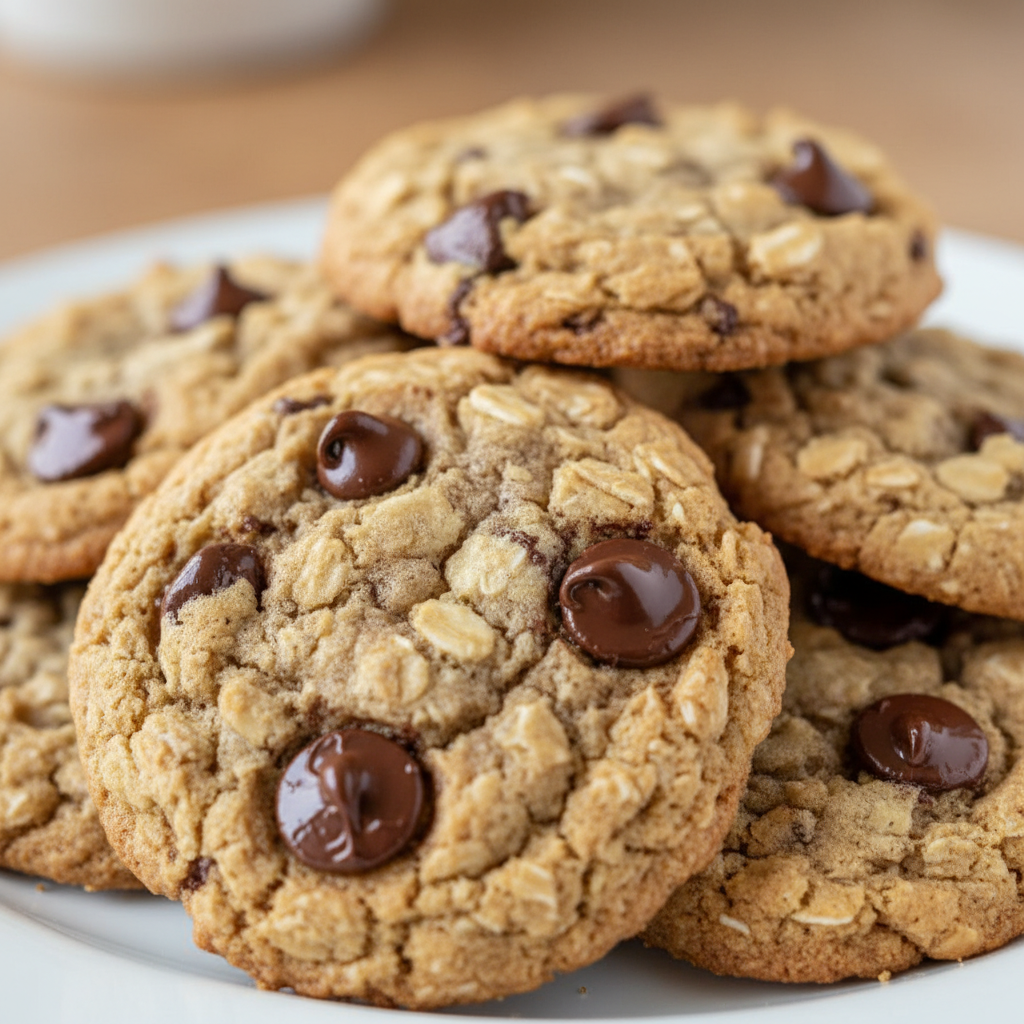
Best Chewy Brown Butter Oatmeal Chocolate Chip Cookie Recipe
Ingredients
Equipment
Method
- Melt 1/2 cup of unsalted butter in a small, light-colored saucepan over medium heat. Watch carefully as it melts, then foams, and tiny amber-colored bits begin to form at the bottom. Swirl occasionally. Once the milk solids turn a beautiful golden brown and a rich, nutty aroma fills your kitchen, immediately pour the browned butter into a heatproof bowl. Let it cool until it is a soft, semi-solid consistency, much like room temperature butter, before proceeding. This cooling is vital so it does not cook the sugars or egg later.
- In a medium bowl, whisk together the 1 cup of all-purpose flour, 1/2 teaspoon of baking soda, and 1/2 teaspoon of salt. Make sure these are thoroughly combined, then set the bowl aside.
- In the bowl of a stand mixer fitted with the paddle attachment, or with a hand mixer, combine your cooled browned butter with 1/3 cup of granulated sugar and 2/3 cup of light-brown sugar. Beat on medium speed for 2 to 3 minutes, until the mixture becomes truly light, fluffy, and noticeably paler in color. Scrape down the sides of the bowl as needed.
- Reduce the mixer speed to low. Add the 2 teaspoons of pure vanilla extract and 1 large egg. Beat until the ingredients are just well mixed, about 1 minute. Ensure you scrape down the sides of the bowl to incorporate everything fully.
- Gradually add the flour mixture to the wet ingredients. Mix on low speed until the flour is just almost combined. It is crucial not to overmix at this stage. Stop mixing as soon as most of the flour streaks disappear.
- Remove the bowl from the mixer. With a sturdy spoon or spatula, stir in the 1 1/2 cups of rolled oats and 1 cup of semisweet chocolate chips until they are evenly distributed throughout the dough.
- Cover the cookie dough bowl with plastic wrap and chill it in the refrigerator for at least one hour, or ideally, overnight. This chilling period prevents the cookies from spreading too much, allows the flavors to meld, and helps achieve that perfect chewy texture.
- When ready to bake, preheat your oven to 375 degrees F (190 degrees C). Line your baking sheets with parchment paper.
- Using a small ice cream scooper (approximately two tablespoons), drop heaping tablespoon-size balls of dough onto the prepared baking sheets, spacing them about 2 inches apart. For a bakery-worthy appearance, press a few extra chocolate chips onto the tops of the scooped dough balls before baking. For consistently uniform cookies, weigh each dough ball, aiming for about 35-40 grams per cookie.
- Bake the cookies for 8 to 10 minutes. Look for cookies that are golden around the edges but still appear soft, slightly puffed, and even a little underbaked in the center. Do not overbake.
- Remove the baking sheets from the oven. Let the cookies cool on the baking sheet for 1 to 2 minutes. Then, carefully transfer the cookies to a wire rack to cool completely.
