


Ah, risotto. The very name conjures images of a chef toiling over a stove, stirring diligently for what seems to be an eternity. It’s often considered a dish for special occasions, demanding patience and constant attention. But what if I told you that achieving a restaurant-quality, intensely savory One-Pot Mushroom Risotto could be surprisingly easy, quick, and happen almost entirely hands-free? Prepare to have your culinary perceptions flipped! I’m here to share my ultimate pressure cooker method, ensuring a velvety, umami-rich dish every single time, complete with a unique flavor-boosting secret you won’t want to cook without.
Why You’ll Love This Recipe
In my kitchen, flavor is paramount, and efficiency is a close second. This recipe for One-Pot Mushroom Risotto delivers on both counts, transforming a traditionally labor-intensive dish into an effortless weeknight wonder. Here’s why it will become your new go-to:
- The Secret Umami Boost: My unique twist involves infusing your stock with a piece of Parmigiano-Reggiano rind alongside the dried Porcini mushrooms and fresh mushroom scraps. As the rind simmers, it slowly melts, releasing a concentrated burst of glutamates. This amplifies the nutty, salty umami profile, creating an incredibly deep and foundational savory flavor that truly sets this risotto apart, harmonizing perfectly with the soy sauce and miso paste.
- Effortless One-Pot Cooking: Forget the endless stirring! Utilizing a pressure cooker simplifies the entire process. This “one-pot” approach means minimal cleanup and a significantly reduced cooking time, allowing you to achieve that perfect creamy, al dente texture in a fraction of the traditional time.
- Unparalleled Mushroom Depth: We layer mushroom flavor at every stage—from rehydrated Porcini mushrooms and fresh mixed mushrooms (like shiitake, cremini, oyster, and chanterelle) to mushroom scraps in the stock. Combined with the Parmigiano rind, soy sauce, and miso paste, each bite is a symphony of rich, earthy goodness.
- Perfect Creaminess, Guaranteed: The controlled environment of the pressure cooker ensures even cooking, and a final vigorous stir activates the starches, resulting in that luxurious, smooth, and utterly irresistible creamy texture.
Ingredients Needed
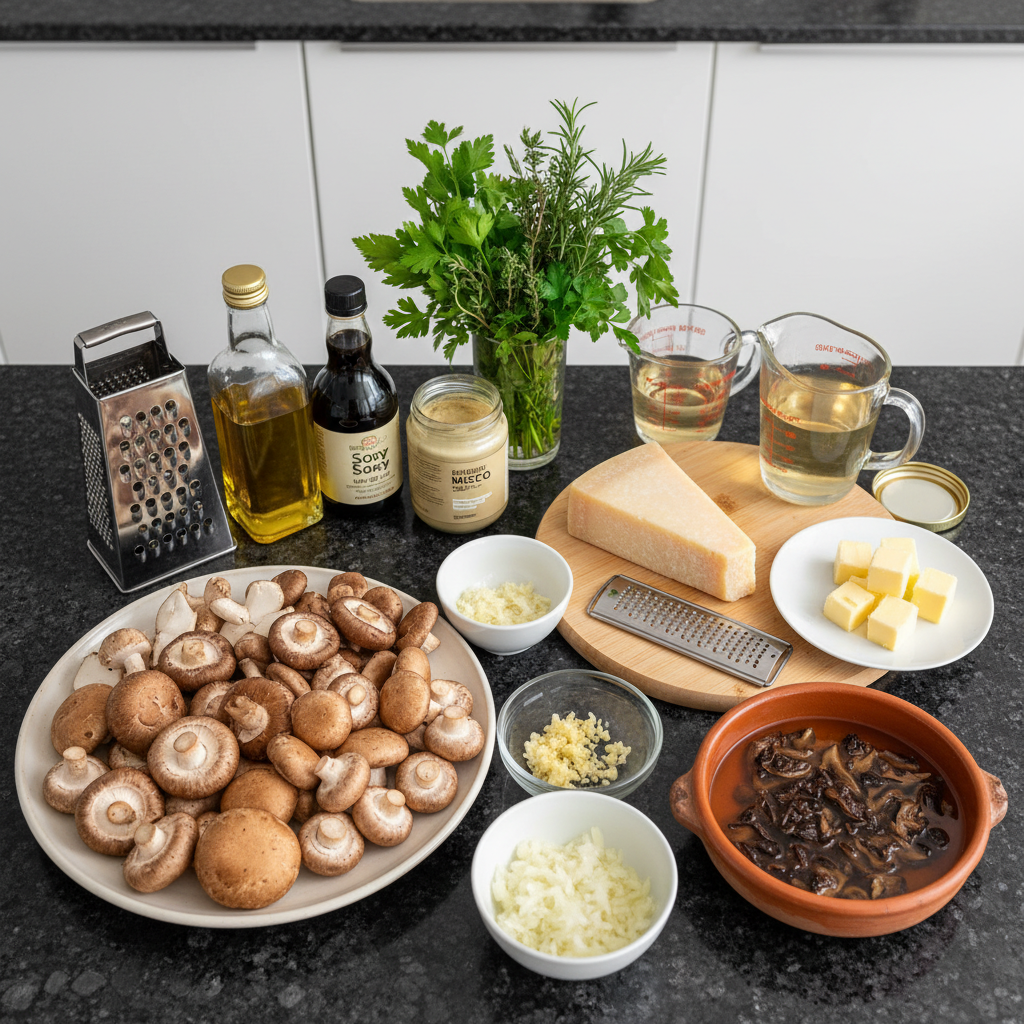
Gathering your ingredients is the first step to any great meal. Here’s exactly what you’ll need for this fantastic One-Pot Mushroom Risotto:
- 1 quart (950ml) homemade or store-bought low-sodium chicken stock or vegetable stock
- 1 ounce (30g) dried porcini mushrooms (optional)
- 4 tablespoons (60ml) extra-virgin olive oil
- 4 tablespoons (50g) unsalted butter
- 1 1/2 pounds (700g) mixed mushrooms, such as shiitake, cremini, oyster, and chanterelle, trimmed and thinly sliced, stems reserved
- Kosher salt and freshly ground black pepper
- 1 medium yellow onion, finely chopped (about 6 ounces; 170g)
- 2 medium cloves garlic, finely minced
- 1 1/2 cups (about 300g) risotto rice, such as arborio or vialone nano
- 2 teaspoons (10ml) soy sauce
- 1 tablespoon (15ml) light miso paste
- 3/4 cup (175ml) dry white wine
- 1/4 cup (60ml) heavy cream (optional; see note)
- 1 ounce (30g) finely grated Parmigiano-Reggiano cheese, plus more for serving
- Handful finely minced mixed fresh herbs, such as parsley, chervil, tarragon, and/or chives
Ingredient Notes & Substitutions
Understanding your ingredients helps you make the best choices and adaptations for your kitchen:
- Risotto Rice: For that signature creamy texture with an al dente bite, opt for high-starch varieties. Arborio rice is the most common and readily available, known for its ability to absorb liquid and release starch. If you can find it, Vialone nano rice offers an even finer grain and a slightly firmer, chewier al dente texture. You can typically find these at well-stocked supermarkets or Italian specialty stores.
- Mushrooms: Don’t be shy about exploring! A mix of fresh shiitake, cremini, oyster, and chanterelle mushrooms will offer a complex flavor profile. The dried Porcini mushrooms are key for an intense earthy backbone, and remember to reserve fresh mushroom stems to infuse into your stock for even deeper mushroom flavor.
- Stock: I always recommend using a low-sodium Chicken stock or Vegetable stock. This gives you full control over the final seasoning. And here’s where our secret twist comes in: don’t forget to add a piece of Parmigiano-Reggiano rind to the simmering stock! It’s a game-changer for umami depth.
- Wine: A crisp dry white wine like Pinot Grigio or Sauvignon Blanc works beautifully. If you prefer not to use wine, a dry vermouth or even a semi-dry hard cider can offer a similar acidic balance and depth.
- Dairy Options: The heavy cream is optional, but it definitely adds an extra layer of luxurious richness. The Parmigiano-Reggiano cheese, however, is essential for finishing the dish, contributing saltiness and nutty complexity.
- Vegan/Dairy-Free Adjustments: This recipe can easily be adapted! Use a high-quality Vegetable stock instead of chicken, omit the Parmigiano-Reggiano cheese and heavy cream, and ensure your miso paste is dairy-free (most are, but always check). Nutritional yeast can provide a cheesy, umami note if desired.
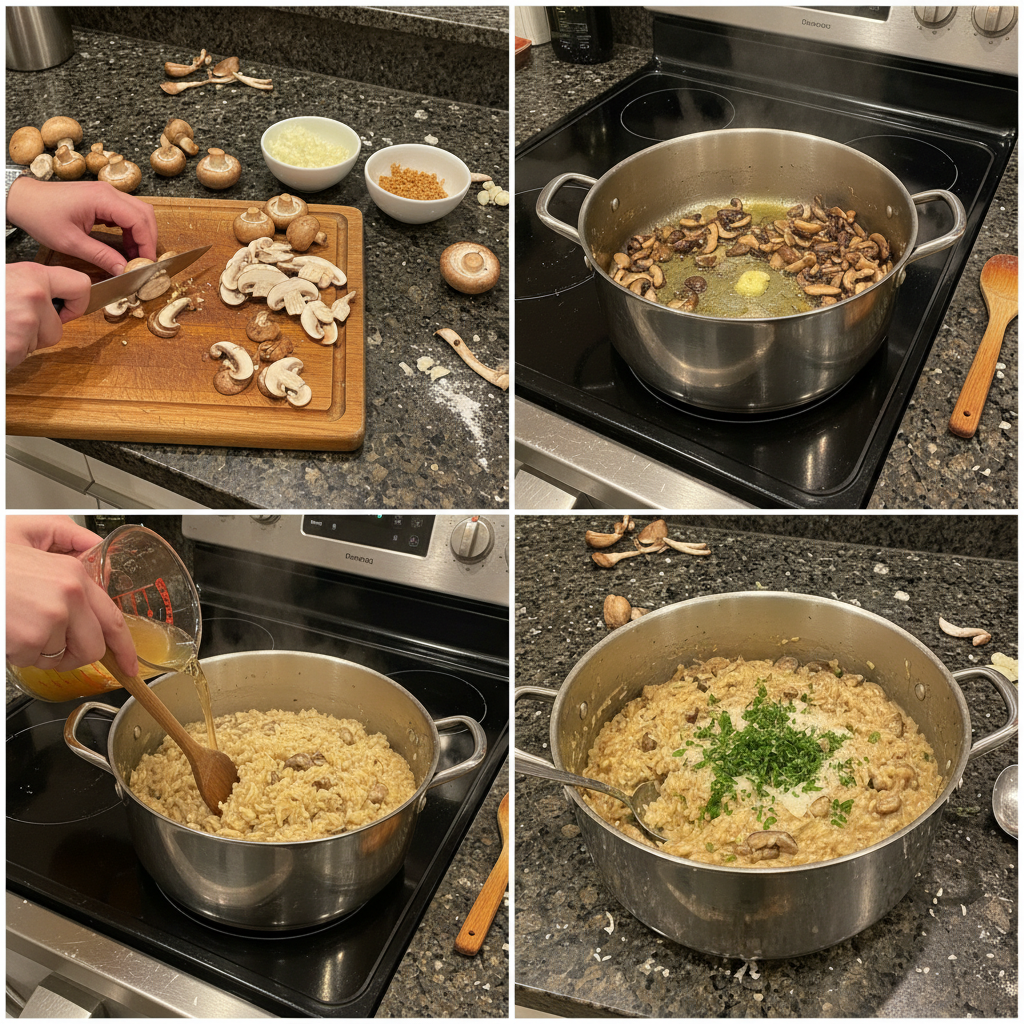
How to Make One-Pot Mushroom Risotto (Pressure Cooker Method)
Get ready to achieve extraordinary results with minimal fuss. Follow these steps for the perfect One-Pot Mushroom Risotto.
Prepare the Infused Stock
- Place your chicken stock or vegetable stock and dried porcini mushrooms (if using) in a microwave-safe container. Microwave on high power until it reaches a gentle simmer, which usually takes about 5 minutes. Alternatively, heat them in a small saucepan until simmering on the stovetop.
- Carefully remove the container from the microwave or heat. Using a slotted spoon, transfer the softened porcini to a cutting board and roughly chop them. Add your reserved fresh mushroom scraps to the container with the porcini-infused stock and, most importantly, drop in your piece of Parmigiano-Reggiano rind. Set this aside to continue infusing; this is where foundational umami magic begins!
Sauté the Mushrooms and Aromatics
- In the base of your pressure cooker, combine the extra-virgin olive oil and unsalted butter. Heat over high heat, swirling gently, until the foaming from the butter subsides. This combination helps prevent the butter from burning and ensures optimal browning.
- Add your thinly sliced fresh mixed mushrooms to the hot fat. Season generously with kosher salt and freshly ground black pepper. Cook, stirring occasionally, until all the excess moisture has evaporated and the mushrooms are beautifully well browned. This typically takes about 8 minutes. You’ll notice a rich, nutty aroma developing as the Maillard reaction works its magic, concentrating their flavor.
- Now, add the finely chopped yellow onion, minced garlic, and your chopped rehydrated porcini mushrooms (if using). Cook, stirring frequently, until the onions have softened and become aromatic, about 4 minutes.
- Add the risotto rice to the pot and cook, stirring continuously. This step, called toasting the rice or “tostatura,” coats each grain in the flavorful fat, helping it cook evenly. Continue stirring until the rice grains are evenly coated and toasted but not browned, usually 3 to 4 minutes. You’ll notice the rice grains starting to look translucent around the edges and cloudy in the center, like tiny ice cubes.
- Stir in the soy sauce and miso paste until they are thoroughly and evenly incorporated. These ingredients are fantastic for boosting the overall umami profile of your risotto.
Deglaze and Pressure Cook
- Pour in the dry white wine. Cook, stirring, until the pungent, raw alcohol smell has completely cooked off and the wine has almost fully evaporated, typically about 2 minutes. This is a crucial step for a clean, nuanced flavor.
- Carefully pour the infused stock into the pot through a fine-mesh strainer, discarding the mushroom stems and the now softened (but still flavorful!) Parmigiano-Reggiano rind. Give the bottom of the pot a good scrape with a spoon to ensure no rice grains or pieces of onion are sticking, making sure all grains of rice are fully submerged in the liquid.
- Close the pressure cooker and bring it up to low pressure (10 PSI on most units). Cook at low pressure for exactly 5 minutes.
- Once the 5 minutes are up, it’s time to depressurize. If you have a non-electric pressure cooker, carefully run it under cold water to quick-release the pressure. If you have an electric unit like an Instant Pot, use the steam-release valve.
Finish and Serve
- Open the pressure cooker. The risotto might look a bit soupy at first, but don’t worry! Stir vigorously to combine the rice and cooking liquid. You’ll see a beautiful, creamy consistency begin to develop as the starches release.
- Stir in the heavy cream (if using), the finely grated Parmigiano-Reggiano cheese, and the handful of finely minced fresh herbs.
- Taste the risotto. If it’s too soupy, continue to cook it for a few minutes longer, stirring, until it thickens to your desired consistency. If it’s too thick, simply stir in a splash of hot water or stock. The ideal consistency should flow slowly when you drag a trail through it with a spoon. Season to taste with additional kosher salt and freshly ground black pepper.
- Serve your glorious One-Pot Mushroom Risotto immediately on hot plates, passing extra grated cheese at the table for individual preference. Risotto is best enjoyed piping hot!
Mastering Risotto Success: Rice, Pressure Cookers & Troubleshooting
Achieving risotto perfection involves a few key insights, especially when working with a pressure cooker. Let’s demystify some common questions and techniques.
Choosing the Best Risotto Rice
The type of rice you choose is fundamental to the final texture of your risotto. I always recommend specific risotto rice varieties:
- Arborio Rice: This is the most common and widely available variety in the US. It has large, plump grains with a high starch content. When cooked, it releases its starches to create a wonderfully creamy texture, while still maintaining a pleasant chewiness at its core. It’s a fantastic starting point for any risotto.
- Vialone Nano Rice: A personal favorite of mine, Vialone nano rice has a finer, shorter grain than Arborio. It absorbs liquid more evenly and yields a slightly firmer, yet equally creamy, risotto with a more defined al dente bite. It’s often preferred by professional chefs. You might need to seek this out at Italian specialty stores or online, but it’s well worth the effort.
Both types are excellent; the choice often comes down to personal preference for creaminess versus a slightly firmer bite.
Understanding Your Pressure Cooker
Using a pressure cooker for risotto is a game-changer for speed and ease, but knowing your equipment is key:
- PSI Settings: Most modern electric pressure cookers, like the popular Instant Pot, operate at either a “low” pressure (around 5-7 PSI) or “high” pressure (around 10-12 PSI). For this recipe, when I refer to “low pressure,” I’m generally aiming for that 10-12 PSI range that many electric units default to for their “high” setting or offer as a specific “low” option. Always check your manual for specific settings.
- Depressurizing Methods: The recipe calls for different depressurizing methods depending on your cooker:
- Non-Electric Pressure Cookers: Running it under cold water quickly cools the pot, allowing for rapid pressure release.Electric Pressure Cookers (e.g., Instant Pot): Using the steam-release valve is the standard quick-release method. Be cautious of the hot steam!
Precise depressurization prevents overcooking and ensures the rice remains perfectly al dente.
Troubleshooting Common Risotto Issues
Even with the best instructions, issues can arise. Here’s how to tackle them:
- Blandness: If your risotto lacks punch, re-evaluate your flavor-building steps. Did you thoroughly brown your fresh mixed mushrooms? Was the stock deeply infused with Porcini mushrooms, mushroom scraps, and our secret Parmigiano-Reggiano rind? Did you remember the soy sauce and miso paste for that crucial umami depth? These layers are essential.
- Unevenly Cooked Rice: This can happen if not all the rice grains are fully submerged in the liquid before pressure cooking. Ensure you scrape down the sides of the cooker. Also, an incorrect liquid-to-rice ratio or inconsistent depressurization can play a role. Follow the recipe’s measurements precisely.
- Too Thick or Too Soupy: After depressurizing and stirring, your risotto should be creamy but still flow slowly. If it’s too thick, simply stir in a splash of hot chicken stock or water until it reaches the desired consistency. If it’s too soupy, cook it for a few extra minutes, stirring constantly, to help evaporate some liquid and release more starch for thickening.
Pro Tips & Troubleshooting
Elevate your One-Pot Mushroom Risotto from good to unforgettable with these expert insights and common mistake avoidance strategies.
Pro Tips for Perfect Risotto
- Maximize Mushroom Flavor: This is a mushroom risotto, so let those fungi shine! Thoroughly brown your fresh mixed mushrooms in stages, starting with extra-virgin olive oil for high heat then adding unsalted butter for richness. Remember to infuse your stock with both dried porcini mushrooms and fresh mushroom trimmings. And don’t forget the ultimate secret: a piece of Parmigiano-Reggiano rind in the stock for unparalleled umami depth. Finish with soy sauce and miso paste for an extra layer of savory complexity.
- Deglazing for Depth: After sautéing your aromatics and toasting the rice, don’t rush the wine step. Properly degazing the pot with dry white wine and patiently cooking off all the raw alcohol aroma before sealing the pressure cooker is crucial. This concentrates the flavors and prevents any harsh aftertaste.
- Activate Starches: Once you’ve depressurized your cooker, a vigorous stir is your best friend. This essential step helps release the starches from the rice, creating that signature rich, luscious, and incredibly creamy texture we all crave in a perfect risotto.
- Serve Hot: Risotto waits for no one! Always serve your One-Pot Mushroom Risotto immediately on hot plates or pre-warmed bowls. This prevents it from cooling down too quickly and losing its ideal creamy consistency, ensuring every bite is as delicious as the first.
Common Mistakes to Avoid
- Insufficient Mushroom Browning: A common pitfall is not allowing your fresh mushrooms to properly brown. This leads to a weaker, less complex flavor in your risotto. Embrace the Maillard reaction; it’s where the magic happens!
- Undercooked Wine: Rushing the wine evaporation step can leave an unpleasant, raw alcohol taste in your finished dish. Take the time to cook off the alcohol until you no longer smell it.
- Cold Serving: Serving risotto on cold plates is a cardinal sin. It causes the risotto to cool rapidly, losing its gorgeous creamy texture and becoming gummy. Always pre-warm your serving dishes.
- Over or Undercooking Rice: In a pressure cooker, precise timing and the correct liquid-to-rice ratio are paramount. Overcooking will lead to mushy, gummy rice, while undercooking will result in an unpleasant, crunchy texture. Follow the recommended cooking times closely.
Serving & Storage
Once you’ve mastered this incredible One-Pot Mushroom Risotto, you’ll want to enjoy every last spoonful. Here’s how to serve it perfectly and handle any leftovers.
Serving Suggestions
- Garnish: For a burst of fresh flavor and a pop of color, always finish your risotto with a generous sprinkle of finely minced mixed fresh herbs. My favorites include a combination of parsley, chervil, tarragon, and chives.
- Cheese: While the recipe calls for Parmigiano-Reggiano cheese in the finish, I always recommend passing extra grated cheese at the table. This allows everyone to customize their bowl to their liking.
- Plating: As mentioned, serving your risotto in pre-heated bowls or plates is crucial. This keeps the risotto warm and beautifully creamy longer, ensuring the best possible eating experience.
- Pairings: This rich, earthy mushroom risotto pairs wonderfully with a light-bodied red wine, such as a Pinot Noir or a light Chianti. If you prefer white, a crisp, dry white like Sauvignon Blanc or a dry sparkling wine makes an excellent counterpoint.
Storage and Reheating Leftovers
Risotto is always best fresh, but sometimes leftovers are inevitable (and welcome!).
- Storing: Allow any leftover risotto to cool completely before transferring it to an airtight container. Store it in the refrigerator for up to 3-4 days.
- Reheating: The challenge with reheating risotto is maintaining its creamy consistency without it becoming gummy or dry.
- Stovetop Method: My preferred method. Place the risotto in a saucepan over gentle heat. Add a splash of hot broth, water, or even a little milk or cream. Stir frequently, gently warming it through and adding more liquid as needed, until it regains its creamy texture.
- Microwave Method: For a quicker option, place a single serving in a microwave-safe bowl. Add a tablespoon or two of hot water or broth. Heat in short bursts (30-60 seconds), stirring well after each burst, until heated through and creamy again.
- Freezing: I generally advise against freezing risotto. The delicate texture of the rice can suffer significantly upon thawing and reheating, often resulting in a mushy or grainy consistency.
Conclusion
There you have it – the secret to a truly spectacular One-Pot Mushroom Risotto that shatters the myth of endless stirring. By harnessing the power of the pressure cooker and my unique Parmigiano-Reggiano rind twist, you’re not just saving time; you’re unlocking an incredible depth of flavor that’s both complex and comforting. I promise, even if you’re a beginner, you can achieve a perfectly creamy, al dente risotto that tastes like it came from a gourmet Italian kitchen. So, gather your ingredients, embrace the ease, and prepare to impress yourself and your loved ones. Don’t be afraid to experiment with different mushroom varieties or a mix of fresh herbs! I encourage you to try this recipe, share your delicious creations, and explore other quick recipe ideas that bring gourmet meals within reach on any weeknight.
FAQ
Is risotto difficult to make, and is constant stirring necessary?
Traditionally, risotto is known for being labor-intensive, requiring constant stirring. However, with my One-Pot Mushroom Risotto pressure cooker method, it’s surprisingly easy! The pressure cooker eliminates the need for constant stirring, making this recipe accessible even for beginners, while still achieving a perfectly creamy result.
What’s the secret to maximizing mushroom flavor in risotto?
The secret lies in layering flavors! I maximize mushroom flavor by thoroughly browning fresh mixed mushrooms, infusing the cooking stock with rehydrated Porcini mushrooms and fresh mushroom stems, and critically, adding a piece of Parmigiano-Reggiano rind to the stock for an intense umami boost. Finishing with soy sauce and miso paste further amplifies the savory depth.
What is the ideal liquid-to-rice ratio for pressure cooker risotto?
For this One-Pot Mushroom Risotto recipe, I recommend a liquid-to-rice ratio of approximately 1 quart (950ml) of stock to 1 1/2 cups (about 300g) of risotto rice. This ratio is carefully calibrated for pressure cooking to ensure the rice is perfectly cooked and creamy without being overly soupy or too dry.
How can I adjust my risotto if it’s too thick or too soupy?
If your risotto is too thick after cooking, simply stir in a splash of hot chicken stock or water until it reaches your desired creamy consistency. If it’s too soupy, cook it for a few extra minutes on the stovetop, stirring frequently, to allow excess liquid to evaporate and starches to release, which will help it thicken.
Can I make this mushroom risotto without a pressure cooker?
Yes, you can! While the pressure cooker significantly speeds up the process, you can make a stovetop version. You’ll need to follow traditional risotto methods: sauté aromatics, toast rice, then add warm stock gradually, about 1/2 cup at a time, stirring constantly and allowing each addition to absorb before adding more, until the rice is al dente and creamy. This will take significantly longer (around 20-30 minutes of active stirring) compared to the pressure cooker method.
How should I store and reheat leftover mushroom risotto?
Store leftover One-Pot Mushroom Risotto in an airtight container in the refrigerator for 3-4 days. To reheat without it becoming gummy or dry, use the stovetop method: gently warm it in a saucepan over low heat with a splash of hot broth or water, stirring frequently until creamy. Alternatively, you can use the microwave in short bursts, stirring liquid in between, but the stovetop usually yields better results.
Can I make this recipe vegan or dairy-free?
Absolutely! To make this recipe vegan or dairy-free, use a high-quality Vegetable stock instead of chicken stock. Omit the heavy cream and Parmigiano-Reggiano cheese. Most miso paste is vegan, but always double-check the label. For a cheesy flavor, you can stir in nutritional yeast at the end, along with a bit of dairy-free butter or olive oil for richness.
Why is it important to cook off the alcohol from wine in a pressure cooker?
Cooking off the raw alcohol aroma from the dry white wine before sealing the pressure cooker is crucial because the pressure cooker traps steam, which would also trap the unpleasant, harsh taste of uncooked alcohol. Allowing it to evaporate ensures that only the desirable nuanced flavors of the wine contribute to your risotto, preventing an acrid or bitter aftertaste in the finished dish.
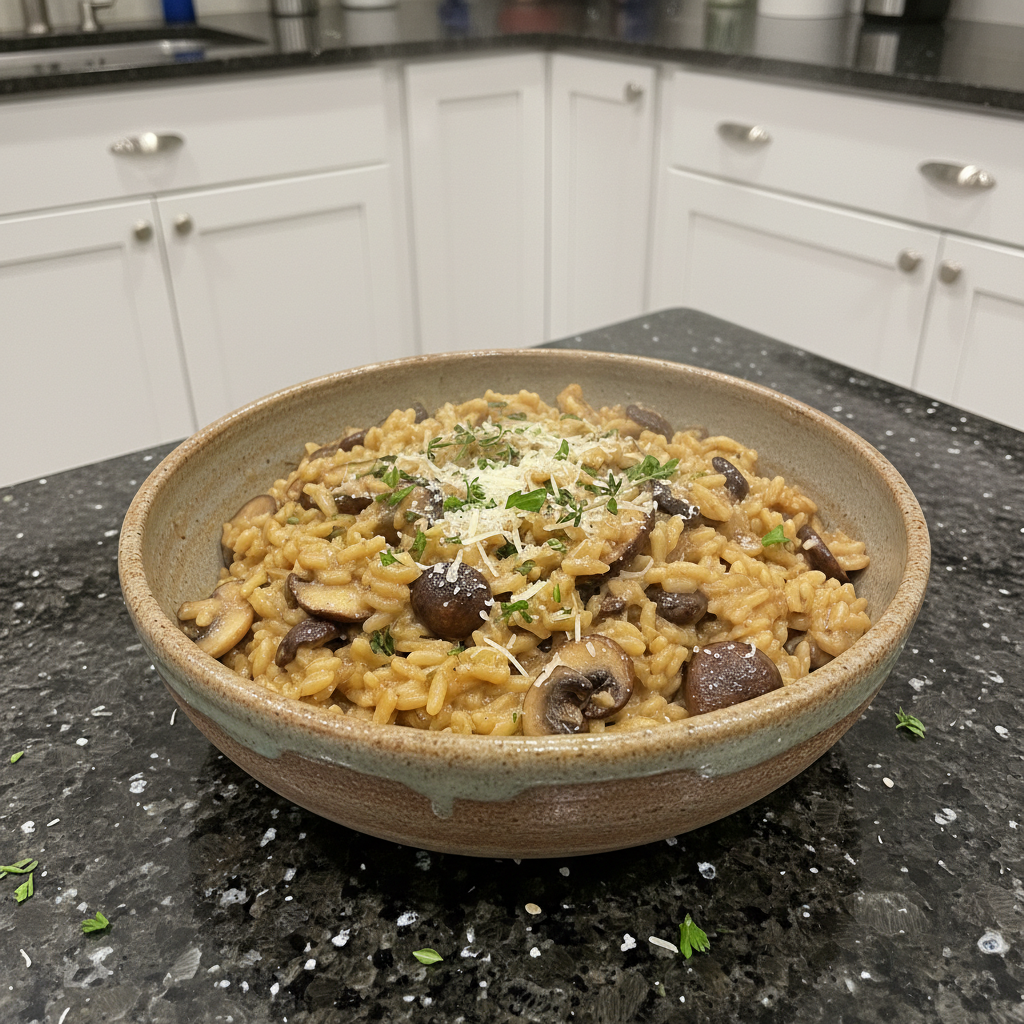
One-Pot Mushroom Risotto: Ultimate Umami with a Secret Twist
Ingredients
Equipment
Method
- Place your chicken stock or vegetable stock and dried porcini mushrooms (if using) in a microwave-safe container. Microwave on high power until it reaches a gentle simmer, which usually takes about 5 minutes. Alternatively, heat them in a small saucepan until simmering on the stovetop.
- Carefully remove the container from the microwave or heat. Using a slotted spoon, transfer the softened porcini to a cutting board and roughly chop them. Add your reserved fresh mushroom scraps to the container with the porcini-infused stock and, most importantly, drop in your piece of Parmigiano-Reggiano rind. Set this aside to continue infusing; this is where foundational umami magic begins!
- In the base of your pressure cooker, combine the extra-virgin olive oil and unsalted butter. Heat over high heat, swirling gently, until the foaming from the butter subsides. This combination helps prevent the butter from burning and ensures optimal browning.
- Add your thinly sliced fresh mixed mushrooms to the hot fat. Season generously with kosher salt and freshly ground black pepper. Cook, stirring occasionally, until all the excess moisture has evaporated and the mushrooms are beautifully well browned. This typically takes about 8 minutes. You’ll notice a rich, nutty aroma developing as the Maillard reaction works its magic, concentrating their flavor.
- Now, add the finely chopped yellow onion, minced garlic, and your chopped rehydrated porcini mushrooms (if using). Cook, stirring frequently, until the onions have softened and become aromatic, about 4 minutes.
- Add the risotto rice to the pot and cook, stirring continuously. This step, called toasting the rice or “tostatura,” coats each grain in the flavorful fat, helping it cook evenly. Continue stirring until the rice grains are evenly coated and toasted but not browned, usually 3 to 4 minutes. You’ll notice the rice grains starting to look translucent around the edges and cloudy in the center, like tiny ice cubes.
- Stir in the soy sauce and miso paste until they are thoroughly and evenly incorporated. These ingredients are fantastic for boosting the overall umami profile of your risotto.
- Pour in the dry white wine. Cook, stirring, until the pungent, raw alcohol smell has completely cooked off and the wine has almost fully evaporated, typically about 2 minutes. This is a crucial step for a clean, nuanced flavor.
- Carefully pour the infused stock into the pot through a fine-mesh strainer, discarding the mushroom stems and the now softened (but still flavorful!) Parmigiano-Reggiano rind. Give the bottom of the pot a good scrape with a spoon to ensure no rice grains or pieces of onion are sticking, making sure all grains of rice are fully submerged in the liquid.
- Close the pressure cooker and bring it up to low pressure (10 PSI on most units). Cook at low pressure for exactly 5 minutes.
- Once the 5 minutes are up, it’s time to depressurize. If you have a non-electric pressure cooker, carefully run it under cold water to quick-release the pressure. If you have an electric unit like an Instant Pot, use the steam-release valve.
- Open the pressure cooker. The risotto might look a bit soupy at first, but don’t worry! Stir vigorously to combine the rice and cooking liquid. You’ll see a beautiful, creamy consistency begin to develop as the starches release.
- Stir in the heavy cream (if using), the finely grated Parmigiano-Reggiano cheese, and the handful of finely minced fresh herbs.
- Taste the risotto. If it’s too soupy, continue to cook it for a few minutes longer, stirring, until it thickens to your desired consistency. If it’s too thick, simply stir in a splash of hot water or stock. The ideal consistency should flow slowly when you drag a trail through it with a spoon. Season to taste with additional kosher salt and freshly ground black pepper.
- Serve your glorious One-Pot Mushroom Risotto immediately on hot plates, passing extra grated cheese at the table for individual preference. Risotto is best enjoyed piping hot!
